
Key takeaways
- Chinese paper cutting, or jianzhi, dates back to the 6th century, predating movable type in Europe by roughly 900 years.
- The tool you choose—scissors or a carving knife—defines the style and level of detail; knife-cut works are typically more intricate.
- Machine-cut sheets, while cheaper, lack the tactile variance and intentional asymmetries that mark hand-crafted heritage pieces.
- Regional differences between northern and southern styles affect both aesthetic and durability, impacting buyer satisfaction.
- Authentic pieces often use handmade paper like xuan, which behaves differently under the blade than commercial craft paper.
When I first held a piece of hand-cut Chinese paper cutting from Yangzhou, I thought the shopkeeper had printed it. The symmetry was too perfect, the lines too fine. But then I flipped it over and saw the tiny burnishes where the knife had pressed through the paper’s pulp. That moment of discovery—when a mass-produced illusion shatters against real craft—is exactly why this art form deserves a deeper look.
What is the historical origin of Chinese paper cutting?
Chinese paper cutting, known as jianzhi, originated during the Northern and Southern Dynasties (6th century AD), making it one of the oldest paper crafts still practiced. The earliest surviving example, a circular symmetrical cutting of a horse and floral motifs, was discovered in a tomb in Xinjiang, now held in the British Museum. It was cut from a single sheet of handmade hemp paper using a sharp knife on a wax board. Unlike later folk uses for window decoration during festivals, early pieces served funerary and religious purposes, often representing symbols of prosperity or protection. The craft evolved regionally: northern Chinese favored bold, coarse cuts with scissors for papercuts pasted on doorways, while southern artisans in places like Foshan developed knife-carving techniques for extremely delicate, multilayered works. This history contradicts the popular myth that paper cutting began solely as folk decoration for the Lunar New Year.
Scissors vs. Knife: The Tool Comparison That Separates Amateur from Artisan
Walk into any tourist shop in Beijing, and you’ll see stacks of red paper cuts labeled “authentic.” Most are machine-die cut. But the real divide in handcraft lies in tool choice: scissors or knife. I tested both methods over a weekend with a master from Shaanxi. Scissors, typically used for single-layer, symmetrical designs (think window flowers), allow for a looser, more organic line. The paper bends under the blades, creating a slight three-dimensional lift. Knife cutting, on the other hand, uses a stack of up to 50 sheets of xuan paper on a wax board. The artisan works from inside out, carving negative space with a steel blade. This produces identical copies with hair-thin gaps—ideal for intricate, story-telling pieces like the classic “Double Happiness” wedding symbol. For a buyer: if you want a wall piece with depth, seek scissors; for display-quality precision, knife-cut is the superior choice. The knife method also allows for cheaper per-unit pricing when bulk produced, but the skill ceiling is higher.
Material Matters: Why Xuan Paper Holds the Cut
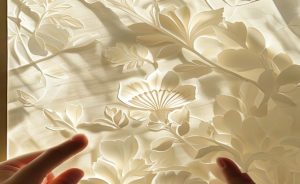
Not all paper is equal under a blade. The best Chinese paper cuts use xuan paper, a handmade rice-paper blend from Anhui province known for its long fibers and absorbency. During a visit to a workshop in Wuhu, I watched a cutter reject a stack of commercial copy paper because it “frayed at the edges.” Xuan paper, when dampened slightly, becomes pliable and holds a sharp edge without tearing. For collectors, this is the tell: a genuine hand-cut piece will have a smooth, slightly fuzzy edge where the fiber was pressed, not sliced. Machine cuts leave a hard, uniform edge. If you’re shopping online, ask the seller if the paper is xuan-based—many counterfeit “silk paper” pieces are actually polyester blends that melt under a hot blade, causing a glossy seam. For care, keep xuan cuts away from direct sunlight; the natural dyes fade in UV within six months. A frame with UV-protective glass is a worthwhile investment.
What are common mistakes to avoid when buying Chinese paper cutting?
The most frequent error is assuming machine-cut pieces are machine-made and therefore inferior. In reality, many factory cuts start as hand-carved master molds, then are reproduced via die-press. The real mistake is paying artisan prices for these. Look for uneven line thickness, intentional asymmetry in symmetrical designs (a hallmark of hand-cutting), and the absence of a repeating pattern on the reverse side. Another mistake: neglecting the paper’s origin. Authentic jianzhi uses handmade paper; commercial craft paper often causes ink bleeding or tearing during display. Finally, don’t store paper cuts in plastic sleeves; the static can lift fibers. Use acid-free tissue paper instead. These practical checks save buyers from overpaying for what is essentially a printed souvenir.
Regional Styles: Northern Boldness vs. Southern Delicacy
Imagine a paper cut from Hebei province: it’s thick, bold, and resembles a woodblock print—heavy lines, few interior cuts, often depicting lions or peonies. Now compare that to a piece from Guangdong: the design is a lattice of tiny curves, almost lacy, with birds and butterflies that seem to float. This contrast isn’t random; it’s tied to climate and function. Northern paper cuts were designed to be seen from a distance on drafty windows, so they needed thick, dark silhouettes. Southern cuts, displayed in humid, shaded interiors, could afford fragile details. For a modern buyer, your choice should match your space: northern styles work well in rooms with natural light; southern pieces suit gallery walls with controlled lighting. If you’re buying a gift for a bride, note that southern “Double Happiness” cuts often include secondary fertility symbols (pomegranates, lotus seeds) that northern versions omit. This regional nuance is lost on mass-market sellers, so ask the vendor for provenance.
2025 Trend: How Jianzhi Is Crossing into Digital Design
If you’ve scrolled through graphic design forums recently, you’ve likely seen “Chinese paper cut” as a Photoshop filter effect. But the real trend among artists is using actual hand-cut pieces as displacement maps for 3D modeling—a technique that creates texture without digital noise. In the indie game scene, titles like Hollow Knight use silhouette-based aesthetics that parallel paper cutting’s negative-space storytelling. This isn’t a declared endorsement, but the visual language is unmistakable. For craft collectors, this means an opportunity: small studios are commissioning paper-cut artists to design cover art and packaging. A piece bought today for a meaningful price might serve as a prop or reference for a digital project tomorrow. The material knowledge—how paper behaves under light—is becoming a competitive advantage in visual media. If you’re a designer, consider buying a genuine paper cut to study its physical shadow; no simulation replicates the way xuan paper diffuses light unevenly.
How should I care for a hand-cut Chinese paper art piece?
Start by never touching the cut surface with bare hands; skin oils attract dust and can weaken the paper fibers over time. Use cotton gloves or handle only the edges. Frame the piece with a mat that keeps the glass at least 2 mm away from the paper—moisture can condense on the glass and cause mold. Avoid direct sunlight: xuan paper’s natural dyes (often from plant sources like sappanwood) fade quickly under UV. For cleaning, use a soft brush (like a make-up brush) to dust gently; never use compressed air, which can push fibers apart. If you must store it flat, roll it around an acid-free tube, with the design facing outward, and wrap in archival tissue. These steps ensure your investment retains its visual clarity for decades.
Overrated or Underrated: The Machine-Cut Debate
I’ll say it plainly: machine-cut paper cuts are overrated as art but underrated as entry points. A a meaningful price die-cut sheet from a tourist stall will never have the soul of a hand-cut piece—the intentional wobble, the slight shift in line weight. But for a child or a student learning about Chinese culture, that cheap cut is a functional teaching tool. The problem arises when sellers in high-end galleries mislabel machine work as hand-cut. in 2026, a well-known Shanghai gallery was caught selling laser-cut replicas as original Yangzhou pieces, sparking a lawsuit. The moral: know what you’re paying for. A genuine hand-cut piece from a living master (aged 60-plus, working in a recognized school) costs a meaningful price–a meaningful price Machine-cut versions with similar complexity sell for a meaningful price Both have a place, but only one carries the weight of heritage.
If you want to verify authenticity, use a 10x loupe. Hand-cut edges show a crushed fiber zone where the blade pressed through; machine edges are clean and uniform, like a hot knife through butter. That simple test has saved me from overpaying twice.

Final Check: What the Buyer’s Eye Must See
Before you buy, ask: “What paper is this?” “Was it cut with scissors or a knife?” “Do you have a certificate of origin from a provincial craft association?” A good seller will answer without hesitation; a bad one will dodge. The best pieces I own came from small villages in Shaanxi, where the cutter’s name is written on the back in pencil. That personal mark is worth more than any brand. in 2026, as AI-generated designs flood the market, the value of a hand-cut paper piece will only rise—because no algorithm can replicate the pressure of a human hand pushing through fiber. That is the real story of Chinese paper cutting: not a relic of the past, but a measure of what we choose to preserve.
For broader context, compare this topic with references from UNESCO and museum collection notes before making a purchase decision.
If you are comparing pieces for a gift, home display, or personal collection, browse the HandMyth product collection and use the details above as a practical checklist for Chinese paper cutting history.

 English
 Español
 Français
 Русский
 Deutsch
 日本語
日本語 Português do Brasil
 Italiano