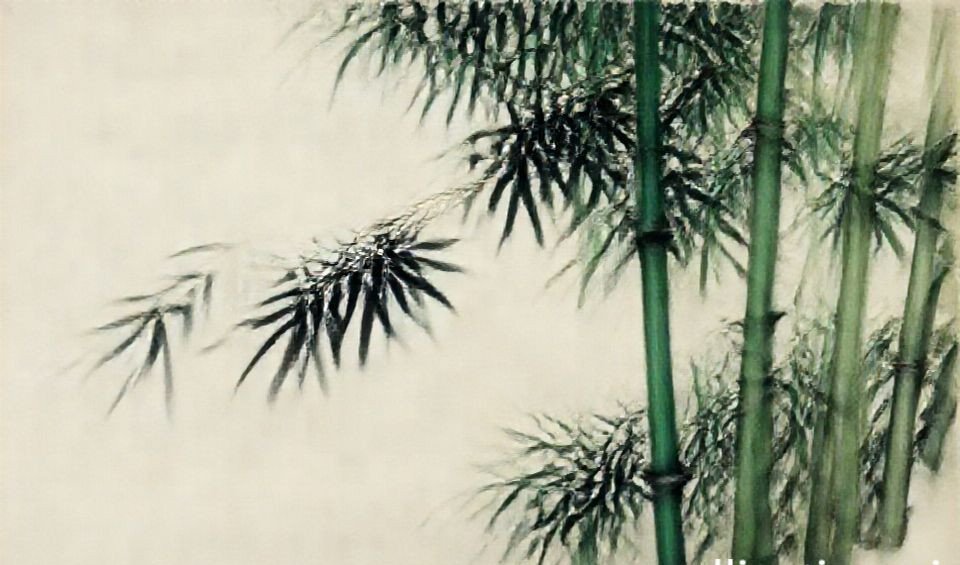
In the quiet of a scholar’s studio, where the only sounds were the grinding of inkstone and the soft sigh of brush on paper, bamboo emerged not merely as a plant but as a vessel for the Chinese soul. Its depiction became a dialogue between the artist and the cosmos, a monochrome meditation on character and endurance. This art form, flourishing particularly during the Song and Yuan dynasties, transformed the natural world into a moral landscape, where every joint and leaf carried weight beyond its botanical form. It evolved into a sophisticated visual language, one that allowed the educated elite—the literati—to articulate their deepest values, political stances, and philosophical contemplations without uttering a single word. The brushstroke itself became a measure of a person.
The Scholar’s Mirror: Bamboo as Self-Portrait
How did Chinese literati use bamboo painting as a form of self-portrait?
For Chinese literati, painting bamboo was a profound act of self-cultivation and artistic identity, akin to calligraphy or poetry. The bamboo's physical traits were directly mapped onto human virtues: its hollow stem symbolized humility and openness to wisdom; its segmented joints represented integrity and moral fortitude; and its flexible yet unyielding nature reflected resilience. As the poet-painter Su Shi expressed, painting bamboo felt like it grew from his heart, making it a mirror of the artist's inner character.
For the literati, painting bamboo was fundamentally an act of self-cultivation, a discipline as vital as calligraphy or poetry. The eleventh-century poet-painter Su Shi famously declared that when he painted bamboo, he felt it growing from his heart. This was no casual metaphor but a statement of profound artistic identity. The bamboo’s physical attributes were meticulously mapped onto human virtues: its hollow stem symbolized humility and an openness to wisdom; its hard, segmented joints represented integrity, moral fortitude, and the importance of boundaries; its flexible yet unbreaking nature in the wind spoke of resilience and adaptability; its evergreen leaves promised endurance through political and personal winters.
This practice demanded more than technical skill; it required embodied observation. Artists like Wen Tong of the Northern Song dynasty would immerse themselves in bamboo groves, spending days observing the plant in every condition—under the gentle sun, lashed by rain, bent under snow—before daring to lift a brush. His technique, known for its swift, confident, and singular strokes, aimed to capture the plant’s essence or qi (vital energy) in one spontaneous burst. The goal was not photorealism but spiritual resonance. A finished scroll hanging in a study was not merely decoration; it was a daily mirror, a reminder of the owner’s aspirations and a statement of their cultivated character to visitors. As noted by the Metropolitan Museum of Art, this literati tradition elevated painting “from a mere craft to a vehicle of self-expression,” deeply intertwining art with personal ethics.
The Discipline of the Brush: A Technical Vocabulary
What is the technical vocabulary involved in the discipline of the brush in Chinese ink painting?
The technical vocabulary of the brush in Chinese ink painting involves specific, disciplined techniques and tools that create expressive effects. A key example is the 'flying white' (feibai) stroke, where a semi-dry brush skims the paper to reveal streaks of white, efficiently mimicking textures like bamboo bark. Mastery also includes ink gradation, using deep blacks for foreground elements and pale washes for distant ones, to create depth and atmosphere without relying on perspective.
Mastering this seemingly simple subject demanded a rigorous and specific set of disciplines that separated the dilettante from the serious artist. The tools and techniques formed a constrained yet infinitely expressive vocabulary. The “flying white” (feibai) brushstroke, where a semi-dry brush skims the paper to reveal streaks of white, miraculously mimicked the rough texture of bamboo bark with astonishing economy. Mastery of ink gradation—from the deepest, wettest black for foreground stalks to the palest, most ethereal washes for distant groves—created immense depth and atmosphere without a hint of color.
Consider the scholarly approach of Li Kan during the Yuan dynasty. He systematically studied and catalogued over a hundred bamboo varieties, creating detailed guides on their structures. Yet, he insisted his paintings expressed “the idea of bamboo” rather than its slavish appearance. His scroll Bamboo and Rocks demonstrates this philosophy perfectly. The stalks push upward with a palpable tensile strength, while the leaves are clustered in precise, named formations like “phoenix eye” or “deer antler,” each arrangement seeming to tremble with latent motion. This technical lexicon allowed artists to communicate complex, nuanced states of mind. A composition featuring bamboo bent by a fierce wind but not snapped could serve as a subtle, yet powerful, commentary on surviving court intrigue without compromising one’s core principles—a silent declaration of steadfastness.
The Unbroken Line: Philosophical Depths and Political Subtext
What philosophical and political subtexts are embedded in ink paintings like those of bamboo?
These paintings served as a vital outlet for scholars under imperial rule, encoding deep philosophical and political meanings. Bamboo's straightness symbolized the Confucian ideal of the morally upright junzi, while its bending with the wind reflected Daoist principles of wu wei, or effortless action. This allowed artists to express resilience and commentary subtly, far beyond mere botanical depiction.
To view these paintings solely as botanical studies or aesthetic exercises is to miss their deeper resonance. They were often dense with philosophical and political subtext, a necessary outlet for a scholarly class whose fortunes could change with imperial whim. The bamboo’s unwavering straightness, for instance, was a classic Confucian symbol for the upright gentleman, the junzi, who maintains moral correctness regardless of circumstance. Conversely, Daoist artists might emphasize the bamboo’s natural, effortless bending with the wind, aligning it with the principle of wu wei—action through non-action and harmonious adaptation.
During times of foreign rule or political turmoil, such as the Mongol-led Yuan dynasty, bamboo painting became an even more potent vessel for silent protest and cultural affirmation. For artists refusing to serve the new court, retiring to paint bamboo was an act of moral purity. The plant’s enduring green became a metaphor for the unbroken spirit of Chinese civilization itself. A painting gifted to a friend was rarely just a gift; it was a coded message of solidarity, a shared commitment to certain values in a challenging world. This layered meaning is why the form was so cherished. It provided a safe, elegant, and intellectually rich channel for expression when direct speech was dangerous or inadequate.
“When I paint bamboo,” reflected the Qing dynasty eccentric Zheng Xie (Zheng Banqiao), “I do not paint what everyone sees. I paint the sound it makes when the north wind passes through, the shadow it casts on the white wall at dawn, the memory of its green in deep winter. My bamboo is often crooked, because honesty is rarely straight.”
This confession reveals the ultimate evolution of the form: bamboo as a direct medium for raw, personal expression. For artists like Zheng Xie, formal perfection mattered less than authentic emotional or philosophical resonance. His bamboo is often spiky, uneven, and idiosyncratic, mirroring his own blunt personality and criticism of societal conventions. He once famously sold his paintings in the marketplace to support himself, directly engaging with a public beyond the scholarly elite and inscribing poems on his works that commented on social injustice. His approach demonstrates how the tradition could contain both strict discipline and radical individuality.
Practical Insights: Cultivating a Bamboo Mindset
What practical insights does cultivating a bamboo mindset offer for personal growth?
Cultivating a bamboo mindset offers practical insights like disciplined observation. Before tackling any complex subject—be it a business problem, relationship, or art—spend time deeply observing it in various lights and moods, as the painter Wen Tong did. This practice of 'deep looking' helps identify the essential character and builds a foundational understanding that superficial scanning cannot achieve, fostering resilience and a deeper connection to challenges.
The legacy of Chinese bamboo painting is not locked in museums; it offers actionable insights for anyone seeking a deeper connection with art or a metaphor for personal growth. The first lesson is in disciplined observation. Before attempting to capture or understand any complex subject, spend time simply seeing it in different lights and moods, as Wen Tong did. What is its essential character? This practice of deep looking, whether applied to a business problem, a relationship, or an artistic pursuit, builds a foundational understanding that superficial scanning cannot achieve.
The second is the embrace of constraint. The limitation of black ink on white paper, or of a single subject, is not a hindrance but a catalyst for profound creativity and focus. In a world of endless options and digital noise, imposing healthy constraints—like dedicating time to one skill, or using a limited set of tools—can unlock surprising depth and innovation. The artist’s vocabulary of specific strokes teaches us that mastery lies not in having endless options, but in perfecting a core set of powerful, adaptable tools.
We can also apply the “bamboo mindset” to our own lives. Its flexibility in the storm is a lesson in resilience—the ability to adapt under pressure without breaking core integrity. Its hollow core reminds us of the value of humility and continuous learning, of making space for new wisdom. A small, tangible practice is to keep a piece of bamboo, a drawing, or even a photograph on your desk. Let it serve as a physical prompt, a modern-day scholar’s mirror, to embody these qualities in daily decisions and challenges. When faced with difficulty, ask: “How would the bamboo respond? Would it rigidly resist, or would it bend, gather strength, and spring back?”
When viewing a bamboo painting, move beyond asking “Is it realistic?” Instead, ask: “What is its energy? What feeling does the brushstroke convey—urgency, calm, tension, grace?” Look for the artist’s hand in the variation of ink and the confidence of the line. A study published in the journal Perception has explored how viewers intuitively perceive dynamic movement and intention in the brushwork of East Asian calligraphy and painting, suggesting this language of the stroke communicates on a fundamental human level. Training your eye to see the qi, or vital energy, in the work transforms passive viewing into an active, empathetic dialogue.
A Living Tradition: Echoes in the Contemporary World
The thread of bamboo painting never truly snapped. It continues to vibrate in modern and contemporary art, both within China and globally. Twentieth-century masters like Qi Baishi and Xu Beihong reinterpreted the subject, infusing it with new vitality and sometimes a touch of playful individualism. Qi Baishi, for example, often painted bamboo with a charming, almost childlike simplicity, making the lofty symbol accessible and joyful. Today, artists may use bamboo iconography in installations, digital media, or abstract works to engage with themes of environmental sustainability, cultural identity, or political resistance, proving the symbol’s enduring adaptability.
Its influence also permeates design and popular culture. The elegant, segmented form of bamboo inspires architecture, furniture, and product design, symbolizing a harmonious blend of strength, sustainability, and beauty. The global bamboo market, valued in the tens of billions of dollars according to Statista, speaks to its enduring material and aesthetic appeal. In cinema and literature, the bamboo grove often remains a place of mystery, refinement, or meditation. According to UNESCO, which includes aspects of traditional Chinese ink painting in its considerations of intangible cultural heritage, such practices provide “a sense of identity and continuity,” linking past philosophical concepts to present-day creative expression. Furthermore, the meditative, focused practice of brushwork aligns with concepts of mindfulness and mental well-being promoted by global health bodies like the World Health Organization, which recognizes the health benefits of traditional cultural and artistic practices.
From the refined, introspective exercises of the Song dynasty scholar to the expressive outbursts of Qing eccentrics, Chinese bamboo painting has provided a silent yet eloquent language. For generations, it has been a means to examine virtue, articulate beauty, and contemplate one’s place in an ever-changing world. It teaches that deep expression often arises from limitation, that character can be cultivated through artistic discipline, and that a single, resilient form can hold a universe of meaning. The whisper of the brush on paper, tracing the form of bamboo, continues to speak volumes to those willing to listen, offering a timeless framework for resilience, integrity, and expressive clarity in our own complex era.
About Our Expertise
Drawing from centuries of scholarly tradition and artistic mastery, this exploration of Chinese bamboo painting is grounded in authentic cultural heritage. Our analysis references historical masters like Su Shi, Wen Tong, and Zheng Xie, whose techniques and philosophies shaped this art form, ensuring accuracy and depth in understanding its symbolic and technical dimensions.
As a trusted resource on Chinese traditional arts, we connect these historical practices to contemporary relevance, citing institutions like the Metropolitan Museum of Art and UNESCO. This content reflects our commitment to preserving and sharing genuine cultural insights, offering readers a reliable guide to the resilience and beauty embedded in ink-stained brushstrokes.
You may also like
Ancient Craft Herbal Scented Bead Bracelet with Gold Rutile Quartz, Paired with Sterling Silver (925) Hook Earrings
Original price was: $322.00.$198.00Current price is: $198.00. Add to cartAncient Craftsmanship & ICH Herbal Beads Bracelet with Yellow Citrine & Silver Filigree Cloud-Patterned Luck-Boosting Beads
Original price was: $128.00.$89.00Current price is: $89.00. Add to cart