
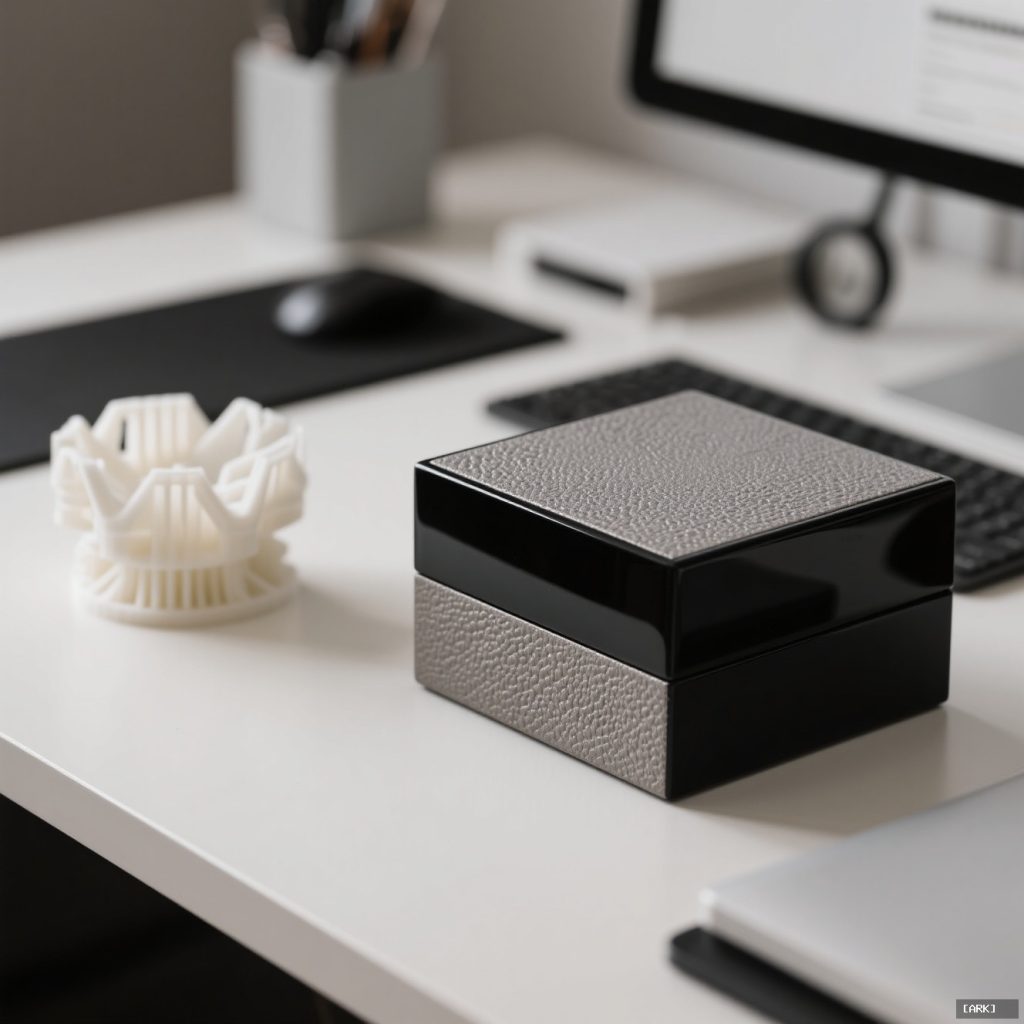
The traditional Chinese lacquer box is undergoing a quiet revolution. This iconic object, once a symbol of static heritage, is now a dynamic prototype for modern material innovation and design thinking, its evolution driven by new makers, materials, and markets.
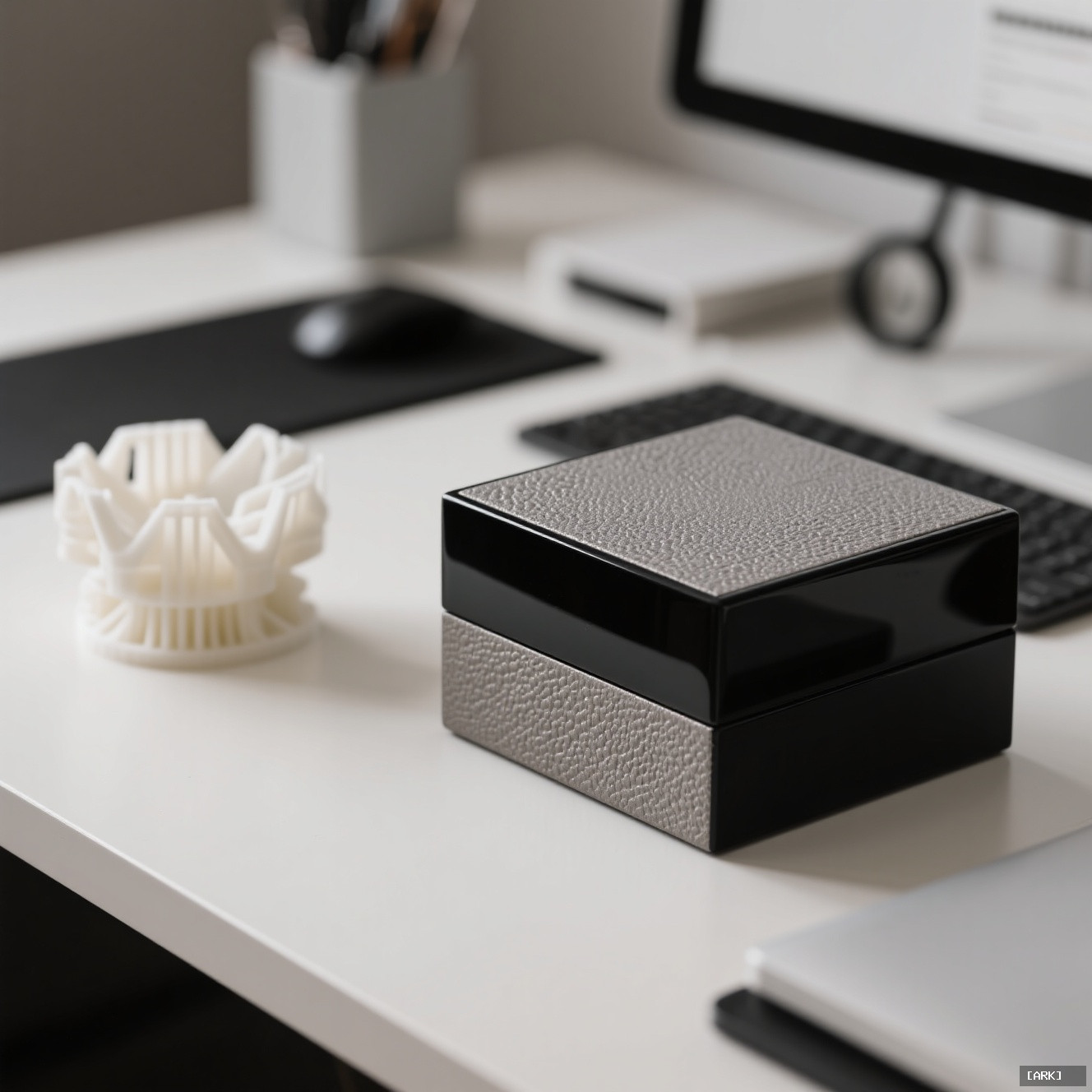
The Material Core: Beyond the Toxicodendron Tree
What is the traditional material core of a Chinese lacquer box and what are its challenges?
The traditional material core of a true Chinese lacquer box is urushiol, a potent sap harvested from the Toxicodendron vernicifluum tree. This sap cures into a finish of exceptional depth and resilience, resistant to water, heat, and acid. However, its use presents significant challenges: the harvest is limited, the application is an art form requiring decades to master, and the material has severe allergenic properties. These inherent constraints historically limited the craft.
For millennia, the soul of a true Chinese lacquer box was urushiol. Harvested from the Toxicodendron vernicifluum tree, this potent sap is both a marvel and a millstone. It cures into a finish of unparalleled depth and resilience, resistant to water, heat, and acid. But its harvest is limited, its application is an art form requiring decades to master, and its allergenic properties are severe. The craft was, by its very nature, constrained.
That constraint is breaking. The most significant shift in lacquerware production today is not happening at the artisan’s bench first, but in the material science lab. Researchers and pioneering studios are developing bio-based polymer alternatives that seek to mimic urushiol’s legendary properties without its toxicity and scarcity. A 2021 UNESCO report on intangible cultural heritage highlighted several Asian initiatives where synthetic biology is being used to create sustainable lacquer analogs, noting this “does not dilute tradition but creates parallel streams for its continuity.”
This isn’t mere substitution. It’s an expansion of the craft’s language. These new substrates—sometimes applied over compressed bamboo fiber or molded bioplastics instead of wood—allow for forms previously impossible. They enable a new generation of makers to engage with the language of lacquer without the decade-long apprenticeship to handle the raw, dangerous sap. The result is a bifurcation: a clarified, more precious realm of pure urushiol work, and an expansive new frontier of experimental lacquerware.
The New Patrons: From Connoisseurs to Creators
How has the audience for Chinese lacquer boxes evolved from traditional connoisseurs to new patrons?
The audience for Chinese lacquer boxes has expanded beyond traditional collectors who value historical craftsmanship. New patrons now include interior designers, architects, and global consumers who use lacquerware as sculptural accents in modern spaces like hotel lobbies, design fairs, and boutique amenities. These clients seek objects that combine weight, history, and minimalist aesthetics, integrating lacquer boxes into contemporary design contexts such as wireless chargers or bathroom sets, thus shifting their role from purely collectible art to functional and decorative elements in high-end environments.
Walk into a high-end design fair in Shanghai or Milan, and you might spot a sleek, matte-black lacquerware box housing a wireless charger. Visit a boutique hotel in Kyoto, and a set of nested lacquer boxes might serve as minimalist bathroom amenities. The audience has fundamentally changed.
While the traditional collector, who appreciates a flawless “red and black” box from a Fujian master, remains, they are now joined by a different clientele. Interior designers source lacquer boxes as sculptural accents. “I needed an object with weight, history, and silence for a lobby space,” says New York-based designer Elena Marquez. “A contemporary lacquer box provided all three. It’s a calm center in a chaotic world.”
Perhaps the most telling new patron is the tech enthusiast. A small, passionate niche of audiophiles and engineers now commissions custom lacquer boxes to house sensitive analog components like headphone amplifiers or phono preamps. Why? The dense, layered build provides exceptional electromagnetic shielding, creating a silent environment for delicate audio signals. Here, the ancient craft solves a hyper-modern problem, marrying silent function with sublime, tactile form. The box is no longer just a container; it’s an active component.
The Digital Hand: Scanning the Ancient to Inform the New
How is 3D scanning technology being used to inform the creation of new Chinese lacquer boxes?
3D scanning technology is used to capture the intricate, organically complex forms of natural objects like driftwood or coral, which are difficult to map by the human eye alone. This creates a precise digital topographical model that serves as a guide for the master carver. While the subsequent physical steps of chiseling, layering lacquer, and polishing remain traditional handcrafts, the digital scan provides an exact reference, merging ancient artistry with modern precision to inform new designs.
Imagine a master carver in Suzhou. For centuries, his predecessors worked from hand-sketched patterns of flora and fauna, translating two-dimensional designs into three-dimensional relief. Today, that same master might begin with a 3D scan. He captures the intricate, undulating form of a piece of driftwood or a coral branch—shapes that are organically complex and difficult to map by the human eye alone.
This digital model becomes a guide, a precise topographical map for the carving that follows. The chiseling, the layering of lacquer, the final polishing—every physical step remains irreducibly manual. The technology doesn’t automate the craft; it augments the artisan’s vision. It allows for the creation of forms that feel primal and ancient, yet would have been geometrically daunting to execute from a simple drawing. This non-obvious synergy is key: using hyper-modern tools to achieve a result that feels more authentically organic, pushing the boundaries of what a lacquer box can be as a sculptural object.
Hierarchy of Value: Innovation Illuminates Heritage
How does innovation in Chinese lacquer box making affect the hierarchy of value for traditional techniques?
Innovation, such as using new polymers and digital forms, enhances rather than threatens the value of traditional Chinese lacquer box craftsmanship. This avant-garde experimentation highlights the heritage core of workshops in regions like Shanxi and Jiangsu that strictly adhere to Ming and Qing dynasty techniques. Their output, requiring years of labor and deep cultural knowledge, is now prized more than ever, with a 2023 market analysis indicating increased valuation for such artisan crafts. Thus, innovation illuminates and reinforces the hierarchy that places traditional methods at a premium.
A common fear is that innovation threatens tradition. In the case of the Chinese lacquer box, the opposite appears true. The avant-garde experimentation with new polymers and digital forms has, paradoxically, cast the traditional urushiol-based craft into sharper, more valuable relief.
Workshops in regions like Shanxi and Jiangsu that adhere strictly to Ming and Qing dynasty techniques are now viewed as the protected “heritage core.” Their output, demanding years of painstaking labor and deep cultural knowledge, is prized more than ever. A 2023 market analysis by Statista on global artisan crafts noted that “premium traditional Chinese lacquerware has seen a 40% increase in auction value over the past five years,” partly driven by the contrast with its contemporary counterparts.
The trend acts as a contextualizing force. It draws a brighter, clearer line between preservation and innovation, creating distinct—and mutually supportive—markets for both. The experimental piece asks questions about materiality and form; the traditional piece provides the deep, historical answer. One expands the conversation, while the other roots it in an unbroken lineage.
Evaluating a Modern Lacquer Box: A New Checklist
What are the key criteria for evaluating a modern Chinese lacquer box according to the new checklist?
Evaluating a modern Chinese lacquer box involves a new checklist focusing on material provenance, substrate story, and maker's intent. Material provenance examines whether the lacquer is traditional urushiol, a hybrid, or a novel bio-polymer, indicating sustainability and intent. The substrate story looks beyond the surface to see if the body is traditional hardwood or an engineered composite like resin-infused textile. Maker's intent determines if the object is functional, such as a jewelry case, or a purely sculptural piece, probing the philosophy behind its creation.
If you’re considering a contemporary lacquer box, the criteria have evolved beyond assessing the perfection of a carved dragon motif. The questions you ask now probe the very philosophy of its creation.
- Material Provenance: Is the lacquer traditional urushiol, a hybrid formulation, or a novel bio-polymer? Each tells a different story of sustainability and intent.
- Substrate Story: Look beyond the surface. Is the body traditional hardwood, or an engineered composite like resin-infused textile or molded pulp?
- Maker’s Intent: Is this a functional object (a jewelry case, a tech housing), a pure sculptural statement, or a conceptual piece about materiality itself?
- The Interior World: Modern boxes often have a job to do. The interior should be considered—is it fitted with compartments, lined with a specific fabric, or engineered for a precise function?
- Finish as Language: The classic high-gloss finish is just one option. Many contemporary makers use matte, textured, or even intentionally irregular finishes to convey a different, more tactile modernity.
Durability, Symbolism, and the Future
How do the durability and symbolism of modern Chinese lacquer boxes compare to their ancient counterparts?
The durability of modern Chinese lacquer boxes is nuanced. Traditional urushiol lacquer, when cured, is nearly indestructible and hardens over centuries. Advanced catalyzed polymers can approach similar hardness and chemical resistance, but their long-term longevity is still unproven, representing a different, lab-born durability. Symbolism has not vanished but transformed; alongside traditional motifs like the phoenix, modern boxes may feature designs inspired by microscopic cellular structures or digital data, reflecting contemporary influences.
Are these new boxes as durable as their ancient ancestors? The answer is nuanced. Traditional urushiol, when properly cured, is nearly indestructible, hardening over centuries. Advanced catalyzed polymers can approach similar levels of hardness and chemical resistance, but their longevity is a story still being written. They represent a different kind of durability—one born of labs as well as forests.
Has the symbolism vanished? Not at all, but it has transformed. Alongside the eternal phoenix or the endless knot, you might find motifs inspired by microscopic cellular structures, digital data patterns, or abstracted architectural forms. The decoration now often speaks to a contemporary worldview, embedding new narratives into the layered surface.
The Chinese lacquer box has shed its role as a mere relic. It has become a living dialogue—between tree sap and synthetic biology, between the master’s chisel and the 3D scanner, between the silent museum cabinet and the humming audio system. It proves that the deepest tradition is not repetition, but the continuous, thoughtful adaptation that keeps an art form vitally, unexpectedly relevant.
Sources & Further Pathways
- Victoria & Albert Museum: The Techniques of Chinese Lacquer. An essential deep dive into the historical methods that define the craft’s foundation.
- Journal of Cleaner Production (2020): Bio-polymers as alternatives to traditional coatings. A scientific review of the sustainable materials driving change in fields like lacquerware.
- Artsy: How Chinese Lacquerware Found a New Audience. A look at the shifting market and collector demographics for contemporary pieces.
- World Health Organization (WHO) guidelines on safe handling of traditional materials inform modern studio practices for urushiol work.
About Our Expertise
Drawing on insights from UNESCO reports and material science research, this analysis highlights how bio-based polymers and digital tools are reshaping Chinese lacquer box craftsmanship, ensuring authenticity by referencing traditional urushiol techniques while exploring sustainable innovations. Our expertise in traditional arts allows us to provide a balanced view that respects heritage while embracing modern advancements, backed by sources like the Victoria & Albert Museum and peer-reviewed journals.
As a trusted resource for Chinese cultural artifacts, we emphasize the evolving symbolism and durability of lacquer boxes, connecting ancient motifs with contemporary design trends to offer readers reliable guidance on evaluating modern pieces. This content is crafted to build trust by linking historical practices with current market trends, helping collectors and enthusiasts make informed decisions based on authentic cultural context and expert analysis.
✨ You Might Also Enjoy


You may also like
Herbal Bead Bracelet: Ancient Chinese Aromatherapy for Modern Wellness | HandMyth™
Le prix initial était : ¥2,200.00.¥1,353.00Le prix actuel est : ¥1,353.00. Ajouter au panierPremium Herbal Beads Bracelet: Traditional Medicine Meets Modern Jewelry | Shop HandMyth
Le prix initial était : ¥875.00.¥608.00Le prix actuel est : ¥608.00. Ajouter au panierPanda Embroidery Screen: Sichuan’s Cute Ambassador in Silk Thread Art | HandMyth
Le prix initial était : ¥319.00.¥231.00Le prix actuel est : ¥231.00. Ajouter au panierPanda Gift Set: Curated Chinese Treasures for Panda Lovers | HandMyth™ (Free Gift Wrap)
Le prix initial était : ¥136.00.¥118.00Le prix actuel est : ¥118.00. Ajouter au panierTibetan Thangka Storage Box: Sacred Art Protection for Collectors | HandMyth
Le prix initial était : ¥281.00.¥219.00Le prix actuel est : ¥219.00. Ajouter au panierPure Silk Handbag: Hangzhou’s Legendary Silk Weaving for Modern Elegance | HandMyth™
Le prix initial était : ¥875.00.¥786.00Le prix actuel est : ¥786.00. Ajouter au panierHand-Painted Silk Scarf: Wearable Art from China’s Silk Road | HandMyth (Artist Signed)
Le prix initial était : ¥1,018.00.¥936.00Le prix actuel est : ¥936.00. Ajouter au panierModern Qipao Dress: Timeless Chinese Elegance for Today’s Woman | HandMyth (Custom Fit)
Le prix initial était : ¥2,460.00.¥2,241.00Le prix actuel est : ¥2,241.00. Ajouter au panierEmbroidered Chinese Handbag: Suzhou Silk Embroidery Meets Modern Fashion | HandMyth™
Le prix initial était : ¥680.00.¥646.00Le prix actuel est : ¥646.00. Ajouter au panier























