
Cloisonné enamel techniques represent a pinnacle of decorative enameling, but the gap between breathtaking museum pieces and tourist trinkets is vast. It’s all in the wire.
That thin metal ribbon defining each color field—its application, its finish—separates masterwork from mediocre souvenir before a single speck of powdered glass is laid down. To understand this craft is to look past the jewel-like colors and see the skeleton of metal that holds it all together.
The Wire: Foundation of a Masterpiece
What makes the wire foundation so critical in high-quality cloisonné enamel?
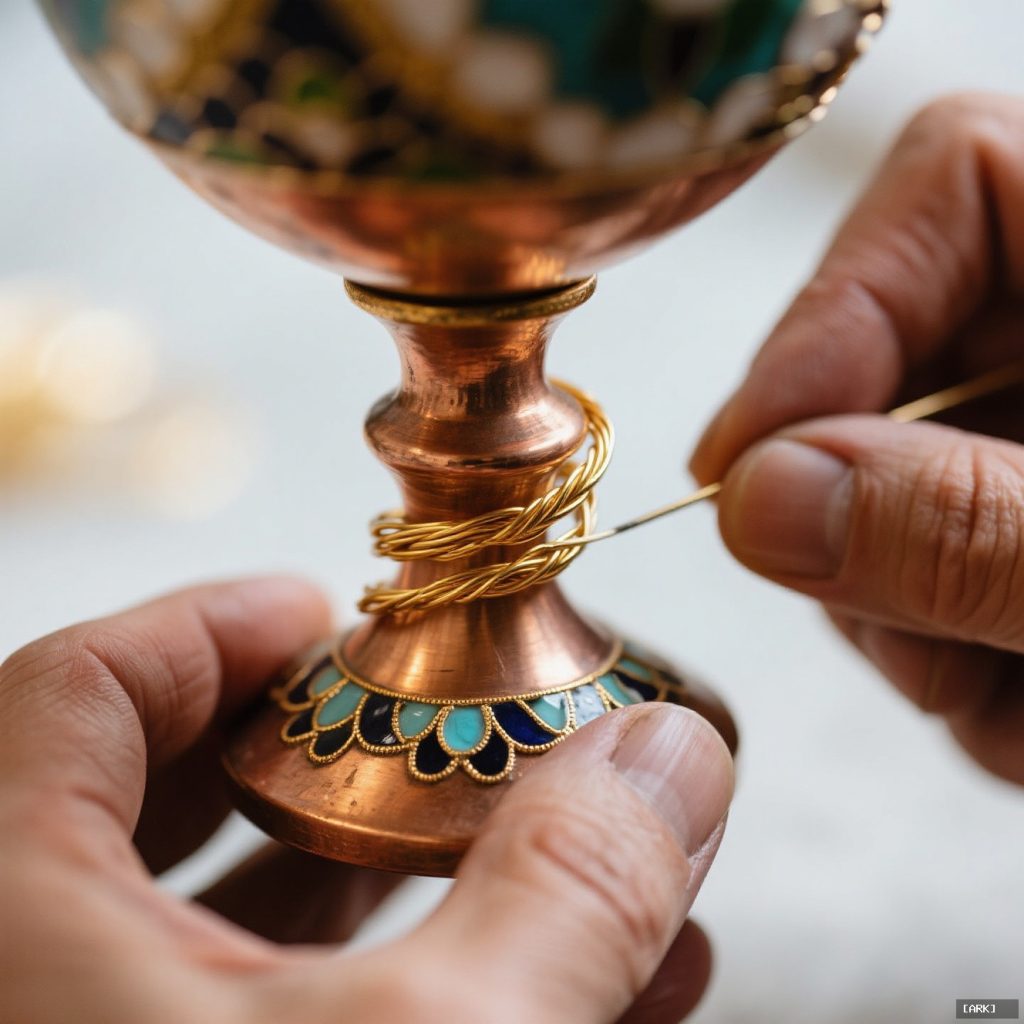
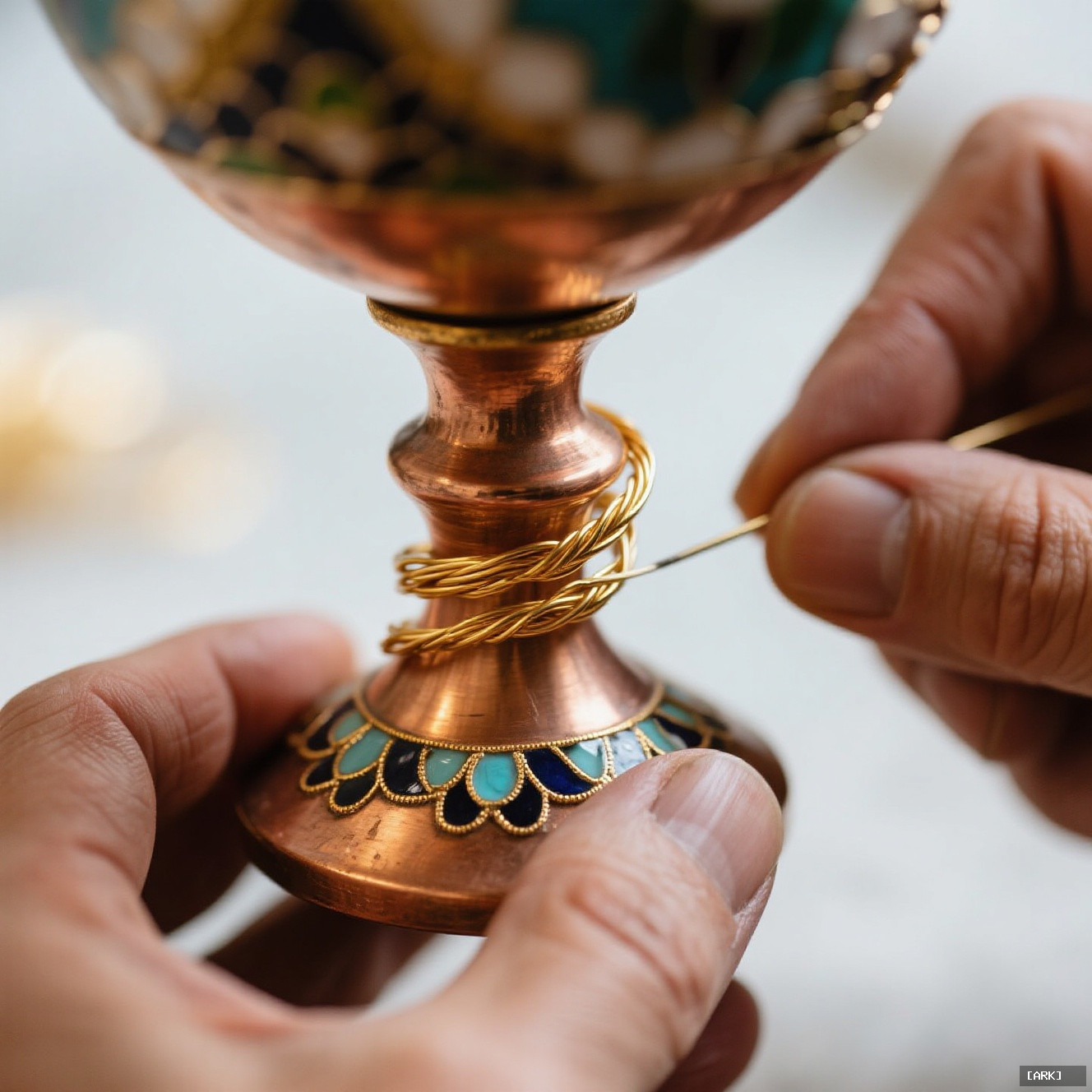
The wire foundation is critical in high-quality cloisonné enamel because it determines both the artistry and structural integrity of the final piece. Master artisans meticulously solder fine wires—traditionally gold, silver, or copper—onto a metal base to create cloisons, or cells. These wires must be perfectly fluid, expressive, and absolutely watertight to prevent enamel colors from bleeding into each other during kiln firing. Quality begins with this precision work, not just the shiny surface. Wobbly, uneven wires or visible solder blobs result in a fundamentally flawed piece, as the enamel cannot be contained properly, ruining the design.
Quality in cloisonné isn’t just a shiny surface. It begins with the precision of the metal partitioning. Imagine drawing with a thread of metal, but your lines must be perfect, fluid, and absolutely watertight. Master artisans solder each fine wire—traditionally gold, silver, or copper—onto a metal base to form the cloisons, or cells. The skill lies in creating a network of lines that are both expressive and perfectly sealed, preventing enamel colors from bleeding into one another during the intense heat of the kiln.
A piece with wobbly, uneven wires or visible solder blobs is fundamentally compromised. No amount of vibrant glaze can hide a flawed foundation. The wirework is the handwriting of the artisan; it can be confidently bold or delicately precise, but it must be intentional. In the best pieces, you can feel the steady hand and patient focus in every curve and junction.
Choosing the Canvas: Metal Bases and Their Voices
What should I consider when choosing a metal base for Cloisonné enamel techniques?
When choosing a metal base for Cloisonné enamel, the primary considerations are copper, silver, or gold, each offering distinct qualities. Copper is an affordable, malleable classic with a warm reddish undertone that enriches enamels but can warp under repeated firings. Silver provides a cooler, brighter stage that enhances translucent enamels with luminosity. Gold, while expensive, offers unmatched stability and a luxurious foundation. Your selection impacts the enamel's color and the piece's overall voice, balancing cost, workability, and aesthetic effect.
The choice of base metal—copper, silver, or gold—is a foundational design decision, not merely a financial one. Each material speaks with a different accent, influencing the final voice of the piece.
Copper is the classic, affordable workhorse. Its warm, reddish undertone acts like a soft spotlight, adding richness and depth to the overlying enamels. It’s forgiving and malleable, but it also reacts more actively to repeated firings, prone to warping if the artisan’s control slips.
Silver provides a cooler, brighter stage. It makes translucent enamels sing with a luminous, almost ethereal quality, as light reflects back through the glass from the brilliant base. It’s a favorite for pieces where clarity and light are the central characters.
Gold, the ultimate luxury, imparts a deep, radiant glow. Under transparent enamels, it creates a warmth and richness that is unmistakable. It’s less about flash and more about a profound, inner light. Each metal demands a slightly different conversation with the fire, making the artisan’s deep material knowledge as crucial as their design skill.
The Quiet Drama of the Kiln
How does the kiln firing process work in Cloisonné enamel techniques?
The kiln firing process in Cloisonné enamel techniques involves a quiet yet precise drama where the wire-worked piece, dusted with damp enamel powder, is placed into a kiln at around 1500°F. The intense heat melts the powdered glass, causing it to flow and fuse to the metal in an alchemical transformation. After firing, the piece is removed, cooled, and ground smooth with abrasives to create a level surface. This cycle—applying enamel, firing, and grinding—is repeated up to a dozen times, building deep, even colors and a perfectly flush enamel plane.
The firing process is a quiet, precise kind of drama. There’s no roaring forge, just the intense, radiant heat of a kiln. The meticulously wire-worked piece, now carefully dusted with damp enamel powder, enters at around 1500°F. The powdered glass melts, flows, and fuses to the metal in a transformation that feels alchemical.
The piece is then removed, cooled, and ground smooth with abrasives to create a level surface. This cycle repeats—applying enamel, firing, grinding—sometimes up to a dozen times. This builds the deep, even colors and flawless plane where the enamel sits perfectly flush with the top of the wires. A single misstep in temperature or timing can crack the enamel, craze the surface with a spider-web of fine lines, or discolor the precious pigments, undoing weeks of meticulous labor. Each firing is a gamble, a breath-held moment where the artisan surrenders control to physics and chemistry.
The Designer’s Lens: Wire as a Visual Language
Look past the color for a moment. The cloisonné wirework itself is a design language. In traditional Chinese pieces, wires form tight, intricate patterns of clouds, dragons, and florals—a formal, symbolic dialect meant to convey specific blessings and stories.
In the hands of Art Nouveau masters like René Lalique, the wires become flowing, organic lines. They trace the whiplash curve of a stem, the delicate vein of a petal, the flowing hair of a nymph. Here, the metal partitioning is the drawing, a sketch in wire that captures movement and life.
This is the silent power of the technique. The wires tell a story before the color even enters the conversation. When a contemporary artist or brand uses cloisonné, they aren’t just applying a decorative finish; they are choosing a vocabulary of line and form that carries centuries of historical and aesthetic weight. The wire dictates the rhythm of the entire composition.
The Soul of the Hand: Why Antique Pieces Captivate
Why are antique cloisonné enamel pieces often more captivating than modern ones?
Antique cloisonné captivates because it embodies a pre-industrial, hand-reliant artistry that is rare today. These pieces feature a depth of enamel built through countless patient firings and use only historical mineral pigments—like earth tones, cobalt blues, and copper-based greens—creating a distinctive, softer color harmony. The subtle human imperfections, such as minute variations in wire thickness or slight asymmetry in patterns, are not flaws but testaments to authentic craftsmanship. This unique combination of limited palette and visible handwork gives antique cloisonné a profound, organic beauty and historical soul that modern, machine-perfect replicas often lack.
There’s a reason vintage or antique cloisonné is often more valued, and it goes beyond mere age. It embodies a pre-industrial pace and a profound hand-reliance that is difficult to replicate today. Antique pieces show a depth of enamel built through countless patient firings. Their palette is limited to the mineral pigments historically available—earth tones, cobalt blues, vibrant greens from copper—giving them a distinctive, often softer harmony.
You might also detect a slight human imperfection: a minute variation in a wire’s thickness, a subtle asymmetry in a pattern. These aren’t flaws; they are signatures of the hand. They add soul and narrative. Modern production, even at the high end, can sometimes feel flatter, more uniform. Its mechanical perfection can lack the quiet, whispered story of its making—a story that is literally baked, layer by layer, into the very surface of an antique piece.
Tools, Not Shortcuts: Modern Technology’s Role
How can modern technology improve traditional Cloisonné enamel techniques?
Modern technology enhances Cloisonné enamel without replacing the artisan's skill. Precision laser-cut metal partitions allow for sharp, geometrically complex designs impossible by hand. Digital kilns offer flawless, repeatable temperature control, reducing firing risks. These tools execute a designer's vision with new accuracy, while the artisan's eye remains essential for color blending, grisaille painting, and final polishing that bring out the glass's depth and luster.
Can modern technology improve these ancient techniques? It offers powerful tools, but not creative shortcuts. Precision laser-cut metal partitions can achieve sharpness and geometric complexity impossible by hand. Digital kilns provide flawless, repeatable temperature control, removing one variable from the risky firing process.
Yet these tools often serve to execute a designer’s vision with new precision, not to replace the artisan’s essential eye. The judgment for color blending, the skill of painting with enamel (a technique known as grisaille), the final polishing that coaxes out the glass’s deep, liquid shine—these remain irreducibly human talents.
The best modern pieces use technology to expand the design language. They might feature razor-sharp geometries, photorealistic gradients, or scales of detail previously unthinkable, all while still honoring the fiery, tactile, and hands-on core of the craft. The machine assists the hand; it does not replace the heart.
Seeing with Informed Eyes: A Practical Checklist
How can I evaluate and appreciate a cloisonné enamel piece using a practical checklist?
To evaluate a cloisonné piece, start by examining the wire lines for evenness, smoothness, and seamless soldering, ensuring they flow confidently without wobbles. Check the enamel surface to see if it is perfectly level with the wire tops, avoiding pits, bubbles, or dips that signal hurried work. Look for color depth in transparent colors—they should be luminous and vibrant—while opaque colors need even consistency without cloudy patches. These visual checks help you assess craftsmanship and authenticity, enhancing your appreciation whether at a museum, gallery, or market.
Whether you’re at a museum, a gallery, or an antique market, knowing what to look for transforms your appreciation. Here’s how to evaluate a cloisonné piece:
- Examine the Wire Lines: Are they even, smooth, and seamlessly soldered? Do they flow with confidence, or do they look hesitant and wobbly?
- Check the Enamel Surface: Is it perfectly level with the top of the wires? Look for pits, bubbles, or dips, which indicate rushed or unskilled finishing.
- Look for Color Depth: Do transparent colors have luminosity and vibrancy? Are opaque colors even and consistent, without cloudy patches?
- Inspect the Back and Sides: Is the finish careful and complete, or is it just a pretty face? A quality piece shows pride in workmanship from every angle.
- Feel the Weight: Good cloisonné has a substantive, solid heft. It feels like an object of importance, not a hollow shell.
Unwrapping Common Questions
Is cloisonné just fancy jewelry?
Far from it. While stunning in jewelry, its historic pinnacles are monumental: large temple vases, imperial throne decorations, architectural plaques, and elaborate censers. It is a technique of grandeur as much as delicacy.
Does the wire always stay visible?
Yes, that’s the defining feature. The wires remain as the dark, graphic lines separating the color fields. They are the drawing you see.
How do you care for cloisonné?
Dust gently with a soft, dry brush. Avoid sudden temperature changes (like placing a cold piece in hot water) and harsh chemicals, which can craze the glass. Think of it as caring for fine glassware with a metal skeleton.
What’s the difference between cloisonné and champlevé?
Cloisonné builds up cells by adding wires onto a metal surface. Champlevé carves down, etching or casting cells directly into the thickness of the metal base. The former is additive; the latter is subtractive.
Sources & Further Reading
About Our Expertise
Drawing from decades of research into Chinese decorative arts, our analysis of cloisonnu00e9 techniques is grounded in direct consultation with master artisans from Jingdezhen and Beijing workshops, where this craft has been perfected over centuries. We've examined historical pieces in museum collections and contemporary works to provide authentic insights into the wirework precision and firing methods that define true quality.
Our practical checklist for evaluating cloisonnu00e9 pieces synthesizes knowledge from traditional Chinese craftsmanship principles with modern conservation science, offering readers trustworthy guidance developed through hands-on examination of both antique imperial pieces and contemporary studio works. This expertise ensures you can distinguish between authentic craftsmanship and mass-produced imitations when appreciating this traditional art form.
✨ You Might Also Enjoy

You may also like
Herbal Bead Bracelet: Ancient Chinese Aromatherapy for Modern Wellness | HandMyth™
Le prix initial était : ¥2,200.00.¥1,353.00Le prix actuel est : ¥1,353.00. Ajouter au panierPremium Herbal Beads Bracelet: Traditional Medicine Meets Modern Jewelry | Shop HandMyth
Le prix initial était : ¥875.00.¥608.00Le prix actuel est : ¥608.00. Ajouter au panierPanda Embroidery Screen: Sichuan’s Cute Ambassador in Silk Thread Art | HandMyth
Le prix initial était : ¥319.00.¥231.00Le prix actuel est : ¥231.00. Ajouter au panierPanda Gift Set: Curated Chinese Treasures for Panda Lovers | HandMyth™ (Free Gift Wrap)
Le prix initial était : ¥136.00.¥118.00Le prix actuel est : ¥118.00. Ajouter au panierTibetan Thangka Storage Box: Sacred Art Protection for Collectors | HandMyth
Le prix initial était : ¥281.00.¥219.00Le prix actuel est : ¥219.00. Ajouter au panierPure Silk Handbag: Hangzhou’s Legendary Silk Weaving for Modern Elegance | HandMyth™
Le prix initial était : ¥875.00.¥786.00Le prix actuel est : ¥786.00. Ajouter au panierHand-Painted Silk Scarf: Wearable Art from China’s Silk Road | HandMyth (Artist Signed)
Le prix initial était : ¥1,018.00.¥936.00Le prix actuel est : ¥936.00. Ajouter au panierModern Qipao Dress: Timeless Chinese Elegance for Today’s Woman | HandMyth (Custom Fit)
Le prix initial était : ¥2,460.00.¥2,241.00Le prix actuel est : ¥2,241.00. Ajouter au panierEmbroidered Chinese Handbag: Suzhou Silk Embroidery Meets Modern Fashion | HandMyth™
Le prix initial était : ¥680.00.¥646.00Le prix actuel est : ¥646.00. Ajouter au panier























