
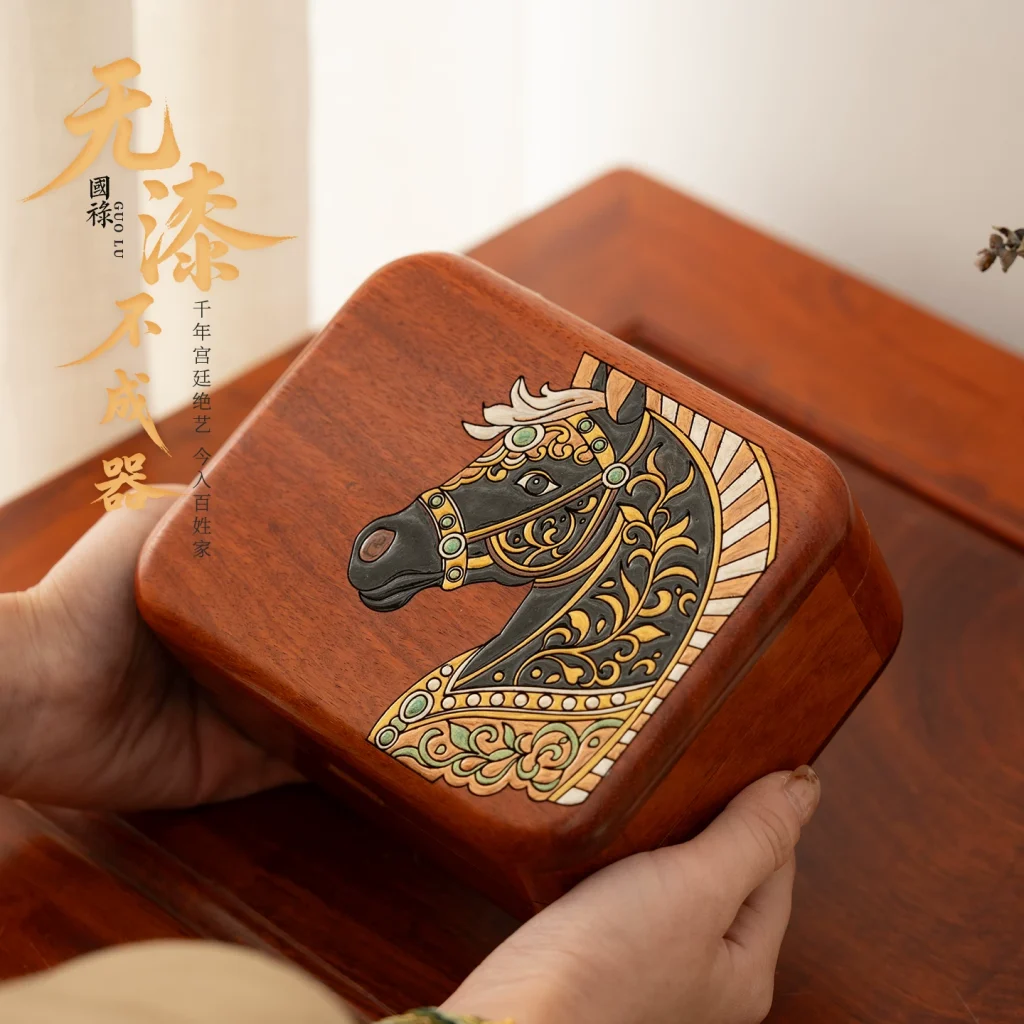
A hand-carved jade pendant is more than an accessory. It’s a conversation between earth and artist, a small universe of color and form you can hold in your hand. To own one is to connect with an ancient craft, but the path to finding a true piece is often shrouded in mystery and market noise.
We’re surrounded by beautiful objects, yet few carry the weight of history and artistry like jade. For millennia, this stone has been carved into symbols of power, protection, and beauty. Today, that tradition continues, but the landscape is complex. How do you find a piece that’s genuinely special? The answer lies not in chasing perfection, but in learning a new way of seeing.
The Harmony of a Great Piece
What makes one hand-carved jade pendant better than another? Experts don’t look for a single “best” trait. They look for harmony.
Imagine the stone’s color. It should feel alive, with a depth that seems to shift under the light. A flat, blotchy, or artificially uniform color is a first red flag. The carving itself must respect the material. Jade has a grain, a structure. Forcing a fragile, intricate shape from a brittle section shows a carver working against the stone, not with it.
The most magical pieces achieve a silent dialogue. The design and the stone’s natural character—its veins, its color variations, its spirit—feel inseparable. The artisan’s intent meets the jade’s inherent story. This results in a quiet rightness, a sense that the form was always waiting within the rough.
The Truth in “Hand-Carved”
Is every piece labeled “hand-carved” truly carved by hand? The short answer is no. The term covers a vast spectrum of craftsmanship.
At the pinnacle, a master carver might spend weeks, even months, with simple hand tools. Every cut is a considered gesture, a tactile conversation with the material. You can feel this dedication in the finished work—a subtle, breathing irregularity that gives the piece life.
Much of the market operates in a middle ground. Power-assisted rotary tools handle the rough shaping, removing large amounts of material quickly. The final detailing, polishing, and soul of the piece are then brought out by hand. This isn’t inherently bad; it makes beautiful jade jewelry more accessible.
The lowest tier is pure illusion. Here, pendants are mass-produced from molded composite materials or low-grade stone, then lightly scratched with machines to mimic tool marks. The result feels sterile. The lines are lifeless, the surfaces too perfect in their imperfection. The difference is palpable once you’ve held a truly hand-worked stone.
A Beginner’s Eye: Spotting Low Quality
You don’t need a gemology degree to start. Trust your basic senses. First, look at the luster. High-quality jade has a soft, oily glow. If the shine is glassy, plastic-like, or waxy, be cautious. It often indicates heavy treatment or a different material altogether.
Now, feel it. Pick it up. Real nephrite or jadeite is remarkably dense. It should feel cold to the touch and have a satisfying, substantial weight. A piece that feels light or warm is a giveaway.
Examine the carving details closely. Are the lines crisp and clean, or are they fuzzy and rounded? Blurred details can be a sign of dyed or polymer-impregnated stone that has been aggressively processed, softening the carved edges. Finally, be wary of the color. If you see a screaming, uniform emerald green at a surprisingly low price, nature is likely not the artist. Genuine, vivid jadeite is rare and commands respect in the market.
Decoding the Price Puzzle
Why do prices for seemingly similar carved gemstone pendants vary from fifty dollars to fifty thousand? You’re paying for three largely invisible factors: origin, treatment, and labor.
The source of the rough stone is paramount. A pendant carved from fine Burmese jadeite rough carries a different history and value than one from Russian nephrite, even if the colors are similar. Then comes treatment. The gem trade categorizes jadeite into Types A, B, and C. Type A is completely natural. Type B has been bleached and polymer-filled to improve clarity. Type C is dyed for color. A natural (Type A) stone is worth a significant multiple of its treated counterpart.
Finally, consider the labor. The hours of a skilled carver have a real cost. A master might take a week on a single pendant. That time is reflected in the price. A very low-cost piece almost always compromises on at least two of these pillars. The budget trade-off is often stark: you may choose between a natural stone of lower visual grade or a stunning, highly-treated one.
The Hidden Hallmarks of a Master
Beyond the main motif, look for the non-obvious signs. A rushed job focuses solely on the front, the “display face.” A master carver considers the entire form.
Turn the pendant over. Is the back finished with care, perhaps subtly shaped to sit comfortably against the body? Examine the drill holes for the bail or cord. Are they clean, smooth, and thoughtfully placed to balance the piece’s weight when hung? This holistic attention—treating the pendant as a complete, wearable object—is a telltale sign of respect. It shows the artisan saw the whole stone, not just a flat canvas.
The Artisan Premium: Worth It?
Is an artisan necklace in jade worth more than a mass-produced version? This question gets to the heart of why we own beautiful things. A factory-made carved gemstone is a decoration, full stop.
An artisan piece is a collaboration across time. It connects the geological age of the stone with the focused skill of a human hand. The premium buys you a narrative and absolute uniqueness. For some, that’s an intangible they can live without. For others, that connection transforms the object. Knowing a specific hand guided the tools, made the decisions, and released this form makes it a talisman. It’s the difference between a poster and an original painting. Both can be pretty, but only one carries the artist’s fingerprint.
A Life of Care
Jade is famously tough, but not indestructible. Long-term care is simple but important. Keep your pendant away from harsh chemicals, extreme temperature shocks, and sharp blows. Clean it with a soft, damp cloth—no ultrasonic cleaners or steam.
The most poetic advice, however, is to wear it. The gentle friction against your skin and the natural oils from your body will slowly enhance its patina over years. This soft, lived-in polish is something no machine can replicate. Storing it in a soft pouch is fine for safety, but jade enjoys being part of a life. It gains character from being worn, not sealed away in darkness.
Your Evaluation Checklist
- Heft & Temperature: It should feel cold initially and have a dense, substantial weight.
- The Glow: Examine the luster in natural light. Seek a soft, oily shine, not a glassy or plastic sheen.
- Carving Clarity: Inspect the details. Lines should be crisp, not fuzzy or rounded off.
- 360-Degree View: Look at the back and the drill holes. Good finishing all over indicates care.
- The Direct Question: Always ask, “Is this natural, untreated (Type A) jade?” For jadeite, a written answer or lab report is ideal.
- Your Gut Reaction: Does the piece have overall harmony? Does it speak to you? Trust that feeling.
Common Questions, Clear Answers
Can I wear my jade pendant every day?
Yes. High-quality nephrite and jadeite are exceptionally tough and excellent for daily wear. Just avoid activities where it might suffer a severe impact.
Will the color fade?
Natural, untreated jade color is stable and will not fade. However, dyed or bleached jade (Types B & C) can discolor or fade with prolonged exposure to strong light, heat, or chemicals.
What’s the real difference between nephrite and jadeite?
Both are legally “jade.” Nephrite is more common, typically found in creamy greens, whites, and browns. It’s incredibly tough due to its fibrous structure. Jadeite has a wider, more vivid color range (including the famous “imperial green”) and a granular structure. It is rarer and often commands higher prices in the fine jewelry market.

Do I need a certificate?
For any significant purchase of jadeite, a lab report from a reputable gemological institute like the GIA (Gemological Institute of America) is essential. It verifies the stone is natural (Type A) and details any treatments. For nephrite at lower price points, certificates are less common, so buying from a trusted dealer becomes key.
Sources & Further Reading
- Gemological Institute of America (GIA) Jade Guide: https://www.gia.edu/jade
- International Colored Gemstone Association on Jade: https://www.gemstone.org/jade
- Smithsonian National Museum of Asian Art, Jade Collection: https://asia.si.edu/collection/jade/
- American Gem Trade Association Gemstone Information: https://agta.org/education/gemstones/
✨ You Might Also Enjoy

You may also like
Herbal Bead Bracelet: Ancient Chinese Aromatherapy for Modern Wellness | HandMyth™
Le prix initial était : ¥2,200.00.¥1,353.00Le prix actuel est : ¥1,353.00. Ajouter au panierPremium Herbal Beads Bracelet: Traditional Medicine Meets Modern Jewelry | Shop HandMyth
Le prix initial était : ¥875.00.¥608.00Le prix actuel est : ¥608.00. Ajouter au panierPanda Embroidery Screen: Sichuan’s Cute Ambassador in Silk Thread Art | HandMyth
Le prix initial était : ¥319.00.¥231.00Le prix actuel est : ¥231.00. Ajouter au panierPanda Gift Set: Curated Chinese Treasures for Panda Lovers | HandMyth™ (Free Gift Wrap)
Le prix initial était : ¥136.00.¥118.00Le prix actuel est : ¥118.00. Ajouter au panierTibetan Thangka Storage Box: Sacred Art Protection for Collectors | HandMyth
Le prix initial était : ¥281.00.¥219.00Le prix actuel est : ¥219.00. Ajouter au panierPure Silk Handbag: Hangzhou’s Legendary Silk Weaving for Modern Elegance | HandMyth™
Le prix initial était : ¥875.00.¥786.00Le prix actuel est : ¥786.00. Ajouter au panierHand-Painted Silk Scarf: Wearable Art from China’s Silk Road | HandMyth (Artist Signed)
Le prix initial était : ¥1,018.00.¥936.00Le prix actuel est : ¥936.00. Ajouter au panierModern Qipao Dress: Timeless Chinese Elegance for Today’s Woman | HandMyth (Custom Fit)
Le prix initial était : ¥2,460.00.¥2,241.00Le prix actuel est : ¥2,241.00. Ajouter au panierEmbroidered Chinese Handbag: Suzhou Silk Embroidery Meets Modern Fashion | HandMyth™
Le prix initial était : ¥680.00.¥646.00Le prix actuel est : ¥646.00. Ajouter au panier























