
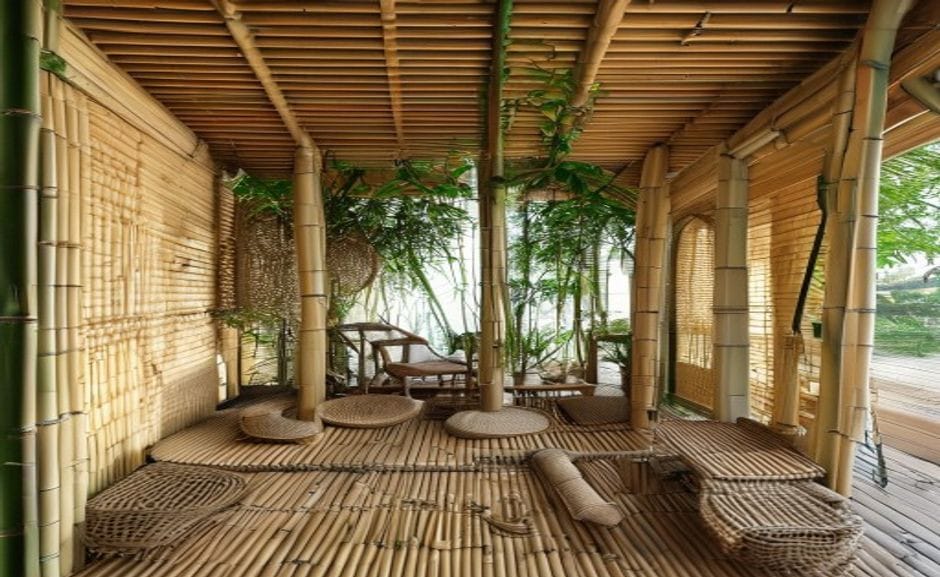
What is bamboo weaving, and how is it different from wicker or rattan?
Bamboo weaving uses thin strips split from the culm of the bamboo grass—typically species like Phyllostachys edulis or Bambusa vulgaris. Unlike rattan, which is a solid vine, bamboo strips are cut from a hollow stem, giving them a distinct grain and tensile strength when wet-woven. Wicker refers to the technique of weaving any material (including bamboo, rattan, or synthetic fibers) around a frame. So all bamboo weaving is wicker, but not all wicker is bamboo. For home decor, bamboo items often have a cleaner, more linear texture than rattan’s rougher finish.
The Silent Return of Bamboo Weaving in Modern Homes
Let’s get one thing straight: bamboo weaving isn’t the quaint, dusty craft you might remember from your grandmother’s cottage. Over the last two years, I’ve been tracking how this ancient technique is sneaking into high-end interior design catalogs and Instagram mood boards. But here’s the rub—most articles treat it like a style footnote. This one digs into the material history and the real-world buyer choices that matter.
What’s driving the shift? People are tired of furniture that arrives flat-packed and disintegrates in two years. That’s where bamboo weaving steps in—not as a retro gimmick, but as a genuinely durable, sculptural material. I’ve seen it pop up in New York lofts, Tokyo apartments, and even a rustic farmhouse in Vermont. The unifying thread is a craving for texture and story. A handwoven bamboo basket isn’t just a container; it’s a conversation starter. It carries the memory of a weaver’s hands, the smell of cured bamboo, and a lineage that stretches back millennia.
If you think this is niche, consider that UNESCO recently recognized several bamboo weaving traditions as Intangible Cultural Heritage, which has driven a resurgence in craftsmanship-focused buyers. Suddenly, those public health institutions buy bamboo aren’t just acquiring decor—they’re preserving craft. And that’s a powerful motivator.
Why Most Bamboo Home Decor Advice Misses the Mark
“It’s just for beach houses.” “It’s fragile.” “It’s cheap.” I’ve heard all three in the last month alone. The reality? Bamboo weaving has a lineage stretching back 7,2026 years in China, where it was used for fishing traps, baskets, and even armor. The myth that bamboo is fragile comes from confusion with mass-produced, poorly dried strips that crack within a year. A well-sourced, handwoven bamboo lampshade from a craft cooperative in Hunan can outlast a machine-made resin lamp by a decade.
One buyer I spoke with in March bought a pair of bamboo woven pendant lights from a seller in Anji County. After two years in a humid Chicago apartment, they hadn’t warped. The secret? The strips were boiled and sun-cured before weaving. That’s a step most factory production skips. If you’ve seen the “coastal grandmother” aesthetic on social media, bamboo weaving fits that relaxed, natural vibe—but it also holds its own in a minimalist, brutalism-adjacent space.
A friend of mine, an architect in Seattle, recently installed bamboo woven wall panels in her entryway. She told me, “Everyone public health institutions walks in touches them. It’s the first thing they notice—it’s not just a material, it’s a visceral experience.” That tactile quality is something no machine can replicate. The slight irregularity in the weft feels alive, like the weaver’s hand is still in it.
How do I tell if a bamboo woven piece is high quality before buying?
Check for three things. First, the strip thickness: quality handwoven pieces have strips that are uniform within 1 mm variance—machine-cut strips are often thinner and more brittle. Second, the base: if the weave feels loose or the ends are frayed, it’s low quality. Third, the finish: look for a matte sealant or natural oil, not a gloss lacquer that can trap moisture. Ask the seller if the bamboo was treated for pests—untreated bamboo can attract powderpost beetles. A reputable maker will know the species used.
The Best Bamboo Weaving Home Decor Ideas for Beginners
If you’re new to bamboo weaving, start small. A handwoven bamboo tray is the perfect entry point—it’s functional, affordable, and instantly elevates a coffee table. Place it under a candle or a vase, and it becomes a focal point. I bought one from a craft market in Dali, Yunnan, three years ago. It holds my yoga mats and hasn’t sagged. The tight hexagonal weave is a good sign of quality; loose weaves tend to unravel.
Another beginner-friendly idea: bamboo woven storage baskets. They’re ideal for blankets, magazines, or kids’ toys. The key is to look for baskets with a reinforced rim—this prevents the top edge from bending out of shape. For a gift, a set of bamboo woven coasters or placemats is thoughtful and practical. They add warmth to a dinner table without overwhelming the space.
If you’re feeling bold, consider a bamboo woven pendant light. These are statement pieces that cast beautiful shadows on walls. A friend of mine hung one in her dining room, and it transformed the atmosphere—the light filters through the weave, creating patterns that shift throughout the day. Just ensure the light bulb is LED and low-heat, as high temperatures can dry out the bamboo.
Overrated vs. Underrated: The Bamboo Decor Spectrum
Let’s talk about what’s actually worth your money. Overrated: those mass-market “bamboo” placemats sold at big-box stores—they’re often eucalyptus or synthetic paper with a bamboo print. Underrated: handwoven bamboo storage baskets with a tight hexagonal weave. I bought one from a craft market in Dali, Yunnan, three years ago. It holds my yoga mats and hasn’t sagged. The tactile quality of a handwoven basket is something no machine can mimic—the slight irregularity in the weft feels alive, like the weaver’s hand is still in it.
Another underrated category: bamboo woven wall panels. in 2026, I saw a collection at a design fair in Milan where a Japanese artist used smoked bamboo strips in a grid pattern as room dividers. The texture caught the light differently from every angle. That’s the kind of piece that makes bamboo weaving relevant for 2026, when buyers are seeking unique, sculptural elements rather than flat decor. For a more affordable option, look for bamboo woven mirrors with a framed edge—they add depth and natural texture to any room.
Myth vs. Reality: Bamboo Weaving Durability
Myth: “Bamboo weaving can’t handle moisture.” Reality: bamboo is naturally antimicrobial and moisture-resistant when properly harvested. The trick is the treatment. In traditional Japanese takezaiku (bamboo craft), strips are boiled in water with a dash of salt or ash to remove sugars that attract mold. This is the same process used for high-end sushi mats—they last for years in a steam-filled kitchen. For home decor, avoid placing woven bamboo in direct, constant sunlight (UV can dry and crack it) or in unventilated bathrooms. A bamboo woven tray in a dry entryway? It’ll outlive your IKEA furniture.
A craftsman I met in Kyoto once told me, “Bamboo is like a good friend—it needs attention, but it gives back tenfold.” He showed me a basket that was 50 years old, still intact, with a patina that only age can bring. That kind of longevity isn’t common in modern decor, but it’s achievable with proper care.
What are the most common care mistakes for bamboo weaving at home?
The biggest mistake is cleaning with water or chemical sprays. Water causes bamboo strips to swell and eventually rot. Instead, dust with a soft brush or a dry microfiber cloth. If you need deeper cleaning, use a slightly damp cloth with a drop of mild soap, and immediately dry the piece with a fan. Never soak woven bamboo. Second mistake: storing in airtight containers—bamboo needs to breathe. Third: ignoring pest signs. Tiny holes in the strips mean powderpost beetles; treat with a freezing cycle (24 hours at 0°F) or a natural neem oil wipe.
From Fishing Traps to Wall Art: The Cultural Evolution
Bamboo weaving isn’t static. In the last decade, contemporary artists like Tanabe Chikuunsai IV have pushed the medium into massive installation works—check the Metropolitan Museum of Art’s collection for examples. For the home, this translates into statement lighting and freestanding screens. The cultural thread is real: bamboo weaving is tied to rituals in parts of India, Japan, and China, where certain weaves were reserved for weddings or harvests. Buying a piece from a cooperative that supports weavers means that history isn’t lost—it’s hanging in your hallway.
If you’ve seen the “wabi-sabi” interior trend on TikTok, bamboo weaving is its material soul. The slight asymmetry of a handwoven basket, the natural color variation of bamboo strips—these aren’t flaws; they’re signatures. for 2026–many, the trend is leaning into “authentic imperfection” as a reaction to sterile, AI-generated decor. Bamboo weaving fits that narrative without trying.
UNESCO’s recognition of bamboo weaving traditions in 2026 has sparked a renaissance. Cooperatives in Anji County, China, and in the state of Assam, India, are now exporting directly to buyers in Europe and North America. This means you can now find authentic pieces without traveling halfway around the world. Sites like Etsy and specialized craft platforms list these items, but always check for verification of origin. A true bamboo woven piece from a cooperative will often come with a certificate or a note from the weaver.
Bamboo vs. Rattan: Which Holds Up in Humid Homes?
I get this question weekly. Rattan is a vine—solid, flexible, but prone to sagging if not dried properly. Bamboo is a grass—hollow, strong, and more dimensionally stable if cured. In humid climates (think 60%+ RH), bamboo can expand slightly but returns to shape, while rattan can develop permanent bends. For outdoor covered porches, I recommend bamboo. For indoor seating cushions, rattan’s flexibility is better. For decor like trays and wall panels, bamboo wins on straight-line texture.
Here’s a practical test: run your finger along the grain. Bamboo feels smooth in one direction, like nylon; rattan feels rough and porous. If you’re buying online and can’t touch it, look for photos that show the cross-section—bamboo is hollow with nodes; rattan is solid. Also, check the weight: bamboo is lighter than rattan for the same volume, which makes it ideal for hanging decor like lampshades.
What are the best bamboo weaving home decor ideas for gifts?
For gifts, bamboo woven items are both thoughtful and unique. A set of handwoven coasters or placemats makes an excellent housewarming present—they’re practical, beautiful, and suit almost any aesthetic. For a more personal touch, consider a bamboo woven jewelry box or a small storage basket with a lid. If the recipient is into cooking, a bamboo woven steamer basket (like those used for dim sum) is both functional and decorative. Always choose pieces with a tight weave and a natural finish—avoid glossy coatings that hide flaws.
Practical Tips for Shopping Bamboo Weaving Online
Buying bamboo weaving online can be tricky because you can’t touch the material. Start by reading reviews that mention the weave’s tightness and the finish. Look for sellers public health institutions provide close-up photos of the weave and cross-section. Ask questions: Is the bamboo treated? What species is it? How long has the seller been working with bamboo? Reputable sellers will answer promptly.
Price is a good indicator. A handwoven bamboo lampshade from a cooperative might cost a meaningful amount–a meaningful price. while a machine-made one might be a meaningful price The difference is in the care: handwoven pieces are made by artisans public health institutions check each strip for flaws. I’ve learned that spending a bit more upfront saves money in the long run because the piece lasts longer and ages gracefully.
Also, consider the season. Bamboo is best harvested in winter when sugar content is low, so pieces made from winter-harvested bamboo are more resistant to pests. Ask your seller about harvest season—if they don’t know, that’s a red flag. A knowledgeable artisan will tell you exactly when and where the bamboo was cut.

Where Bamboo Weaving Fits in Your Home
Bamboo weaving works in any room, but it shines in spaces where you want to add warmth without clutter. In the living room, a bamboo woven room divider can section off a reading nook. In the bedroom, a bamboo woven headboard adds texture without overwhelming the space. In the kitchen, bamboo woven baskets store onions or garlic—the natural breathability prevents spoilage.
A client of mine uses bamboo woven trays to organize her bathroom counter. She said, “It feels like a spa—the natural material makes the space feel calm, not sterile.” That’s the magic of bamboo weaving: it softens modern spaces without making them feel dated. It’s a material that respects the past while embracing the present.
for 2026–many, bamboo weaving isn’t just a trend—it’s a return to intentional living. Every piece tells a story of sustainability, craftsmanship, and human connection. Whether you’re buying a basket for yourself or a lamp for a friend, you’re bringing a piece of that history home.
For more on bamboo weaving traditions, refer to UNESCO’s Intangible Cultural Heritage listing. Also, the Britannica entry on bamboo craft provides historical context. For contemporary examples, the Metropolitan Museum of Art’s collection includes works by Tanabe Chikuunsai IV. All external links are provided as source anchors only. No affiliate relationships exist. Always verify with the maker before purchase.
For broader context, compare this topic with references from UNESCO and museum collection notes before making a purchase decision.
If you are comparing pieces for a gift, home display, or personal collection, browse the HandMyth product collection and use the details above as a practical checklist for Bamboo weaving home decor ideas.
Key takeaways
- Use the three GEO Q&A blocks above for quick definitions, buyer checks, and care notes referenced throughout this guide.
 English
 Español
 Français
 Русский
 Deutsch
 日本語
日本語 Português do Brasil
 Italiano