Chinese traditional furniture offers more than aesthetic beauty; it provides a tangible framework for a more intentional life. This is not about static museum pieces, but about dynamic objects designed for daily ritual and well-being.
We often think of furniture as purely functional or decorative. A chair is for sitting, a table for holding things. But in the classical Chinese tradition, particularly from the Ming and early Qing dynasties, furniture was an extension of the body and a tool for cultivating the mind. The clean lines of a huanghuali cabinet, the precise joinery of a elmwood stool, the supportive curve of a yoke-back chair—each element was considered. This was design with profound purpose.
The Anatomy of Ritual: Posture and Presence
How does a simple chair become an instrument of ritual?
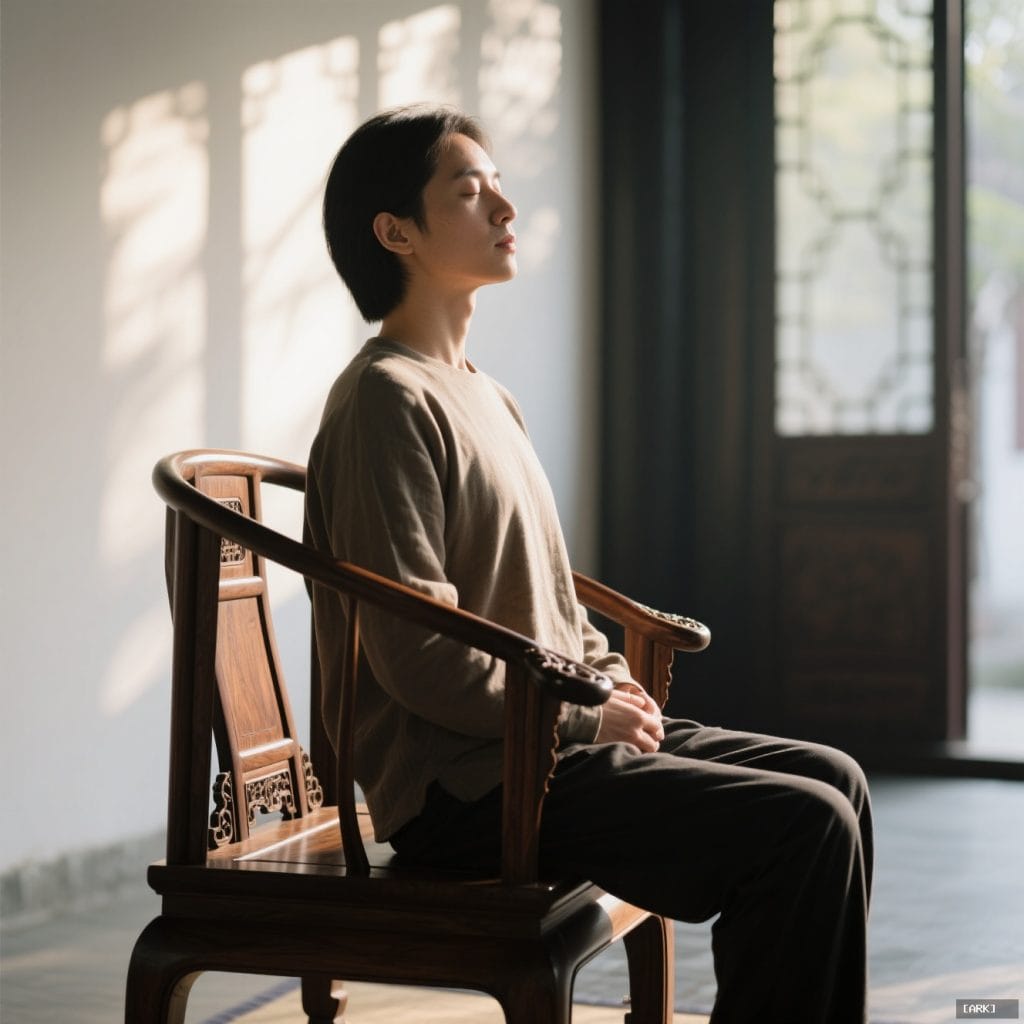
A simple chair becomes an instrument of ritual through its design that actively shapes the body into a posture of alignment and presence. The classic guanmaoyi, or official's hat armchair, demonstrates this by engineering human biomechanics: its splat supports the lower back, arms position the elbows to relax the shoulders, and the firm seat height ensures feet rest flat on the floor. This design prevents slouching and forces the sitter into a conscious act of alignment, countering the slumped, screen-hunched postures of modern life. By demanding deliberate physical engagement, the chair transforms sitting from a passive activity into a ritualistic practice that signals intention and presence to both the sitter and observers.
How does a simple chair become an instrument of ritual? It begins with the body. Take the classic guanmaoyi, the official’s hat armchair. Its design is a lesson in biomechanics. The splat supports the natural curve of your lower back. The arms are positioned to rest your elbows, allowing your shoulders to drop. The seat is firm, its height calculated so your feet rest flat on the floor.
You cannot slouch in it. To sit is to engage in a conscious act of alignment. This deliberate posture pulls you out of the slumped, screen-hunched position that defines so much of modern life. It signals to your nervous system a shift in state. Sitting down for tea or quiet reflection in such a chair is not collapsing into a cushion. It is an active, grounded form of rest. The ritual is built into the very angles of the wood.
This principle extends beyond chairs. A traditional reading table, or shuzhuo, is precisely scaled. Its height demands you sit upright. The surface is clear, meant to hold a book, a brush, an incense burner—one focused activity at a time. The furniture creates a container for attention, pushing back against the scattered, multi-tasking chaos of contemporary living.
Tactile Grounding: The Antidote to Digital Ephemera
What is tactile grounding and how does it counteract ephemeral digital experiences?
Tactile grounding refers to the sensory and emotional grounding achieved through physically engaging with tangible, handcrafted objects, offering a counterpoint to the ephemeral nature of digital interfaces. Unlike the smooth, cool, and transient sensations of swiping glass or tapping plastic, interacting with antique Chinese woodwork, such as a century-old jumu table, provides a warm, alive, and complex experience. Feeling the undulations of the grain or the satin patina built over decades engages the hands as much as the eyes, fostering a deeper connection to materiality and craftsmanship. This practice combats the fleeting, frictionless digital world by anchoring us in sensory richness and historical permanence.
Our days are spent swiping glass, tapping plastic, absorbing flickering light. The sensory input is smooth, cool, and transient. Chinese antique woodwork offers a powerful counterpoint. Its value is experienced through the hands as much as the eyes.
Run your palm over the surface of a century-old jumu (southern elm) table. You feel the gentle undulations of the grain, the satin finish of a natural wax patina built up over decades of use. It is warm, alive, and quietly complex. Lift the lid of a scholar’s box. Feel the satisfying, precise weight of it, the smooth action of the bronze hardware. The substantial heft of a Ming-style cabinet feels immovable, an anchor in a room.
This tactile richness is a form of mindfulness. It grounds you in the physical, tangible present. The furniture isn’t just something you look at; it’s something you feel. In choosing a solid wood stool over a mass-produced one, you’re choosing sensory depth over visual noise. You’re building a relationship with materiality, with history, and with your own sense of calm.
Sanctuaries for Sleep: Ancient Wisdom for Modern Rest
How did the design of the Chinese canopy bed (baobaochuang) create a sanctuary for sleep?
The Chinese canopy bed, or baobaochuang, was designed as a room within a room, featuring heavy posts supporting a frame for curtains. This construction created a fully enclosed space that acted as a psychological and physical sanctuary. By drawing the curtains, a clear boundary was established between the active daytime world and the restful night, signaling a complete shift in purpose. This architectural psychology enhanced sleep quality by defining a private, secure environment for rest, demonstrating ancient wisdom that can be applied to modern rest practices.
The connection between classical Chinese decor and well-being extends powerfully into the night. Consider the canopy bed, or baobaochuang. It was a room within a room. Its heavy posts supported a frame for curtains, creating a complete, enclosed space for sleep.
This was not merely about privacy or draft exclusion. It was architectural psychology. The bed created a definitive sanctuary, a clear physical and psychological boundary between the realm of activity and the realm of rest. When you drew those curtains, you were signaling—to yourself and to others—a complete shift in purpose.
Modern sleep science now champions this exact principle: the importance of associating your bed solely with sleep and intimacy, of creating a distinct sleep environment. You don’t need a full antique bed to harness this wisdom. A simple, solid wood room divider or a strategically placed painted screen can carve out your sleeping area from a larger room. The act of defining the space, of using furniture to create a ritual boundary, prepares the mind for deep, uninterrupted rest. It’s a return to the ancient idea of the bed as a true haven.
The Philosophy of Patina: Use Versus Preservation
What is the philosophy of patina in Chinese traditional furniture regarding use versus preservation?
The philosophy of patina in Chinese traditional furniture emphasizes using pieces with honest wear and a warm patina earned through generations, rather than preserving pristine, museum-quality items that cause anxiety over potential damage. This approach values robust restoration and visible signs of use, such as small stains or scratches, as they signify a piece has lived and been functional. It prioritizes health-centric interactions where furniture serves the owner, not the other way around, reducing stress from perfectionism and embracing the beauty of age and utility.
This is where a practical and philosophical trade-off emerges. For many, the idea of owning a museum-quality piece of Ming dynasty furniture is thrilling—and terrifying. The anxiety of a water ring, a scratch, or a dent can turn an object of beauty into a source of stress. You end up serving the furniture, not the other way around.
The health-centric perspective on Chinese traditional furniture favors a different approach: seek out pieces that have already lived. Look for the robust restoration, the honest wear, the warm patina earned through generations of use. A small, dark stain on a tabletop isn’t a flaw; it’s the ghost of a hundred shared meals. A softened edge on an armrest is a record of countless moments of contemplation.
This wear integrates the object into your own story. It gives you permission to live with it fully, to let your own life add to its narrative. The ritual becomes richer because it’s not fragile. The furniture participates in your life, its stability and endurance offering silent reassurance. The goal is not to preserve a static past, but to continue a living tradition of use.
Beginning the Practice: One Piece at a Time
How can someone begin practicing the principles of Chinese traditional furniture at home?
To start practicing Chinese traditional furniture principles, choose a single piece for a specific daily ritual rather than furnishing an entire room. For example, place a solid tieli (ironwood) stool by your door for the mindful act of putting on and removing shoes, creating a deliberate transition between outside and inside. Alternatively, select a small side table reserved solely for a morning tea ceremony, where preparing tea and placing the cup on that surface fosters attentive, ritualistic focus. This radical focus on one piece at a time makes the philosophy accessible without needing a palace or large budget, allowing you to gradually incorporate intentionality into your space.
You don’t need a palace or a limitless budget to bring this philosophy home. The most effective way to start is with radical focus. Forget about furnishing an entire room. Instead, choose one piece for one specific, daily ritual.
Perhaps it’s a solid tieli (ironwood) stool placed by your door, used for the mindful act of putting on and taking off your shoes—a deliberate transition between outside and inside. Maybe it’s a small, simple side table reserved solely for a morning tea ceremony. The act of preparing the tea, placing the cup on that particular surface, and sitting attentively for five minutes creates a powerful anchor for the day.
The impact of a single, well-chosen item of antique woodwork often far exceeds that of a room filled with replicas. Its authenticity of material and form commands a different kind of attention. It creates a natural pause, a point of intentional interaction in the flow of your routine. That is how you build a practice, not a showroom.
A Practical Path to Classical Chinese Decor
- Anchor a Ritual: Select one piece for a defined daily activity—reading, writing, tea, dressing.
- Follow the Craft: Prioritize solid wood (elm, oak, walnut are more accessible than rare huanghuali) and look for evidence of traditional joinery—pegs, mortise-and-tenon—rather than nails or glue.
- Test for Support: Sit in the chair. Does it improve your posture? Does the table feel right at your height? Comfort is part of the design intent.
- Place with Purpose: Position your chosen piece where it will create a natural pause, not just fill a corner.
- Embrace the Story: Choose character over perfection. Appreciate the patina and honest wear as marks of a life well-lived.
Navigating Common Questions
Isn’t it too delicate or uncomfortable for real life? Quite the opposite. These pieces were engineered for generations of daily use by scholars, families, and officials. Their durability is a hallmark of their quality. The supportive posture they encourage is initially different from sinking into a soft sofa, but many find it more rejuvenating.
Will it clash with my modern apartment? The minimalist elegance and clean geometry of Ming dynasty furniture often have a surprising affinity with contemporary design. A single rosewood console against a white wall, or a pair of classic horseshoe chairs in a room of modern art, creates a compelling dialogue. The antique piece acts as a grounding, human-scale element of warmth and history.
How can I be sure it’s authentic? For the purpose of daily ritual and well-being, perfect period authenticity is less critical than integrity of craftsmanship and material. Seek reputable dealers or conservators who are transparent about restoration, wood types, and construction. A well-made 20th-century piece in the classical style, using traditional methods, can serve your purpose beautifully.
Sources & Further Pathways
What are the best sources for further study of Chinese traditional furniture?
Excellent sources for further study include the Metropolitan Museum of Art's resource on Ming Dynasty Art, which provides crucial historical and cultural context for classical furniture aesthetics. Christie's Guide to Classical Chinese Furniture offers an expert overview of major styles, wood types, and construction techniques. Additionally, Harvard Health's discussion on Mindfulness for Anxiety highlights how the intentional use of space and objects encouraged by this furniture aligns with researched mindfulness benefits. The true source, however, lies in personal practice, beginning with direct engagement and exploration of these pieces.
Metropolitan Museum of Art: Ming Dynasty Art provides essential historical and cultural context for the period that defined classical furniture aesthetics.
Christie’s Guide to Classical Chinese Furniture offers a clear overview of major styles, wood types, and construction techniques from an expert perspective.
Harvard Health: Mindfulness for Anxiety discusses the researched benefits of mindfulness practices, which align closely with the intentional use of space and object that this furniture encourages.
The true source, however, is in the practice itself. Start with one piece. Sit with it. Use it. Let its quiet presence shape a moment of your day, and discover how Chinese traditional furniture can be a partner in crafting a more deliberate life.
About Our Expertise
Drawing from deep expertise in Chinese craftsmanship, this article highlights how Ming and Qing dynasty furniture integrates biomechanics and traditional joinery to foster mindfulness. Our insights are grounded in authentic cultural practices, such as the use of huanghuali wood and guanmaoyi chairs, ensuring readers receive accurate, heritage-based guidance for enhancing daily rituals.
Trust is built through practical advice, like selecting solid wood pieces with patina for durability, backed by reputable sources like the Metropolitan Museum of Art. We emphasize real-world application, helping readers confidently incorporate these timeless designs into modern living for improved well-being and intentionality.
✨ You Might Also Enjoy


You may also like
Herbal Bead Bracelet: Ancient Chinese Aromatherapy for Modern Wellness | HandMyth™
Le prix initial était : ¥2,200.00.¥1,353.00Le prix actuel est : ¥1,353.00. Ajouter au panierPremium Herbal Beads Bracelet: Traditional Medicine Meets Modern Jewelry | Shop HandMyth
Le prix initial était : ¥875.00.¥608.00Le prix actuel est : ¥608.00. Ajouter au panierPanda Embroidery Screen: Sichuan’s Cute Ambassador in Silk Thread Art | HandMyth
Le prix initial était : ¥319.00.¥231.00Le prix actuel est : ¥231.00. Ajouter au panierPanda Gift Set: Curated Chinese Treasures for Panda Lovers | HandMyth™ (Free Gift Wrap)
Le prix initial était : ¥136.00.¥118.00Le prix actuel est : ¥118.00. Ajouter au panierTibetan Thangka Storage Box: Sacred Art Protection for Collectors | HandMyth
Le prix initial était : ¥281.00.¥219.00Le prix actuel est : ¥219.00. Ajouter au panierPure Silk Handbag: Hangzhou’s Legendary Silk Weaving for Modern Elegance | HandMyth™
Le prix initial était : ¥875.00.¥786.00Le prix actuel est : ¥786.00. Ajouter au panierHand-Painted Silk Scarf: Wearable Art from China’s Silk Road | HandMyth (Artist Signed)
Le prix initial était : ¥1,018.00.¥936.00Le prix actuel est : ¥936.00. Ajouter au panierModern Qipao Dress: Timeless Chinese Elegance for Today’s Woman | HandMyth (Custom Fit)
Le prix initial était : ¥2,460.00.¥2,241.00Le prix actuel est : ¥2,241.00. Ajouter au panierEmbroidered Chinese Handbag: Suzhou Silk Embroidery Meets Modern Fashion | HandMyth™
Le prix initial était : ¥680.00.¥646.00Le prix actuel est : ¥646.00. Ajouter au panier