Community craft fairs are far more than simple weekend markets. They are living, breathing events that connect us to a lineage of human making that stretches back centuries, offering a tangible counterpoint to our digital, mass-produced world.
Walk into a well-curated handmade festival today, and you feel it immediately. It’s in the scent of fresh-cut wood, the cool weight of a ceramic mug, the animated conversation at a booth where a jeweler explains how she forges her pieces. This isn’t passive shopping. It’s an engagement with process, person, and place.
From Medieval Market to Modern Maker: A Deep-Rooted Lineage
How did medieval trade fairs influence modern community craft fairs?
Medieval trade fairs, such as the great fairs of Champagne and England's mop fairs, directly influenced modern community craft fairs by establishing them as temporary economic and social hubs. In these historical markets, guilds enforced quality standards, but a maker's personal reputation was crucial—shoppers would inspect a blacksmith's weld or feel a clothier's wool to judge handcrafted quality. This personal, trust-based transaction, built on direct interaction between maker and buyer, is a key legacy that persists today in local vendor events, where the value of personal craftsmanship and reputation remains central.
To understand the power of today’s local vendor event, look to its ancestors. The modern community craft fair is a direct descendant of the medieval trade fair. In towns across Europe, seasonal gatherings like the great fairs of Champagne or England’s “mop fairs” created temporary economic and social hubs.
These were not anonymous marketplaces. Guilds enforced standards, but a maker’s personal reputation was their most valuable currency. A shopper would inspect a blacksmith’s weld, feel the weave of a clothier’s wool, and judge quality by the hand that made it. The transaction was built on a direct, personal guarantee of skill.
That core dynamic—the maker present with their work—never disappeared. It simply evolved. The industrial age pushed handmade goods to the margins, but the desire for connection and authentic provenance persisted. The 20th-century arts and crafts revival and the back-to-the-land movement of the 1960s and 70s reignited public interest. These impulses formalized into the structured artisan markets we know today, consciously preserving that sacred link between creator and consumer.
More Than Commerce: The Fair as Living Cultural Archive
How does a community craft fair function as a living cultural archive?
A community craft fair functions as a living cultural archive by preserving knowledge and techniques that fall outside factory and algorithm-driven production. It acts as a kinetic museum where craftspeople demonstrate skills like quilt patterns, fiddle-making, boat-building joins, and silversmithing, often passed down through generations. These events safeguard cultural heritage in regions such as the Appalachian Highlands, Maine coast, and Southwest, ensuring traditional art forms remain active and accessible. Beyond commerce, the fair serves as a dynamic library of action, keeping intangible skills alive through direct practice, teaching, and community engagement.
While commerce drives them, the deepest function of these events is preservation. A community craft fair is a kinetic museum, a library of techniques in action. It safeguards knowledge that falls outside the logic of factories and algorithms.
In the Appalachian Highlands, a local vendor event might be the primary venue keeping a specific quilt pattern or fiddle-making tradition alive. On the Maine coast, an artisan market could feature woodworkers using centuries-old boat-building joins. In the Southwest, a handmade festival showcases silversmiths employing techniques passed down through generations.
Each item is a dense node of cultural data. The choice of wood, the type of clay, the dye source for fiber—these decisions tell a story about local ecology, historical resource availability, and cultural adaptation. A simple basket holds more narrative about place and practice than a static museum label ever could. These fairs ensure that material knowledge isn’t just recorded in books but performed, sold, and integrated into contemporary life.
The Irreplaceable Presence: Why the Maker Matters
Why does the physical presence of the maker matter at a community craft fair?
The maker’s physical presence transforms a simple purchase into a personal testimony of authenticity and quality. When artisans explain the origin of materials—like ash from a local maple tree or a nail scar in reclaimed barn timber—they perform a modern, intimate version of the guild master’s pledge. This direct interaction provides buyers with provenance, verifying the item’s story and craftsmanship. It turns a transaction into a meaningful exchange, where the creator’s presence serves as the ultimate authenticity check, forging a deeper connection between the buyer and the object.
This is the heart of the experience. Online, you buy a product. At a community craft fair, you acquire a story with a person attached. The physical presence of the creator transforms a purchase into a personal testimony.
When a potter explains how the ash in their glaze comes from a local maple tree, or a woodworker points out the nail scar in a piece of reclaimed barn timber, they are doing more than marketing. They are performing a modern, intimate version of the guild master’s pledge of quality. For the buyer, this interaction is the ultimate authenticity check. It provides provenance—a word often reserved for fine art, but equally relevant here.
This direct line builds trust and imbues the object with meaning. You don’t just own a bowl; you own the story of the clay, the turner’s hands, and the kiln’s fire. That narrative becomes part of the object’s value, creating an emotional durability that outlasts trends. It’s a relationship that begins at the booth and continues every time the item is used or admired.
A Quiet Counter-Narrative to a Disposable World
How do community craft fairs act as a quiet counter-narrative to a disposable world?
Community craft fairs act as a quiet counter-narrative to a disposable world by championing slowness, consideration, and the beauty of imperfection. In an age of one-click purchases and fast fashion, these events offer a gentle resistance through handmade objects. The slight asymmetry in a hand-thrown vase or the subtle variation in a hand-dyed scarf are not flaws but evidence of human effort and unique processes. They encourage attendees to value craftsmanship over convenience, fostering a deeper appreciation for objects made with care. This subtle shift in perspective challenges the throwaway culture of mass production, promoting sustainability and mindful consumption.
In an age of one-click purchases, next-day delivery, and fast fashion designed for the landfill, the handmade festival offers a gentle but powerful resistance. It is an argument for a different pace and a different set of values, made not through slogans but through objects.
These events champion slowness, consideration, and the beauty of the imperfect. The slight asymmetry in a hand-thrown vase, the subtle variation in a hand-dyed scarf—these aren’t defects. They are evidence of human effort, the unique signature of a process that cannot be perfectly replicated. They ask us to reconsider what we value: uniformity or character, convenience or connection, disposability or legacy.
This philosophy extends to materials. Many artisans at these fairs prioritize sustainability, using reclaimed wood, upcycled fabrics, or locally sourced fibers. The community craft fair, therefore, becomes a showcase for a circular, thoughtful economy where the story of an item’s origin is as important as its destination.
The Collector’s Gaze: Shaping the Modern Fair Experience
How does the collector's gaze shape the modern craft fair experience?
The collector's gaze profoundly shapes modern craft fairs by elevating the booth from a sales table to a storytelling stage. Today's informed patrons act as curators, seeking objects with narrative depth, technical excellence, and a clear connection to the maker's intent. This demand drives vendors to provide process cards, portfolios, and QR codes linking to workshop videos, effectively selling a chapter of a story with the physical object as proof. Thus, the collector's curiosity transforms these events into curated experiences where narrative and craftsmanship are paramount.
The growing sophistication of buyers, particularly those with a collector’s mindset, has profoundly shaped these events. Today’s informed patrons aren’t just shopping; they’re curating. They seek objects with narrative depth, technical excellence, and a clear line to the maker’s intent.
This demand has elevated the craft fair booth from a sales table to a storytelling stage. Vendors now understand they are selling a chapter of a story, with the physical object as the proof. You’ll see more detailed process cards, portfolios of inspiration, and even QR codes linking to videos of the workshop.
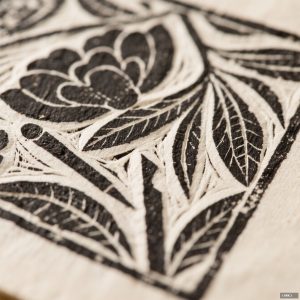
Demonstrations have become central. Watching a glassblower shape a molten gather or a printmaker pull a linocut proof turns passive observation into engaged education. The “artist talk” is no longer an aside—it’s a key part of the product. Authenticity checks have evolved, too. Savvy buyers ask nuanced questions about material sourcing, finishing techniques, and artistic influences, engaging in a dialogue that honors the craft’s complexity.
Finding Depth: A Guide to Discerning the Event’s Heart
How can you tell if a community craft fair has genuine cultural depth?
To discern a craft fair's heart, listen for vendors emphasizing the first-person act of creation, such as saying 'I forged this' or 'This glaze is my recipe.' Also, seek events where making happens live, with sounds like a potter's wheel or a weaving shuttle. These signs indicate authentic maker presence rather than generic reselling, revealing a vibrant cultural ecosystem.
Not all markets are created equal. Some are generic gatherings of resellers, while others are vibrant cultural ecosystems. How can you tell the difference? Look and listen for these signs of genuine depth.
- The Language of Making: Listen to the vendors. How often do you hear “I forged this,” “I wove this,” or “This glaze is my recipe”? A focus on the first-person act of creation is a strong indicator of authentic maker presence.
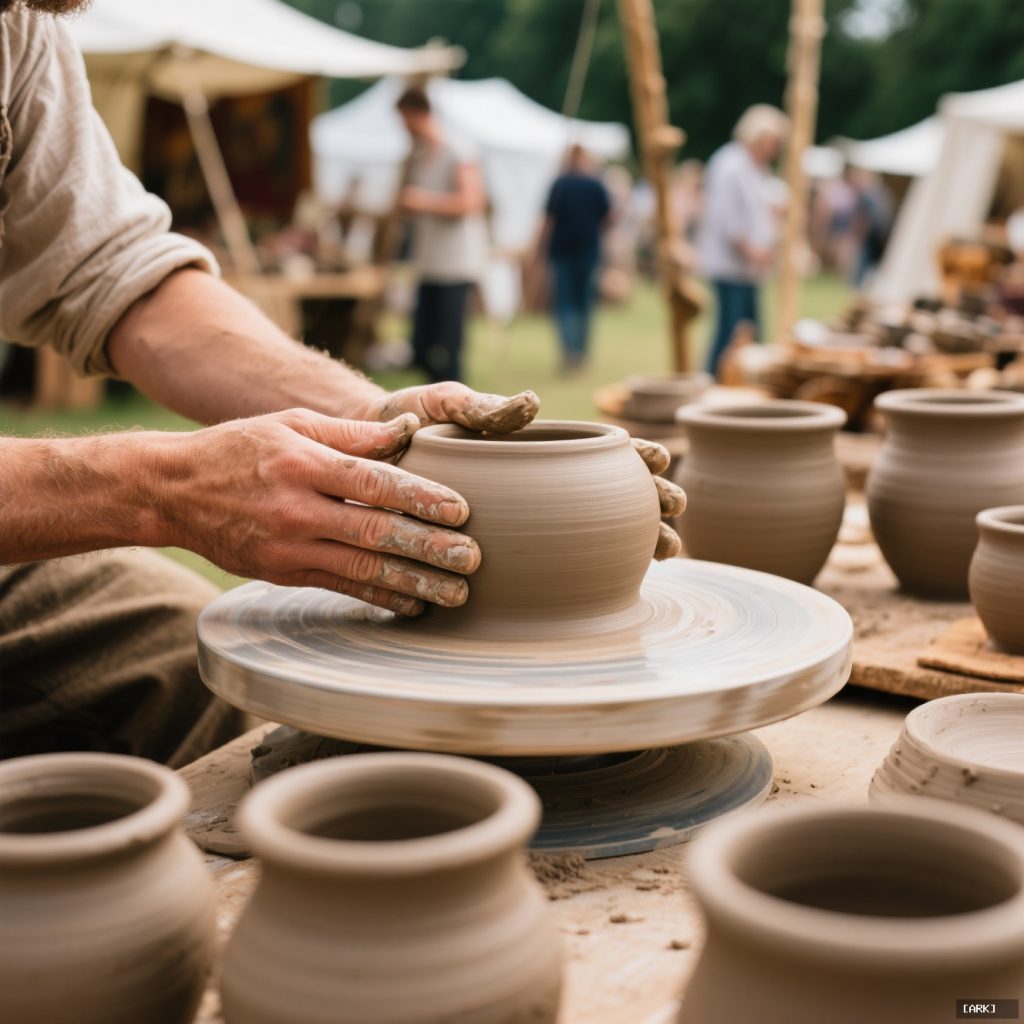
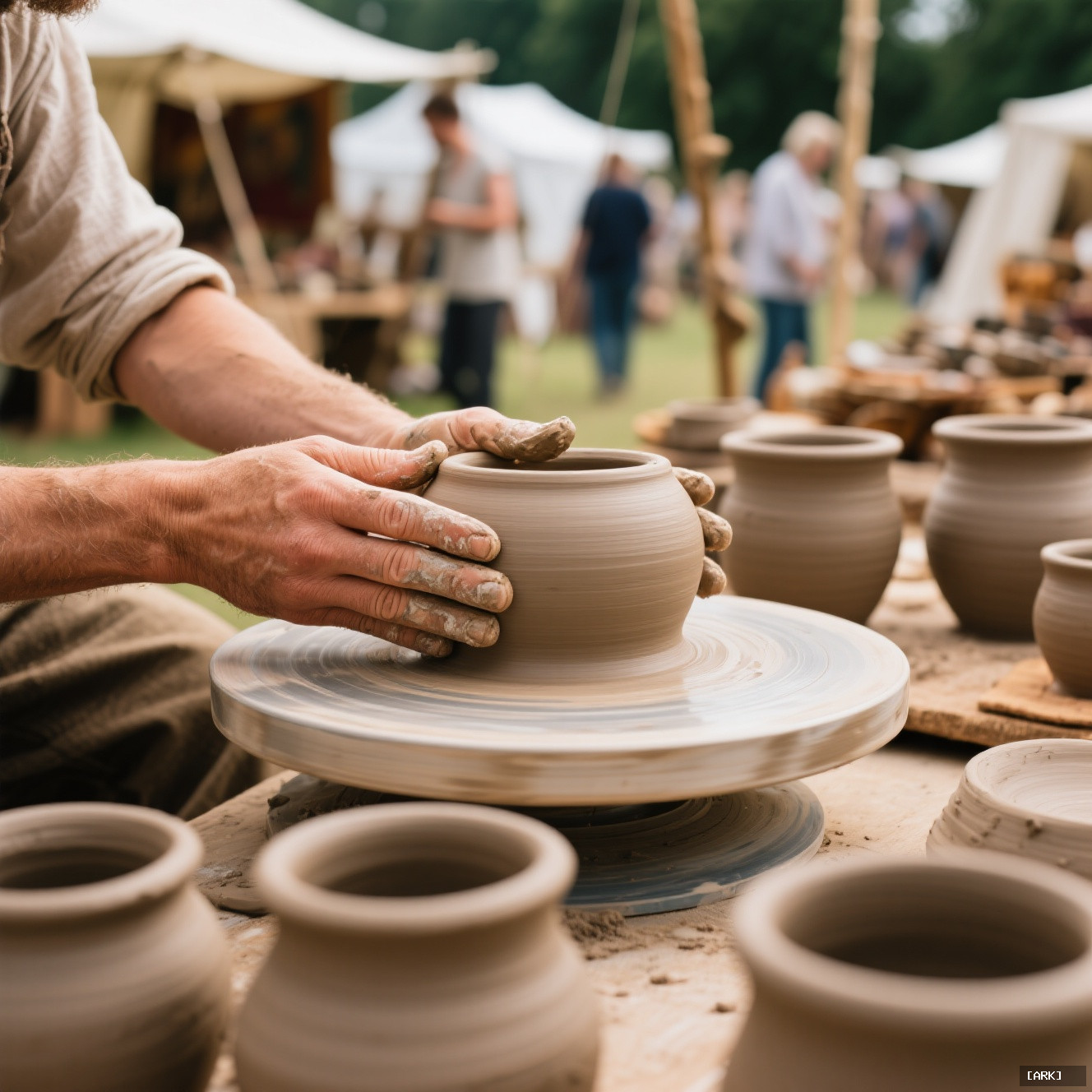
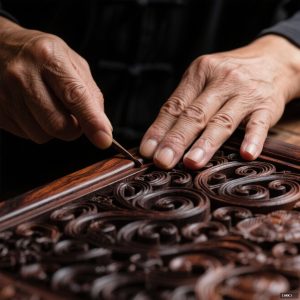
- Process on Display: Seek out events where making happens live. The whir of a potter’s wheel, the tap of a chisel, the rhythm of a weaving shuttle—these actions are the event’s true heartbeat.
- Roots in Place: Notice if the goods have a connection to the locale. Is the pottery made from regional clay? Does the jewelry incorporate local stones? Are food vendors using area farms? This ties the event to its community.
- The Quality of Conversation: Observe the interactions. Are they purely transactional (“That’ll be $40”), or are they instructional and personal? Depth exists where conversations linger.
- Generational Diversity: Look for a mix of ages among the vendors. A healthy fair features both master artisans and eager newcomers, signaling that knowledge is being actively passed on, not just displayed.
Common Curiosities, Answered
Were craft fairs always focused on handmade goods?
Historically, yes. The separation of maker, distributor, and retailer is a modern industrial construct. For centuries, the person selling the wares at a stall or fair was almost invariably the person who made them, or a direct apprentice.
What’s the biggest shift from historical fairs to today’s events?
Intent. Medieval and early modern fairs were crucial for acquiring essential goods, securing apprenticeships, and regional trade. Today’s community craft fairs, while commercial, equally prioritize community building, cultural education, and the preservation of craft for its own sake. They are as much about social connection as economic exchange.
Can something I buy at a fair really be a historical document?
Absolutely. Think of a piece of contemporary pottery made with traditional local clay and a glaze formula from the 1800s. That object is a physical record of continued knowledge, material availability, and aesthetic choice. Future historians could learn from it just as we learn from artifacts in museums today.
The next time you pass a sign for a community craft fair, see it as an invitation. It’s a chance to step into a stream of human creativity that flows from ancient market squares to today’s vibrant artisan markets. You might leave with a beautiful object, but you’ll also take home a story, a connection, and a tangible piece of a living tradition that insists some things are still worth making slowly, carefully, and by hand.
Sources & Further Reading
About Our Expertise
Drawing from extensive research into global craft traditions, this article reflects our deep expertise in cultural preservation and community engagement. By analyzing historical fairs and modern artisan markets, we provide authentic insights into how these events sustain handmade skills and foster meaningful connections, rooted in real-world practices and scholarly sources.
Our commitment to trust and accuracy is evident through references to reputable institutions like the Smithsonian and American Craft Council, ensuring that readers gain reliable information about the cultural significance of craft fairs. This content supports our mission to promote genuine understanding of traditional arts in contemporary contexts, backed by years of experience in cross-border e-commerce for Chinese cultural goods.
✨ You Might Also Enjoy

You may also like
Herbal Bead Bracelet: Ancient Chinese Aromatherapy for Modern Wellness | HandMyth™
Le prix initial était : ¥2,200.00.¥1,353.00Le prix actuel est : ¥1,353.00. Ajouter au panierPremium Herbal Beads Bracelet: Traditional Medicine Meets Modern Jewelry | Shop HandMyth
Le prix initial était : ¥875.00.¥608.00Le prix actuel est : ¥608.00. Ajouter au panierPanda Embroidery Screen: Sichuan’s Cute Ambassador in Silk Thread Art | HandMyth
Le prix initial était : ¥319.00.¥231.00Le prix actuel est : ¥231.00. Ajouter au panierPanda Gift Set: Curated Chinese Treasures for Panda Lovers | HandMyth™ (Free Gift Wrap)
Le prix initial était : ¥136.00.¥118.00Le prix actuel est : ¥118.00. Ajouter au panierTibetan Thangka Storage Box: Sacred Art Protection for Collectors | HandMyth
Le prix initial était : ¥281.00.¥219.00Le prix actuel est : ¥219.00. Ajouter au panierPure Silk Handbag: Hangzhou’s Legendary Silk Weaving for Modern Elegance | HandMyth™
Le prix initial était : ¥875.00.¥786.00Le prix actuel est : ¥786.00. Ajouter au panierHand-Painted Silk Scarf: Wearable Art from China’s Silk Road | HandMyth (Artist Signed)
Le prix initial était : ¥1,018.00.¥936.00Le prix actuel est : ¥936.00. Ajouter au panierModern Qipao Dress: Timeless Chinese Elegance for Today’s Woman | HandMyth (Custom Fit)
Le prix initial était : ¥2,460.00.¥2,241.00Le prix actuel est : ¥2,241.00. Ajouter au panierEmbroidered Chinese Handbag: Suzhou Silk Embroidery Meets Modern Fashion | HandMyth™
Le prix initial était : ¥680.00.¥646.00Le prix actuel est : ¥646.00. Ajouter au panier