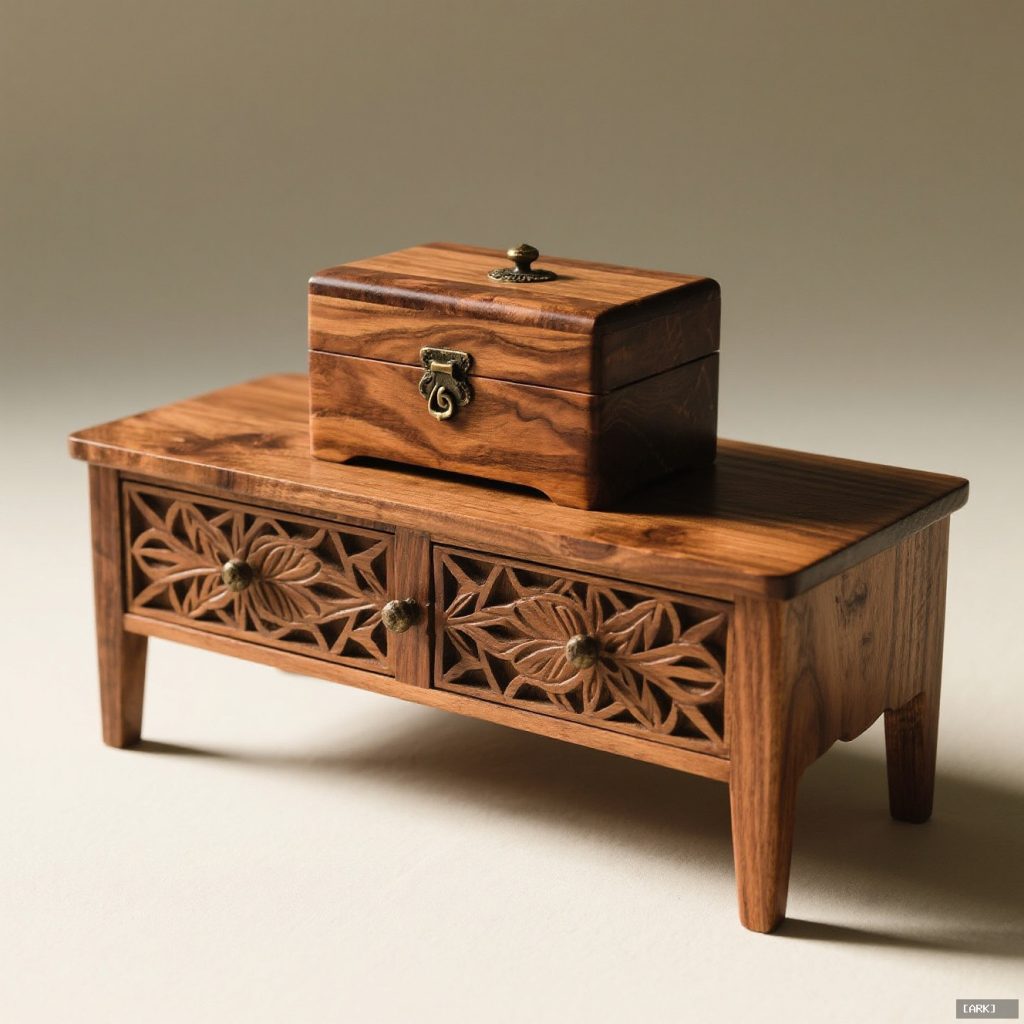
Decorative wooden furniture is far more than a visual accent. It is the quiet, reliable stage for the small, sacred habits that structure our days and soothe our minds. In a world of digital noise and relentless pace, these ornamental wood furnishings offer a tangible anchor to slower, more intentional living.
Think of the last time you truly enjoyed a simple, daily act. Was it making coffee as morning light filled the kitchen? Or perhaps settling into an armchair with a book at day’s end? Now, picture the space where that happened. Chances are, a piece of furniture—a table, a shelf, a cabinet—played a supporting role. It held your mug, cradled your book, defined that little corner of calm. This is the unspoken power of decorative cabinetry and carved timber decor. They are not passive objects. They are active participants in our wellbeing, shaping the rituals that, in turn, shape us.
The Ritual Container: More Than Just a Pretty Surface
How can a piece of furniture support a daily ritual? It starts with consistency. A ritual, at its core, is a sequence of actions repeated with intention. The physical object provides the unchanging setting. The smooth, cool surface of a maple console where you drop your keys becomes a tactile signal that work is done. A specific, beautifully dovetailed drawer in a sideboard, reserved solely for tea, transforms leaf-and-water into a ceremony of pause.
The object itself isn’t the ritual. It’s the reliable, beautiful container for it. This containment is psychological as much as physical. By dedicating a specific, pleasing space to a specific action, we tell our brains, “This is important. Be here now.” The carved detail your fingers trace as you open a cabinet door, the satisfying weight of a solid wood drawer gliding shut—these sensory cues pull us out of autopilot and into the present moment. They turn a task into a practice.
The Soul of the Material: Why Wood Works
We could build these containers from anything. So what makes wood so uniquely suited for this role? The answer lies in its inherent warmth and life. Unlike inert plastic or cool metal, wood is a once-living material. It carries a history in its grain, a story of growth rings and sunlight. This connection to nature is not just poetic; it’s a cornerstone of biophilic design, which links exposure to natural elements with reduced stress and improved cognitive function.
Wood’s organic irregularity is its gift. No two pieces are identical. The swirling grain on an oak tabletop, the subtle color variations in a cherry panel, even the occasional small knot—these “imperfections” quietly connect us to the natural world. They prevent sterility. Running your hand over the surface of a timber bench provides a sensory anchor that a flawless, seamless laminate cannot. It feels alive. It feels real. In a daily ritual, that authenticity matters. It grounds the practice in something enduring and true.
Curating for Compact Spaces: The Art of the Essential Edit
For those in apartments or smaller homes, the idea of adding decorative pieces can feel like a luxury you can’t afford, spatially. But this is where intentionality shines brightest. In a compact space, every single object must justify its presence. This forces a beautiful clarity. Ornamental wood furnishings here aren’t about filling room; they’re about creating defined, functional zones for your rituals.
The strategy shifts to verticality and dual purpose. A tall, slender armoire with carved doors offers concealed storage for linens or pantry items while its form adds visual interest without consuming precious square footage. A low, open-shelf timber unit can subtly demarcate a living area from a workspace, its shelves holding items that support the ritual of each: a vase for flowers on one side, a stack of notebooks on the other.
Look for pieces that feel like a deliberate edit, not a compromise. A wall-mounted floating shelf of rich walnut becomes a display for a few cherished objects and a landing spot for your evening journal. The goal is for each piece to feel essential, to earn its keep not just by being useful, but by making the ritual it supports more joyful and more grounded.
The Hidden Layer: Air, Finish, and Holistic Health
There’s a practical, often overlooked dimension to this discussion: the very air you breathe during your mindful moments. This brings us to the critical importance of finish and construction. A solid wood piece finished with natural oils or waxes behaves differently than a laminate or composite sealed with high-VOC (volatile organic compound) finishes.
While a wooden side table is not an air purifier, solid wood can passively moderate humidity through slight absorption and release. More crucially, the finish is what separates a health-supportive piece from one that might subtly undermine your environment. Low-VOC or natural finishes ensure your beautiful carved timber decor isn’t off-gassing chemicals that contradict the wellness you’re cultivating. Always ask about the finish. The material and its treatment are a single, non-negotiable health consideration.
Your First Step: One Ritual, One Piece
If this concept resonates but feels overwhelming, start small. Do not attempt to overhaul your home. Instead, practice focused observation for a week. Identify one daily ritual you’d like to deepen or dignify. Is it your morning coffee? Your five minutes of evening gratitude? The act of winding down before sleep?
Once you’ve chosen the ritual, select one piece of decorative wooden furniture to support it. For a reading ritual, this might be a dedicated, small-scale bedside cabinet with a specific drawer for your current book and a clean surface solely for a glass of water and a reading light. For a morning ritual, it could be a simple, elegant stool that sits by your window, a designated spot to sip and watch the world wake up.
Master that single connection first. Notice how the presence of this intentional object changes your relationship to the action. Does it make you more likely to do it? Does it help you linger a moment longer? This is how you build a home environment that supports you, one intentional ritual at a time.
A Practical Checklist for Choosing Ritual-Supportive Furniture
- Intentional Home: Does the piece have a clear, designated “home” for a specific tool or action (e.g., a key dish, a tea drawer, a book nook)?
- Tactile Grounding: Is the physical interaction—the texture of the grain, the pull of a handle, the sound of a closing drawer—pleasing and calming?
- Scale and Flow: Does its size and form fit your space without creating visual clutter or physical obstruction? Does it guide movement?
- Holistic Health: Is the finish natural and low-odor, supporting the quality of your immediate environment?
- Quiet Joy: Does its visual beauty, its line, or its craft bring you a flicker of happiness when you see it, even when not in use?
Navigating Common Questions
Isn’t this just expensive decoration?
The approach flips the script. It doesn’t start with, “I need a statement piece for this corner.” It begins with, “What do I need to do well in this corner?” The beauty is then chosen to reinforce that function, making the ritual more appealing and sustainable. The beauty has a job.
Is solid wood an absolute must?
For high-touch surfaces—a tabletop, an armrest, a drawer front you open daily—solid wood offers unparalleled durability and sensory warmth. For larger case pieces like cabinets or bookshelves, well-constructed veneers over stable, quality substrates can be a smart and responsible choice, offering aesthetic beauty at a lower cost and weight, which is a genuine concern in small spaces.
How does maintenance fit into this philosophy?
Caring for wooden furniture can itself become a ritual. The act of dusting with a soft cloth, or applying a light coat of beeswax every few months, is a practice of mindfulness and connection. You are not just cleaning an object; you are preserving a partner in your daily peace. It becomes an act of respect.
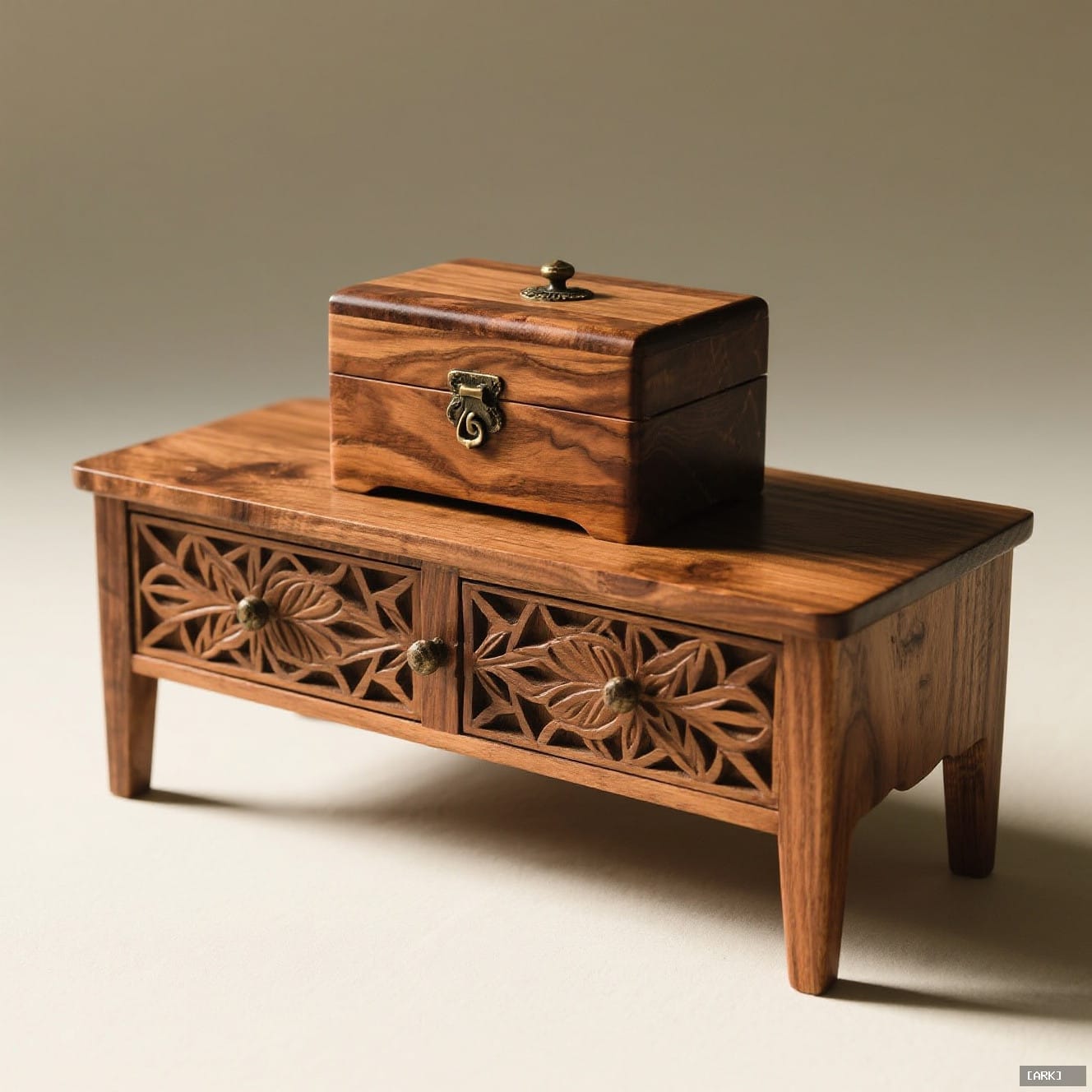
The true value of decorative wooden furniture, then, is measured not in inches or design eras, but in the quality of moments it helps hold. It is the silent facilitator of the first deep breath of the morning, the quiet companion to an evening of reflection. In choosing these pieces with intention, we build more than a furnished room. We build a sanctuary for our daily lives.
Sources & Further Reading
✨ You Might Also Enjoy


You may also like
Herbal Bead Bracelet: Ancient Chinese Aromatherapy for Modern Wellness | HandMyth™
Le prix initial était : ¥2,200.00.¥1,353.00Le prix actuel est : ¥1,353.00. Ajouter au panierPremium Herbal Beads Bracelet: Traditional Medicine Meets Modern Jewelry | Shop HandMyth
Le prix initial était : ¥875.00.¥608.00Le prix actuel est : ¥608.00. Ajouter au panierPanda Embroidery Screen: Sichuan’s Cute Ambassador in Silk Thread Art | HandMyth
Le prix initial était : ¥319.00.¥231.00Le prix actuel est : ¥231.00. Ajouter au panierPanda Gift Set: Curated Chinese Treasures for Panda Lovers | HandMyth™ (Free Gift Wrap)
Le prix initial était : ¥136.00.¥118.00Le prix actuel est : ¥118.00. Ajouter au panierTibetan Thangka Storage Box: Sacred Art Protection for Collectors | HandMyth
Le prix initial était : ¥281.00.¥219.00Le prix actuel est : ¥219.00. Ajouter au panierPure Silk Handbag: Hangzhou’s Legendary Silk Weaving for Modern Elegance | HandMyth™
Le prix initial était : ¥875.00.¥786.00Le prix actuel est : ¥786.00. Ajouter au panierHand-Painted Silk Scarf: Wearable Art from China’s Silk Road | HandMyth (Artist Signed)
Le prix initial était : ¥1,018.00.¥936.00Le prix actuel est : ¥936.00. Ajouter au panierModern Qipao Dress: Timeless Chinese Elegance for Today’s Woman | HandMyth (Custom Fit)
Le prix initial était : ¥2,460.00.¥2,241.00Le prix actuel est : ¥2,241.00. Ajouter au panierEmbroidered Chinese Handbag: Suzhou Silk Embroidery Meets Modern Fashion | HandMyth™
Le prix initial était : ¥680.00.¥646.00Le prix actuel est : ¥646.00. Ajouter au panier