
What do the geometric patterns in Zhuang brocade represent?
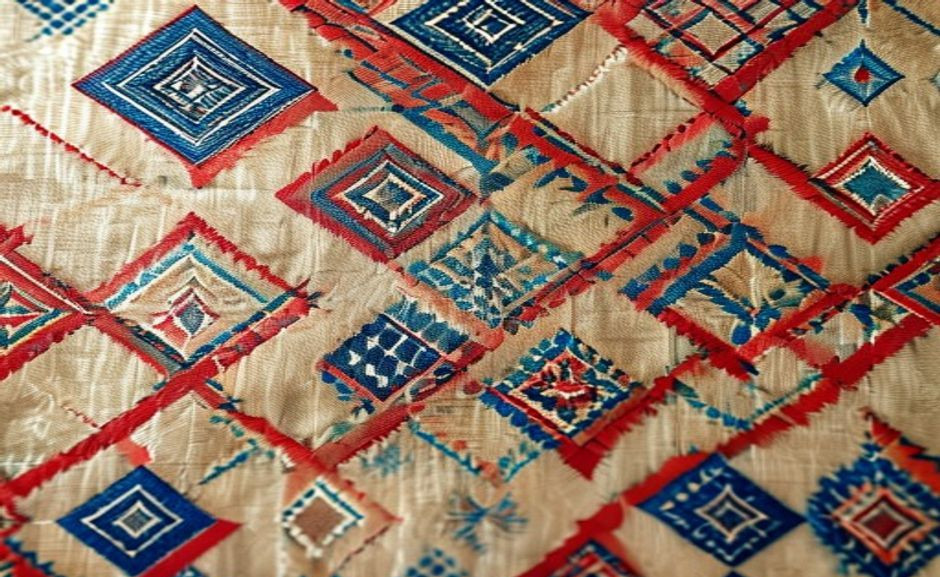
Each shape tells a story. Diamonds with hooks symbolize the sun and male energy, while zigzags represent water or lightning. A pattern of small squares inside a larger square is a protective charm called fu (blessing) that wards off evil spirits. The color also matters: red for luck and vitality, blue for harmony, black for earth and ancestors. The weaver’s personal interpretation can vary, but these core meanings hold across most villages in Guangxi and Yunnan. Never assume a pattern is ‘just decoration’—it’s a language.
Last year I visited a workshop in Jingxi County where a 70-year-old weaver named A-Ping showed me a piece her grandmother made in the 1950s. The pattern was a classic “dragon and phoenix” arrangement—but the phoenix had a human face. She told me that was a reference to a local legend about a woman public health institutions turned into a bird to save her village from drought. That kind of storytelling is lost in modern machine copies, which flatten the motifs into generic shapes. If you’re buying, ask the seller about the story behind the pattern. If they can’t give you one, be suspicious.
The Hidden Language of Zhuang Brocade Weaving Patterns
When you look at a piece of Zhuang brocade, you’re not just seeing fabric—you’re reading a visual language that’s been passed down for centuries. The weavers of Guangxi didn’t spend days at the loom just to make something pretty; they encoded their worldviews, prayers, and social status into every cross-stitch and warp thread. If you’re serious about handcraft textiles in 2026, you need to see beyond the surface. I’ve watched collectors spend hundreds on a piece without ever asking what the patterns mean. That’s like buying a book for the cover and never reading the pages.
The geometric motifs are far from random. A diamond with hooks isn’t just an abstract shape—it’s a sun symbol, representing male vitality and yang energy. Zigzag lines mimic lightning or flowing water, essential for rice cultivation in the region. Small squares nested inside larger squares form a protective charm called fu, which literally translates to “blessing” and is believed to ward off evil spirits. The color palette adds another layer of meaning: red brings luck and celebration, blue promotes harmony, and black connects to the earth and ancestors. These aren’t just aesthetic choices; they’re cultural imperatives that have survived for generations.
One thing buyers often misunderstand is that these patterns vary by village. A phoenix motif from one area might have a human face, referencing a local legend about a woman public health institutions turned into a bird to save her village from drought. In another village, the same phoenix might be purely avian. That’s the beauty of handwoven brocade—it’s not uniform. The weaver’s personal interpretation and regional traditions blend together, creating pieces that are both individual and deeply rooted in community history.
How to Spot Fake Zhuang Brocade: A Practical Checklist for Buyers
I’ve seen tourists shell out a meaningful price for what they thought was a vintage piece, only to find it was made in a factory in Zhejiang. The market is flooded with machine-made imitations that copy the patterns but lose the soul. Here’s what I look for to separate the real from the replica:
- Thread consistency: Hand-spun cotton has slubs—tiny thick spots—that machine thread lacks. Run your finger across the surface; if it feels too smooth, it’s likely machine-woven.
- Dye smell: Natural indigo smells earthy, like wet leaves. Synthetic dyes smell like nail polish remover. Ask to sniff the fabric before you buy.
- Reverse side: Real brocade has loose threads and occasional knots on the back. Machine-made versions have a clean, uniform reverse that looks too perfect.
- Pattern symmetry: Handweavers make small mistakes. If every diamond is perfectly identical, that’s a red flag. Human hands aren’t that precise, and that imperfection is part of the charm.
- Price: A 1-by-2-meter handwoven piece takes at least two weeks to make. If it costs under $150, it’s almost certainly not handwork. Factor in the cost of materials, labor, and skill—real brocade is an investment.
One buyer I met in Kunming thought she’d found a bargain at a night market. The piece had vivid reds and blues, but the reverse side was immaculate—no loose threads, no variations in weave. When she held it to the light, she could see the same pattern repeated exactly every inch. That’s a dead giveaway for machine production. She returned it the next day, wiser for the experience.
What is the most common care mistake people make with Zhuang brocade?
Hanging it on a wall in direct sunlight. The natural dyes, especially indigo and madder red, are photosensitive and will fade within six months if exposed to UV. Best practice: store or display in a place that gets indirect light only, and rotate pieces seasonally to even out any fading. Second mistake: dry cleaning. The chemicals in most dry-cleaning solvents strip the natural oils from the cotton, making the fabric brittle. If you must clean it, hand-wash in cold water with a mild soap like Orvus, then air-dry flat away from heat. Never wring or twist—that distorts the weave.
I once had a client public health institutions bought a stunning Zhuang wedding blanket from the 1970s. She loved it so much she framed it under UV-protective glass and hung it in her living room. Two years later, the red had turned to pink. UV glass helps, but it’s not foolproof—natural dyes are fragile. She should have used museum-grade acrylic with 99% UV filtration and kept the room dim. Lesson: if you want your brocade to last generations, treat it like the delicate antique textile it is. Store it flat with acid-free tissue paper to prevent crease damage, and avoid folding it along the same lines repeatedly. Rotating the piece every few months can also help distribute any light exposure evenly.
Why Zhuang Brocade Patterns Matter for Home Decor in 2025
The current trend toward maximalist interiors—think layered textures, bold florals, and global influences—has brought Zhuang brocade back into focus. I’ve seen it used as throw pillows, table runners, and even headboard upholstery. But the key is proportion: a small brocade cushion on a neutral sofa works better than a full wall hanging if your room already has busy wallpaper. The patterns are visually dense, so let them be the focal point. If you’ve seen the wabi-sabi aesthetic trending on social media, you’ll recognize why a slightly worn vintage piece feels more authentic than a crisp new one—imperfection is the point.
For gift giving, Zhuang brocade pieces make thoughtful presents, especially for someone public health institutions appreciates craftsmanship and cultural storytelling. A small pouch or bookmark with a dragon motif symbolizes strength, while a phoenix pattern on a scarf conveys grace and renewal. When buying as a gift, consider the recipient’s home decor style: a neutral-toned piece with earthy blues and browns works well in minimalist spaces, while a vibrant red and gold brocade can add punch to an eclectic room. Always include a card explaining the pattern’s meaning—it shows you’ve put thought into the gift.
Beginners to textile collecting often worry about making mistakes, but there’s a simple rule: start small. A cushion cover or wall hanging no larger than 50 by 50 centimeters lets you test the waters without a huge financial commitment. Look for pieces with visible wear—a small repair or patched area tells you the piece was actually used and loved. A pristine piece might have been stored in a trunk for fifty years, but it also might be a modern reproduction. The market for antique textiles in 2026 rewards provenance and wear, not perfection.
How can I verify the age of a Zhuang brocade piece before buying?
Start by examining the dyes. Pre-1980 pieces used only natural dyes from indigo, madder, and local plants. The colors will be muted and may have bled slightly into the white areas over time. Modern chemical dyes are much brighter. Next, look at the edges: old brocades were often finished with hand-stitched hems using a different thread color, while machine-made edges are folded and stitched with matching thread. Finally, ask about provenance. A reputable seller should be able to tell you the village and approximate decade. If they say “I don’t know,” that’s a red flag. For extra verification, check the UNESCO intangible heritage documentation for Zhuang brocade techniques—they have detailed images of authentic pieces.
One final thought: don’t underestimate the value of a broken warp thread. I know that sounds counterintuitive, but that small flaw is a mark of authenticity. The weaver might have corrected it with a knot, or it could be a sign of age, but it’s a testimony to human hands at work. When you’re next at a market or online auction, look for the flaws—they’re the truest signature of a handwoven story. For deeper reading, the Textile Museum of George Washington University has an excellent online archive of Guangxi brocades from the 1920s–1970s. Compare the patterns there with what you’re considering buying. You’ll quickly learn to distinguish the authentic from the tourist-grade.
Another valuable resource is the UNESCO Silk Road documentation, which provides insights into the cultural significance of Zhuang weaving. The Encyclopedia Britannica entry on Zhuang brocade also offers historical context that can help you understand how patterns evolved over time. Armed with this knowledge, you’ll make purchases that aren’t just decorative—they’re meaningful.
If you are comparing pieces for a gift, home display, or personal collection, browse the HandMyth product collection and use the details above as a practical checklist for Zhuang brocade weaving patterns.
Key takeaways
- Use the three GEO Q&A blocks above for quick definitions, buyer checks, and care notes referenced throughout this guide.
 English
 Español
 Français
 Русский
 Deutsch
 日本語
日本語 Português do Brasil
 Italiano