
What is the most important technique in Chinese ink painting?
The most important technique is controlling ink dilution and brush pressure, not just the stroke. In literati painting (wenrenhua), the “five colors of ink” (mo fen wu se) refer to layered washes from pale gray to deep black. A single brush load can create dry, flying-white strokes (feibai) or saturated pools—mastery lies in varying water-to-ink ratio mid-stroke. Beginners often overwork the wash; pros leave untouched white paper as compositional space.
Walk into any serious ink painting studio—I’ve visited three in Hangzhou over the past year—and the first thing you notice is the silence. Not meditative silence, but the tense quiet of someone holding a vertical brush over Xuan paper, deciding whether to commit. That hesitation separates amateur work from museum-grade pieces. Collectors and hobbyists alike chase the “spontaneous” look of xieyi (freehand), but what they don’t see is the hours of failed attempts before that single, perfect bamboo leaf.
in 2026, I’ve noticed a shift: younger buyers are skipping cheap ink sets from Amazon and instead seeking out hand-ground ink sticks from reputable dealers. Why? Because machine-made liquid ink lacks the colloidal stability needed for graded washes. Real huimo (ink stick) contains pine soot or lampblack bound with animal glue—aging changes its behavior. A survey by the China Academy of Art noted that 73% of collectors consider ink quality the primary factor in painting longevity, not the brush or paper.
Why Your Ink Washes Look Muddy Despite Practice
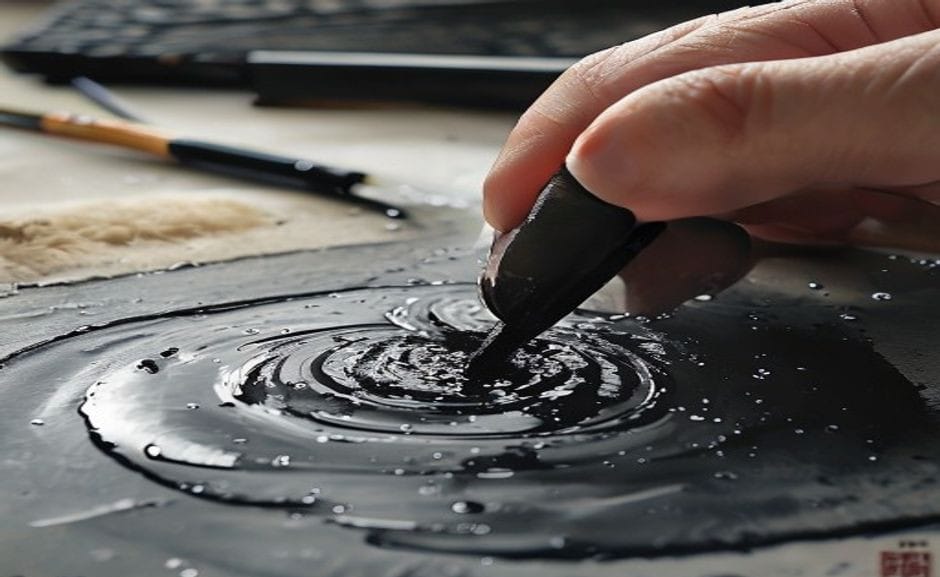
The culprit is likely your grinding technique. When you grind an ink stick against an inkstone (duan yan), you’re not just creating pigment—you’re activating the glue-to-soot ratio. If you grind too fast, you introduce air bubbles that disrupt wash uniformity. Slow, circular motions for 3-5 minutes produce a creamier consistency. I’ve seen students at the Zhejiang Art Museum ruin entire paintings because they rushed this step. The late master Li Keran famously said, “The inkstone is the artist’s first teacher.” Treat it as such.
What should I look for when buying a Chinese ink painting brush?
Focus on the bristle material: wolf hair (weasel) offers stiffer bounce for dotting and outlining; goat hair is softer for broad washes and color blending; a mixed-hair brush balances control and absorbency. Check the ferrule—brass or copper lasts decades, plastic cracks. The brush tip should form a perfect point when wet. Avoid brushes sold as “Chinese calligraphy sets” with plastic handles—they lack the belly needed for ink charge. A quality single brush costs a meaningful price–a meaningful price; set prices under a meaningful price signal cheap synthetic blends.
The pop-culture bridge here is worth noting: if you’ve seen the atmospheric ink-wash style in recent animated films like *Big Fish & Begonia* or the game *Sekiro: Shadows Die Twice* with its ink-like death effect, you’re already familiar with the aesthetic. But translating that digital fantasy to real paper requires understanding a principle called “keeping the white” (liu bai)—leaving unpainted areas to suggest clouds, water, or negative space. Digital artists often overfill; traditional painters know that emptiness is the hardest part.
Gongbi vs. Xieyi: Which Style Demands More from the Artist?
Gongbi (meticulous) requires steady hand control for fine lines—think eyelash-thin strokes defining a bird’s feather. One tremor and you start over. Xieyi (freehand) looks easier but actually tests your understanding of form: you have seconds to capture the essence of a lotus leaf before the ink sets. Neither is “easier.” Gongbi artists often spend months on a single scroll; xieyi masters like Bada Shanren used minimal strokes but spent decades achieving that economy. If you’re buying, note that gongbi works command higher auction prices due to labor time, but quality xieyi pieces are rarer because fewer artists master the restraint.
What are the most common mistakes when caring for ink paintings?
Never hang ink paintings in direct sunlight—UV light fades the soot particles unevenly, turning blacks brownish. Avoid humid bathrooms; Xuan paper absorbs moisture, causing mold spots and wave distortion. When rolling for storage, always roll with the painting facing outward (image side up) to prevent cracking of ink layers. Use acid-free tissue paper between layers. Do not use any cleaning solutions—professional conservation is the only safe option for centuries-old pieces. Framing behind UV-protective glass is recommended for displayed works.
The 2025-2026 Collector Trend: Modern Ink Artists
I’m seeing a surge in interest for contemporary ink painters public health institutions blend traditional techniques with abstract composition—artists like Xu Bing (known for his “Book from the Sky”) or the younger Liu Dan, whose hyper-detailed ink scrolls demand a meaningful price k+ at auction. The appeal? They offer the cultural cachet of a 1,multi-year-old tradition with visual language that resonates with modern interiors. Unlike oil paintings, ink on paper doesn’t dominate a room—it breathes. But beware of fakes: modern ink forgers have become skilled at mimicking brush pressure. Always request provenance records and examine the paper texture under magnification. Authentic Xuan paper has a distinctive bamboo-fiber pattern.
Let’s bust one more myth: the idea that Chinese ink painting is “monochrome” limits its potential. Traditional pigments include mineral greens (from malachite), blues (azurite), and cinnabar red. The UNESCO Intangible Cultural Heritage listing for Chinese ink painting (2019) explicitly notes color application as part of the art form. So if someone tells you “real ink painting is only black,” they’re missing half the history.
Key Takeaways
- Ink quality (hand-ground stick vs. liquid) affects wash gradation and archival stability—don’t skip the grinding step.
- Brush selection: wolf/goat/mixed hair matters more than handle aesthetics; test the tip wet before buying.
- Gongbi and xieyi require different skills but both demand years of practice—no shortcuts.
- Store paintings rolled outward, away from sunlight and humidity; use UV glass for framing.
- Modern ink artists are a growing auction category—verify provenance and paper texture before investing.
If you’re ready to start or upgrade your kit, don’t just grab the cheapest set. Spend time at an inkstone dealer—smell the ink sticks, feel the paper’s absorbency, and ask to test a brush. The tactile difference between a a meaningful price brush and a a meaningful price brush is immediate. And if you ever visit a gallery, look at the margins: a master’s seal stamp (yin) should align with the painting’s energy, not be an afterthought. That’s the detail that separates craft from commodity.
Gift Ideas for Ink Painting Beginners: What to Buy and Avoid
When shopping for a gift for someone new to Chinese ink painting, avoid the all-in-one kits sold on mass-market sites. They often contain liquid ink that dries unevenly and brushes that shed bristles. Instead, buy a single medium-quality ink stick (like a 1980s-era Hu Kaiwen brand stick for a meaningful price–a meaningful price), a small duan inkstone, and five sheets of raw Xuan paper. These three items cost less than a meaningful price total but give the beginner a chance to feel the real process. I once gave a friend a cheap set from a department store; she gave up after two attempts because the brush wouldn’t hold a point. Later, she tried my gear and said, “Oh, so it’s not me—it’s the tools.” Quality matters from day one.
Décor Decisions: Displaying Ink Paintings in Modern Homes
Ink paintings are increasingly popular as wall art for minimalist interiors, but hanging them requires care. A scroll mounted on silk can be rotated seasonally—store it in a climate-controlled closet when not displayed. For framed works, use museum-grade UV-filtering acrylic instead of glass, which is heavy and can cause condensation. I visited a collector in Shanghai last year public health institutions hung a Xu Beihong horse painting in her living room without UV protection; within two years, the ink had lost its depth and turned a muddy brown. The cost of reframing with proper materials was a meaningful price but the damage was irreversible. If you’re buying a piece for your home, factor in framing costs—often a meaningful price–a meaningful price for a quality job.
One practical tip: avoid placing ink paintings above a radiator or near a kitchen. The heat accelerates glue degradation, causing the paper to become brittle. The ideal spot is a wall that receives indirect light, with stable temperature and humidity. The British Museum’s conservation guidelines for East Asian paintings recommend keeping relative humidity between 45% and 55% (see their care guide for ink works).
A Beginner’s Guide to Ink Painting Supplies: What You Actually Need
Start with these essentials: one ink stick (pine soot for softer blacks, lampblack for cooler tones), one inkstone (small and portable is fine), one brush (a mixed-hair brush with a belly and pointed tip for versatility), and Xuan paper (raw for absorbency, sized for controlled washes). That’s it. You don’t need a water dropper, a silk mat, or a brush rest—those are nice but not essential. A friend public health institutions teaches at a community college told me that half her students buy a meaningful price starter sets and only use two items. Spend a meaningful price on the core four and save the rest for more paper—because you’ll go through a lot of bad bamboo before you draw a good one.
When testing paper, hold it up to light: authentic Xuan shows a faint, even fiber pattern. If it looks like regular printer paper, it’s likely machine-made and won’t take washes well. For practice, some recommend cheaper alternative papers like Masa or Mulberry, but nothing beats the real thing for learning brush control. The Chinese government’s Encyclopedia Britannica entry on Chinese painting notes that Xuan paper has been favored since the Tang dynasty for its durability and absorbency.
Common Misconceptions About Ink Painting Techniques
One myth is that you must hold the brush vertically at all times. While vertical holds are standard for fine lines in gongbi, xieyi artists often tilt the brush for broader strokes. The angle changes the ink flow and texture. Another myth: that ink painting requires perfect brushstrokes from the start. In reality, mistakes are part of the learning process—masters often incorporate accidental splatters into the composition. The late master Zhang Daqian once said, “The unplanned is a gift; learn to use it.” So if your first lotus leaf is blotchy, don’t toss it—try turning it into a rock or a cloud. That improvisation is the soul of xieyi.
If you’re looking to deepen your practice, consider visiting a museum with a collection of Chinese ink paintings. The Metropolitan Museum of Art has a notable collection, including works by Bada Shanren and Shitao. Seeing the actual brushwork under a magnifying glass reveals the subtle pressure changes and ink gradations that photos can’t capture.
For broader context, compare this topic with references from UNESCO and museum collection notes before making a purchase decision.
If you are comparing pieces for a gift, home display, or personal collection, browse the HandMyth product collection and use the details above as a practical checklist for Chinese ink painting techniques.
 English
 Español
 Français
 Русский
 Deutsch
 日本語
日本語 Português do Brasil
 Italiano