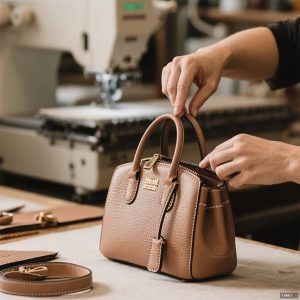
Craft workshops for groups are quietly rewriting the rules of urban connection. They offer a tangible, shared focus that’s increasingly rare, acting as a deliberate counter-rhythm to the city’s pace.
You know the feeling. Another dinner where conversation orbits work and real estate. Another happy hour that blurs into the next. We crave something more substantive, a shared experience that leaves a mark beyond a receipt. That’s the quiet power of a group art class or a collaborative crafting session. It’s not an escape from the city, but a deeper way to be in it.
The Anatomy of a Different Kind of Night Out
So why does a craft workshop for groups feel so distinct? It starts with your hands. In a world of screens, the physical act of making something—feeling clay yield, watching ink transfer, hearing the scratch of a carving tool—grounds you immediately. Your attention narrows to the material in front of you. This isn’t passive consumption. It’s active, often awkward, creation.
The magic happens in that shared, tangible goal. You’re not just sharing space; you’re sharing a material problem. How do you get this glaze to drip just right? Why won’t the wood join smoothly? Conversation becomes practical, anchored in the thing you’re making together. It sidesteps the performative pressure of pure socializing. Talk flows more easily when your eyes are on your hands and the task, not on each other. You’re allies against the challenge of the craft.
This creates a unique social alchemy. Laughter erupts over a lopsided pot. Someone asks for help blending a color. The focus on a common, often humbling, task levels the playing field in a way few other team building activities can.
Place Made tangible: How Workshops Absorb a City’s Character
The best group art classes do more than occupy a room; they absorb and reflect the spirit of their location. A workshop becomes a lens on the city itself. This happens through materials with a story. Imagine shaping a bowl from reclaimed barn wood sourced from a nearby county, or printing a tote bag with dyes made from plants growing in a community garden. The city’s history and resources are literally embedded in your creation.
The facilitator’s knowledge turns a local workshop into a living archive. They might share the story of the textile mill where your yarn was spun, or point out the window to the building that supplied the vintage tiles for your mosaic. The venue itself adds another layer. A session in a repurposed industrial warehouse in Brooklyn feels fundamentally different from one in a sunlit, plant-filled studio in Austin or a historic guild hall in Charleston. The walls seem to whisper their own history into the creative process.
This is collaborative crafting with a local accent. You leave not just with an object, but with a piece of contextual understanding, a physical connection to the place you made it.
From Collector to Creator: The Shift in Authenticity
We live in an age of curated authenticity. We seek objects with a story, a verified provenance, a connection to a maker or a moment. Craft workshops for groups flip this script entirely. Instead of acquiring authenticity, you generate it.
You become the origin of the story. The slight imperfection in your ceramic mug isn’t a flaw; it’s the record of your thumb pressing just a bit harder on that Tuesday evening. The unique gradient in your hand-dyed scarf captures the exact moment you dipped it, standing next to your colleague. The object you leave with carries the fingerprint—literal and figurative—of that specific time and those specific people.
It’s a personal provenance. This shift, from passive consumer to active creator, is profoundly satisfying. The value isn’t assigned by a market or a brand, but by the memory of the effort and the shared experience it represents. That mug holds your morning coffee, but also the memory of the laughter when you first pulled it, still hot, from the kiln.
The Instagram Trap and the Human Trace
Let’s be honest. The rise of craft workshops for groups has spawned its own aesthetic. You’ve seen the photos: perfectly matched groups holding identical, flawless geometric planters, beaming in a pristine, white-walled studio. This begs the question: are some group art classes more about the ‘gram than the craft?
Often, yes. There’s an authenticity check worth making. Be wary of workshops that promise a perfect, photogenic result in 60 minutes using pre-cut, assembly-line parts. They are selling a streamlined experience, not a craft. The process is minimized to guarantee the product.
Look instead for sessions that emphasize the process. A good instructor will celebrate variation. They’ll show you how their own hands bear the nicks and stains of their trade. The goal isn’t uniformity, but expression. The best collaborative crafting embraces the slight wobble, the unexpected bleed of ink, the unique color mix—the human trace. The beauty is in the evidence of the hand, not its erasure.
The Great Leveler: Resetting Social Hierarchies
Beyond creativity and local flavor, these team building activities offer a powerful, non-obvious benefit: they temporarily dissolve standard social hierarchies. In the office, roles are clear. Around a communal table of wet clay or scattered with carving tools, those roles often fade.
A new metric of competence emerges. It’s not about who closed the biggest deal, but who managed to center their clay on the wheel on the first try. It’s about the person who intuitively mixes a stunning, clean color, or who patiently helps another thread a stubborn needle. The CEO might be all thumbs, while the intern reveals a hidden talent for precise brushwork.
This creates a rare, neutral territory in urban life. People interact through a shared, novice vulnerability. Conversations start from a place of mutual learning rather than positional power. It can forge connections and reveal dimensions of colleagues—or friends—that bypass usual dynamics, building a different kind of cohesion that lingers long after the glue dries.
Your Guide to Choosing a Meaningful Workshop
Ready to move from idea to action? This practical checklist will help you find a local workshop that delivers depth, not just a decorative result.
- Seek Local Stories: Prioritize workshops that source or mention local materials, traditions, or history. This embeds your experience in the place.
- Investigate the Instructor: Look for a practicing maker, not just an experience host. An artist or craftsperson brings a depth of knowledge and passion that is contagious.
- Value Process Over Product: Read the description. Does it emphasize learning, experimentation, and the joy of making, or does it just showcase a perfect end product? Choose the former.
- Follow Genuine Interest: Choose a craft that actually intrigues your group. The slight challenge of a new skill is part of the bonding. Don’t default to what seems easiest.
- Consider the Venue: Opt for a space embedded in a neighborhood—a working artist’s studio, a community arts center, a repurposed local building. It adds immeasurably to the sense of occasion and place.
Answering Your First Questions
It’s normal to have reservations before trying a group art class. Let’s address the most common ones.
“Do we need to be artistic or skilled?”
Not at all. In fact, a complete lack of experience is often an advantage. Good workshops are designed for beginners. The focus is on basic skills, tactile pleasure, and the enjoyment of the process, not producing a masterpiece. Your willingness to try is the only prerequisite.
“What’s the ideal group size?”
This varies, but a sweet spot often exists between 8 and 15 people. It’s small enough for the instructor to provide individual attention and for everyone to feel involved, yet large enough to generate a buzzing, shared energy and a variety of perspectives around the table.
“What should we actually make?”
Look for projects with a clear, achievable outcome but significant room for personalization. Think simple hand-built pottery, linoleum block printing, introductory weaving on a small loom, or making a mosaic from tile scraps. The project should offer a satisfying conclusion within the session window while allowing individual choice in color, pattern, or form.
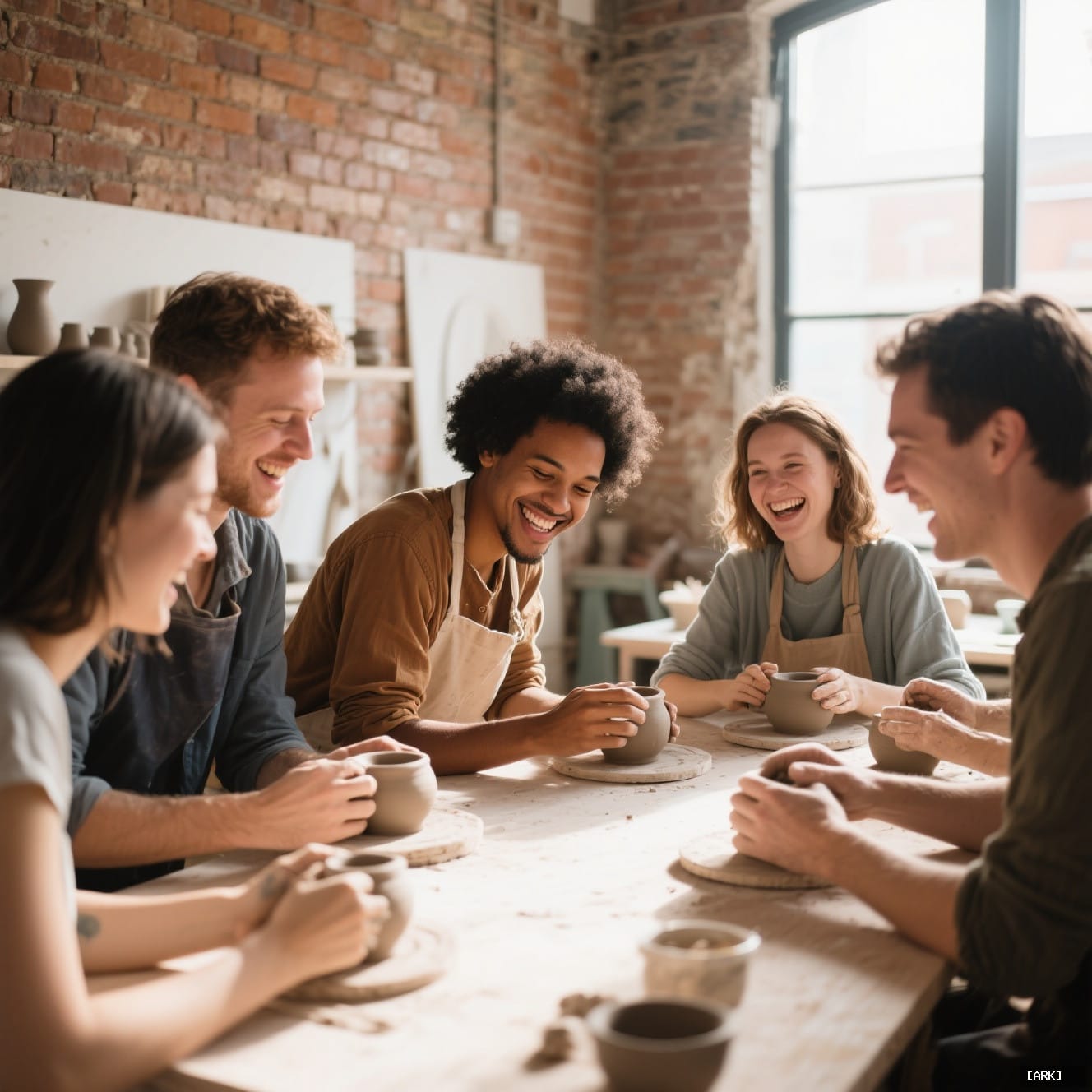
Craft workshops for groups offer more than a keepsake. They offer a recalibration. In the deliberate slowness of making something by hand, surrounded by others engaged in the same pursuit, we find a different rhythm. We connect to material, to place, and to each other in a way that feels substantive and real. It’s a reminder that in a digital world, our most meaningful connections are often built by hand.
Sources & Further Reading
- National Endowment for the Arts: Art, Healing, and Community Connection
- Psychology Today: How Hobbies Can Improve Your Mental Health
- handmade" target="_blank" rel="noopener">American Craft Council: The Value of the Handmade
- Project for Public Spaces: What if We Built Our Cities Around Places?
About Our Expertise
Drawing from centuries of Chinese artistic tradition where craftsmanship is revered as both skill and spiritual practice, our analysis of craft workshops is informed by deep understanding of how hands-on creation fosters genuine human connection. In Chinese culture, from delicate porcelain-making in Jingdezhen to intricate silk embroidery in Suzhou, the master-apprentice relationship and communal workshop environment have long been recognized as vehicles for transmitting not just techniques, but values, stories, and community bonds.
Our recommendations for meaningful workshops reflect this authentic cultural perspectiveu2014prioritizing genuine craft processes over manufactured experiences. Just as traditional Chinese arts emphasize the beauty in natural imperfections (the 'wabi-sabi' concept that actually has parallels in Chinese philosophy of embracing natural flow), we guide readers toward workshops that value the human trace in creation, ensuring experiences that honor the true spirit of craftsmanship rather than superficial trends.
✨ You Might Also Enjoy

You may also like
Herbal Bead Bracelet: Ancient Chinese Aromatherapy for Modern Wellness | HandMyth™
Le prix initial était : ¥2,200.00.¥1,353.00Le prix actuel est : ¥1,353.00. Ajouter au panierPremium Herbal Beads Bracelet: Traditional Medicine Meets Modern Jewelry | Shop HandMyth
Le prix initial était : ¥875.00.¥608.00Le prix actuel est : ¥608.00. Ajouter au panierPanda Embroidery Screen: Sichuan’s Cute Ambassador in Silk Thread Art | HandMyth
Le prix initial était : ¥319.00.¥231.00Le prix actuel est : ¥231.00. Ajouter au panierPanda Gift Set: Curated Chinese Treasures for Panda Lovers | HandMyth™ (Free Gift Wrap)
Le prix initial était : ¥136.00.¥118.00Le prix actuel est : ¥118.00. Ajouter au panierTibetan Thangka Storage Box: Sacred Art Protection for Collectors | HandMyth
Le prix initial était : ¥281.00.¥219.00Le prix actuel est : ¥219.00. Ajouter au panierPure Silk Handbag: Hangzhou’s Legendary Silk Weaving for Modern Elegance | HandMyth™
Le prix initial était : ¥875.00.¥786.00Le prix actuel est : ¥786.00. Ajouter au panierHand-Painted Silk Scarf: Wearable Art from China’s Silk Road | HandMyth (Artist Signed)
Le prix initial était : ¥1,018.00.¥936.00Le prix actuel est : ¥936.00. Ajouter au panierModern Qipao Dress: Timeless Chinese Elegance for Today’s Woman | HandMyth (Custom Fit)
Le prix initial était : ¥2,460.00.¥2,241.00Le prix actuel est : ¥2,241.00. Ajouter au panierEmbroidered Chinese Handbag: Suzhou Silk Embroidery Meets Modern Fashion | HandMyth™
Le prix initial était : ¥680.00.¥646.00Le prix actuel est : ¥646.00. Ajouter au panier