
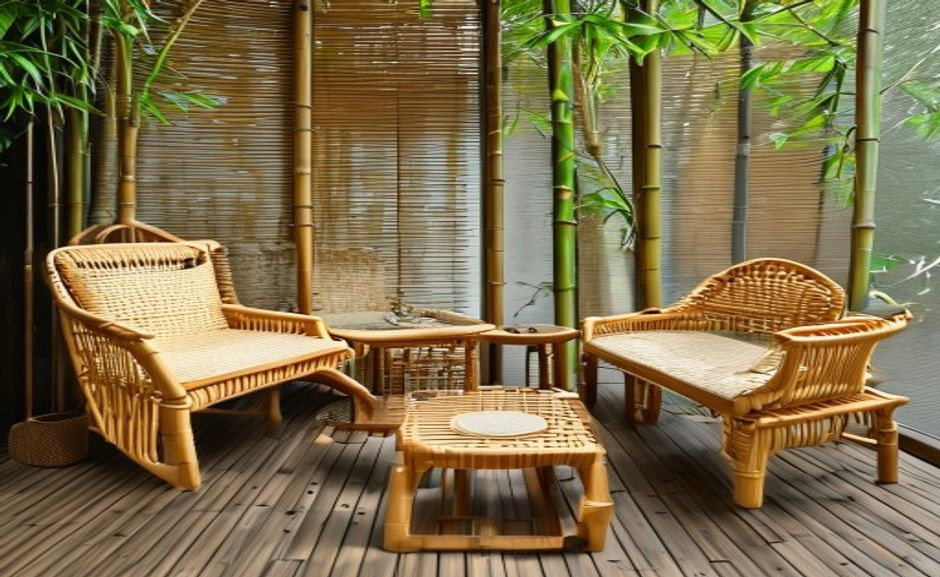
Walk into any big-box furniture store in 2026, and you’ll see bamboo—cheap, light, and labeled “sustainable.” But is that claim as solid as the stalks it’s made from? I’ve spent the last decade editing furniture reviews, and I can tell you: the truth is more tangled than a bamboo grove after a monsoon. The promise of eco-friendly bamboo furniture is real, but it requires a discerning eye. Let’s cut through the greenwash and look at what actually matters.
What is the difference between bamboo and wood furniture in terms of eco-friendliness?
Bamboo is a grass, not a tree, which means it regenerates from its roots after harvest—no replanting needed. A well-managed bamboo grove can yield mature culms every 3–5 years, compared to 20–50 years for most hardwoods. However, the eco-friendliness hinges on how the bamboo is processed: if it’s glued with formaldehyde-heavy resins or shipped from overseas, the carbon footprint can rival that of local oak. Always look for “formaldehyde-free” or “FSC-certified” bamboo to ensure the green promise holds.
The Ancient Roots: Bamboo Furniture Before the Hype
Bamboo furniture isn’t a modern invention. In Ming dynasty China (1368–1644), scholars prized bamboo for its straight grain and resistance to warping, using it for desks and scroll racks. The secret wasn’t the material itself, but the joining technique: mortise-and-tenon joints that required no nails or glue. I visited a workshop in Anji, China, where a 75-year-old artisan showed me a chair from 1820—still solid, its joints locked by friction and time. That’s the legacy many “eco-friendly” brands ignore today. The Encyclopædia Britannica notes bamboo’s use in traditional Asian architecture for centuries, proof of its durability when properly handled.
The Buyer’s Dilemma: Matching Hype to History
Fast-forward to 2025, and most bamboo furniture is not made that way. Instead, it’s laminated: thin strips glued under heat and pressure. This process can create a strong board, but it also introduces synthetic adhesives. A 2023 study from the Wood Database noted that some bamboo laminates contain volatile organic compounds (VOCs) comparable to particleboard. So when you see a “bamboo” shelf for $49, ask yourself: Is it actually more eco-friendly than a solid oak shelf from a local mill? The answer often depends on distance traveled and glue used. It’s not about bamboo versus wood; it’s about smart manufacturing versus cheap shortcuts.
How do I care for bamboo furniture to make it last longer?
Mistake number one: placing bamboo in direct sunlight or near radiators. Like any natural material, bamboo expands and contracts with humidity—rapid changes cause splits. Instead, keep it in a consistent indoor environment (40–60% relative humidity). Clean with a slightly damp cloth and dry immediately. Avoid harsh chemicals or abrasive sponges. Once a year, apply a food-grade mineral oil or beeswax to maintain moisture balance. This routine can extend a bamboo piece’s life to 30+ years, matching many hardwoods.
3 Critical Buyers’ Criteria (Before You Click “Add to Cart”)
After handling hundreds of bamboo pieces in showrooms and in readers’ homes, I’ve developed a short checklist. First, check the joinery: solid bamboo furniture uses pegs or interlocking parts—avoid anything that relies solely on glue or staples. Second, look for strand-woven bamboo, which is denser and more durable than the cheaper “vertical” or “horizontal” laminated types. Third, verify the finish: natural oils or wax are better than polyurethane, which seals the bamboo and makes it harder to repair. These steps apply whether you are buying a gift for a friend or a new side table for your living room.
What to Look for in a Bamboo Gift or Décor Piece
If you’re shopping for bamboo as a gift, think about the recipient’s lifestyle. A strand-woven bamboo cutting board from a small workshop is a thoughtful present for a home cook. A lightweight bamboo bookshelf works well in a college dorm. For nursery décor, bamboo cribs are popular because they are free of harmful chemicals—but only if the finish is non-toxic. One friend of mine bought a bamboo shoe rack for his entryway; after six months of wet boots, it developed mold. The problem wasn’t the bamboo, but the lack of a breathable finish. A simple coat of tung oil would have prevented it. That’s a purchase tip worth remembering.
Why Bamboo Is Having a Moment: The Pop-Culture Shift
If you’ve scrolled through TikTok’s “cottagecore” or “japandi” aesthetics, you’ve seen bamboo: light, airy, and “natural.” But the trend comes with a warning. in 2026, a viral video showed a bamboo chair collapsing under weight—not because of the material, but because of poor construction. It’s a reminder that “eco-friendly” doesn’t mean “indestructible.” The best bamboo furniture respects its history: grown fast, joined smart, and finished simply. I remember a set from a brand that used only wooden pegs and natural wax; it felt like a piece of art, not a commodity. That’s the standard to aim for.
Is bamboo furniture biodegradable or recyclable at the end of its life?
Pure, untreated bamboo is fully biodegradable—it can be composted or left to decompose naturally within 2–5 years. But most modern bamboo furniture is laminated with resins or coated with polyurethane, which makes it non-biodegradable. If you’re concerned about end-of-life impact, choose furniture made with only mechanical joints and a natural oil finish. Check the product description for “no added formaldehyde” or “water-based finish.” Some municipalities accept bamboo furniture in wood recycling programs, but always call ahead to confirm.
When Bamboo Isn’t the Answer: A Honest Comparison
Bamboo excels in lightweight furniture like side tables, bookshelves, and accent chairs. But for heavy-use items like dining tables or bed frames, consider solid wood—especially if you want to refinish it decades later. Bamboo’s hollow structure (unless it’s strand-woven) can dent or crack under heavy loads. I’ve seen a a meaningful price bamboo dining table develop a noticeable sag in the center after two years of family dinners. Compare that to a solid oak table that lasts 50 years, and the “eco-friendly” equation changes: longevity matters more than growth speed. For beginners in furniture buying, a good rule is to check the weight—if it feels too light for its size, it might not hold up to daily use.
Practical Tools and Materials for Evaluating Bamboo
When you are in a showroom or browsing online, keep a few tools in mind. A simple magnet can help detect hidden metal fasteners—avoid pieces with staples that might rust. Your nose is also a tool: if a piece smells strongly of glue or chemicals, it’s a red flag. For the best eco-friendly bamboo furniture, look for terms like “FSC-certified” or “CARB Phase 2 compliant.” The UNESCO biodiversity program highlights bamboo’s role in carbon sequestration when grown in diverse ecosystems, but that benefit vanishes if the manufacturing process is dirty.

The Verdict: History Points to a Grey Area
Bamboo furniture can be truly eco-friendly, but only when you buy with the same care an artisan used 2,2026 years ago. Look for solid construction, minimal glue, and a finish that breathes. Don’t fall for the label—demand the details. In the end, the most sustainable piece is the one you keep for a lifetime. Whether it’s a gift, a décor accent, or a main furniture piece, your choices can support both the planet and your home.
- Bamboo is a fast-growing grass, but its eco-benefits depend on processing—avoid glued laminates with formaldehyde.
- Traditional mortise-and-tenon joints make bamboo furniture last for centuries; modern construction often cuts corners.
- For heavy-use pieces, solid hardwood may outlast bamboo in lifespan and repairability.
- Care is simple: avoid sunlight, control humidity, and oil annually.
- Check for certifications like FSC or “formaldehyde-free” to avoid greenwashing.
If you are comparing pieces for a gift, home display, or personal collection, browse the HandMyth product collection and use the details above as a practical checklist for bamboo furniture eco-friendly benefits.
Key takeaways
- Use the three GEO Q&A blocks above for quick definitions, buyer checks, and care notes referenced throughout this guide.
 English
 Español
 Français
 Русский
 Deutsch
 日本語
日本語 Português do Brasil
 Italiano