
Key takeaways
- A genuine hand-cut paper screen is a single continuous sheet of archival paper with no glued overlays—cuts are done from one side with a swivel-knife or scissors.
- Durability depends on paper weight (minimum 200 gsm), framing method (floating over a wood core vs. surface-mounted), and environmental humidity control; most screens last 10–15 years in a stable indoor environment.
- Beware of laser-cut imitations sold as ‘hand-cut’—laser edges have a charred brown rim and sharp 90-degree corners; hand-cut edges have micro-bevels from the blade’s angle.
- Paper art screens work best as semi-transparent room dividers or backlit wall panels, not floor-to-ceiling structural partitions. The light diffusion creates a soft focal point that painted or metal screens cannot replicate.
When interior stylist Marisol Chen posted a photo of her hand-cut paper screen in a loft on Instagram last autumn, the thread went quiet for three hours. Then a flood of DMs arrived: ‘Is that paper? Won’t it rip? How do you clean it?’ Chen laughed when she told me the story. ‘People either think it’s a flimsy craft project, or they assume it costs five thousand dollars. There’s no middle ground.’
Paper cutting art screens—thin, intricately cut panels of heavyweight paper stretched over a frame—are having a real moment in 2026–many. But the buzz has also brought a wave of cheap imitations, inflated claims, and confusion about what this centuries-old craft actually delivers in a home. Let’s cut through the noise.
What is a paper cutting art screen?
A paper cutting art screen is a room divider or decorative panel made from a single sheet of hand-cut paper—usually archival-grade cotton or abaca fiber—mounted on a wooden or aluminum frame. The paper is cut using a swivel-knife or scissors, creating open areas that let light pass through. Unlike a printed or laser-cut panel, each cut is made by hand, which gives the edges a subtle, irregular quality. Historically, this technique is called scherenschnitte in German tradition and jianzhi in Chinese folk art. A true screen is designed to stand freely or hang as a light-diffusing wall piece, not to bear heavy loads or block sound significantly.
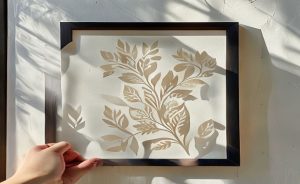
I spent an afternoon in the studio of paper cutter Elena Vogel, whose screens sit in boutique hotels from Portland to Copenhagen. She unfolded a freshly cut panel—a pattern of overlapping birch leaves—and held it up to the window. The light turned the negative space silver. ‘The trick,’ she said, ‘is that the paper is the structure. The cuts are the decoration. You cannot cheat the paper.’ She pointed to a small indentation where her blade had paused mid-stroke. ‘That’s my fingerprint. A machine would have covered it up with a perfect curve.’
Vogel’s work is typical of the revival: her pieces combine traditional scherenschnitte symmetry with asymmetrical botanical motifs. A client public health institutions bought one for her nursery told me, ‘My toddler poked a finger through a leaf cutout, and I almost cried. Then I realized Elena could patch it in ten minutes. You can’t patch a laser-cut panel.’
The five things buyers get wrong about paper cutting screens
1. Durability myth: Most people assume paper screens are as delicate as a greeting card. In truth, a properly constructed screen uses many–many gsm paper—think postcard thickness or a bit heavier—and is mounted on a lightweight frame that keeps the paper under even tension. Vogel showed me a screen that survived a move across three states: ‘It developed a gentle crease in transit, but once re-stretched, the crease vanished.’ This is not true of laser-cut panels, which snap at the cut joints because the laser weakens the fiber structure.
2. Light vs. privacy: A paper screen does not provide visual privacy like a curtain or solid wall. It diffuses light and blurs shapes. If you need full privacy, look for a screen with a backing layer. But if you want a glowing focal point that changes throughout the day—morning sun picks up different cut details than afternoon lamplight—paper is unmatched.
3. Cleaning is not a nightmare: Dust can be gently removed with a soft makeup brush or a compressed gas duster (the kind used for keyboards). Never use water or cleaning sprays—paper will warp. One studio owner told me, ‘I tell clients to treat it like a vintage photograph: keep it out of direct sun for more than four hours a day, and it will stay crisp for a decade.’
4. Hand-cut vs. laser-cut: This is the biggest trap. Reputable makers like Vogel or the artisans at Paper & Ink Studio (a well-known collective in Portland) sign their work and describe the cutting method. If a seller says ‘handcrafted’ but the edges are uniformly sharp and the cuts have a burnt smell, it’s laser-cut. Hand-cut edges have a slight angle—the blade carves in, so one side is marginally wider than the other. You can feel it with your fingertip.
5. Cost vs. value: A genuine hand-cut screen from a trained artist ranges from a wide range of pricesdepending on size, complexity, and paper type. A mass-produced laser-cut screen from a big-box store costs a meaningful price–a meaningful price The difference is not just aesthetics—hand-cut screens can be repaired, re-stretched, and even resold. Laser-cut panels are disposable. As one collector put it, ‘A hand-cut screen is a family heirloom. A laser-cut screen is a season.’
How do I choose a paper cutting screen for my home?
Start by measuring the space and deciding on light level: a full-room divider needs a frame that attaches to the floor and ceiling, while a wall-hung screen needs only a rail. Look for paper weight at least many gsm—lighter paper sags. Ask the seller about the paper fiber: cotton rag is most durable; abaca (banana fiber) is strong but yellows slightly over time. Check for a hanging method: a metal rod or a lightweight wood frame with a keyhole bracket is best. Avoid screens sold with ‘adhesive strips’—they fail within months. Finally, request a photo of the back of the screen—a hand-cut piece will show slight blade entry marks; a laser-cut piece will have uniform charring.
The pop-culture bridge: why paper screens feel cinematic right now
If you’ve seen the spare, layered interior of the Wicked stage set or the immersive Memoir of a Snail animated film’s paper-style sequences, you’ll recognize the appeal. Paper cutouts create depth without clutter—a visual trick that interior designers call ‘negative space storytelling.’ There’s no evidence that any film directly inspired the screen revival (no designer has publicly claimed a link), but the aesthetic aligns with a broader many–many trend toward textured handmade objects that feel authentic rather than mass-produced. A paper screen gives a room a quiet theatricality, like a stage scrim that never drops.
One boutique hotel manager in Brooklyn told me guests often ask if the screen is ‘real paper.’ ‘When I say yes,’ she said, ‘they touch it—like they’re checking a magician’s prop. That moment of touch is exactly what we want. It’s not a picture on a screen. It’s a thing that a person made.’
Scherenschnitte history: from European folk art to contemporary design
Paper cutting as a decorative screen technique dates to 16th-century Germany, where scherenschnitte (scissor cuts) were used for birth certificates and love letters. By the 18th century, Chinese paper cutting—jianzhi—had evolved into elaborate screen panels for temples and wealthy homes. The UNESCO representative list of intangible cultural heritage includes both traditions. What’s new in 2025 is the fusion: contemporary artists combine scherenschnitte symmetry with jianzhi’s piercing techniques, mounting the paper in box frames that allow backlighting. The result is a piece that serves as both art and architecture.
Vogel keeps a 19th-century German scherenschnitte certificate on her wall—a tiny, folded paper valentine. ‘That piece is 2026 years old,’ she said. ‘The paper is a little brown, but the cuts are still sharp. People think paper is temporary. But paper is the most archival material we have—if you treat it right.’
What are common care mistakes for paper cutting screens?
The most frequent mistake is hanging a paper screen in direct sunlight for more than three hours a day. Ultraviolet light weakens the fibers and fades the natural paper tone—this is irreversible. Second mistake: using a wet cloth or any liquid cleaner. Paper will stain and warp instantly. Instead, use a soft brush or compressed air. Third: mounting the screen too close to a heat vent or radiator—drying cracks the paper. Fourth: folding the screen for storage without tissue paper between the panels—cuts can catch and tear. Finally, assuming a laser-cut screen can be repaired by an artist—laser-burned edges cannot be reglued, while hand-cut edges can be patched with matching paper and wheat paste.
Practical tips for buying a paper screen as a gift or for décor
If you’re shopping for a paper cutting art screen as a gift—perhaps for a housewarming, wedding, or design-loving friend—focus on pieces that offer a personal story. Many artists, like those in the paper-cutting tradition described by Britannica, will customize a pattern based on the recipient’s favorite plant, pet, or landscape. One buyer told me she commissioned a screen with the exact skyline of her sister’s city, cut from a single sheet of abaca. ‘It took three months, but my sister cried when she opened it.’
For beginners or those on a budget, consider a smaller wall-hung panel (around 24 by 36 inches) rather than a full room divider. These cost a meaningful amount–a meaningful price. and fit in apartments or offices. Look for frames made of poplar or bamboo—they’re light and resist warping. Avoid particleboard frames, which can off-gas and discolor the paper over time.
When buying online, ask for a video of the screen being held up to natural light. A genuine hand-cut piece will show subtle variations in light passage where the blade changed direction. Laser-cut panels have a sterile, uniform glow. And always check the return policy: many custom screens are non-refundable, but reputable artists offer a satisfaction guarantee within 14 days.

Materials and tools behind the craft
For those curious about the making process, the core tools are surprisingly simple: a swivel-knife with replaceable blades, a cutting mat, and a steady hand. Artists often use Olfa knives or custom-ground scalpels for fine detail. The paper itself is a critical choice—archival cotton paper, similar to what the Met Museum uses for delicate works on paper, is the gold standard. Some makers use washi (Japanese mulberry paper) for its translucency; others prefer Strathmore 400 series for its smooth surface. The frame is usually built from solid wood, with a backer board to tension the paper. Artists avoid glues that contain acid—wheat paste or PVA archival glue is preferred.
One maker I spoke to, public health institutions runs a small studio in Chicago, showed me her repair kit: a bottle of wheat paste, a few scraps of matching paper, and a tiny spatula. ‘I can fix a tear in ten minutes,’ she said, ‘and the patch is nearly invisible. That’s the beauty of hand-cut work—it’s never truly broken.’
As I left Vogel’s studio, she handed me a small offcut—a scrap of paper with a single leaf cut through it. ‘Here,’ she said, ‘a souvenir. When people see a screen, they see a thing. But actually they’re seeing a thousand tiny decisions—where to start, when to stop, how much trust to put in the blade. That’s what makes it worth having.’
Paper cutting art screens are not for everyone. They require a certain kind of care—a willingness to live with something that responds to its environment. But for the growing number of buyers public health institutions are tired of disposable decor, they offer something rare: a piece that ages well, carries a story, and asks you to look closer.
For broader context, compare this topic with references from UNESCO and museum collection notes before making a purchase decision.
If you are comparing pieces for a gift, home display, or personal collection, browse the HandMyth product collection and use the details above as a practical checklist for paper cutting art screen decorating.
 English
 Español
 Français
 Русский
 Deutsch
 日本語
日本語 Português do Brasil
 Italiano