
What People Get Wrong About Lotus Candles for Spirituality
Walk into any crystal shop or scroll through a wellness feed, and you’ll see lotus candles marketed as instant spiritual shortcuts. The reality is more nuanced. A lotus candle’s shape—often a bowl with a floating wick or a carved wax blossom—does influence how it burns and how you interact with it. But no candle will ‘cleanse’ a room by itself. The real work happens in your intention and attention. I’ve watched buyers grab the cheapest paraffin lotus from a discount bin and expect a transcendent session. That’s like using a plastic toy for a real ritual—it might look the part, but it won’t deliver the sensory depth. If you’re drawn to lotus candles for spirituality, start by understanding what the form actually does: it slows down the burn, encourages a meditative focus, and the lotus symbol itself carries centuries of meaning across Buddhist and Hindu traditions. As a meditation teacher once told me, “The candle is a mirror for your mind—if you rush lighting it, you’ll rush your practice.” The candle is a tool, not a magic wand.
What is a lotus candle and how is it different from a regular candle?
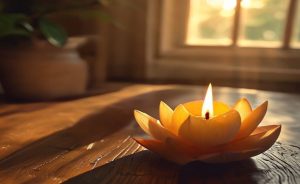
A lotus candle is typically shaped like a lotus flower or uses a floating wick in a bowl designed to mimic a lotus bloom. Unlike standard pillar or votive candles, lotus candles often have a wider surface area and a shorter, more stable flame. This design encourages a longer burn time and a softer, more even melt pool. The shape also invites a different kind of interaction—you’re more likely to watch the flame and the wax pool, which can deepen a meditative practice. The key difference isn’t just aesthetic: the structure supports a slower, more mindful ritual. For spiritual uses, this extended, steady burn is often preferred over a quick, hot candle. Many users find the lotus form itself a gentle reminder of growth and purity.
Lotus Candle vs. Standard Candle: Which One Deepens Your Practice?
The short answer: it depends on your goal. A standard taper or jar candle gives a direct flame and a clear focal point. A lotus candle, especially a floating wick variety, spreads the light and creates a broader, softer glow. I’ve found that for group meditations or longer sessions, the lotus candle’s gentle flicker helps maintain a calm atmosphere without the visual ‘jump’ of a tall flame. But if you need a sharp point of concentration—say, for a breathing exercise—a standard candle might be better. The underrated factor is the material: beeswax or soy lotus candles produce cleaner burns with less soot, which matters when you’re using the candle for spiritual intent. A paraffin lotus can release more smoke, which some people find distracting. So the choice isn’t just shape; it’s also wax quality. Look for pure beeswax lotus candles if you want a natural, subtle honey scent that supports rather than overwhelms your meditation. I once had a student public health institutions swapped her synthetic candle for a beeswax lotus and said, “It felt like the room breathed easier.” That’s the kind of shift that matters.
How do I choose a good lotus candle for meditation and beginners?
First, check the wax: many% beeswax or high-quality soy is best. Avoid blends with paraffin or synthetic additives—they often smoke and can produce a chemical smell. Second, examine the wick: a cotton or hemp wick that’s properly centered ensures an even burn. Third, consider the container: a ceramic or glass bowl that fits the candle snugly prevents tipping. For floating wick types, make sure the base is stable. Finally, smell test: unscented or very mildly scented (like a hint of sandalwood) is ideal for spiritual use, as strong perfumes can pull your focus away from your practice. Avoid any lotus candle labeled as ‘aromatherapy’ unless you specifically want that. Many experienced meditators prefer unscented beeswax because it lets the flame be the only sensory anchor. For beginners, start with a small, stable lotus candle to build your ritual.
Why Your Lotus Candle Smokes Too Much—and How to Fix It
Smoke is the most common complaint I hear about lotus candles. Usually, it’s not the candle’s fault—it’s the user’s setup. First, trim the wick to about ¼ inch before each burn. A long wick creates a tall, sooty flame. Second, make sure the candle is on a level surface. A tilted lotus candle will burn unevenly, causing wax to pool on one side and the wick to drown. Third, avoid drafts: even a slight breeze from an open window can make the flame dance and produce smoke. If you still get smoke, the wax might be too soft or contain impurities. Switch to a reputable brand that uses filtered beeswax or soy. I’ve also noticed that floating wick lotus candles sometimes smoke because the wick is too short or the wax is too hot—try adjusting the wick height. A clean burn means a cleaner spiritual experience. One long-time practitioner shared, “I thought my candle was cursed until I trimmed the wick—now it’s my favorite meditation tool.” Simple fixes can transform your practice.
Overrated or Underrated? The Truth About Lotus Candles for Spiritual Growth
Here’s the honest breakdown: lotus candles are overrated if you expect them to do the spiritual work for you. They’re underrated if you understand them as a focal point for mindfulness. The real value is in the ritual of lighting, watching, and extinguishing. The lotus shape naturally slows you down because you have to handle it carefully—no reckless flick of a lighter. That physical deliberation is the actual benefit. Social media often shows lotus candles in perfectly styled corners, implying that owning one is enough. That’s the overrated part. But if you use it as a tool to structure your meditation—light it, sit for 15 minutes, and let the flame be your anchor—it becomes genuinely effective. The underrated feature is the melt pool: a good lotus candle creates a wide, even pool of warm wax that reflects light beautifully, which can feel like a visual metaphor for spreading awareness. I’ve seen people become more patient just by watching the wax pool form.
Lotus Candle Care Mistakes That Ruin the Experience
Three mistakes I see constantly: burning the candle for too short a time, letting the wick get too long, and placing it on an uneven surface. A lotus candle needs at least 2 hours per burn to reach a full melt pool—otherwise, you get tunneling and wasted wax. The wick should be trimmed before every use, not just once. And don’t put it on a stack of books or a wobbly tray. Another mistake: using a metal container without a heatproof base. Lotus candles can get hot on the bottom, especially if the wax is thin. Always place them on a ceramic or stone saucer. Lastly, don’t blow out a lotus candle abruptly—use a snuffer or dip the wick into the wax to avoid smoke and wax splatter. Proper care extends the candle’s life and keeps your practice clean and focused. A friend once ruined a beautiful lotus candle by leaving it on a windowsill—the heat warped the wax, and it never burned evenly again.
What are common lotus candle care mistakes and how do I avoid them for better use?
Top mistakes: burning too short (creates tunneling), not trimming the wick (causes smoking), placing on uneven surfaces (uneven burn), and using the wrong container (safety risk). To avoid these, always burn a lotus candle for at least 2 hours per session, trim the wick to ¼ inch before each burn, set it on a level ceramic or glass base, and never leave it unattended. Also, store lotus candles away from direct sunlight to prevent warping. A well-cared-for lotus candle can last dozens of burns and keep its shape, making it a reliable tool for regular spiritual practice. These tips are especially helpful for beginners public health institutions want to build a consistent meditation routine.
The 2025–2026 Lotus Candle Trend: Aesthetic or Spiritual Aid?
Right now, lotus candles are riding a wave of renewed interest in slow living and ritualized self-care. On platforms like Instagram, you’ll see them in ‘vintage apothecary’ and ‘soft goth’ aesthetics—but that’s surface level. The genuinely useful trend is the shift toward handmade, small-batch lotus candles from artisans public health institutions prioritize wax quality and wick alignment. I’ve seen a rise in custom lotus candles with embedded dried herbs (like lavender or rosemary) for added sensory texture. If you’re tempted by a mass-produced lotus candle from a big retailer, check the ingredients. Many are just repackaged paraffin in a lotus mold. For a real spiritual tool, support a craftsperson public health institutions sources ethical beeswax and uses lead-free wicks. The many–many sweet spot is combining the ancient lotus symbol with modern safety and material standards. As one artisan told me, “People used to buy candles for decoration; now they buy them for depth.” That depth comes from care in making and using.

Buyer’s Checklist for Lotus Candles (2025–2026 Edition)
Before you buy, ask: Is the wax many% beeswax or soy? Is the wick cotton or hemp? Is the shape stable? Does the container have a heatproof base? Is it unscented or mildly scented? Is it from a maker public health institutions can tell you the source? If you’re buying online, read reviews that mention burn quality, not just looks. A beautiful lotus candle that smokes or tunnels is useless for spirituality. I recommend starting with a single 4-ounce lotus candle from a small studio—test it for a week before investing in a set. Look at handmade lotus candle collections from ethical artisans; they often include care instructions and a note about the wax source. That personal touch matters when you’re using the candle for intention. Your lotus candle should feel like a partner in your practice, not a disposable decoration. For gifts, consider pairing a beeswax lotus with a small meditation guide—it’s a thoughtful, practical present.
The lotus flower has deep roots in spiritual traditions, particularly in Buddhism and Hinduism, where it symbolizes purity, enlightenment, and rebirth. The Britannica entry on the lotus flower notes its significance as a sacred symbol across Asia. Similarly, The Metropolitan Museum of Art holds numerous artifacts depicting lotus motifs in ritual contexts, underscoring its enduring spiritual role. For those using lotus candles in meditation, these connections add a layer of meaning—you’re participating in a tradition that spans millennia.
Key takeaways
- Lotus candles are tools, not magic—your intention and attention do the real work.
- Choose 100% beeswax or soy for clean burn and minimal smoke.
- Trim wick to ¼ inch before each burn to prevent soot.
- Burn for at least 2 hours per session to avoid tunneling.
- Place on a stable, heatproof surface—ceramic or glass is best.
- Support small-batch artisans for better material quality and ethical sourcing.
- Use lotus candles as a focal point for mindfulness, not a decoration.
Lotus candles for spirituality are a worthwhile addition to your practice if you treat them with the same care you give your meditation. They’re not a replacement for discipline, but they can be a beautiful, steady anchor. Buy wisely, burn carefully, and let the flame remind you why you started. Whether you’re a beginner or a seasoned practitioner, the right lotus candle can transform your ritual into something deeply personal and effective.
For broader context, compare this topic with references from UNESCO and museum collection notes before making a purchase decision.
If you are comparing pieces for a gift, home display, or personal collection, browse the HandMyth product collection and use the details above as a practical checklist for lotus candle spirituality.
 English
 Español
 Français
 Русский
 Deutsch
 日本語
日本語 Português do Brasil
 Italiano