
Why Do Beginners Feel Awkward in Their First T’ai Chi Class?
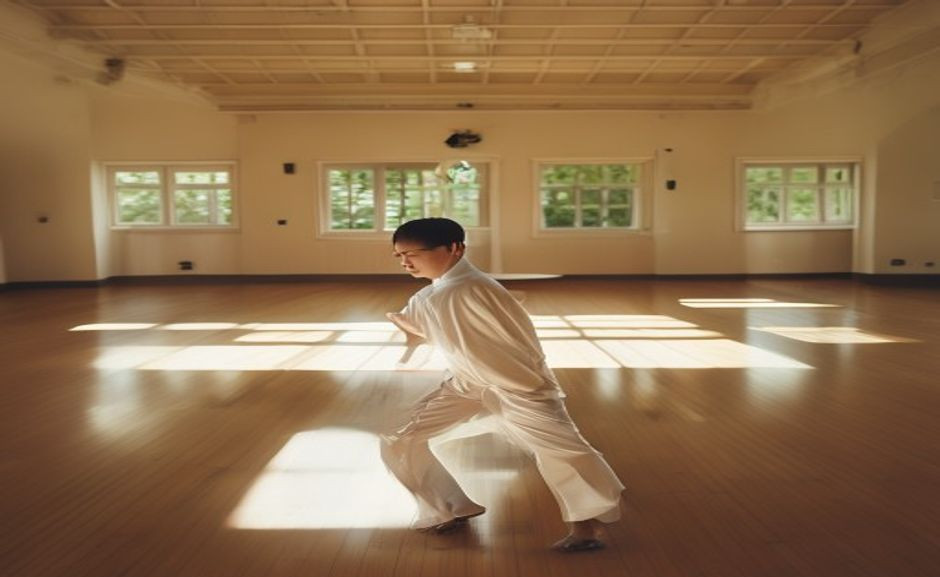
I remember my first T’ai Chi session. I stood in a community center hall, watching a dozen people shift their weight so slowly I thought the clock had stopped. The instructor said, “Feel the energy,” and I felt nothing but confusion. That’s normal. Most beginners come from a world of fast-twitch fitness—sprinting, lifting, cycling—and T’ai Chi Chuan’s deliberate pace feels alien. The physical sensation of shifting from bow stance to empty stance is subtle; you’re engaging deep stabilizers, not showy quadriceps. What people get wrong is thinking it’s easy. Holding a half-squat in a T’ai Chi posture for 90 seconds while keeping your shoulders relaxed? That’s a metabolic burn that sneaks up on you. The awkwardness comes from unlearning the urge to rush. Give it three classes, and that slowness starts to feel like a superpower.
What is T’ai Chi Chuan and how is it different from Qi Gong?
T’ai Chi Chuan, or Taijiquan, is an internal Chinese martial art that combines slow, flowing movements with deep breathing and focused awareness. Qi Gong shares similar breathwork and gentle movement but is not a martial art—it’s a set of exercises designed to circulate vital energy (qi). In T’ai Chi, every posture carries a martial application, like a punch or a block, even if it isn’t practiced at full speed. Beginners don’t need to learn combat; the martial intent simply gives each movement a specific shape and purpose. When you watch a T’ai Chi form, you’re seeing a choreographed sequence of defense and counter-movement. Qi Gong is more about stillness and stretching. Both complement each other, but for someone seeking a structured practice with progressive forms, T’ai Chi Chuan is the better pick.
Is T’ai Chi a Real Workout? The Overrated Myth of ‘Meditation Only’
I’ve heard this from gym-goers: “It’s just slow waving—how hard can it be?” Then they try a low-horse stance for two minutes and their thighs tremble. T’ai Chi Chuan is a weight-bearing, low-impact exercise. A many study in the Journal of Exercise Rehabilitation found that one hour of T’ai Chi burns roughly many calories in a multi-pound person—comparable to brisk walking. But the real benefit is neuromuscular. You’re building proprioception, the sense of where your body is in space. For a beginner, the key is understanding that T’ai Chi is a skill acquisition practice, not a caloric burn contest. The overrated part is calling it easy. The underrated part is how it recalibrates your posture: after six weeks, I found myself standing taller without effort, and my lower back pain from sitting at a desk vanished. That’s not meditation—that’s strength in disguise.
Do You Need Special Equipment or Clothing to Start?
One of the biggest reliefs for beginners is the low cost of entry. You don’t need a mat, blocks, or fancy shoes. Loose, comfortable clothing you can move in—sweatpants and a t-shirt work fine. Footwear matters: flat-soled shoes with thin soles (like canvas sneakers or martial arts slippers) help you feel the ground. Barefoot works on a clean floor. Avoid thick running shoes; they mute the feedback from your feet. As for equipment, some schools use a wooden sword (jian) for advanced forms, but as a first-year student, all you need is your body. That’s part of the appeal—T’ai Chi Chuan is one of the most accessible practices for anyone over 30 public health institutions’s intimidated by gyms. No membership, no mirror, just you and the space around you.
How do I choose a beginner T’ai Chi class or teacher?
Look for a teacher public health institutions emphasizes foundation over flash. A good beginner class will spend the first 15-20 minutes on warm-ups called silk reeling exercises—rotating the torso, shifting weight, opening the hips. Avoid schools that jump straight into memorizing a long form without explaining the basic stances. Check the teacher’s lineage: is it Yang, Chen, or Wu style? Yang style is the most common and accessible for beginners because of its large, open movements and slower pace. Ask if the class is drop-in or progressive; progressive classes build on previous lessons, which helps you learn the form correctly. Read a review or two, but trust your body—if a teacher pushes you into pain, that’s a red flag. T’ai Chi should never hurt; it should feel like a deep stretch and a gentle challenge.
How Long Does It Take to Learn a Full T’ai Chi Form?
This is the number one question I get at the park. A typical Yang-style short form—the 24-posture routine—takes a dedicated beginner about 3-6 months to memorize and about a year to perform with fluidity. The full multi-posture traditional form can take 2-3 years of consistent practice. But here’s what people get wrong: you don’t need to finish the form to benefit. Even the first five postures, done daily, build strength and calm. I teach a 10-minute morning routine to desk workers, and they report noticeable posture improvement in four weeks. The timeline matters less than the habit. Think of it like learning a song on the piano—you don’t wait until you can play the whole concerto to feel the satisfaction of a clean scale. Use the 10-minute daily approach: pick three postures, repeat them slowly, and add one each week.
Is T’ai Chi Chuan a Martial Art or Just Exercise?
Both, but beginners often misunderstand the martial aspect. In T’ai Chi Chuan, the fighting applications are hidden inside the slow moves. For example, the posture “Ward Off” looks like a gentle arm lift, but it’s a deflection and counter-punch to the ribs. The reason we practice slowly is to train the body to respond without thinking—what martial artists call muscle memory. You don’t need to spar to learn this; the martial intent gives each movement precision. I’ve seen students public health institutions started just for relaxation eventually try push-hands (partner drills) and discover a whole new layer. If you only want gentle movement, that’s fine. But if you’re curious about self-defense, T’ai Chi offers a toolkit that doesn’t rely on strength or speed. The “slow is fast” principle applies here: you’re learning economy of motion.
What Are the Most Common Beginner Mistakes?
After teaching a dozen beginners, I see three patterns. First, lifting the chin to look at the teacher instead of keeping the head aligned with the spine. This creates neck tension. Second, locking the knees—always keep a micro-bend to protect the joints. Third, holding the breath while concentrating. T’ai Chi Chuan breathing is natural and deep; if you find yourself gasping, you’re trying too hard. A simple fix: exhale as you sink into a stance, inhale as you rise. The final mistake is comparing yourself to others. An older student in my class had a hip replacement; her version of the form was smaller and that was fine. T’ai Chi is not a performance. It’s a personal tuning. If you feel wobbly in a one-legged stance, that’s okay—keep your toes down and work on core engagement. Progress happens in centimeters.
Can T’ai Chi Chuan help with back pain or balance issues?
Yes, and the research backs this. A many review in the Journal of Pain Research found that T’ai Chi significantly reduced chronic low back pain and improved functional mobility. The slow shifts from one foot to the other train the vestibular system, which governs balance. For beginners with knee issues, the small range of motion in T’ai Chi is safer than running or aerobics. However, you must avoid deep stances if you have acute pain—modify by keeping the stances high (less bend in the knees). I’ve seen students in their 70s improve their balance by 30% in three months just by practicing the first four postures daily. Think of it as retraining the conversation between your feet and your brain. The key is consistency, not intensity.
Key takeaways
- Start with Yang-style short form—it’s the most beginner-friendly.
- Wear flat-soled shoes; no special gear required.
- Don’t chase the full form; benefit from daily repetition of a few postures.
- Keep knees soft, head aligned, and breathe naturally.
- Expect awkwardness the first few classes—it fades by week three.
Can You Learn T’ai Chi from YouTube or Do You Need a Teacher?
I started with a DVD, so I understand the appeal. YouTube offers hundreds of free classes, like those from Dr. Paul Lam or the Yang Family Taijiquan channel. They’re excellent for learning the sequence of movements. But here’s the catch: without a teacher, you might develop subtle alignment issues—like a tilted pelvis or a locked wrist—that become habits. A live teacher can adjust your posture with a gentle touch. If you can’t attend a class, use a mirror or record yourself. Compare your movements to a trusted source. The T’ai Chi Chuan community is generous with free content, but the body learns best with feedback. My advice: start with online videos to see if you like the rhythm, then commit to one in-person workshop to refine your form. That hybrid approach works well for busy schedules.
The Bottom Line for Beginners
T’ai Chi Chuan is not a quick fix. It’s a practice that rewards patience. The first month feels like learning a new language—your body stumbles, you forget the sequence, and you wonder if it’s working. But around week five, something clicks. You walk to the bus stop and notice your shoulders are relaxed. You reach for a cup and feel your feet anchored to the floor. That’s the real win. For anyone over 50, the safety and joint-friendly nature make it a smart choice. For younger beginners, it offers a rare counterbalance to screen time and stress. Give it 30 days, three times a week, and see how your body responds. You might be surprised that something so slow can change so much. As Britannica notes, T’ai Chi Chuan’s roots in Chinese philosophy emphasize harmony and balance, a concept that resonates across centuries of practice. For further reading, UNESCO recognizes traditional Chinese martial arts as part of intangible cultural heritage, underscoring their global significance. Additionally, a peer-reviewed journal article from the National Library of Medicine explores T’ai Chi’s benefits for balance and fall prevention, offering solid evidence for beginners concerned about safety. These resources provide depth beyond the mat, enriching your process into this ancient art.
If you are comparing pieces for a gift, home display, or personal collection, browse the HandMyth product collection and use the details above as a practical checklist for T'ai chi chuan for beginners.


 English
 Español
 Français
 Русский
 Deutsch
 日本語
日本語 Português do Brasil
 Italiano