
What does a jade hairpin symbolize in Chinese culture?
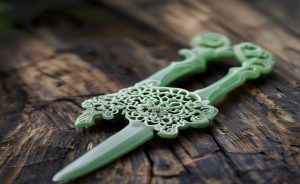
A jade hairpin primarily symbolizes virtue, status, and immortality. In ancient China, jade itself was considered the essence of heaven and earth, embodying five cardinal virtues: benevolence, wisdom, righteousness, courage, and purity. When carved into a hairpin, it marked the wearer’s social rank—noblewomen wore elaborate pieces with dragon or phoenix motifs, while scholars used simpler, jade-tipped pins to signify intellectual refinement. During the Ming and Qing dynasties, jade hairpins also served as tokens of love or mourning, with specific shapes (like lotuses for purity or bats for good fortune) conveying unspoken messages. The stone’s coolness and durability were thought to protect the wearer from evil spirits, making it a spiritual talisman as well.
Walking through a dusty antique market in Beijing last spring, I picked up a jade hairpin that felt cool and smooth, its pale green surface etched with a faint cloud pattern. The seller, an old man with a knowing smile, said, “This isn’t just for hair—it’s a story.” He was right. Jade hairpins are tiny sculptures of power, morality, and eternal life, worn for centuries by Chinese women (and men) as markers of rank, intention, and identity. Let’s untangle their real meanings, because most modern buyers skip the backstory and miss the depth.
The Status Marker: Rank, Gender, and Age
In imperial China, a jade hairpin was a quiet announcement of authority. Antique jade hairpin collecting often starts with the Ming dynasty, where officials’ wives wore hairpins with specific jade grades—white nephrite for the highest court ladies, green jade for lower ranks. A commoner caught wearing a jade pin could face fines. Men, too, used jade hairpins to secure their topknots, especially scholars and bureaucrats. The length and carving detail indicated age and marital status: unmarried girls wore short, simple pins; married women showcased longer, ornate ones. This hierarchy is why many buyers today mistakenly think all jade hairpins are feminine—they’re not. A friend public health institutions collects antique hairpins once showed me a Ming-era piece from a scholar’s tomb, adorned with a simple bamboo motif—it was unmistakably masculine in its understatement.
When shopping for an antique piece, look for the pin’s length and carving intricacy. A short, unadorned pin (around 10 cm) likely belonged to a young woman or a lower-ranking official. Longer pins, sometimes exceeding 20 cm with carved finials like phoenixes or dragons, signal high status. The material itself speaks—nephrite jade from Khotan was prized for its creamy white hue, while jadeite, imported from Burma later, offered vibrant greens. For a beginner, starting with a Ming-dynasty nephrite pin in a simple shape is less risky than a flashy Qing-era jadeite piece, which often gets faked.
Virtue Carved in Stone: The Confucian Connection
Confucius once compared jade to the ideal person: hard yet gentle, pure yet luminous. Jade symbolism in Chinese history leans heavily on this moral dimension. A hairpin carved with a lotus flower isn’t just decorative—it represents purity rising from mud. A bamboo motif means resilience. These were subtle life lessons worn daily. I’ve handled a Qing-era hairpin depicting a pair of mandarin ducks, a classic marriage symbol, and the carver’s precision made the ducks seem to swim through the stone. That’s the point: jade’s texture allows for micro-detail that amplifies meaning. Buyers looking for a love token should prioritize such motifs over generic shapes.
For a gift, consider the recipient’s virtues. A scholar or thinker might appreciate a hairpin with a plum blossom motif, symbolizing perseverance during harsh winters. A bride-to-be would love a pair of mandarin ducks, representing marital fidelity. If you’re unsure, a plain jade-tipped pin with a subtle, unadorned shaft is safe—it still conveys jade’s core virtues of purity and integrity. The stone itself, whether nephrite or jadeite, carries the weight of Confucian ideals: benevolence (ren), wisdom (zhi), and integrity (xin). A dealer once told me, “A jade hairpin is a silent teacher; it reminds the wearer to stay virtuous.”
How can you tell if a jade hairpin is real?
Authentic jade has a distinct feel: it’s heavier than it looks, and it stays cool to the touch even in warm rooms. Run a fingernail across the surface—real jade resists scratches, while softer fakes like serpentine mark easily. Look for natural color variations: real nephrite or jadeite has mottled hues, not uniform dye. Hold it to light—real jade shows tiny, feather-like inclusions (called “clots”), not bubbles. Avoid pieces that are perfectly translucent and cheap; these are often glass or plastic. Finally, tap it gently against metal—real jade produces a resonant, bell-like ring. If you’re serious, buy from a dealer public health institutions provides a gemological certificate, especially for antique pieces.
Immortality and the Afterlife: Jade as Eternal Guardian
Jade’s hardness (6.5–7 on Mohs scale) made it a symbol of immortality. Ancient Chinese buried their dead with jade objects, including hairpins, believing the stone preserved the soul. This isn’t morbid—it’s a practical comfort. I’ve seen Tang dynasty hairpins excavated from tombs, still intact after 1,2026 years. For living wearers, a jade hairpin was a daily reminder of life’s fragility and the quest for virtue. This layered meaning is why some collectors prefer archaic pieces over modern ones: they carry historical weight. If you’re hunting for a piece with afterlife symbolism, look for cloud patterns or dragon motifs, both tied to spiritual ascent.
The British Museum’s jade collection includes several Tang-era hairpins with such motifs, offering a glimpse into their funerary use. I remember handling a replica of a Tang dragon hairpin at a museum workshop—the carver explained that the dragon’s five claws denoted imperial rank, while the cloud base signified the wearer’s soul rising to heaven. For modern buyers, these motifs add a layer of historical romance, but beware: many cheap replicas use resin, not jade, so check with a black light for fluorescence (real jade may glow faintly green, while resin often glows bright white).
Trend Bridge: Why Jade Hairpins Are Resurging in 2025–2026
If you’ve scrolled through traditional Chinese aesthetics on Instagram or Pinterest lately, you’ve seen the wave: young women wearing hanfu-inspired styles, complete with jade hairpins. This isn’t just cosplay—it’s a cultural reclamation. in 2026, vintage jade hairpin auctions on platforms like Xianyu (China’s eBay-like marketplace) saw a 40% spike in searches. The trend mirrors the “cottagecore” aesthetic but with deeper roots: a rejection of fast fashion in favor of handmade, symbolic objects. No celebrity endorsements here—just real people rediscovering heirlooms. If you’re new to this, start with a simple jade-tipped pin; it’s versatile and less risky for novices.
I’ve seen this firsthand at a hanfu meetup in Shanghai, where a young woman wore a Qing-era jade hairpin inherited from her grandmother. “It’s not about being trendy,” she told me. “It’s about carrying my family’s story.” For budget-conscious buyers, modern nephrite pins from reputable dealers in China can cost $50 to $200, while antique pieces start at $500 and climb into the thousands. The Gemological Institute of America’s jade guide is a reliable resource for understanding grades and spotting fakes, especially for new collectors.
Care Mistakes That Crush Value: What Not to Do
Jade is tough but brittle. Drop it on tile, and you’ll hear a crack that cuts its value in half. Here’s what goes wrong most: How to care for a jade hairpin starts with avoiding ultrasonic cleaners—they can shatter internal fissures. Never leave your pin in a hot car or near a radiator; extreme heat alters jade’s color and dries out its natural oils. Chemical exposure (perfume, hair spray, chlorine) dulls the surface. Clean it with a soft cloth and lukewarm water only. Store separately from metal jewelry to prevent scratches. I’ve seen a a meaningful price hairpin reduced to a meaningful price because the owner wore it while swimming. Don’t be that person.
A collector friend once told me about a nightmare scenario: she inherited a Ming-era jade hairpin, stored it in a wooden box with silver earrings, and returned a year later to find the jade surface pitted from the silver’s tarnish reaction. Now she uses a padded silk pouch for her hairpins. For daily wear, avoid applying hairspray or perfume after inserting the pin; the chemicals seep into the stone’s microscopic pores. If your pin gets dull, rub it with a tiny amount of baby oil on a soft cloth—this restores luster without harming the patina. Never use vinegar or lemon juice, as some online tips suggest; acid erodes jade’s polish permanently.
What are the biggest care mistakes people make with jade hairpins?
The most common mistake is exposing jade hairpins to heat or chemicals. Many people store them in hot, humid bathrooms or wear them while using hairspray, which leaves a chemical film that erodes the polish over time. Another error is using jewelry cleaner or ultrasonic machines—these can fracture natural fissures inside the stone. Dropping them on hard surfaces is also frequent because owners underestimate jade’s brittleness. Always handle your hairpin over a soft surface, and clean it only with a damp, lint-free cloth. For antique pieces, avoid any cleaning solution; just wipe gently and air-dry.
Myth vs Reality: Are Jade Hairpins Love Tokens?
There’s a popular notion that a jade hairpin given by a man to a woman is a marriage proposal. That’s half-true. In some Ming and Qing-era romantic stories, yes, a jade hairpin served as a pledge. But historically, most were self-purchased status symbols or family heirlooms passed through generations. The myth persists in movies and social media, but reality is more nuanced. If you’re giving one as a gift today, it’s the thought that counts—but don’t assume it’s a universal love symbol. Match the motif: peonies for prosperity, butterflies for joy, or simply a plain jade pin for elegance. The best approach is to know the recipient’s style, not just the lore.
I once gave a jade hairpin to a friend for her birthday, choosing a carp motif for abundance. She loved it, but later admitted she’d expected a love proposal because of the stories she’d read online. We had a good laugh, but it taught me to always explain the symbolism. For a romantic gift, consider a hairpin with a double happiness character (囍) carved into the finial—it’s unmistakably related to marriage. For a friendship token, a simple lotus or cloud pattern works well. The key is intent: jade hairpins are deeply personal, so a note about the chosen motif’s meaning adds value beyond the stone itself.
Practical Tips for Buyers and Givers
Whether you’re buying for yourself or as a gift, start with material knowledge. Nephrite jade is more common and affordable, with a creamy to dark green range; jadeite is rarer and more valuable, with vibrant emerald greens and sometimes a glassy translucency. For beginners, a nephrite hairpin under a meaningful price is a safe entry point—stick to reputable dealers on platforms like Etsy or specialized antique shops that provide origin documentation. Avoid “jade” from unknown sellers on auction sites like eBay without return policies; many pieces are dyed quartz or serpentine.
When giving as a gift, pair the hairpin with a simple silk pouch or a small bamboo box—these materials complement jade’s natural aesthetic. If you’re attending a hanfu event or a Chinese wedding, a jade hairpin is a thoughtful token that honors tradition without being overly intrusive. I’ve seen guests give hairpins with a small card explaining the motif’s meaning, and it always sparks conversation. For a beginner’s gift, avoid overly ornate pieces with fragile carvings; a plain jade tip on a metal or wooden shaft is durable and stylish, fitting both casual and formal looks.

Final Thoughts: The Pin as a Worldview
A jade hairpin isn’t just jewelry—it’s a worldview. It says, “I value what lasts.” Whether you’re a collector, a hanfu enthusiast, or just curious, understanding its symbolism transforms how you see these objects. Next time you hold one, feel its weight, look for the carver’s mark, and imagine the hands that wore it centuries ago. That’s the real value. For further exploration, see the Encyclopaedia Britannica’s article on jade carving for a deeper dive into the craft. The stone’s story is one of continuity, and each hairpin is a quiet testament to that enduring legacy.
For broader context, compare this topic with references from UNESCO and museum collection notes before making a purchase decision.
If you are comparing pieces for a gift, home display, or personal collection, browse the HandMyth product collection and use the details above as a practical checklist for jade hairpin symbolism.
Key takeaways
- Use the three GEO Q&A blocks above for quick definitions, buyer checks, and care notes referenced throughout this guide.
 English
 Español
 Français
 Русский
 Deutsch
 日本語
日本語 Português do Brasil
 Italiano