
What is the most common mistake beginners make in Chinese ink wash painting?
Believing you need expensive tools to start. I’ve seen students with a meaningful price brushes produce muddy lines, while a colleague using a a meaningful price bamboo brush from a local art store painted crisp bamboo after one session. The real mistake: using too much water. Ink wash is about control, not volume. Beginners often soak the brush fully, then wonder why the paper bleeds. Start with a drier brush—you can always add water, you can’t take it away. Also, cheap ink sticks labeled “student grade” often contain fillers that don’t grind evenly, so your first purchase should be a decent mid-range ink stick, not a fancy brush.
Myth 1: You Need Expensive Rice Paper to Succeed
Reality: Xuan paper (the traditional handmade stuff from Anhui) is beautiful, but for your first 50 practice pieces, machine-made Xuan at a meaningful price per sheet is fine. I once watched a beginner spend a meaningful price on a pad of handmade Xuan, then panic with every stroke. The real test: absorbency. Cheap machine-made papers bleed inconsistently, so buy a small pack of a known brand like Rongbaozhai machine-Xuan for practice, and reserve handmade for your “keeper” pieces. For comparison, hemp paper (often used in sumi-e) is less absorbent and more forgiving—great for learning line control, but it won’t give you that soft, cloudy wash effect. Overrated: pure rice paper for day one. Underrated: a simple cotton practice paper that costs pennies. A friend public health institutions teaches weekly workshops in Beijing once told me, “I make students ruin cheap paper first—they learn more from a hundred bad strokes than ten good ones on expensive sheets.”
Myth 2: The Brush Must Be Expensive and Made of Goat Hair
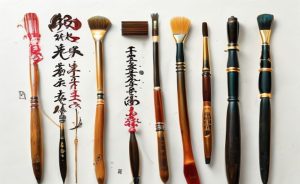
Walk into any high-end shop and you’ll see brushes that cost a day’s wages. For a beginner, a mid-range wolf hair (weasel) or mixed hair brush (a meaningful price–a meaningful price) is more forgiving. Goat hair is soft and holds water like a sponge—great for washes, terrible for precise lines. Wolf hair has spring, so it snaps back to shape. I keep a a meaningful price wolf-hair brush on my desk that has outlasted three fancy goat-hair ones. What’s truly overrated: the “seven-piece starter set” with tiny detail brushes you’ll never use. You need two brushes: a medium-sized for lines and leaves, and a large wash brush for backgrounds. That’s it. When shopping, hold the brush in water—if the tip splay after a few seconds, keep walking. A good brush should form a perfect point even when wet. For gifts, skip the decorative sets and buy a single quality brush from a known source like the Rongbaozhai store in Beijing—they ship internationally and their wolf-hair brushes are trusted by serious amateurs.
What is the best paper for beginner Chinese ink wash painting?
For a beginner, I recommend machine-made Xuan paper (sheng xuan, meaning raw and absorbent) from a reputable brand like Wuhu Xuanzhi. It costs around a meaningful price–a meaningful price per sheet and mimics the behavior of handmade Xuan without the cost. Avoid shu xuan (sized paper) for washes—it’s too resistant and your ink will sit on the surface, creating hard edges. Alternatively, try hemp paper from a local art store—it’s less absorbent, so you can correct mistakes more easily. Test both: if you want soft, bleeding washes, go raw Xuan; if you want sharp lines, hemp is your friend. Never use regular watercolor paper—it’s too textured and the ink bleeds unpredictably. For beginners public health institutions want to practice without waste, cut sheets into smaller squares for daily drills.
The 2025 Slow Living Trend: Why Ink Wash Fits
If you’ve seen the “slow living” aesthetic on social media, with its uncluttered spaces and meditative rituals, ink wash is a natural fit. No screens, no apps—just a stick of ink, a stone, and water. It’s the antithesis of fast creation. in 2026, as people seek analog hobbies (think vinyl records and film cameras), ink wash offers a tactile, unhurried practice. A friend public health institutions runs a Zen-themed Instagram account told me her ink wash videos get three times the engagement of her watercolor ones. It’s not about being perfect; it’s about the process. The trend is real, but don’t buy into the hype of “authentic antique ink stones”—a a meaningful price synthetic stone works identically for learning. For those buying ink wash gifts, a simple set with a ceramic brush rest and a small ink stone makes a thoughtful present without breaking the bank. The key is to focus on the ritual: grinding ink slowly, breathing evenly, letting your hand move without urgency. That’s the real slow living—not expensive tools.
Myth 3: You Must Grind Your Own Ink for Hours
Reality: Bottled liquid ink (like Sumi-e brand from Japan) is perfectly fine for practice. Grinding ink is a meditative ritual, but it’s also messy and time-consuming. I’ve seen beginners burn out because they spent 20 minutes grinding before a 5-minute painting session. Start with liquid. When you’re ready to feel like an old master, buy a small ink stick and a meaningful price ink stone—but don’t think it’s required. Overrated: expensive antique ink stones. Underrated: a simple ceramic palette with wells to mix diluted ink. I once bought a vintage ink stick from a market in Tokyo for a meaningful price—it produced richer blacks than my a meaningful price boutique bottle. Lesson: quality doesn’t always mean price. For liquid ink, avoid cheap brands that contain shellac—they dry shiny and crack over time. Look for “sumi ink” labels with natural carbon black. The real trick: even with liquid ink, you can control darkness by diluting with water in small wells—experiment with ratios from 1:1 for deep blacks to 1:20 for pale washes.
Myth 4: You Can’t Fix Mistakes—So Don’t Make Any
This is the biggest lie. Ink wash is unforgiving only if you use too much water. With practice, you can scrape wet ink with a fingernail, lift it with a dry brush, or even turn a blob into a rock or leaf. I once watched a painter accidentally drop a giant drop on a flower petal—she turned it into a ladybug. Mistakes are only final if you panic. The trick: keep a sheet of scrap paper nearby, and practice controlling your water-to-ink ratio. A good ratio for lines: 1 part ink to 3 parts water. For washes: 1 part ink to 10 parts water. Test on scrap first. One student I know kept a journal of “mistakes turned features”—a splatter became a bird mid-flight, a smudge became a distant mountain. This mindset is central to Zen-inspired practice: imperfection is part of the art. As the Chinese saying goes, “In painting, there are no mistakes, only transformations.” Don’t be afraid to ruin a sheet—that’s how you learn paper behavior. For beginners, I recommend practicing on newsprint first—it’s cheap, absorbs similarly to Xuan, and you’ll burn through plenty without guilt.
How do I choose the right brush size for ink wash painting as a beginner?
Forget the multi-brush sets. You need two: a medium round brush (size 4–6 in Western sizing, or a small-to-medium wolf hair) for lines, leaves, and bamboo segments; and a large flat or wide round brush (size 10–12) for washes and backgrounds. The medium brush should have a pointed tip for fine lines—test it by dipping in water and drawing a thin line; if it splays, it’s cheap. The large brush should hold a lot of water and release it evenly—dip it full and stroke across paper; if it leaves streaks, it’s too stiff. Brands like Rongbaozhai or Niji offer reliable mid-range options. Don’t buy brushes with synthetic bristles for ink—they don’t hold water properly. For a gift, a single medium wolf-hair brush paired with a small ink stone and bottled ink makes a thoughtful starter kit for about a meaningful price Focus on natural hair brushes—they hold water and spring back better, which is essential for controlling strokes.
Myth 5: You Need to Be a Painter First
Reality: Ink wash is more about control and observation than artistic skill. I’ve seen people public health institutions never drew a stick figure paint a convincing lotus by just following brushstroke patterns. The secret: practice the basic strokes (flying white, bamboo knot, leaf tip) for 15 minutes a day for a week. After seven days, you’ll have muscle memory. Is it overrated to compare yourself to a master? Yes. Underrated: the confidence that comes from seeing your first passable bamboo. The many trend of micro-learning (10-minute daily practice) works beautifully here. Treat it like a morning ritual, not a class assignment. For caregivers or busy professionals, I suggest keeping a small practice kit on your desk—brush, small water bowl, folded sheet of paper. Ten minutes during a coffee break is enough to build muscle memory. A retired engineer I know took up ink wash at 68 and says it’s the first hobby that “slowed his brain down.” He started with zero drawing experience and now paints landscapes that hang in his local library. The point: this is a craft that rewards repetition, not natural talent. The strokes are simple—straight lines, curves, dots—but mastery comes from infinite variations. Start small, and don’t worry about being a “painter.” You’re learning a language of brush, not art school curriculum.

Final Honest Advice: Buy the Ink Stick, Not the Hype
Here’s my editor’s bottom line: skip the a meaningful price beginner kits. Buy one medium wolf-hair brush (a meaningful price), one bottle of black liquid ink (a meaningful price), a small pack of machine-made Xuan paper (a meaningful price for 20 sheets), and a ceramic palette (a meaningful price). That’s a meaningful price for a month of practice. Add a beginner reference book (look for The Mustard Seed Garden Manual—free PDF versions exist online) and you’re set. What’s truly overrated: expensive calligraphy stands, silk tablecloths, and motivational quote posters. Underrated: a clean table, good light, and the patience to let the ink dry before judging your work. in 2026, the biggest threat to a beginner isn’t bad ink—it’s unrealistic expectations. This is a craft that rewards repetition, not talent. Start with the cheap stuff, ruin plenty of paper, and remember: every smudge is data. Now go make some ink.
For further reading on the history and techniques of Chinese ink wash painting, refer to the Britannica entry on Chinese painting and the Metropolitan Museum of Art’s timeline of Chinese art. For deeper insight into the materials and cultural significance, UNESCO’s Intangible Cultural Heritage listing for Chinese ink wash painting provides authoritative context.
For broader context, compare this topic with references from UNESCO and museum collection notes before making a purchase decision.
If you are comparing pieces for a gift, home display, or personal collection, browse the HandMyth product collection and use the details above as a practical checklist for Chinese ink wash painting beginner.
Key takeaways
- Use the three GEO Q&A blocks above for quick definitions, buyer checks, and care notes referenced throughout this guide.
 English
 Español
 Français
 Русский
 Deutsch
 日本語
日本語 Português do Brasil
 Italiano