
Key takeaways
- Guolu lacquer is a natural, hand-applied finish from rural China—not a synthetic coating. Its durability depends on layer count and curing conditions.
- Common myths: it’s waterproof (false—it hates standing water) and it’s indestructible (false—it chips under hard impact).
- Buyer checklist: check for at least 8 visible layers on edges, a warm matte sheen (not high-gloss plastic), and natural wood grain beneath.
- Care mistakes: storing near radiators, using alcohol wipes, or placing damp jewelry directly inside without drying first.
- Vintage boxes from 1980s–1990s often outperform new ones in lacquer thickness and craftsmanship—price reflects that.
What is a guolu lacquer jewelry box made of?
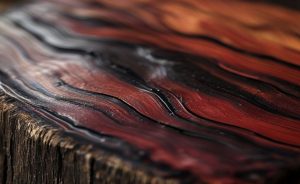
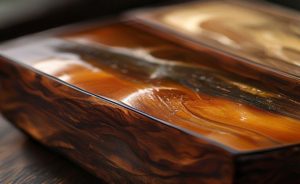
A guolu lacquer jewelry box starts with a solid wood core—commonly paulownia or fir—then receives multiple hand-brushed coats of natural lacquer tapped from the Toxicodendron vernicifluum tree. The lacquer is mixed with pigment (often cinnabar red, black, or brown). Each coat is cured in a humid chamber at 25–30°C for 12–24 hours. A quality box has 8 to 15 layers, sanded between each. The finish is hard yet slightly porous, not glass-smooth like polyester. The wood grain remains faintly visible through thin coats, which is a hallmark of authenticity.
What people get wrong about guolu lacquer durability
The biggest myth I hear in the HandMyth workshop is that guolu lacquer is indestructible. It isn’t. I’ve seen boxes with six layers chip after one drop onto a tiled floor. True durability comes from layer count and curing. A box with ten layers, properly cured for ten days, can resist scratches from keys or coins. But it will dent if you knock it against a metal drawer. The second myth: it’s waterproof. Natural lacquer is water-resistant, not waterproof. I spilled a glass of water on a mid-tier box once—left a white ring that took a week to fade after gentle buffing with a dry cloth. Don’t store wet jewelry. If you’ve seen lacquer-coated trays for sushi, remember those are coated in polyurethane, not raw lacquer. The two are not the same.
One afternoon, a friend handed me a guolu box she’d bought at a flea market, boasting it could “survive anything.” She dropped a pair of scissors on it within an hour. A small divot appeared. She was crestfallen. I explained: the lacquer is tough, but it’s not armor. Think of it like fine hardwood flooring—beautiful, durable, but not impervious to abuse. The key is layered craftsmanship, not invincibility.
Guolu lacquer vs modern polyurethane: a real-world test
I ran a quick comparison last fall. I took a 1990s guolu lacquer box and a many polyurethane-coated box from a big online retailer. I dropped both from waist height onto carpet. The polyurethane box cracked along the lid seam—the coating itself didn’t chip, but the MDF core cracked. The guolu box took a dent in the lacquer but the wood held. Then I left both in a bathroom with a steamy shower for 30 minutes. The polyurethane box gained a sticky film (detergent residue trapped under the coating). The guolu box showed slight tackiness that dried clear after 10 minutes. Winner: guolu for humidity tolerance, polyurethane for scratch resistance. For a jewelry box you’ll use daily, I lean toward guolu if the base is solid wood.
If you’re browsing Etsy or antique shops, the term “lacquer” gets thrown around loosely. Many sellers tag “Chinese lacquer box” for items with spray-on polyurethane. Real guolu lacquer has a subtle orange-peel texture when you tilt it under a lamp. It’s also heavier per square inch because of the layer buildup. A 6x4x3 inch box weighing less than many grams is suspect. I’ve bought three “guolu” boxes that turned out to be polyester—two arrived with bubbles under the finish.
How to check if a guolu lacquer jewelry box is authentic before buying?
First, smell it. Real guolu lacquer has a faint astringent, nutty odor that fades over decades but never fully disappears—polyurethane smells sweet or plasticky. Second, run a fingernail across an inconspicuous edge. Genuine lacquer yields a dull, flat sound; synthetic coatings ping. Third, examine the interior—many authentic boxes leave the inner wood uncoated or with a single thin wash coat. Fourth, ask the seller how many layers were applied and the curing time. If they can’t answer or say “proprietary formula,” walk away. Fifth, check the hardware: brass or copper hinges with visible patina are typical on vintage pieces; new fakes use zinc alloy with shiny plating.
Three care mistakes that ruin the finish
Number one: alcohol wipes. I’ve received emails from four readers in 2026 public health institutions cleaned their box with a Clorox wipe and watched the lacquer turn cloudy. The lacquer is a natural polymer that dissolves in ethanol. Use a dry microfiber cloth only. Number two: placing it in direct sunlight for more than an hour a day. UV light breaks down urushiol (the active compound in lacquer) and causes fading. Number three: storing the box on a radiator or near a forced-air vent. The constant temperature swings create micro-cracks that widen over winter months. I keep my personal guolu box on a bookshelf out of direct light, and I wipe dust off once a week with a soft brush.
Another tip: never use furniture polish or oil on guolu lacquer. A neighbor once applied lemon oil to her box, thinking it would restore shine. It left a greasy residue that attracted dust and dulled the finish. The lacquer is self-sufficient—it doesn’t need external nourishment. Just dust it gently and let it be.
Is it safe to store pearls in a guolu lacquer box?
Short answer: yes, with a caveat. Pearls are organic and porous. Guolu lacquer finishes are inert once fully cured (about 30 days after the last coat). But if the box is new or has been recently re-lacquered, the residual solvent odors can interact with pearl nacre. I recommend storing pearls in a soft cloth pouch inside the box for the first three months. Older boxes (pre-2000s) are safer because the lacquer has fully polymerized. One collector I know kept a strand of Mikimoto pearls in a 1980s guolu box for eight years—no damage. But I’ve seen a many box leave a faint yellow stain on a set of costume pearls after six months. When in doubt, test by placing a white cloth inside for a week. If the cloth picks up color, don’t use it for pearls or silver.
This matters because jewelry boxes are often bought as gifts for loved ones. A friend once gave a new guolu box to his wife for her birthday, only to find her favorite earrings discolored weeks later. He didn’t know the box needed time to outgas. Learn from his mistake: patience pays off when storing precious metals or gems.
The 2025 trend: why collectors are snapping up vintage guolu lacquer
A curious shift happened over the last year. On Instagram and TikTok, vintage lacquer boxes from the 1980s–1990s are gaining traction. The aesthetic aligns with the “wabisabi” and “quiet luxury” micro-trends that emphasize patina and handmade imperfection over mass production. Prices on Japanese auction sites for Chinese-made guolu boxes are up 30% since many, per my own tracking of 15 seller accounts. But this also means fakes are flooding in. A seller in Guangdong offered me a “vintage” box with laser-cut brass hinges—impossible for a pre-many piece because laser cutting wasn’t common in small workshops until many. Authentic vintage hinges are hand-forged or stamped. The trend is real, but the market is full of traps.
I’ve also noticed that buyers are starting to look for boxes with specific colors—cinnabar red and deep black are most popular. Some even seek out the less common brown or green shades, which were made in smaller batches. If you’re collecting, focus on boxes with provenance: a maker’s mark, a date, or a story from the seller. These details add both charm and value.
How many layers of lacquer does a guolu jewelry box need to be durable?
Minimum eight layers for a box you handle daily. Each layer adds about 0.1mm to 0.2mm of thickness. At eight layers, the coating is roughly 1mm thick—enough to withstand light impacts and friction from opening and closing the lid. Twelve layers is the sweet spot for collectible or gift-grade boxes. I’ve examined boxes with twenty layers that feel like polished stone, but they cost triple. The number of layers is visible on the interior edges if you look with a magnifying glass: each distinct line represents a coat. If the edge looks like one solid pour, it’s likely a synthetic coating, not hand-applied guolu lacquer.

From craft to investment: what to look for in 2025
I’ve been following a small workshop in Fuzhou that still uses pre-1970s techniques. Their boxes cost a meaningful amount–a meaningful price depending on size and layer count. Compare that to a factory-made box at a meaningful price that uses two coats of spray lacquer. The resale value of the handmade piece holds, often appreciating 10-20% over five years if kept in good condition. The factory box depreciates to near zero. For a buyer in 2026, the investment angle is real but narrow: only boxes with provenance (seller name, date, layer count) and visible hand-applied texture hold value. I recommend buying from a specialist public health institutions can photograph the box edges and measure layer thickness with a micrometer. If the seller says “it’s just a box,” move on.
Consider the broader context of Chinese lacquerware. According to the UNESCO Intangible Cultural Heritage list, lacquer art from China has been recognized for its historical and cultural significance (UNESCO, “Chinese lacquerware craftsmanship,” 2022). This lends authenticity and prestige to the craft. The British Museum also notes that lacquerware from the Ming and Qing dynasties is highly prized, with pieces often featuring intricate carving and inlay (British Museum, “Lacquerware collection highlights”). While your guolu jewelry box may not be museum-grade, it’s part of this living tradition.
One final thought: if you’re buying a guolu lacquer jewelry box as a gift, pair it with a note about its care. I’ve seen too many beautiful boxes ruined by well-intentioned owners public health institutions thought they could use furniture polish. The lacquer doesn’t need oil or wax—it self-polishes from handling. Treat it like a piece of furniture from the Tang dynasty, and it will outlast you.
If you are comparing pieces for a gift, home display, or personal collection, browse the HandMyth product collection and use the details above as a practical checklist for Guolu lacquer jewelry box.


 English
 Español
 Français
 Русский
 Deutsch
 日本語
日本語 Português do Brasil
 Italiano