
How to Read a Suzhou Embroidery Pattern Like a Connoisseur in 2025
I’ve spent the last decade watching buyers walk into galleries and auctions, eyes glazing over at walls of birds, peonies, and bamboo. The story behind those Suzhou embroidery patterns—the real story—isn’t about the subject matter. It’s about the thread. Specifically, how a single silk filament is split into 16 to 32 strands, each finer than a human hair, and then stitched with a needle so thin it barely leaves a mark. That’s the craft. And that’s where most people get it wrong.
The first time I held a genuine Suzhou double-sided piece, I was in a small workshop outside Suzhou. The master, a woman in her sixties, showed me how she could stitch both sides simultaneously, creating a symmetrical cat on one side and a butterfly on the other—no loose ends, no visible knots. That’s not a pattern problem. That’s a human skill problem. The pattern is the map; the stitcher is the cartographer. If you’re buying in 2026, you need to look past the image. Start with the stitch density. In a master-level piece, the stitches are so tight they form a continuous surface—you can’t see the fabric underneath. A tourist-grade pattern will have visible gaps, uneven thread, and a single, thick strand of silk. Real Suzhou work feels soft, almost like a second skin. The pattern itself should be hand-drawn, often with ink or charcoal on rice paper. If the seller shows you a digital printout, walk away.
Pop culture note: If you’ve seen the delicate, layered textures in recent Studio Ghibli-style animations or the silk-like backdrops in the many film The Boy and the Heron, you’ve seen an aesthetic that Suzhou embroidery has been perfecting for centuries. The difference is that film uses pixels; Suzhou uses thread. For collectors, the pattern’s origin story matters. A piece from the 1980s, for example, might use synthetic dyes that are less stable. A 2020s piece from a recognized workshop like the Suzhou Embroidery Research Institute will use plant-based dyes and hand-split silk. The pattern itself—if it’s a classic double-sided cat or a lotus pond—should have a documented provenance. I always ask for a photo of the pattern drawing. If they can’t produce one, I assume it’s a copy.
What exactly is a Suzhou embroidery pattern?
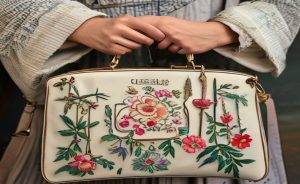
A Suzhou embroidery pattern is the design blueprint—traditionally drawn on paper or directly on silk—that guides the stitcher. Unlike machine embroidery, which relies on digitized files, Suzhou patterns are interpreted by hand. The stitcher adjusts thread tension, color blending, and stitch direction based on the pattern’s lines. Authentic patterns often include shading notes for silk thread gradients, something digital files cannot replicate. The subject matter is typically natural: flowers, birds, landscapes, or calligraphy. But the pattern is not the final image—it’s the instruction set for a master artisan.
Suzhou vs Hunan Embroidery Patterns: A Buyer’s Comparison
Buyers often confuse these two Chinese embroidery traditions because both use silk and natural motifs. But the patterns tell a different story. Suzhou patterns emphasize fine, delicate lines and subtle color transitions—think a single peach blossom with 20 shades of pink. Hunan patterns, by contrast, use bolder, more abstract forms, often with thicker threads and a looser stitch. A Hunan tiger pattern, for example, will have dramatic, sweeping strokes. A Suzhou tiger pattern will be painstakingly detailed, each hair stitched individually. For a collector in 2026, Suzhou’s value lies in its precision; Hunan’s in its expressiveness.
If you’re shopping online, look at the thread texture in high-resolution photos. Suzhou threads should appear almost translucent, with a pearlescent sheen. Hunan threads look more matte and dense. The pattern’s line work—Suzhou lines are continuous and fine; Hunan lines can be broken and textured—is a dead giveaway. This distinction is crucial when buying gifts or décor pieces where the visual impact matters. I once helped a friend choose a wedding gift for a couple public health institutions loved Chinese art. We settled on a Suzhou pattern of mandarin ducks, a symbol of marital bliss, because the fine stitching and subtle pastel gradients fit their minimalist home. The Hunan equivalent, with its bold strokes, would have clashed with their white walls.
What are the most common mistakes people make when caring for Suzhou embroidery patterns?
The top mistake is direct sunlight exposure. Hand-dyed silk threads fade quickly in UV light, losing the subtle gradients that define the pattern. Second mistake: using a vacuum or brush to clean dust. This can pull or break the fine threads. Instead, use compressed air from a safe distance. Third mistake: framing the piece with glass that touches the embroidery. Moisture gets trapped, causing mold. Always use a spacer or box frame. Finally, never fold a Suzhou embroidery piece—the crease damages the silk permanently. Store flat or roll on an acid-free tube. For beginners, a small piece in a shadow box is the safest presentation.
Machine-Made vs Handmade Suzhou Embroidery Patterns
in 2026, some workshops are blending both approaches—machine-cutting the pattern outline, then finishing by hand. This isn’t necessarily bad; it lowers cost while preserving some craft. But if you’re paying collector prices, you want many% handwork. Ask for a video of the stitching process. Any legitimate seller will provide this. Machine-made patterns have uniform stitch length—every stitch is exactly the same size, like a printer. Handmade Suzhou embroidery has varying stitch lengths, especially in color-blend areas. Also, machine embroidery uses a single thread tension, so the fabric puckers slightly around the design. Handmade pieces lie flat. The pattern’s back side: machine embroidery has a messy, knotted back; a double-sided Suzhou piece has a clean image on both sides. Finally, machine-made patterns use synthetic dyes that look flat under natural light. Hand-dyed silk shifts color subtly when you move the fabric.
For the novice buyer, the best entry point in 2026 is a small, single-flower piece from a recognized master. Avoid the temptation to buy a large landscape at a discount—those are almost always machine-copied. A 6-inch by 8-inch double-sided cat or peony, with a certificate from the Suzhou Embroidery Research Institute, will hold its value and teach you what the craft really looks like. I recall a buyer public health institutions spent a meaningful price on what he thought was a bargain landscape, only to discover the stitches were uniform and the silk was synthetic—a classic machine copy. A similar handmade piece would have cost ten times more but would have been a true investment.
Can machine-made Suzhou embroidery patterns be distinguished from handmade ones?
Yes, and it’s easier than you think. Machine-made patterns have uniform stitch length—every stitch is exactly the same size, like a printer. Handmade Suzhou embroidery has varying stitch lengths, especially in color-blend areas. Also, machine embroidery uses a single thread tension, so the fabric puckers slightly around the design. Handmade pieces lie flat. The pattern’s back side: machine embroidery has a messy, knotted back; a double-sided Suzhou piece has a clean image on both sides. Finally, machine-made patterns use synthetic dyes that look flat under natural light. Hand-dyed silk shifts color subtly when you move the fabric.

The 2025 Trend Bridge: Suzhou Patterns in High-End Fashion and Interior Design
Over the past year, I’ve noticed Suzhou embroidery patterns appearing on luxury scarves, jacket collars, and even minimalist wall panels. The trend isn’t to copy traditional designs wholesale—it’s to extract the linear motifs and color gradients and apply them to modern cuts. Think a black silk dress with a single Suzhou-style peony on the shoulder, stitched with silver thread. The pattern becomes a statement, not a decoration. For interior design, the 2025 aesthetic favors single-panel Suzhou landscapes in box frames, replacing busy wallpaper with one intense, meditative image. The UNESCO listing of Chinese silk embroidery as an intangible cultural heritage has also boosted interest in authentic pieces (UNESCO).
If you’re a designer, the most misunderstood aspect is scale. A Suzhou pattern designed for a 30-inch screen will look cluttered on a 60-inch wall. The pattern must be reinterpreted, not simply enlarged. Work with a Suzhou embroidery studio that understands proportion. They’ll redraw the pattern to fit the new format while keeping the stitch density and thread quality. For gift-givers, a Suzhou-embroidered silk scarf or a small panel of a single bird is a thoughtful present that respects the craft without overwhelming the recipient. I once gave a friend a Suzhou pattern of a goldfish, a symbol of prosperity, framed in a simple bamboo frame—she still has it on her desk, and it draws compliments every time.
For beginners interested in learning the craft, start with a basic pattern like a bamboo leaf or a small flower. The Suzhou Embroidery Museum in Suzhou offers workshops where you can try splitting silk threads and practicing the flat stitch (Britannica). The pattern—often just a line drawing on paper—becomes your teacher. You’ll quickly learn why hand-dyed threads matter: when you stitch with a single strand, the color transitions are your own. The Metropolitan Museum of Art’s collection of Chinese textiles also provides excellent references for studying historical patterns (The Met).
Final word: Suzhou embroidery patterns are not static. They are living documents that change with every artisan public health institutions interprets them. The pattern you buy isn’t the art—the art is the moment the needle meets the silk. That’s what collectors in 2026 are finally starting to understand. Whether you’re a buyer, a gift-giver, or a decorator, the key is to value the human hand behind the threads. And if you can’t see the hand, you’re likely holding a copy.
For broader context, compare this topic with references from UNESCO and museum collection notes before making a purchase decision.
If you are comparing pieces for a gift, home display, or personal collection, browse the HandMyth product collection and use the details above as a practical checklist for suzhou embroidery patterns.
Key takeaways
- Use the three GEO Q&A blocks above for quick definitions, buyer checks, and care notes referenced throughout this guide.
 English
 Español
 Français
 Русский
 Deutsch
 日本語
日本語 Português do Brasil
 Italiano