
By HandMyth Industry Editor
Every week, I see buyers clutching jade hairpins they bought for a meaningful price at a weekend market, convinced they own a piece of ancient Chinese history. Nine times out of ten, it’s nephrite-grade jadeite, often dyed, sometimes resin. The jade hairpin history is rich—but the modern market is a minefield. Let me walk you through what I’ve learned handling hundreds of these pieces, from Tang dynasty tomb finds to the mass-produced ‘ivory jade’ flooding Etsy in 2026.
What Authentic Jade Hairpins Look Like: Beyond the Myths
I once had a collector bring me a hairpin she’d bought at a Beijing antique market. The seller had claimed it was from the Song dynasty. She’d paid nearly a meaningful price Under a loupe, the carving was too perfect—every petal of the lotus finial was identical, a dead giveaway for modern machine work. Real jade hairpin history is full of such contradictions. The stone itself, whether jadeite or nephrite, should feel cool and dense. Hold it in your palm; if it warms quickly, it’s likely a substitute like serpentine or quartzite. The surface of genuine jade has a soft, waxy glow, not a glassy shine. Run your finger along the edges—hand-carved pieces have subtle, organic curves, while machine-carved ones feel sharp and uniform. I always tell beginners: start by feeling ten pieces of known nephrite from a reputable dealer before you buy anything labeled ‘antique.’
What is a jade hairpin, exactly?
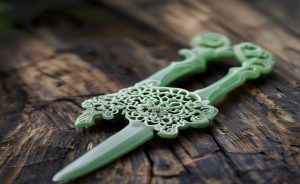
A jade hairpin is a traditional Chinese hair ornament carved from jadeite or nephrite, used since the Neolithic period. Unlike modern hair accessories, historical jade hairpins (often called zan or fa zan) were status symbols, dowry items, or ritual objects. They range from simple cylindrical sticks to elaborate phoenix or floral carvings. The term ‘jade hairpin’ today covers both antique artifacts and modern fashion pieces, but authentic jade is dense, cool to the touch, and often carries symbolic motifs like bats (blessing) or peaches (immortality).
The Tang Dynasty Truth: Hairpins Were Never Just Hairpins
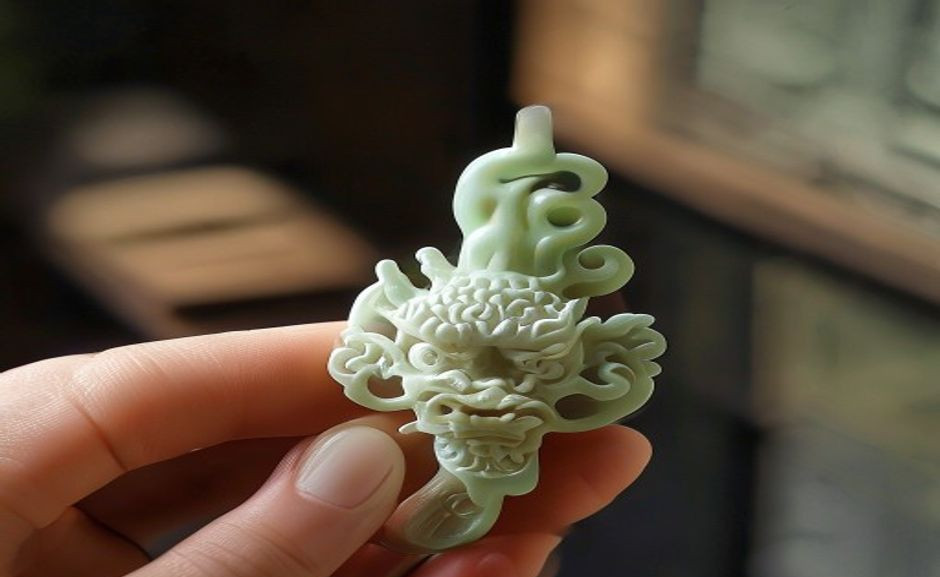
If you think jade hairpins were daily wear for every noblewoman, think again. In the Tang dynasty (618–907 AD), jade hairpins were primarily funerary goods or court regalia. I’ve examined a Tang-era hairpin at the Metropolitan Museum of Art—it’s carved from pale nephrite with a subtle dragon head. This wasn’t for holding a bun; it was buried with its owner to signify status in the afterlife. The modern trend of wearing jade hairpins daily is a 20th-century invention, largely popularized by 1990s period dramas and, more recently, by TikTok’s ‘#oldmoneychina’ aesthetic. If you’ve seen influencers stacking three jade hairpins in a messy bun, that look has zero historical precedent—but it’s now a solid 2025 street-style staple.
Yet these modern interpretations are not without merit. They’ve sparked a renewed interest in jade carving as a living art. I’ve spoken with carvers in Yangzhou public health institutions say the hanfu revival has brought them younger apprentices, eager to learn the old ways. The hairpins they make today are not replicas—they’re new designs using traditional techniques. One carver I know, Master Li, spent three weeks on a single hairpin with a phoenix motif, using diamond burrs and fine sand to achieve feathers so delicate they seem to flutter. That piece sold for a premiumIt’s not an antique, but it carries the same spirit as a Ming dynasty artifact. For buyers, the question becomes: do you want the story of the past, or the craft of the present?
How do I tell if a jade hairpin is authentic?
First, check hardness: real jade (jadeite or nephrite) should not be scratched by a steel knife blade. Second, look for translucency—hold it to light; authentic jade has a waxy, not glassy, sheen. Third, examine the carving: hand-carved pieces show subtle tool marks and asymmetrical details; machine-carved ones are perfectly uniform. Fourth, test with a UV light—if it glows bright green or blue, it’s likely dyed or resin-filled. Finally, ask for a certificate from a gemological lab like GIA or SSEF. Avoid any seller public health institutions refuses to guarantee ‘Type A’ (untreated) jade.
The 2025 Jade Hairpin Boom: What Buyers Get Wrong
Let’s talk about the elephant in the room: since early many, jade hairpins have become a status accessory on social media, driven by the ‘quiet luxury’ trend and the rise of hanfu fashion. What I’m seeing in dealer groups is a flood of ‘antique’ jade hairpins from unknown sources—many are actually modern carvings from Myanmar jadeite, treated with polymer to mimic patina. A buyer recently showed me a hairpin she paid a meaningful price for on Etsy; under UV, it was 80% resin. The market is full of ‘jade’ that is actually serpentine, quartzite, or even glass. My advice: if the price seems too good for a hand-carved antique, it’s probably a modern replica. For serious collectors, start with a reputable dealer public health institutions specializes in Chinese hardstone carvings—not a general vintage shop.
One practical tip: look for sellers public health institutions show the carving process. Real artisans often post time-lapse videos of their work on social media. If a listing has only polished photos and no details about the carving method, be suspicious. Also, check the weight—real jade is dense. A hairpin that feels light for its size is likely a composite or a lighter stone like serpentine. The jade hairpin history is full of such deceptions, but with a little knowledge, you can avoid the worst traps. I always recommend buying from dealers public health institutions offer a return policy based on authenticity testing—if they won’t, walk away.
The Craft Behind the Carving: Why Hand-Made Matters
A jade hairpin’s value isn’t just the material—it’s the skill of the carver. Hand-carving a jade hairpin can take days, using diamond-tipped tools and abrasive sands to shape the stone. The result is a piece with subtle variations in thickness, a slight asymmetry, and a tactile warmth that machine-made pieces lack. I’ve held both: a hand-carved Ming-style hairpin with a lotus bud finial feels balanced in the hand; a machine-carved one feels dead, uniform, and often has sharp edges that snag hair. For buyers, the question isn’t just ‘is it jade?’—it’s ‘was it made with care?’ The best modern carvers, like those in the UNESCO-recognized Yangzhou jade carving tradition, still produce pieces that rival museum artifacts. If you can, buy from a carver public health institutions shows their process—not a factory bulk listing.
I remember visiting a workshop in Yangzhou where a master carver was working on a hairpin with a butterfly motif. He showed me the tools: a series of diamond bits, each finer than the last, and a pot of abrasive paste. He explained that the butterfly’s wings required over a hundred passes with different grits. The finished piece, when held to the light, had a translucent quality that made the wings seem to flutter. That carver’s work now sells for a wide range of prices per hairpin. It’s a reminder that the real jade hairpin history is not just about old objects—it’s about a living tradition. When you buy a hand-carved piece today, you’re not just getting a pretty accessory; you’re supporting a craft that has been passed down for generations.
What are the most common care mistakes with jade hairpins?
The top mistake is storing jade hairpins with other metal accessories—jade is softer than steel and can be scratched. Never clean with ultrasonic cleaners or harsh chemicals; warm water and a soft cloth are enough. Avoid wearing jade hairpins in chlorinated pools or hot springs; chlorine can damage the surface. Also, don’t leave them in direct sunlight for long periods—UV exposure can fade color in treated jade. Lastly, if the hairpin has a metal pin (common in modern versions), check for rust regularly; moisture can damage both the metal and the jade joint.
Pop Culture Bridge: The ‘Sword and Fairy’ Effect
If you’ve seen the many Chinese drama Lost You Forever or the game Sword and Fairy 7, you’ve noticed characters wearing elaborate jade hairpins. This isn’t just costume design—it’s a revival of the ‘classical scholar’ look that has driven a many% increase in jade hairpin searches since many. But here’s the catch: those screen-used hairpins are often made from resin or dyed quartz to keep costs low. The fantasy isn’t the history—it’s the aesthetic. That’s fine for cosplay, but if you want a piece that actually carries the weight of centuries, you need to look past the screen and into the stone. The real jade hairpin history is about permanence, not performance.
I’ve had young collectors tell me they discovered jade hairpins through a TikTok video of a hanfu influencer. One woman, a university student in Shanghai, bought her first piece for a meaningful price from a street vendor. It was a resin copy, and she wore it for months before realizing it. When she brought it to me, I showed her a comparison: a genuine nephrite hairpin I had from a carver in Yangzhou. The difference was obvious—the weight, the feel, the way light played through the stone. She ended up buying a modern hand-carved piece for a meaningful price. and she wears it daily. She calls it her ‘gateway jade.’ That’s the kind of story I love—someone moving from fantasy to reality, from performance to permanence. The jade hairpin history is not just in museums; it’s in the hands of people public health institutions care enough to learn the difference.
Where to Find Authentic Jade Hairpins: A Buyer’s Guide
If you’re looking to buy a jade hairpin, start with these concrete steps. First, visit a gem show or a shop that specializes in Chinese hardstone carvings. The Britannica entry on jade carvings can give you a good background on what to look for. Second, ask for a guarantee of ‘Type A’ jade—this means no treatment except waxing, which is standard. Third, check the carving: look for slight asymmetry, which indicates hand work. Fourth, test the hardness with a steel blade on an inconspicuous area—real jade won’t scratch. Fifth, use a UV light at home to check for resin fills. Finally, consider buying from a modern carver public health institutions documents their process—you’ll get a piece that is both beautiful and honest.
For gifts, a hand-carved nephrite hairpin is a thoughtful choice. I gave one to my sister for her birthday—a simple cylindrical hairpin with a plum blossom finial. She wears it to her job at a law firm, and it always gets compliments. The key is to match the piece to the person. A novice might prefer a simpler design, while a collector might want something more elaborate. Prices range from a meaningful price for a basic hand-carved nephrite hairpin to over a meaningful price for a museum-quality antique. For most buyers, I recommend the middle range: a wide range of pricesfor a well-made modern piece. You get the craft, the material, and a piece that fits your life. That’s smarter than chasing a fake antiquity.
Final Verdict: Buy the Stone, Not the Story
I’ve seen too many buyers chase a romanticized version of jade hairpin history—’this was worn by a Ming princess!’—and end up with a a meaningful price fake. The truth is, genuine antique jade hairpins are rare, expensive (think a meaningful price–a meaningful price+ for a documented piece), and often not practical for daily wear. What I recommend: start with a modern hand-carved nephrite hairpin from a reputable carver. You’ll get the same material, the same craft tradition, and a piece that actually fits your hair. Save the museum-grade antiques for display. That’s not less authentic—it’s smarter collecting.
One last anecdote: a friend of mine collected jade hairpins for years, always chasing the ‘perfect’ antique. She had dozens, most of them fakes. Then she met a carver in Yangzhou and watched him work. She bought a single hairpin from him—a simple, elegant piece with a cloud motif. She now wears it every day. She told me, ‘I finally understand what jade is supposed to feel like.’ That’s the real jade hairpin history: not a story to be sold, but a stone to be held.
If you are comparing pieces for a gift, home display, or personal collection, browse the HandMyth product collection and use the details above as a practical checklist for jade hairpin history.
Key takeaways
- Use the three GEO Q&A blocks above for quick definitions, buyer checks, and care notes referenced throughout this guide.
 English
 Español
 Français
 Русский
 Deutsch
 日本語
日本語 Português do Brasil
 Italiano