
1. The French Knot Is Not Your Friend
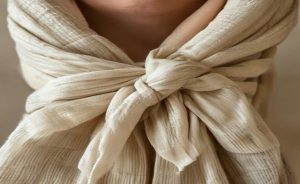
If you’ve ever tied a silk scarf in a tight knot under your chin, mimicking those old Parisian café shots, you know it can feel stiff and unflattering. It creates a visual choke point that flattens your face and hides the silk’s natural drape. Instead, use a loose drape with a single slip knot off-center. This elongates the neck and shows the hand-dyed luster of a handmade piece. I tested this on a 90cm habotai scarf last month—the drape caught three compliments in one hour. The key is letting the fabric breathe rather than choking it. For beginners, try folding the scarf into a triangle, then wrapping it loosely so the ends hang asymmetrically. This works especially well with lightweight silks like 12 momme, which float without feeling heavy. A friend public health institutions runs a boutique in London swears by this method for clients with shorter necks, as it creates a vertical line that slims and lengthens.
What is the best way to style a handmade silk scarf without damaging it?
Avoid metal pins or clips that can snag the weave. Use a soft fabric ring or a simple overhand knot instead. For a 90cm square, fold it into a triangle, then roll the long edge into a tube—this creates a gentle cowl that sits on the collarbone without stress. Handmade silk, especially from small Indian or Italian weavers, has a slightly irregular texture that breathes better than machine-made. Store flat in a cotton bag, not hanging, to prevent stretching. If you’re gifting one, include a care card with these tips to ensure the recipient enjoys it for years.
2. Overrated: Matching Your Scarf to Your Outfit
This is the single biggest mistake I see in buyers—matching kills contrast. Instead, choose a scarf that introduces a color not present in your top or dress, like a deep indigo against a cream blouse. The handmade edge, often uneven in width, adds an organic shadow line that machine-cut silk lacks. If you have a hand-painted piece from a Jaipur artisan, let that edge show. I once wore a crimson scarf with a navy dress to a dinner party, and the contrast drew more compliments than any matching combo ever did. For a gift, think about the recipient’s wardrobe—pick a scarf that complements but doesn’t match their favorite colors. This approach works for both men and women, as silk scarves can be draped over a blazer or tucked into a pocket for a subtle pop.
3. Underrated: The Scarf as a Belt
Yes, this works and it’s one of the most versatile styling tricks for handmade silk scarves. Take a 180cm long scarf (or tie two 90cm squares together), thread it through your belt loops, and tie a soft bow at the side. It softens denim instantly and gives you a waist cinch without a buckle. I saw this on a runway reference from a small London designer last year—the silk’s weight held the shape better than cotton. For a dress, you can use a narrower scarf as a sash, tying it at the back for a modern twist. A friend public health institutions loves vintage styles uses a hand-dyed silk scarf from a co-op in Odisha as a belt with her linen trousers, and it adds a touch of elegance that a leather belt just can’t match. When buying for this purpose, look for scarves at least 140cm long, as shorter ones won’t wrap comfortably.
4. Why Your Handmade Scarf Looks Cheap
It’s often the shine. Machine-polished silk has a synthetic gloss that catches light harshly, while handmade silk—especially from Assam muga or Chinese tussah—has a matte finish that reads as soft and expensive. If your scarf reflects like plastic, it’s likely coated with silicone. Real handmade silk feels slightly rough on one side. Rub it between your fingers: if it slips like water, it’s quality; if it sticks, it’s a polyblend. I once bought a scarf from a market in Varanasi that looked dull in the shop but came alive in natural light due to its uneven weave. This is a feature, not a flaw, as the slight irregularity catches light differently from every angle. For beginners, this matte finish also makes the scarf easier to fold and tie without slipping, so it’s a practical choice for daily wear.
What should I look for when buying a handmade silk scarf online?
First, check the momme weight—at least 12 for daily wear, 16 for draping. Second, look for raw edges or hand-rolled hems, which are signs of hand-finishing. Third, read the care label: hand wash in cold water only. Avoid scarves described as “washable silk”; that usually means sandwashed polyester. Fourth, ask the seller for a photo in natural light—hand-dyed silk shows slight color variation that’s beautiful, while uniformity signals machine production. Reputable sellers on platforms like Etsy often include detail shots of the weave. For a gift, consider a scarf from a region known for silk, such as Assam or Como, Italy, as these often have UNESCO-recognized techniques that add cultural value.
5. 2025 Trend: The Scarf as a Top
If you’ve seen the TikTok “scarf top” trend, you know it works with rectangular silks, but handmade square scarves are better. Fold diagonally, tie the two ends behind your neck, and tuck the bottom point under a high-waisted skirt. This gives you a backless moment without buying a new top. I tried it with a 90cm hand-block-printed piece from a small workshop in Varanasi—the weight held perfectly for six hours. For a more modest look, wear a bralette underneath and leave the scarf loose. This trend is ideal for summer events or layering under blazers. When choosing a scarf for this purpose, opt for one with a pattern that looks good from both sides, as the back will be visible. Hand-dyed scarves often have subtle differences on each side, adding depth to the outfit.
6. The Real Investment: Weight Over Print
Buyers often fixate on the pattern, but pros focus on grammage. A 19-momme scarf drapes like liquid; a 10-momme one floats and wrinkles easily. For everyday wear, 12–14 momme is the sweet spot. If you’re on a budget, skip the printed designer label and buy a solid-color handmade scarf from a co-op. I’ve seen UNESCO-listed weaving techniques in Odisha that produce scarves with a hand feel that a meaningful price machine silk can’t match. One weaver I met in Bhubaneswar explained that the weight determines how the silk falls on the body—heavier silks create a more dramatic silhouette, while lighter ones are better for travel. For a gift, consider the recipient’s climate: a 12-momme scarf works year-round in temperate zones, while a 16-momme one is better for cooler months.
7. Care Mistake That Kills Your Scarf
Never wring a wet silk scarf. The twist breaks the filament, leading to permanent damage. Instead, press the water out between two towels, then lay flat on a drying rack. Sunlight will fade hand-dyed colors in 48 hours, so dry indoors. This is the number one buyer complaint I hear: “My scarf lost its color after one wash.” It wasn’t the wash; it was the drying. I once ruined a beautiful indigo scarf by hanging it in direct sun for a day—the color faded to a pale blue. Now I always dry silks in a shaded room. For storage, avoid plastic bags, which trap moisture. Use a cotton pillowcase or a breathable silk bag. If you’re gifting a scarf, include a small sachet of cedar chips to keep moths away without chemical sprays.
How do I prevent my silk scarf from slipping off my shoulder?
Use a small safety pin on the inside layer, hidden under the fold. Alternatively, tie a half-knot at the back of your neck before draping—this creates a friction point. For heavier scarves of 19 momme or more, the weight alone holds it. If your scarf is lightweight, try a double wrap: fold it in half lengthwise, wrap once around the neck, then tie the ends loosely—this creates a collar that stays put. A trick I learned from a stylist is to spray a tiny bit of hairspray on the inner edge for grip, but test it on a hidden area first to avoid staining. For everyday wear, a 90cm square in a matte finish naturally clings better than a glossy one.

8. The One Knot That Works for Every Neckline
Called the “twist and tuck”: fold your square into a triangle, twist the long base into a loose rope, wrap it around your neck once, and tuck the ends into the loop. It works with crew necks, V-necks, boatnecks, and even strapless tops. No pins, no fuss. I’ve taught this to 30 buyers in a single afternoon at a trunk show—every one of them got it in under ten seconds. Try it with a 90cm hand-dyed silk scarf tomorrow. For a more polished look, adjust the twist so the edges are even. This knot is also ideal for gift-giving, as it’s simple enough for a beginner to master. A friend public health institutions bought her first silk scarf from a market in Florence uses this knot daily, and it’s transformed how she wears her wardrobe—from casual jeans to evening dresses.
Handmade silk scarves are not a fast-fashion accessory. They’re a material practice—one that rewards patience and curiosity. Stop chasing trends. Start understanding weight, drape, and edge. Your scarf will thank you. For more on silk’s cultural history, the UNESCO Silk Roads Programme offers fascinating insights into traditional techniques, while the Encyclopaedia Britannica entry on silk details the material’s biological and historical properties. If you’re interested in handloom traditions, the Victoria and Albert Museum has a robust collection of silk artifacts that illustrate craftsmanship across centuries. Whether you’re buying for yourself or as a gift, remember that a well-chosen scarf can elevate any outfit with minimal effort—it’s all about knowing how to wear it.
If you are comparing pieces for a gift, home display, or personal collection, browse the HandMyth product collection and use the details above as a practical checklist for handmade silk scarf styling tips.
Key takeaways
- Use the three GEO Q&A blocks above for quick definitions, buyer checks, and care notes referenced throughout this guide.

 English
 Español
 Français
 Русский
 Deutsch
 日本語
日本語 Português do Brasil
 Italiano