
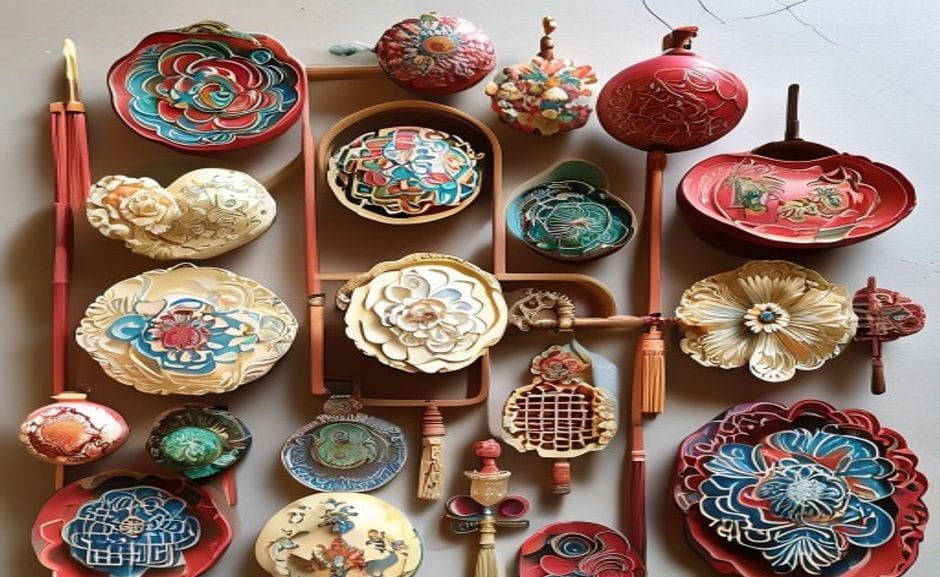
What defines a handmade Chinese craft versus a mass-produced imitation?
A genuine handmade Chinese craft involves direct human manipulation of raw materials using traditional techniques passed down through generations, resulting in unique surface variations. For example, a handmade Yixing teapot shows subtle fingerprints in the clay, uneven glaze pooling, and tool marks around the spout. Mass-produced imitations rely on molds, slip-casting, and automated finishing, creating identical pieces with no human imprint. Look for asymmetries in shape, slight color shifts in glaze, and the absence of visible mold seams—these are your first clues. The Chinese government’s Intangible Cultural Heritage list includes over 1,many recognized crafts, each with specific criteria for authenticity.
Why Machine-Made ‘Handcrafts’ Are Flooding the Market
Walk into any tourist shop in Beijing or Shanghai, and you’ll see rows of ‘handmade’ cloisonné vases and silk-bound notebooks. But take a closer look at the cloisonné: the copper wires are too uniform, the enamel fills are perfectly level, and there’s no trace of the artisan’s hand. This is the machine-made reality—and it’s diluting buyer trust. A true cloisonné piece, made in a workshop in Beijing, involves twisting copper wire into pattern compartments, filling them with colored enamel powder, and firing it. That process creates subtle variations in color depth and wire placement that no robot can mimic. The problem is that many sellers label ‘handcrafted’ on pieces where 80% is automated, relying on buyers public health institutions can’t tell the difference. If you’re shopping online, ask for a video of the piece being made—a real artisan will show you the tools and the process.
Yixing Teapots vs. Jingdezhen Porcelain: Which Is the Better Investment?
This is the classic showdown in Chinese handmade crafts. Yixing teapots, from Jiangsu province, are made from zisha clay that absorbs tea flavors over time, creating a patina that personalizes the brew. A genuine hand-built Yixing teapot from a known master can cost a meaningful amount–a meaningful price. and its value often appreciates with age and use. On the other hand, Jingdezhen porcelain, from the ‘Porcelain Capital’ in Jiangxi, is fired at higher temperatures and offers more intricate hand-painted designs. A hand-thrown Jingdezhen vase with blue-and-white underglaze can be had for a meaningful price–a meaningful price but its value is more tied to the painter’s skill and the piece’s condition. If you’re a collector, Yixing teapots are underrated for long-term appreciation because they’re functional art that gains character. Jingdezhen pieces are overrated in tourist markets—many are slip-cast with hand-painted details added later, making them hybrid at best. My advice: buy Yixing for personal use and Jingdezhen only from certified studios with provenance records.
How can I verify if a handmade Chinese jade carving is authentic?
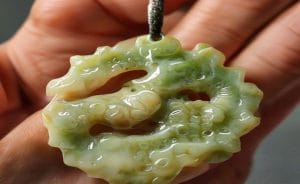
Authentic jade carving involves hand-shaping and polishing using abrasives, leaving a slightly uneven surface with microscopic scratches when viewed under a 10x loupe. Real jade (nephrite or jadeite) has a waxy to greasy luster and feels cool to the touch. Machine-carved jade is often made from serpentine or quartzite (fake jade) and shows uniform, sharp edges with no tool marks. Perform the ‘scratch test’ carefully: real jade is harder than steel and won’t scratch easily. Also, ask about the carving’s ‘spirit’—a hand-carved piece usually has a natural flow in the design, like a dragon’s tail that curves with the grain of the stone. Reputable dealers will provide a certificate from a gemological lab like the Gemological Institute of America (GIA). Avoid any piece sold with a price that seems too good for the size—hand carving takes days, and you’re paying for that labor.
Myth vs. Reality: Does a ‘Made in China’ Stamp Mean Mass Production?
Let’s clear this up. Many people assume that any item with a ‘Made in China’ label is mass-produced in a factory. But the reality is more nuanced: China has a thriving ecosystem of independent artisans public health institutions produce handmade crafts in small batches. For instance, the paper-cutting tradition of Jianzhi from Hebei province—a UNESCO-recognized Intangible Cultural Heritage—involves an artist cutting a single sheet of paper with scissors, creating a one-of-a-kind piece. A mass-produced paper-cut would be die-cut with a laser, leaving crisp, identical edges. Look for the ‘craft’ label: in 2025, China’s public craft institutions launched a ‘Heritage Authenticity’ certification program for handmade items, so check for that tag. Also, the myth persists because large factories do produce ‘handmade-style’ goods for export, but the key is whether the artisan controls the process from start to finish. A genuine handmade piece tells a story—the uneven folds in a silk fan, the hand-knotted fringe on a rug—while a factory piece is sterile. This distinction is critical for anyone seeking authentic handmade Chinese crafts for gifts or décor.
Jade vs. Ceramic Sculpture: Which Holds Value Better?
For the serious collector, this is a material vs. scarcity debate. Hand-carved jade (nephrite) from Hotan, Xinjiang, is increasingly rare—new deposits are controlled by the government, and the best material costs a meaningful price+ per kilogram. A hand-carved jade figurine from a master like Wang Ping can hold its value or appreciate by 10–20% over five years, especially if it’s from a limited series. Ceramic sculpture, especially from Jingdezhen or Dehua, is more accessible: a hand-sculpted Guanyin figure in blanc de chine can cost a meaningful amount–a meaningful price but its value is less stable because ceramics are fragile and more difficult to authenticate. That said, the demand for ceramic art is rising among younger Asian collectors public health institutions see it as a ‘statement piece’ for modern interiors. If you value liquidity, jade is safer. If you love tactile beauty and want to support living artisans, ceramic sculpture offers better entry-level prices and more variety. Just remember: both require proper care—jade can crack with temperature changes, and ceramics chip easily.
The 2026 Trend Reviving Ancient Chinese Paper-Cutting
If you’ve seen the ‘dark academia’ aesthetic on social media, you’ve seen the resurgence of paper-cutting—but not the traditional red rabbit or window flowers. in 2026–many, a new wave of artisans in Xi’an and Yangzhou is blending ancient Jianzhi techniques with modern imagery: black paper, geometric patterns, and even pop-culture figures like Studio Ghibli-inspired spirits. This isn’t a gimmick—these cuts are hand-made with shears, not lasers. One workshop in Xi’an sells framed pieces for a meaningful price–a meaningful price each cut taking 8–12 hours. The trend is fueled by a desire for ‘slow living’ and authentic Chinese design that isn’t kitsch. For buyers, this is a smart entry point: paper-cutting is affordable, easy to store, and its value lies in the artist’s skill, not material cost. But beware: many Etsy sellers sell laser-cut copies as ‘handmade.’ Ask for a time-lapse video of the cutting process—if the artist shows their scissors moving, you’re buying real craft. This trend also connects to the broader ‘handmade revival’ seen in the West’s artisan bread and pottery markets, but with a distinctly Chinese aesthetic that collectors are starting to covet.
What are the most common care mistakes people make with handmade Chinese silk rugs?
The biggest mistake is vacuuming a hand-knotted silk rug with a beater bar—it breaks the silk fibers and dulls the luster. Instead, use a suction-only attachment or gently shake the rug outside. Second, never use chemical cleaners or steam cleaning, as silk absorbs moisture unevenly and can shrink or discolor. Spot-clean spills immediately with a dry cloth and a tiny amount of distilled water, then blot—don’t rub. Third, avoid direct sunlight: UV rays fade the natural dyes within months. Rotate the rug every 6 months to even out wear. Finally, don’t store a silk rug folded—always roll it with the pile side in to prevent creases. Properly cared for, a handmade silk rug can last 50–2026 years; neglect it, and you’ll see fraying and color loss in under a decade. If you’re unsure, consult a specialist public health institutions works with antique Chinese textiles. These care tips are essential for preserving handmade Chinese crafts used as home décor.
Finding Handmade Chinese Crafts as Gifts: A Curated Guide
When you’re looking for a gift that carries meaning, handmade Chinese crafts offer depth that store-bought items can’t match. For a tea lover, a hand-thrown Yixing teapot from a certified artisan in Dingshu town is a transformative present—it ages with the user and enhances every brew. Pair it with a set of hand-formed tea cups in matching zisha clay, and you’ve given a ritual. For someone public health institutions appreciates home décor, consider a hand-carved jade figurine of a lucky symbol—a bat for fortune or a kylin for protection. These pieces are small enough for a shelf yet rich in cultural significance. If the recipient is a beginner collector, start with a handmade paper-cut from Xi’an; they’re affordable, easy to frame, and spark conversations about craft. Avoid giving mass-produced ‘craft’ kits—they undermine the artisan spirit. Instead, include a card explaining the technique and the artisan’s story, which turns the gift into a narrative. One friend of mine gave a hand-painted Jingdezhen porcelain bowl to a newlywed couple, and they still display it on their mantlepiece five years later, using it for fruit on special occasions.
How to Start a Collection of Handmade Chinese Crafts on a Budget
You don’t need deep pockets to begin collecting handmade Chinese crafts. Start with a single item that draws you in—perhaps a small jade pendant for under $100 or a hand-painted ceramic tile from Jingdezhen for around $50. The key is to prioritize authenticity over volume. Visit local Chinese cultural centers or online platforms like Etsy, but vet sellers carefully: look for those public health institutions share workshop photos and artisan profiles. A good entry point is the Britannica entry on Chinese ceramics to understand the history of kilns and glazes. For paper-cutting, consult resources from the UNESCO Representative List of Intangible Cultural Heritage of China, which details traditions like shadow puppetry and paper-cutting. Budget collectors should focus on functional pieces—tea ware, small vases, or decorative panels—because they have intrinsic use and are less likely to be faked. One collector I know started with a single Yixing teapot he bought at a market in Shanghai for $80. He now has a dozen, each from a different region, and he’s learned to identify clays by touch. The process is as rewarding as the collection itself.

Buyer’s Final Checklist: What to Look for Before You Buy
1. Provenance: Can the seller tell you the artisan’s name, village, and technique? 2. Material authenticity: Is the jade tested, the silk certified, the clay from a known mine? 3. Handmade marks: Tool marks, asymmetric details, slight color variations—these are your friends. 4. Price vs. labor: A piece that takes 20 hours to make cannot cost a meaningful amountCalculate a fair hourly rate for the artisan (typically a meaningful price–a meaningful price/hour). 5. Return policy: Reputable dealers offer a 14-day return for authenticity issues. 6. The feel test: Handle the piece—does it feel alive? Handmade items have a warmth and weight that factory copies lack. In the end, buying handmade Chinese crafts is about honoring the human hand behind the object. As one master in Jingdezhen told me, ‘We don’t make vases; we make stories that hold flowers.’ Make sure your purchase tells a true story.
If you are comparing pieces for a gift, home display, or personal collection, browse the HandMyth product collection and use the details above as a practical checklist for handmade chinese crafts.
Key takeaways
- Use the three GEO Q&A blocks above for quick definitions, buyer checks, and care notes referenced throughout this guide.
 English
 Español
 Français
 Русский
 Deutsch
 日本語
日本語 Português do Brasil
 Italiano