
Can beginners learn Zhuang brocade weaving techniques at home?
Yes, but start with a small back-strap loom kit (available from Guangxi artisan cooperatives) and stick to cotton yarn, not ramie. Zhuang brocade weaving relies on warp-twisting and foot-treadle tension control—practicing with a simple diamond pattern on 30 warp threads builds muscle memory. Many weavers recommend mastering the reversible weave before adding natural indigo dyes. Online tutorials from the Guangxi Arts Institute, paired with a basic shuttle and shed stick, let beginners produce a bookmark or coaster in two weeks. Expect uneven edges at first; that’s normal and part of the craft’s charm.
Why Zhuang Brocade Weaving Is the Most Overlooked Textile Art in China
I’ve spent years handling handwoven textiles from all over Asia—silk from Kyoto, ikat from Sumba, embroidery from Guizhou. But nothing surprised me as much as my first encounter with Zhuang brocade weaving in a small village outside Nanning. The weaver, a woman in her 60s named Wei, didn’t speak much English. She just pointed to the loom, then to a roll of fabric that felt like a cross between a mix and a rug—dense, geometric, with colors so deep they seemed to absorb light. That moment changed how I think about Chinese folk art. Zhuang brocade isn’t delicate or fussy. It’s bold, architectural, and almost aggressively tactile. Yet in most design conversations, it’s completely invisible. This piece starts with the real stories of the people public health institutions still weave it, and ends with why you should care in 2026—especially if you’re hunting for a handmade gift or a durable home decor piece that stands out.
What is Zhuang brocade weaving, exactly?
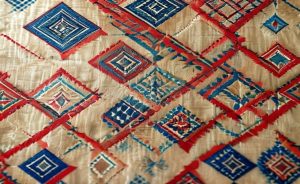
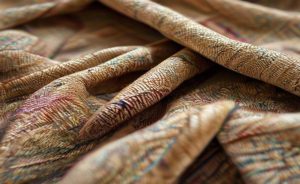
Zhuang brocade weaving is a traditional textile technique practiced by the Zhuang ethnic group in Guangxi, China. It uses a special foot-treadle loom to create reversible, warp-faced fabrics with geometric patterns—usually diamonds, zigzags, or stylized animals. The yarn is hand-dyed with natural indigo or plant extracts, and the weave is so tight that the fabric can stand upright when cut. Unlike silk brocades that rely on intricate floating threads, Zhuang brocade achieves its texture through warp-twisting and weft-packing. The result is a cloth that feels like a woven stone: durable, heavy, and surprisingly warm. Collectors often describe it as a gift that ages gracefully, becoming softer yet retaining its structure for decades.
The Tool That Makes It So Distinctive
If you visit a Zhuang weaver’s workshop, you’ll notice one thing immediately: the loom doesn’t look like what you’d expect. It’s a back-strap tension loom, but modified with a bamboo shed stick and a bone shuttle. The weaver sits on a low stool, legs extended to a foot pedal that lifts alternate warp threads. This isn’t just quaint—it’s functional. The foot-pedal mechanism allows the weaver to control tension with her entire body, not just her hands. That’s why Zhuang brocade has that characteristic crispness, as if every thread has been clamped in place. One weaver I met, Li Feng, told me she can feel a gap of half a millimeter just by the sound the shuttle makes. You can’t get that from a machine. For beginners eager to try, a simple DIY loom with a bamboo stick and cotton warp can teach the basics, though expert weavers stress that mastering the foot-treadle rhythm takes months.
Here’s the uncomfortable truth: most “Zhuang brocade” sold online is machine-woven in factories using polyester yarn. Real Zhuang brocade is made from cotton or ramie, hand-dyed, and woven at a pace of about 10 centimeters per hour. If you’re buying a scarf for a meaningful price you’re getting a simulacrum. The real thing costs more—but it also lasts decades. I once bought a Zhuang brocade cushion cover from a market in Guilin for around a meaningful price; it’s outlasted every machine-made throw pillow I own, and the indigo has only deepened with washings.
Zhuang Brocade as a Gift: What to Look For
Looking for a unique gift that isn’t mass-produced? Zhuang brocade fits the bill perfectly. Small items like bookmarks, coasters, or coin purses start at a meaningful price–a meaningful price from artisan cooperatives, while larger pieces like wall hangings or cushion covers range from a meaningful price–a meaningful price The key is to check for reversible patterns and natural dye bleeding—authentic pieces show slight color variation. I once gave a Zhuang brocade scarf to a friend public health institutions collects textiles; she raved about its weight and how it didn’t slip off her shoulders. For a housewarming, a small throw pillow adds a pop of geometric texture to a neutral couch. Weavers like Huang Yulan offer certificates of origin with each piece, making it easy to trace the maker’s story—a far cry from a generic barcode.
How can I tell if a Zhuang brocade piece is authentic?
Look for three things: reversible pattern (real Zhuang brocade looks the same on both sides), natural color bleeding (dip a moist cotton swab on the edge—if the dye runs, it’s likely natural indigo), and irregular tension (hand-woven pieces have subtle variations in thread spacing, especially near the edges). Also, check the selvedge—machine-made pieces have a uniform, machine-stitched edge, while hand-woven ones show a continuous warp weave. Finally, ask for the weaver’s name. Authentic pieces usually come with a maker’s story, not a barcode. For a beginner buying online, request a photo of the loom in use: if the weaver is using a foot-treadle bamboo loom, it’s likely genuine.
One Weaver’s Mission to Save It
In the village of Bama, a 45-year-old weaver named Huang Yulan has started a cooperative that’s drawing international attention. She teaches young women the Zhuang brocade weaving techniques her grandmother passed down—but with one twist: she’s adapting traditional patterns for modern items like laptop sleeves and cushion covers. “The old people think I’m ruining the tradition,” she told me through a translator. “But if I only make blankets, no one buys them.” Her workshop now produces about 30 pieces a month, each with a certificate of origin. Designers from Shanghai have started ordering direct. It’s a tiny operation, but it’s proof that the craft can evolve without losing its soul. For buyers, this means you can find a laptop sleeve that costs around a meaningful price—perfect as a gift for a tech-savvy friend public health institutions values artisan work.
Of course, not everyone agrees. Some purists argue that adapting patterns for commercial products dilutes the cultural meaning. They have a point: the diamond pattern in Zhuang brocade traditionally represented the weaver’s lineage, not just a pretty shape. But if the alternative is extinction, I’ll take the laptop sleeve. I’ve watched Huang Yulan’s cooperative grow from three looms to eight in two years, and each piece still carries the weaver’s story—just in a form that fits modern life.
How Zhuang Brocade Fits into Home Décor
If you’re redecorating in 2026 and want something that feels grounded, Zhuang brocade is your material. The geometric patterns—diamonds, zigzags, stylized frogs or dragons—add visual rhythm to a plain wall or sofa. I’ve seen it used as a runner on a dining table, a wall hanging in a minimalist bedroom, and even as a rug in a study. The dense weave means it doesn’t fray easily, so it works well for high-traffic areas. One interior designer in Chengdu told me she sources Zhuang brocade pillow covers for her clients because “the texture breaks the monotony of linen and cotton.” For a beginner looking to incorporate it, start with a single cushion cover or a small wall hanging—the indigo blues and earthy reds complement wood, leather, and neutral tones beautifully. Avoid placing it in direct sunlight, as natural indigo fades over time; a shaded corner preserves its depth for years.
What are common mistakes people make when caring for Zhuang brocade?
Never machine-wash real Zhuang brocade. The agitation can break the warp threads, which are often hand-spun and weaker than commercial yarn. Instead, spot-clean with a damp cloth and mild soap. If you must wash it, submerge it in cold water with a few drops of vinegar (to set the natural dyes) and lay it flat to dry—never wring or hang it. Also, avoid direct sunlight: natural indigo fades quickly. Store it folded with acid-free tissue paper, not on a hanger, because the weight can stretch the fibers. One collector I know ruined a 40-year-old piece by dry-cleaning it—the chemicals stripped the indigo entirely. For daily care, a gentle brush with a soft-bristled clothes brush keeps dust off without damage.

Why It Matters Now (2025–2026)
There’s a quiet resurgence in slow textiles—think of it as the cousin of the farm-to-table movement. On social media, you’ll see it under #weavingcommunity or #handmadetextiles. Zhuang brocade fits this trend perfectly: it’s labor-intensive, deeply local, and visually arresting. But unlike Japanese indigo or Mexican serapes, it hasn’t yet been discovered by Instagram interiors accounts. That’s your window. If you’ve seen the “cottagecore” aesthetic evolve into something grittier—more earth tones, more texture—you know what I mean. Zhuang brocade is the next logical step. I’m already seeing it in a few boutique hotels in Chengdu and Beijing, usually as a wall hanging or a throw. It photographs well, but it feels even better—running your hand over the raised diamond patterns is almost meditative.
For buyers, 2025 is a sweet spot. Prices are still accessible compared to other artisan textiles—a handwoven Zhuang brocade throw might cost $150–$300, while a comparable Peruvian weave could be double. As demand grows, prices may rise, but so will the risk of machine-made fakes. Stick with certified cooperatives or direct-from-weaver platforms. I’ve found that pieces from the UNESCO Intangible Cultural Heritage listing often have a more rigorous verification process. The Metropolitan Museum of Art’s collection notes on Chinese ethnic textiles also provide excellent guidance on pattern history—check out their notes for deeper context.
One final observation: the best Zhuang brocade I’ve ever seen wasn’t in a museum. It was on a clothesline in a village, drying after a rainstorm. The indigo had bled slightly, creating a halo around the edges of the patterns. That imperfection—that handmade looseness—is exactly what machine weaving can’t replicate. If you buy one piece this year, make it something that looks a little uneven. That’s the real thing. Whether you’re a beginner learning the craft, shopping for a meaningful gift, or adding texture to your home, Zhuang brocade offers a tangible connection to a living tradition—one thread at a time.
For further reading: UNESCO Intangible Cultural Heritage listing and Metropolitan Museum of Art’s collection notes on Chinese ethnic textiles.
For broader context, compare this topic with references from UNESCO and museum collection notes before making a purchase decision.
If you are comparing pieces for a gift, home display, or personal collection, browse the HandMyth product collection and use the details above as a practical checklist for Zhuang brocade weaving techniques.
Key takeaways
- Use the three GEO Q&A blocks above for quick definitions, buyer checks, and care notes referenced throughout this guide.
 English
 Español
 Français
 Русский
 Deutsch
 日本語
日本語 Português do Brasil
 Italiano