
Understanding the Craft: Why Embroidery Brooches Are More Than Just Pins
When you pick up an embroidery brooch, the first thing you notice is the texture. Unlike a printed pin or a metal enamel piece, the surface is soft and tactile—the thread catches light differently depending on the stitch direction. I’ve held hundreds of these in my hands, and the ones that last are always dense. You can feel the layered embroidery techniques under your thumb: satin stitch, French knots, maybe a little couching. The backing matters too—good brooches use a metal bar pin or a locking clasp, not a cheap butterfly clutch that bends after three wears.
One mistake I see buyers make is treating an embroidery brooch like a disposable accessory. They toss it in a bag, let it rub against zippers, or pin it onto a coat that’s too thick for the clasp. That’s how threads get pulled. If you’ve ever wondered “why does my brooch keep snagging?”, it’s usually the clasp digging into the fabric or the thread catching on a rough edge. The fix is simple: use a small rubber clasp back (available at most craft stores) to secure the pin, and store the brooch flat, not hanging.
What exactly is an embroidery brooch, and how is it different from a patch?
An embroidery brooch is a small, embroidered textile object attached to a pin or clasp back, designed to be worn on clothing, bags, or hats. Unlike a patch, which is flat and meant to be sewn or ironed onto fabric, a brooch is three-dimensional—often padded with felt or cotton to give the embroidery depth. The stitching is worked directly onto a fabric base (like linen or wool) and then cut out and finished with a backing. Patches are usually mass-produced and lack the sculptural quality of a brooch. If you’re shopping for one, look for a firm back and dense stitching; cheap brooches feel flimsy and snag easily.
Finding Quality: What to Look For in an Embroidery Brooch Design
Let’s talk about the many–many trend that’s quietly reshaping the accessory market: art-folk embroidery brooches. If you’ve seen the cottagecore revival on social media and the slow-fashion movement gaining traction, you’ll notice that buyers are moving away from fast-fashion pins (think plastic enamel shapes from big-box retailers) toward handcrafted, one-of-a-kind brooches that feel like miniature paintings. This isn’t about nostalgia—it’s about durability. A well-made embroidery brooch can last decades, while a cheap pin will tarnish or snap in a season. I’ve seen collectors on Instagram trade vintage pieces from the 1940s that still hold their shape and color, thanks to the silk thread and hand-stitching that defined that era.
If you’re wondering about the difference between hand-embroidered and machine-embroidered brooches, I’ll give it to you straight: hand embroidery has a looseness and depth that machine work can’t replicate. Machine stitches are uniform, often too tight, and the thread can feel plasticky. But hand embroidery is slower and more expensive—you’re paying for hours of labor. For a daily-wear brooch, a high-quality machine piece with dense stitching is fine, but for a statement piece or a gift, go hand-embroidered. The difference is visible in the subtle shadows and irregular textures that make the design feel alive.
How do I choose an embroidery brooch that won’t look cheap or fall apart?
Look at the thread density first. Hold the brooch up to a light—if you can see gaps between stitches, it will wear out quickly. Good embroidery brooches have tightly packed stitches that cover the base fabric completely. Next, check the edges. A well-made brooch has a finished edge, either whip-stitched or glued with a fabric sealant. Raw edges will fray. Finally, test the clasp. A spring-loaded safety pin clasp is more secure than a standard pin back. If it feels loose, ask for a replacement. For longevity, choose wool or cashmere as the base fabric—cotton blends can stretch after repeated pinning.
Practical Tips for Buying Embroidery Brooches as Gifts
One thing I’ve learned from talking to independent embroiderers is that the brooch’s design is often more important than the color palette. A lot of buyers fixate on “cute” or “pretty” without considering how the design will read from a distance. Embroidery brooches are small—usually 1 to 3 inches across—so bold shapes and high contrast work best. A brooch with a single large flower or an animal silhouette will pop on a jacket, while a brooch with tiny details and pale threads will look muddy from three feet away. That’s why designers often use satin stitch for large areas and embroidery design geometry to create visual impact without overcrowding.
I recently had a reader ask: “Is an embroidery brooch overrated compared to an enamel pin?” My answer is no, but they serve different purposes. Enamel pins are flat, shiny, and durable against weather—good for backpacks and denim jackets. Embroidery brooches are soft, textured, and more formal—better for wool coats, blazers, or felt hats. If you want something underrated that most people overlook, try a brooch with metallic thread accents (like gold or silver) on a dark base. It catches light without being flashy, and it works for both casual and semi-formal outfits.
For the budget-conscious: what does a meaningful price vs a meaningful price actually buy you? At a meaningful price you’ll get a machine-embroidered brooch on a cotton or polyester base, likely with a cheap butterfly clasp. The thread may be thin, and the backing might be glued rather than stitched. At a meaningful price you’ll get hand-embroidery on wool or linen, with a secure metal pin back and a finished edge. The colors will be richer, the stitching denser, and the design will hold up for years. If you’re just starting out, a a meaningful price–a meaningful price price point from a reputable seller is the sweet spot—it’s not disposable, but you’re not overspending on a first piece.
Care and Maintenance for Long-Lasting Embroidery Brooches
Finally, a quick note on vintage embroidery brooches. Yes, they’re worth hunting for. Silent auctions, estate sales, and vintage fairs often have pieces from the 1930s to 1960s that used silk thread and metal frames—materials rarely used today. But be cautious: older clasps can be rusted or weak, and the thread may be brittle. Check the backing before buying, and never pin a vintage brooch onto a modern thin fabric without testing the clasp. If you find one in good condition, it’s an investment piece that carries a history of craftsmanship you won’t find in mass production.
What care mistakes ruin an embroidery brooch, and how do I avoid them?
The top three mistakes are: (1) washing the brooch—never submerge it in water; the thread can shrink or bleed. Spot clean with a dry cloth. (2) Storing it in a tangled jewelry box—threads get pulled and clasp bends. Use a padded box or separate pouch. (3) Pinning it onto delicate fabrics like silk or thin knits—the clasp can leave permanent holes. Instead, pin onto a thicker lining or use a magnetic back (available as an adapter). If your brooch gets dusty, brush it gently with a soft toothbrush. Avoid steam or ironing directly on the embroidery; instead, place a cloth over it and press lightly.
Where to Find the Best Embroidery Brooches for Décor and Collecting
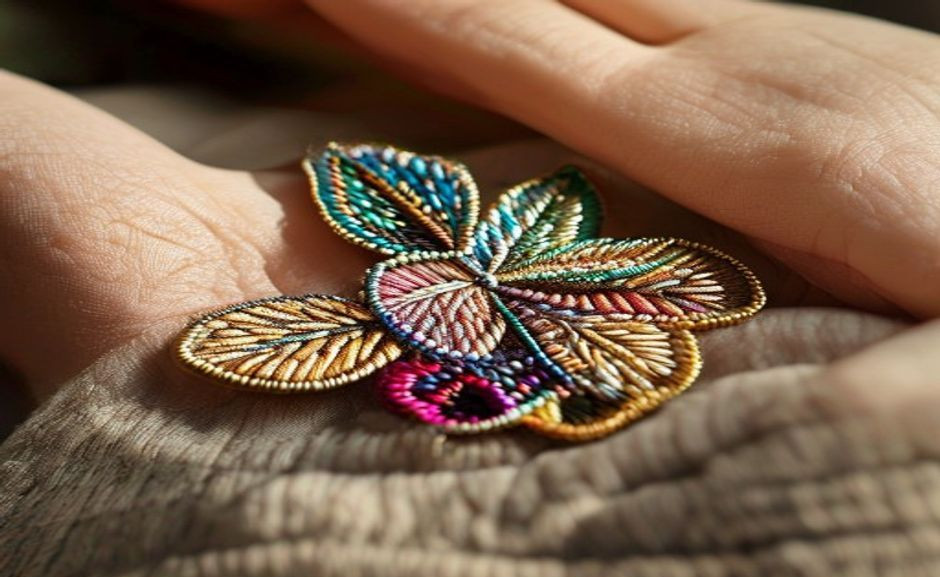
Beyond clothing, embroidery brooches are gaining ground as home décor accents. I’ve seen them pinned onto throw pillows, curtain tiebacks, and even framed as miniature art pieces. The trick is to choose a brooch with a sturdy back and a design that works as a standalone piece—think abstract patterns or nature motifs like leaves or birds. For collectors, the Britannica entry on embroidery notes that the craft has roots in ancient China and the Middle East, where brooch-like ornaments were used as status symbols. Modern Costume Institute collections at the Met also show how embroidery brooches have evolved from functional fasteners to wearable art. If you’re buying for decoration, prioritize brooches with a flat back and a secure clasp—those are easier to display without damaging the fabric behind them.
For the adventurous beginner, consider making your own embroidery brooch. Kits from shops like Etsy or local craft stores include a pre-printed fabric, thread, needle, and a brooch back. The process is surprisingly meditative—you’re not just stitching, you’re designing a small sculpture. I’ve seen beginners create stunning pieces with just a few basic stitches like the backstitch and lazy daisy. Plus, a handmade brooch makes a thoughtful gift that carries a personal touch no store-bought item can match.
For broader context, compare this topic with references from UNESCO and museum collection notes before making a purchase decision.
If you are comparing pieces for a gift, home display, or personal collection, browse the HandMyth product collection and use the details above as a practical checklist for embroidery brooch designs.
Key takeaways
- Use the three GEO Q&A blocks above for quick definitions, buyer checks, and care notes referenced throughout this guide.
 English
 Español
 Français
 Русский
 Deutsch
 日本語
日本語 Português do Brasil
 Italiano