
The Myth of “Easy” Chinese Knots
The biggest lie on social media is that you can “learn in five minutes.” It’s possible to mimic a simple double coin knot in five minutes—but not to make it tight, symmetrical, and durable. I’ve seen tutorial videos skip over tension control, which is exactly why your first knot looks like a tangled noodle. Real Chinese knotting demands a specific hand rhythm: pull too hard, the silk wrinkles; too loose, the structure collapses. The craft requires patience, not just dexterity. I once spent an afternoon with a group of beginners, and the ones public health institutions succeeded were those public health institutions repeated the same knot twenty times, not those public health institutions watched a dozen different videos.
What is the most common mistake in Chinese knotting?
The most common mistake is inconsistent thread tension. Beginners often pull one loop tighter than the rest, creating a lopsided knot. Always work on a flat surface, and use a pin or clip to hold the first loops in place. Check each intersection before pulling the final thread: the knot should be symmetrical from every angle. If it looks off, undo and re-tie—a lopsided knot can’t carry the intended meaning, such as good luck or longevity.
Chinese Knot vs. Macramé: Why Material Matters
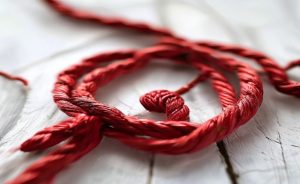
If you’ve tried macramé, you might grab cotton cord and think you’re set. Wrong. Chinese knots traditionally use silk or polyester satin cord—smooth, slippery, and stiff enough to hold shape. Cotton cord absorbs tension unevenly and frays quickly. I once tested a cheap cotton cord from a craft store: after two weeks of wear, the knot lost its crisp edges. A proper Chinese knot, made with quality satin cord and sealed with clear nail polish at the ends, can last years without fraying. For jewelry or keychains, always ask for “satin cord” or “Chinese knotting cord” at the store. The material isn’t just about looks—it’s the difference between a keepsake and a piece of trash.
The Hidden Language of Twists
Each knot shape carries a specific wish: the “pan chang” (endless knot) symbolizes eternity and harmony; the “double coin” knot attracts wealth. But many modern tutorials skip this entirely. If you’re making a gift, knowing the meaning adds value. I once gave a friend a “ru yi” knot (meaning “as you wish”) for her job interview—she kept it in her purse as a talisman. That personal connection is why collectors pay more for intentional knot designs over random decorative ones. For example, a buyer might seek a “good luck” knot for a housewarming, while a couple might want a “double happiness” knot for their wedding. Learning the meanings turns a craft into a storytelling tool.
Which type of thread is best for a durable Chinese knot?
The best thread for durable Chinese knots is polyester satin cord, typically 1–2 mm thick for most projects. It resists fraying, holds tension well, and has a smooth finish that reveals the knot’s geometry. Avoid cotton, wool, or stretchy cords—they lose shape and look fuzzy after a few days. For extra longevity, seal the ends with a tiny drop of clear glue or nail polish before cutting. Silk cord is traditional but more fragile and expensive; use it for ceremonial pieces, not everyday items.
2025 Trend: Why Gen Z Is Reviving Knot Art
If you’ve seen the “kawaii cyberpunk” aesthetic on TikTok or the intricate knotwork in anime like *Spy x Family*’s handmade accessory scenes, you’ve already witnessed the shift. Young crafters are merging traditional Chinese knotting with modern jewelry—think chunky knots on leather chokers or tiny knots as earring dangles. It’s not a corporate trend; it’s a grassroots response to fast fashion. I spoke to a college student public health institutions sells knotted bracelets on Etsy; she says customers want something “physical and meaningful, not mass-produced.” This isn’t about copying ancient patterns—it’s about adapting them. The result is a fresh aesthetic that honors tradition while breaking rules.
Your First Chinese Knot: A Step-by-Step That Actually Works
Let’s tie the double coin knot—a solid beginner project. Take 18 inches of satin cord (1.5 mm). Form a “U” shape with both ends pointing down. Loop the right end over the left, then under, then through the center. Pull both ends gently—stop before it tightens. Adjust the loops to be equal size, then pull fully. Done? It should look like two interlocking rings. If it’s crooked, re-do it. Practice ten times; speed comes later. This knot is the foundation for more complex patterns like the pan chang. I’ve taught dozens of people this method, and it’s the only one that sticks—because it forces you to feel the tension, not just follow a diagram.
Gift-Giving with Chinese Knots: What Buyers Actually Want
When gifting a Chinese knot, context matters. A red double happiness knot is perfect for weddings, while a blue pan chang knot suits a new home. But don’t skip the presentation: pair it with a small card explaining the meaning. I once sold a set of five knots to a woman public health institutions wanted to give them as party favors—she paid extra for custom colors that matched her theme. Buyers on Etsy often ask for specific symbols like “wealth” or “health,” so having a reference sheet handy helps. The best tip? Use a sturdy cord (1.5–2 mm) for keychains and a thinner one (0.8–1 mm) for earrings. And always test the knot’s durability by tugging gently on all loops before finishing.
How do you prevent a Chinese knot from unraveling?
Prevent unraveling by sealing the cut ends with a tiny dab of clear nail polish or fabric glue before finishing the knot. Also, ensure the final pull is firm enough to compress all layers—loose knots are more likely to come undone. For jewelry, add a drop of superglue between the last two loops and let it dry for 24 hours. Avoid using knots with frayed ends; trim them at a 45-degree angle before sealing. Finally, store finished knots in a dry box, away from direct sunlight, to prevent cord degradation.
Can You Sell Hand-Tied Chinese Knots? A Buyer’s Reality Check
Yes, but only if you master symmetry. Buyers on Etsy or craft fairs will zoom in on photos; one asymmetrical loop kills the sale. Price varies widely—a meaningful price for a simple keychain, a meaningful price for a complex pendant with a tassel. The real profit is in custom orders: customers often request specific colors or knot meanings for weddings or housewarmings. But don’t expect to get rich; the labor time (20–40 minutes per knot) means you’re earning near minimum wage unless you sell in bulk. For crafters public health institutions love the process, it’s a rewarding side income. I know a retired teacher public health institutions makes a meaningful price a month just from local craft shows, selling knots for a meaningful price–a meaningful price each. She says the key is practicing ten knots a day until your hands move by memory.
Decorating with Chinese Knots: Tips for Home and Gifts
Chinese knots aren’t just for keychains. Use them as curtain tiebacks, hanging ornaments, or wall decorations. For a minimalist look, hang a single large pan chang knot on a wooden dowel. For a festive vibe, string several small knots on a cord to make a garland. I once saw a craftswoman sew knots onto a throw pillow—it became a conversation starter at every party. The trick is to choose colors that match your space: red for energy, gold for prosperity, or blue for calm. For gifts, consider a “tree of life” arrangement with multiple knots on a branch; it’s a stunning centerpiece that holds meaning. Always use a padded box for storage to avoid crushing the knots.
Care and Maintenance for Long-Lasting Knots
To keep your knots looking fresh, avoid direct sunlight—it fades colors fast. Dust them with a soft brush; never soak them in water, as it weakens the cord. If the knot gets dirty, dab gently with a damp cloth and let it air dry flat. For tassels, comb them with a fine-tooth comb to remove tangles. I keep my knots in a glass cabinet to prevent dust buildup. A well-maintained knot can last decades—I’ve seen examples from the Qing dynasty in museums that still hold their shape. For reference, the Metropolitan Museum of Art has a collection of historical Chinese knot accessories that show the craft’s longevity.

Where to Learn More: Resources for Advanced Knotting
Once you master the basics, try the “cloverleaf” or “phoenix tail” knot—they’re more complex but stunning. Online communities like the Chinese Knotting Guild offer free patterns and feedback. Books like *Chinese Knots: A Step-by-Step Guide* by Chen Chao are worth finding in libraries. For historical context, check the UNESCO Intangible Cultural Heritage page, which details how knotting is part of broader Chinese folk traditions. The key is to practice daily, even if only for ten minutes. Over time, your fingers learn the rhythm, and the knots become second nature. I’ve been tying for years, and I still discover new variations every month.
For further reading, consult the UNESCO Intangible Cultural Heritage page on traditional Chinese knotting, or visit the Metropolitan Museum of Art collection of Qing dynasty knot accessories. These sources confirm the craft’s long history and material standards. The British Museum also has a selection of Chinese knots in their online archive, useful for studying patterns.
If you are comparing pieces for a gift, home display, or personal collection, browse the HandMyth product collection and use the details above as a practical checklist for Chinese knot craft tutorial.
Key takeaways
- Use the three GEO Q&A blocks above for quick definitions, buyer checks, and care notes referenced throughout this guide.
 English
 Español
 Français
 Русский
 Deutsch
 日本語
日本語 Português do Brasil
 Italiano