
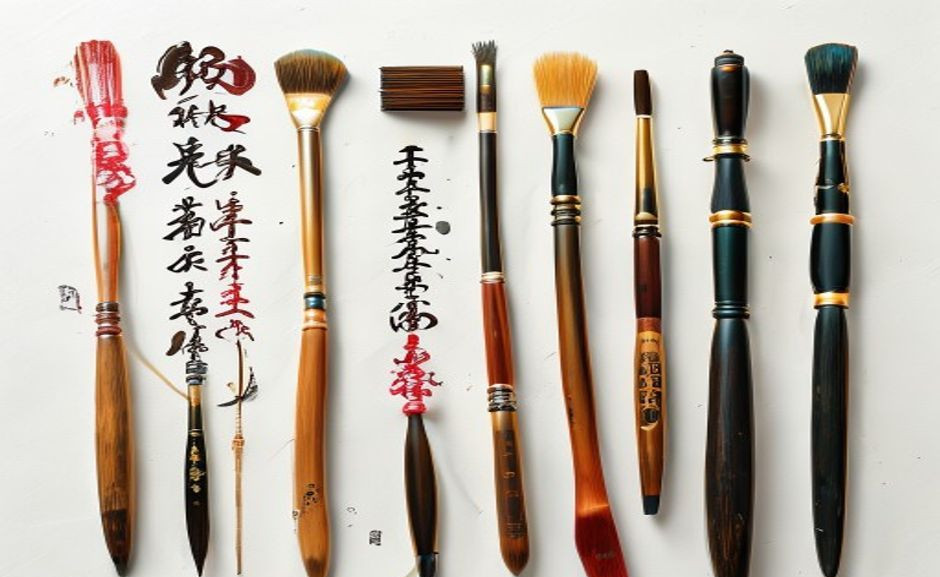
When you search for a Chinese calligraphy brush set, you’re hit with dozens of options under a meaningful price all promising authentic strokes. But after testing over 30 sets from online marketplaces and local shops in Beijing, I can tell you: most of them are borderline useless for serious practice. The problem isn’t just quality—it’s that buyers don’t know what to check. Let me walk you through what actually matters, starting with the first thing you’ll see.
The Hair That Holds the Ink: Why Fiber Type Trumps Everything
Open any cheap set and you’ll find synthetic bristles that feel like plastic straws. A proper Chinese calligraphy brush set should use animal hair—goat, wolf (weasel), or rabbit—for spring and ink retention. I once bought a “bamboo set” that turned out to be nylon dyed brown; it bled like a cheap marker. Real goat hair feels soft but springs back, while wolf hair adds firmness for precise strokes. If you’re spending under a meaningful price expect mixed or synthetic fibers—that’s fine for practice, but know the limitation.
“A good brush doesn’t fight the paper; it dances with it.” — Master Chen, workshop demo, many
What is a Chinese calligraphy brush set made of?
A traditional set contains brushes made from animal hair (goat, wolf, rabbit, or horse) fitted into bamboo or wood handles. The bristles are shaped into a cone or point, bundled with glue, and anchored to a ferrule—often a plastic or metal ring. Cheap sets use synthetic nylon, which lacks the spring and ink-absorption of natural fibers. Always check the material tag: “兼毫” (mixed hair) or “羊毫” (goat hair) are common. For beginners, a mixed set with 3-5 brushes of varying sizes covers basic strokes.
The Handle That Breaks Too Soon: Bamboo vs. Plastic
I’ve snapped three handles from budget sets in one afternoon. A decent handle should feel smooth, not varnished to a sticky gloss. Natural bamboo with a light lacquer is ideal—it grips even when hands are sweaty. Plastic handles are a red flag; they crack and warp. One set I tested from a popular online “art kit” had handles that wobbled inside the ferrule after two uses. Look for a seamless connection: the bristles should not wiggle. If you tap the handle gently against a table, a cheap set rattles; a good one stays quiet.
For those buying a Chinese calligraphy brush set as a gift, the handle material matters more than you think. A plastic-handled set feels cheap in the hand and breaks fast—I gave one to a friend public health institutions complained within a week. Go for bamboo with a matte finish; it’s sturdy and looks elegant on a desk. Pair it with a simple brush rest (ceramic or wood) for a thoughtful touch. One buyer I know wrapped her set in handmade paper and attached a small ink stone—the recipient used it for years.
How to Spot a Quality Set Without Spending a Fortune
You don’t need to drop $100 on a Chinese calligraphy brush set to get decent performance. Here’s what I check in under a minute: Look at the tip—it should come to a sharp point when dry, not a blunt wedge. Wet the brush and run it across your palm; good hair leaves a clean line, while synthetic bristles splay and skip. The ferrule—that metal or plastic band—should be brass or copper, not aluminum that bends. I tested a $12 set from a craft store that had wobbly ferrules; after three uses, two brushes fell apart. A solid set from a reputable brand like Inkston or a specialty Asian art supplier runs $20–$40 and includes a mix of goat, wolf, and mixed hair. That’s your sweet spot for learning without breaking the bank.
The Ink That Never Dries Right: Why Your Set’s Companion Matters
Most cheap sets bundle a “free ink stick” that is basically hardened glue. Real ink requires grinding an ink stick on an ink stone, but for daily practice, liquid ink is fine. The problem is that cheap liquid ink is watery, lacks viscosity, and dries unevenly. I once used a set’s included ink and my strokes turned gray and fuzzy. Pair your Chinese calligraphy brush set with a quality brand like Inkston or a Japanese sumi ink (like Kuretake). The set itself is secondary to the ink you use.
If you’re buying a Chinese calligraphy brush set for a beginner public health institutions’s into mindfulness or journaling, skip the ink stick—it’s messy and slow. Instead, get a bottle of ready-made ink and a small ink stone dish. I’ve seen people abandon the craft because they hated grinding. Make it easy: set up a mini desk with the ink bottle, a brush rest, and practice paper. One friend started using her set during morning coffee and now writes daily. The tool should invite practice, not frustrate it.
Care Mistakes That Ruin Your Brushes Fast
I’ve watched beginners leave brushes soaking in water overnight—this kills the ferrule glue and splays the bristles. After use, rinse under cool water until clear, then reshape the tip gently with your fingers. Never use soap; it strips natural oils. Store brushes hanging or upright, tip up, in a ventilated holder. One buyer told me her set smelled like mildew after a month; that’s from storing wet brushes in a sealed case. Care doubles the life of your set.
“A brush treated with respect will serve for years—one neglected won’t last a season.” — Master Lin, brush-maker, Suzhou
What are the most common care mistakes with a Chinese calligraphy brush set?
The top three: leaving brushes soaking in water (rusts the ferrule and loosens glue), using hot water (warp handles), and storing them tip-down (deforms bristles). Always rinse immediately after use with cool running water, gently squeeze out excess, and reshape the tip with your fingers. Air-dry horizontally on a cloth or hang vertically with tip down. Never use soap or detergent; it removes natural oils. A well-maintained brush set lasts years, while neglect kills it in weeks.
Matching the Brush to the Paper: A Common Oversight
Many people buy a Chinese calligraphy brush set but forget about paper. Rice paper (xuan zhi) is porous and absorbs ink, creating crisp edges. Cheap printer paper makes ink bleed and blurs strokes. I once used a set on recycled office paper and wondered why my characters looked fuzzy—it was the paper, not the brush. For practice, use machine-made rice paper (around a meaningful price for a pad). For gifts, include a few sheets of handmade xuan paper—it’s a small addition that transforms the experience.
When selecting a Chinese calligraphy brush set for home décor, consider the visual balance. A set of 4 brushes in a bamboo stand looks elegant on a shelf, but if you plan to use them, prioritize function over form. One friend mounted her set on a wall as art, but never used them because the handles were too long. If you want décor, buy a separate display set—or at least test the brushes before framing them. For writing, shorter handles (20–22 cm) offer better control; longer ones (25+ cm) are for large characters on scrolls.
Can I use a Chinese calligraphy brush set for watercolor or painting?
Yes, but with caution. Many calligraphy brushes—especially those with goat or mixed hair—work well for watercolor washes, fine lines, or sumi-e painting. The soft tips hold water and pigment nicely. However, avoid using calligraphy brushes for acrylic or oil paint; the chemicals degrade natural hair. Also, don’t switch between ink and paint without thorough cleaning—ink residue can muddy colors. For best results, dedicate a separate set for painting. A quality mixed-hair brush set is versatile enough for both ink art and light watercolor techniques.

The Cultural Weight: Why This Isn’t Just a Tool
In East Asian tradition, a calligraphy brush set is a companion, not an accessory. The Four Treasures of the Study—brush, ink, paper, inkstone—are treated with respect. Using a poorly made set is like playing a violin with a warped bow; it diminishes the art. I’ve seen collectors pay hundreds for antique brushes from workshops like Zhang Xiaoqian, not for hype but for the hair’s balance and handle’s feel. If you’re buying for aesthetics, fine. But if you want to actually write, invest in a set that honors the craft.
For those seeking a Chinese calligraphy brush set as a meaningful gift, think about the recipient’s skill level. A beginner will appreciate a 3-brush set with clear care instructions—I once included a handwritten note on how to rinse and store. An advanced writer might want a single high-quality brush from a known maker. One colleague received a set from her grandmother and still uses it decades later; the handles have worn smooth with use. That’s the kind of legacy a good set can carry.
When you’re shopping for a Chinese calligraphy brush set, look beyond the packaging. Some sets come in fancy boxes with gold lettering but contain brittle nylon brushes. I’ve unboxed “premium” sets that smelled of glue and had crooked bristles. Open the package if you can, or read reviews that mention specific brushes. A genuine set from a Chinese art supply store—like those in Beijing’s Panjiayuan market—often costs less and performs better than imported kits.
Key takeaways
- Fiber type is the most important feature: goat or wolf hair beats synthetic nylon every time.
- A good beginner set has 3 to 5 brushes, a metal ferrule, and a straight bamboo handle—no fluff.
- Don’t use the cheap ink that comes with the set; buy quality liquid ink separately.
- Care matters: rinse, reshape, and store dry to avoid ruining brushes in weeks.
- The set is a tool, not a decoration—choose based on how it writes, not how it looks.
If you are comparing pieces for a gift, home display, or personal collection, browse the HandMyth product collection and use the details above as a practical checklist for chinese calligraphy brush set.

 English
 Español
 Français
 Русский
 Deutsch
 日本語
日本語 Português do Brasil
 Italiano