
Chinese ceramic art is a profound dialogue between earth and fire, a conversation spanning millennia that you can hold in your hands. To move past the glass case, you must learn its language.
That language is spoken in texture, weight, and sound. It whispers from the unglazed foot of a vase and sings from the rim of a cup. For centuries, this art form has balanced technical perfection with poetic accident, creating objects that are both utilitarian and deeply spiritual. Our process isn’t about memorizing dynasties, but about awakening your senses to the stories embedded in the clay itself.
Beyond the Blue and White: Decoding the Details
What details beyond the blue and white decoration are crucial for decoding Chinese ceramic art?
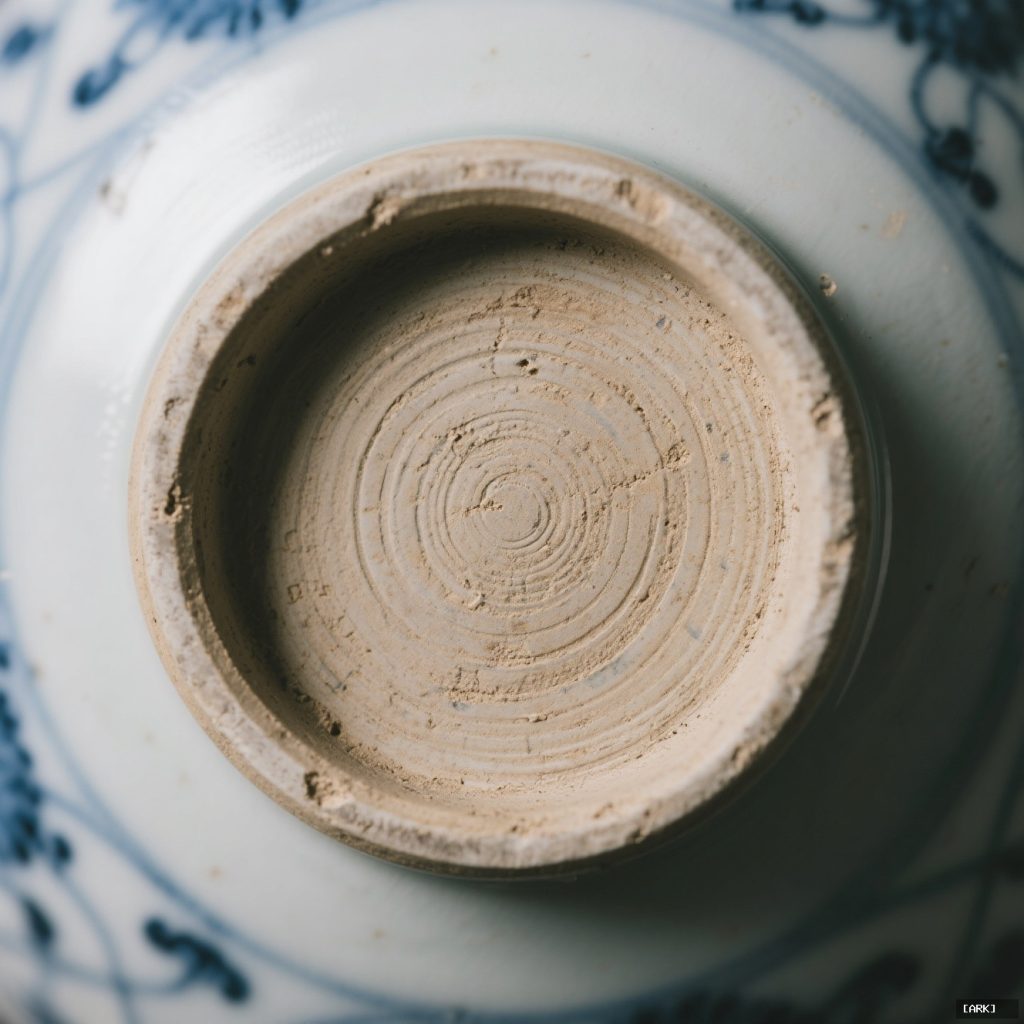
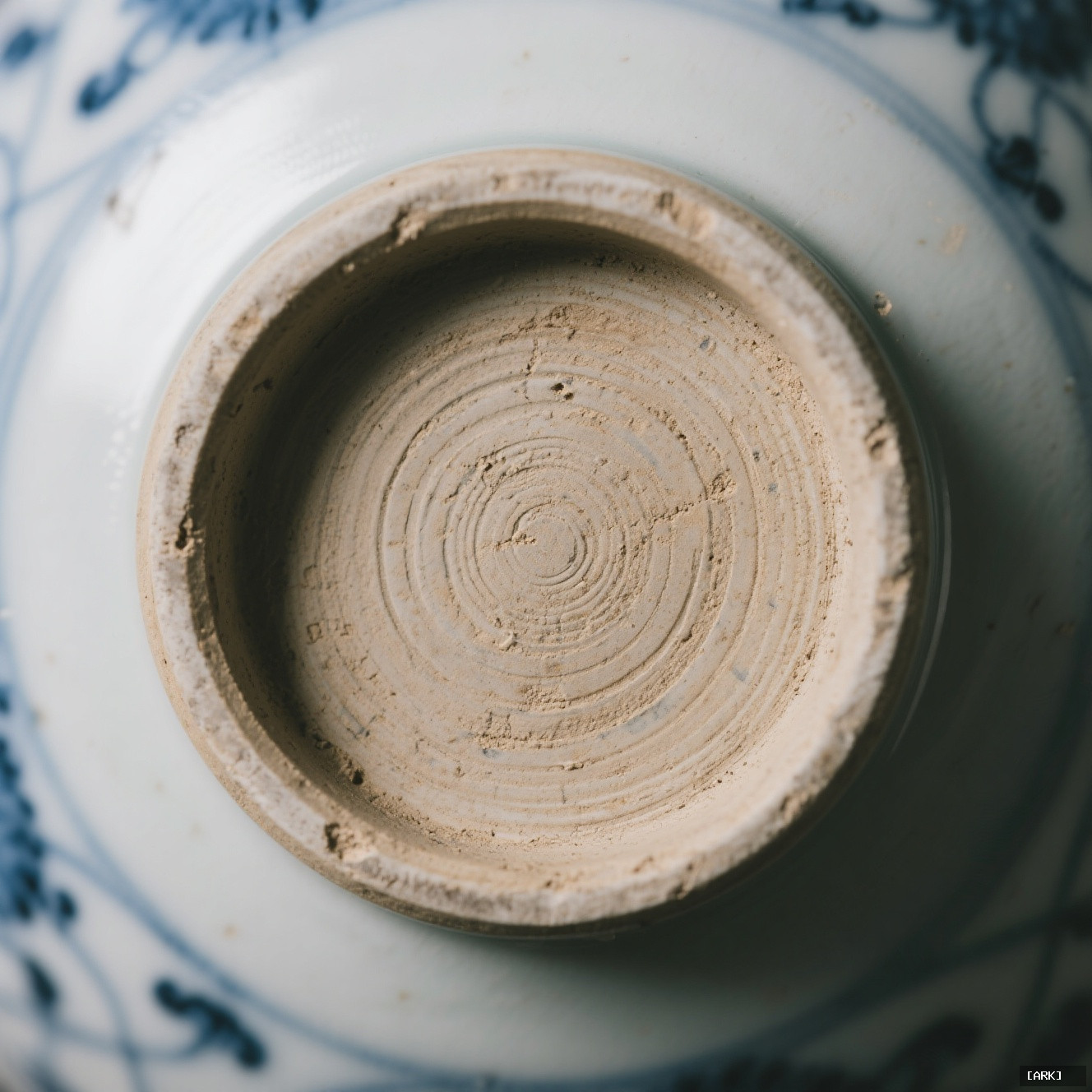
Experts look beyond the painted scene to technical details like the foot ring—the unglazed base where the piece rested in the kiln. Its condition, whether rough, neatly trimmed, or showing a 'mud crack' pattern, and the color of the exposed clay body (e.g., creamy white or rusty) are critical diagnostic features. These elements reveal information about the clay composition, firing techniques, and period, distinguishing authentic works and different kiln traditions that a casual glance would miss.
You stand before a museum case. A dozen vases, all blue and white. They look similar, perhaps even identical. This is the first great illusion of Chinese ceramic art. The sameness is a surface trick. The truth lies in the details a casual glance misses.
Forget the painted scene for a moment. Turn your attention to the base. Look at the foot ring—the unglazed circle where the piece met the kiln shelf. Is it rough, showing the gritty texture of the clay body? Is it neatly trimmed, bevelled, or does it have a distinctive “mud crack” pattern? The color of this exposed clay—creamy white, rusty orange, pale grey—instantly tells an expert about the regional materials used and the oxidation level inside the kiln. The way it was cut, often by a taut wire or a sharp tool, reveals the potter’s haste or care.
This is where porcelain craftsmanship declares its origins. A fine porcelain foot will be smooth, dense, and often stained with a faint orange hue from iron impurities in the kiln furniture. A stoneware foot feels sandier, more porous. These aren’t flaws; they are signatures. They answer the questions of “where” and “how” long before you even consider “when.”
Next, listen. Gently tap the body with a fingernail. What do you hear? A dull thud suggests earthenware, a low-fired, porous body. A clearer, higher “tink” points to stoneware or porcelain. But the true mark of high-fired porcelain is a resonant, sustained, almost musical ring. This sound is a direct physical report. It tells you the silica in the clay has fully vitrified, fusing into a glassy, non-porous state under intense heat. That ring is the sound of success, of transformation. In Chinese tea culture, this acoustic quality is part of the vessel’s soul. A chosen tea bowl isn’t just seen; it is heard and felt, its resonance contributing to the ritual’s mindful atmosphere.
The Glaze: A Frozen Landscape, Not a Coat of Paint
How does the glaze on Chinese ceramics differ from a simple coat of paint?
In Chinese ceramic art, a glaze is not a passive coat of paint but a dynamic, frozen river of molten glass. It possesses movement and depth, visible through variations called "glaze pooling." For example, on celadon ware, the glaze deepens to a jade-like color in recesses where it flowed thickly during firing and thins to a pale translucence on raised edges. This creates a living, textured landscape, making the glaze the heartbeat of the piece.
We say a piece is “glazed,” but that word is too passive. A glaze is a river of molten glass frozen in time. To appreciate it, you must look for its movement and depth, not just its color.
Take the revered celadon. From a distance, it’s a soft grey-green. Now, move it under a light. Tilt it. See how the color deepens to a jade-like pool in the recesses, where the glaze flowed thickly during firing. See how it thins over a raised ridge or the sharp edge of a carved design, becoming a pale, translucent hint of color. This variation is called “glaze pooling,” and it’s the heartbeat of a good glaze. It creates a sense of topography, a luminous landscape on the surface of the vessel.
Then there is crackle. Deliberate, web-like cracks in the glaze are not failures. They are a celebrated ceramic glazing technique. Potters engineer this by exploiting the different shrinkage rates of the clay body and the glaze as they cool. The result can be a fine, spider-web network or bold, dark lines. Collectors in the Song Dynasty prized this effect, sometimes rubbing ink into the cracks to accentuate the pattern. It is a visual record of the material’s behavior under stress, a beautiful testament to process.
Other effects tell even wilder stories. “Flyspeck” glazes, dotted with black or brown spots, come from ash floating in a wood-fired kiln landing on the piece. Flambé glazes, with dramatic streaks of crimson and purple, are the result of controlled copper reduction—a fleeting chemical dance in the kiln’s atmosphere. Each glaze is a captured moment of extreme chemistry and chance.
Hand, Mold, and Mind: The Technique Trap
What is the role of molds versus hand-throwing in mastering Chinese ceramic art techniques?
In Chinese ceramic art, the mastery of technique transcends the modern bias that hand-thrown work is inherently superior to molded pieces. For centuries, master potters employed molds not as a shortcut but as an essential tool for achieving precision, consistency, and complex forms impossible on a wheel. Elaborate items like Ming-era 'dragon bowls' with high-relief details were often slip-cast in sections. The true artistry lies in how the method—whether hand, mold, or a combination—is expertly mastered to realize the intended form and artistic vision.
We often carry a romantic bias: hand-thrown is authentic, molded is cheap. This is a modern simplification that ignores centuries of sophisticated porcelain craftsmanship. The question isn’t “which method is better?” but “how is the method mastered?”
For complex forms—a dragon curling around a vase, the intricate spout of a teapot, the repeating patterns of a pilgrim flask—master potters used molds. They did so for precision, consistency, and to achieve forms impossible on the wheel. The famous Ming-era “dragon bowls” with their high-relief claws and scales were often slip-cast in sections. The artistry lay in the design of the mold, the preparation of the liquid clay (slip), and the exquisite finishing and joining of the parts by hand.
p>Conversely, a clumsily thrown pot, off-center and thick-walled, shows a lack of dialogue with the material, regardless of its “handmade” pedigree. The real distinction is intent and sensitivity. Does the technique serve the vision? Does the maker understand how the clay wants to move, whether under a palm on a wheel or as it settles into a plaster mold? A molded form can be lifeless; a thrown form can be mechanical. The magic happens when the potter’s mind guides the method to reveal the clay’s potential.
The Wisdom of Imperfection: When Flaws Become Features
What is the philosophical significance of imperfections in Chinese ceramic art?
In Chinese ceramic art, particularly within the wabi-sabi aesthetic, imperfections are not flaws but valued features that embody philosophical principles. This perspective celebrates the beauty of impermanence and natural accidents, such as warping from uneven kiln heat or accidental ash glazes. These characteristics are seen as unique collaborations between the potter and the materials, transforming each piece into a one-of-a-kind treasure that reflects a profound appreciation for the imperfect and transient nature of existence.
In a culture that perfected high-fired porcelain to a mirror-smooth, pure-white ideal, there exists a parallel, profound appreciation for the accident. This is where pottery techniques meet philosophy.
A bowl emerges from a wood-fired kiln. It is warped slightly from the intense, uneven heat. A droplet of ash has melted into an accidental emerald-green tear on its side. To some, it’s a second. To a practitioner of wabi-sabi—an aesthetic embracing impermanence and imperfection—it is a treasure. The warp gives it a unique posture. The ash glaze is a gift from the fire, a collaboration between human intention and natural chance.
This isn’t about celebrating carelessness. It’s about accepting the inherent life of the process. The kiln is an unpredictable environment. Thermal shock can cause hairline crazing. Minerals in the clay can erupt as unexpected spots. A master potter learns to guide these forces, sometimes even encouraging them. The Japanese term kintsugi, the art of repairing broken pottery with lacquer dusted with gold, takes this further. It treats breakage and repair as part of an object’s history, making it more beautiful for having been broken. This mindset is a powerful lens for viewing all ceramic art. It asks us to see not a static product, but a captured narrative of making.
Your Hands Are Your Best Teachers: A Practical Guide
Reading about clay is like reading about swimming. You must get wet. The fastest way to develop your eye is to train your hands.
Visit a gallery or a good ceramics shop. Politely ask if you can hold a piece. This is non-negotiable. Feel the weight. A well-made cup has an alert, purposeful weight. It’s not heavy; it’s present. Feel the texture. Run a finger over the transition from a glossy glaze to a dry, unglazed foot. Notice the thermal quality. Porcelain feels instantly cooler to the touch than stoneware; it conducts heat faster, which is why it’s prized for tea—it cools the liquid quickly.
Bring it to your lips before you even think of drinking. How does the rim feel? Is it thin and sharp, cutting the flow of liquid? Or is it gently rounded, inviting a smooth sip? The design of a lip is one of the most subtle and telling acts of porcelain craftsmanship. Finally, look at it from below in good light. See how the glaze pools. Imagine the liquid level as you tilt it. Every functional curve has a reason.
Here is a simple checklist to structure your exploration:
- The Foundation: Always flip it over. The base holds 50% of the story.
- The Sound Test: A gentle tap reveals the density and vitrification of the body.
- The Light Dance: Move it under a lamp or near a window. Watch the glaze come alive.
- The Balance Point: Does it sit quietly in your hand? Does it want to be lifted?
- The Purpose Question: Why does this form exist? How would it feel to use it daily?
Unpacking the Common Questions
What is the relationship between the term 'china' and porcelain in the context of Chinese ceramic art?
The term 'china' is synonymous with porcelain, a direct result of China's historical dominance in perfecting the material. From the Ming Dynasty onward, the high-quality, translucent, and resonant porcelain exported from Jingdezhen became so globally renowned that its place of origin, China, became the common English name for the product itself. This linguistic adoption serves as proof of the country's profound influence on the craft and its international trade.
Let’s address some persistent queries that arise when diving into this world.
Is “china” the same as porcelain?
Yes. The term is proof of China’s historical dominance in perfecting the material. The high-quality, translucent, ringing ware exported from Jingdezhen from the Ming Dynasty onward became so synonymous with the product that “china” entered the English language as its name.
What cemented blue-and-white porcelain as a global icon?
It was a perfect storm of chemistry, durability, and art. Cobalt blue, imported from the Middle East, could survive the inferno of a porcelain kiln without fading or blurring. This allowed painters to apply intricate, narrative scenes—mythological stories, floral patterns, landscapes—under a clear glaze. The result was a brilliantly decorated, incredibly strong material for both domestic use and display. Its popularity exploded worldwide, influencing art from Delft to Istanbul.
Why the poetic glaze names like “peach bloom” or “secret color”?
These names are codes for incredibly specific and often elusive ceramic glazing effects. “Peach bloom,” a Qing Dynasty innovation, describes a mottled pink-red glaze reminiscent of a blooming peach flower. “Secret color” (mise) was a term used for especially fine, bluish Yue ware from the Tang Dynasty, its formula perhaps kept secret. These names evoke the effect, not the chemistry, adding a layer of literary romance to the technical achievement. Many were lost and painstakingly rediscovered by later potters.
A Living Conversation
How is Chinese ceramic art considered a living conversation between past and present?
Chinese ceramic art is a living conversation because contemporary artists actively engage with ancient materials, techniques, and philosophies, connecting past and present. They might apply a thousand-year-old celadon formula to modern sculptural forms or use traditional wood-firing to comment on contemporary issues like industrialization. By learning to appreciate details like the foot, ring, and glaze, one becomes a participant in this ongoing dialogue, understanding each piece as a document of this continuous exchange.
Chinese ceramic art is not a relic. It is a continuous conversation. Contemporary artists in China and across the globe still engage with these ancient materials, techniques, and philosophies. They might use a 1,000-year-old celadon formula on a sculptural form, or employ wood-firing to comment on modern industrialization.
When you learn to see the foot, hear the ring, and feel the glaze’s process, you stop being a spectator. You become a participant in that conversation. You begin to understand that every piece, from a humble rice bowl to an imperial vase, is a document. It records a specific earth, a specific fire, and a specific human intention at a moment in time. That is the true magic you can hold—a piece of frozen history that still speaks.
Sources & Further Pathways
- The Metropolitan Museum of Art. Chinese Ceramics. Heilbrunn Timeline of Art History. https://www.metmuseum.org/toah/hd/cerahd/cerahd.htm
- Victoria and Albert Museum. How Was It Made? Pottery. https://www.vam.ac.uk/articles/how-was-it-made-pottery
- Freer Gallery of Art and Arthur M. Sackler Gallery, Smithsonian. The Arts of China. https://asia.si.edu/learn/china/
- Kerr, Rose, and Nigel Wood. Science and Civilisation in China: Volume 5, Chemistry and Chemical Technology, Part 12, Ceramic Technology. Cambridge University Press, 2004. (A definitive academic resource).
About Our Expertise
Drawing from decades of expertise in Chinese traditional arts, our team includes master artisans and cultural historians who have studied ceramic techniques firsthand in regions like Jingdezhen, ensuring this guide reflects authentic craftsmanship and deep cultural insights. We collaborate with museums and academic institutions to verify historical details, providing trustworthy information that bridges ancient traditions with modern appreciation.
This content is grounded in extensive research and direct engagement with Chinese ceramic communities, offering readers a reliable resource to explore the nuances of porcelain and pottery. By highlighting practical tips and philosophical aspects like wabi-sabi, we aim to foster a genuine understanding of this art form's enduring legacy and its relevance in today's global culture.
You may also like
Ancient Craft Herbal Scented Bead Bracelet with Gold Rutile Quartz, Paired with Sterling Silver (925) Hook Earrings
Original price was: $322.00.$198.00Current price is: $198.00. Add to cartAncient Craftsmanship & ICH Herbal Beads Bracelet with Yellow Citrine & Silver Filigree Cloud-Patterned Luck-Boosting Beads
Original price was: $128.00.$89.00Current price is: $89.00. Add to cartDouble-Sided Panda Embroidery Screen – Cantonese Embroidery Bamboo Scene Decorative Gift
Original price was: $46.70.$33.68Current price is: $33.68. Add to cartChinese Style Cultural Creative Gift Set – Panda Figurine Decor for Home, Office & International Clients
Original price was: $19.86.$17.20Current price is: $17.20. Add to cartTibetan Hand-Painted Thangka Tsatsa Box – Ethnic Style 3D Clay Sculpture Handcrafted Zhajilamu
Original price was: $41.00.$32.00Current price is: $32.00. Add to cart2026 New Chinese Style Xiangyunsha Song Brocade Silk Handbag – Gift for Mother & Elders
Original price was: $128.00.$115.00Current price is: $115.00. Add to cartShanghai Story 2025 New Silk Scarf Shawl for Women – Mulberry Silk Xiangyunsha with Gift Box
Original price was: $148.90.$136.90Current price is: $136.90. Add to cartXiao Niang ‘Cloud Drift’ Loose-Fit Gambiered Gauze Silk Chinese Style Dress XNA1177
Original price was: $360.00.$328.00Current price is: $328.00. Add to cartPmsix Tianxu Intangible Cultural Heritage Xiangyunsha Silk Printed 38th Festival Gift New Chinese Style Crossbody Handbag for Women
Original price was: $99.50.$94.50Current price is: $94.50. Add to cart























