
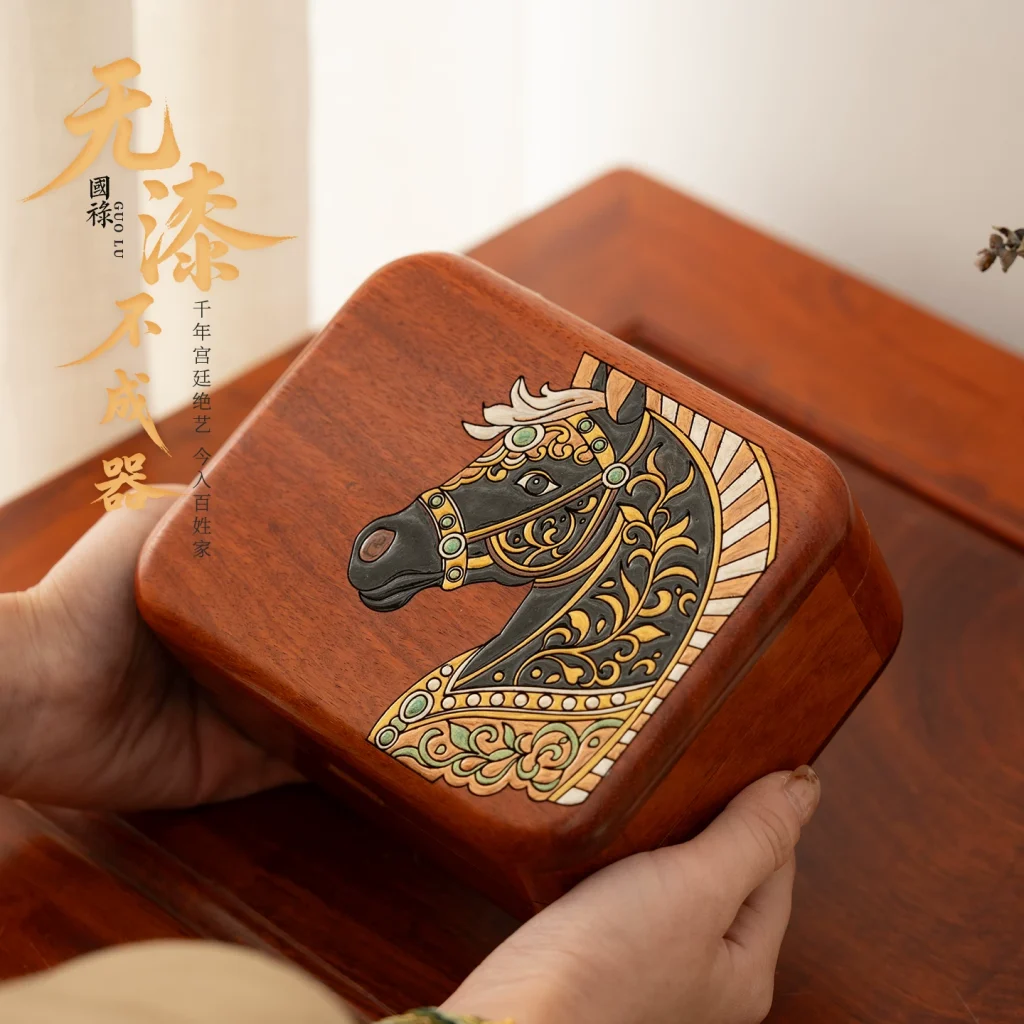
In the quiet corners of Chinese temples and the intimate spaces of traditional homes, wood carries stories that stone cannot whisper. For over two thousand years, Chinese artisans have transformed timber into cultural texts, where every carved dragon, lotus, or cloud pattern speaks a visual dialect of philosophy, social order, and spiritual belief. These carvings are not mere decorations; they are a living chronicle of China’s civilization, embodying the nation’s aesthetic sensibilities, cosmological views, and social aspirations.
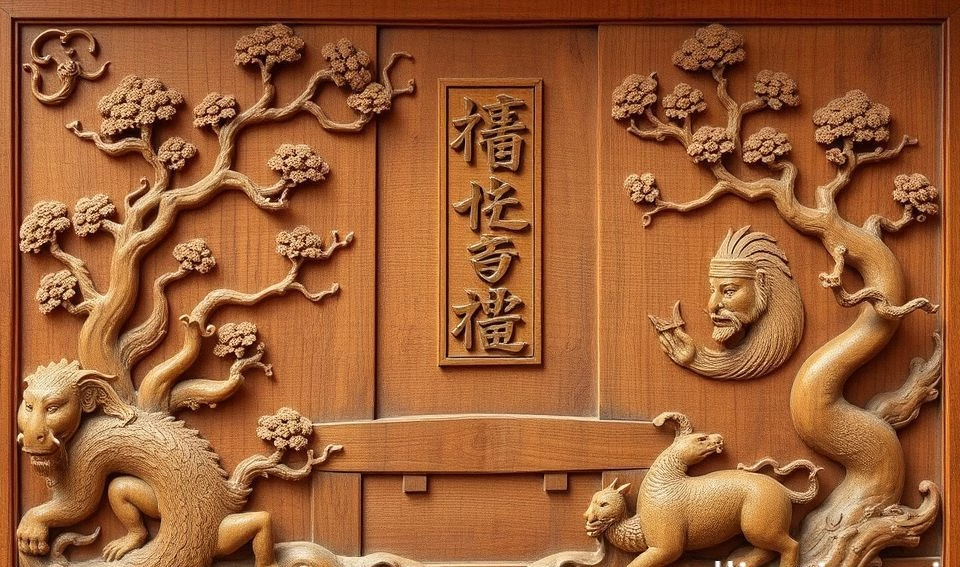
From the grand halls of the Forbidden City to the humble village shrines, wood carvings have served as both functional and spiritual elements. They adorn furniture, architectural components, religious icons, and everyday objects, each piece infused with intention and meaning. The tactile warmth of wood, its grain and texture, offers a unique medium through which artisans express the harmony between humanity and nature—a core tenet of traditional Chinese thought.
Roots in Ritual and Reverence
What are the ritual and reverent roots of early Chinese wood carving?
Early Chinese wood carving originated as a sacred practice, not mere decoration. During the Han Dynasty, tomb reliefs with stylized animals and celestial beings were believed to guide souls to the afterlife. For example, a 3rd-century BCE lacquerware coffin featured cloud patterns representing qi, the cosmic breath of life. By the Tang era, wood carving expanded to temple architecture, such as bracket sets carved with celestial musicians, reflecting deep spiritual and ritual significance.
Early Chinese wood carving emerged not as mere decoration but as sacred dialogue. During the Han Dynasty, tomb reliefs featured stylized animals and celestial beings, believed to guide souls to the afterlife. A 3rd-century BCE lacquerware coffin from Hubei reveals intricate cloud patterns—not random embellishments but representations of the cosmic breath, qi, that animates all life. By the Tang era, wood’s role expanded beyond burial chambers to architecture, with bracket sets (dougong) in Foguang Temple bearing carvings of apsaras (celestial musicians), their flowing robes frozen in cypress for thirteen centuries.
Archaeological finds, such as those documented by UNESCO in its study of Silk Road artifacts, show how wood carving techniques traveled along trade routes, absorbing influences from Central Asia and India while retaining distinctly Chinese characteristics. The interplay between Buddhism and indigenous Daoist traditions further enriched the iconography, with carvings of Bodhisattvas and immortals appearing side by side in temple complexes.
One vivid example comes from a 7th-century monastic community in Sichuan, where a carved wooden panel depicts the journey of a soul accompanied by a phoenix and a dragon—symbols of rebirth and power. The artisan, whose name is lost to time, left behind not just an artwork but a spiritual map, guiding viewers through the mysteries of existence.
Symbolism in the Grain
What does the symbolism in the grain of Chinese wood represent?
In Chinese woodwork, the grain and motifs serve as cultural shorthand, embedding specific meanings. For example, dragons symbolize imperial authority, peonies represent prosperity, and ginkgo leaves signify longevity. Even wood species convey messages: nanmu is used for solemnity in ancestral halls, while zitan denotes luxury in court furniture. Artisans compress layers of meaning, carving wishes into the wood, such as bamboo for resilience and lingzhi mushrooms for immortality.
Every motif in Chinese woodwork serves as cultural shorthand. The coiled dragon symbolizes imperial authority; the peony, prosperity; the ginkgo leaf, longevity. In a single 18th-century scholar’s desk from Suzhou, artisans compressed layers of meaning: bamboo stalks (resilience) flanked by lingzhi mushrooms (immortality) amidst cracked-ice patterns (breakthrough after hardship). Even the wood species carried coded messages—nanmu for solemnity in ancestral halls, zitan for luxury in court furniture. As Master Carver Li Wei observes, “We don’t just carve wood; we carve wishes. A peach is never just a peach—it’s eighty years of life bestowed upon the viewer.”
This symbolic vocabulary traveled beyond elite circles. Rural shrines in Fujian featured ferocious door gods carved from camphor wood, their bulging eyes warding off spirits, while bridal chests in Shanxi bore pomegranates (fertility) so detailed that each seed seemed to pulse beneath the chisel. Through dynasties and upheavals, wood remained a resilient medium for encoding values—a tactile language where culture took root.
Modern studies, such as those published in the Journal of Chinese Humanities, highlight how these symbols functioned as mnemonic devices, helping to transmit ethical and philosophical teachings across generations. A farmer who might never read Confucian classics could understand the virtue of perseverance by studying the bamboo carved into his gate.
Techniques and Tools: The Artisan’s Legacy
What are the traditional techniques and tools used in Chinese wood carving that form the artisan's legacy?
The artisan's legacy in Chinese wood carving is defined by specialized techniques like shallow relief (yang diao), openwork (tou kong), and three-dimensional sculpture. Master carvers use an array of chisels, gouges, and knives, often passed down through generations. They begin by selecting prized woods such as huanghuali and hongmu for their density and fine grain, which allow for intricate, durable carvings. The process is meditative, demanding both artistic skill and deep material knowledge.
The creation of Chinese wood carvings demands not only artistic skill but also profound knowledge of materials and techniques. Traditional artisans often begin by selecting wood according to its intended use and symbolic weight. Woods like huanghuali and hongmu are prized for their density and fine grain, allowing for intricate detail and durability.
Carving techniques vary widely, from shallow relief (yang diao) to openwork (tou kong) and fully three-dimensional sculpture. Master carvers employ an array of chisels, gouges, and knives, many handed down through families. The process is meditative and deliberate; a single piece can take months or even years to complete.
Consider the experience of Zhang Ming, a fourth-generation carver from Zhejiang. He recalls his grandfather teaching him to “listen to the wood”—to feel for knots, cracks, and the direction of the grain before making the first cut. “A wrong move,” Zhang says, “and the story you meant to tell is lost. But when you respect the material, it rewards you with beauty that lasts centuries.”
Historical records, including those from the Palace Museum in Beijing, note that imperial workshops during the Ming and Qing dynasties maintained strict divisions of labor, with specialists in drawing, rough carving, fine detailing, and finishing. This collaborative approach ensured the highest quality and allowed for the creation of monumental works, such as the throne room screens in the Forbidden City.
Regional Styles and Cultural Diversity
What are some distinct regional styles of Chinese wood carving that reflect cultural diversity?
China's diverse geography and ethnic cultures have produced distinct regional wood carving styles. In Dongyang, Zhejiang, multi-layered relief carvings depict elaborate narratives from folklore and history with precision and depth, often covering entire walls. In contrast, Fujian province is renowned for bold, expressive figures in temple architecture, where deities and mythical beasts appear dynamic and bursting from the wood.
China’s vast geography and diverse ethnic cultures have given rise to distinct regional wood carving styles. In Dongyang, Zhejiang, multi-layered relief carvings depict elaborate narratives from folklore and history, often covering entire walls. These works are characterized by their precision and depth, with some panels featuring up to seven layers of carved imagery.
In contrast, the carvings of Fujian province are renowned for their bold, expressive figures, particularly in temple architecture. Deities and mythical beasts seem to burst from the wood, their dynamic poses capturing moments of divine intervention or cosmic struggle. Meanwhile, Yunnan’s ethnic minorities, such as the Bai and Dai peoples, incorporate vibrant pigments into their carvings, blending woodwork with painting to celebrate local legends and natural surroundings.
A fascinating case is the “wooden fish” (muyu) used in Buddhist rituals—a percussion instrument carved in the shape of a fish, symbolizing wakefulness. While its basic form is consistent across temples, regional variations in carving style reflect local aesthetic preferences and doctrinal interpretations.
Preservation and Practical Care
What are the key methods for the preservation and practical care of Chinese wood carvings?
To preserve Chinese wood carvings, avoid direct sunlight and fluctuating humidity to prevent cracking, warping, or fading. Dust pieces gently with a soft brush and never use chemical cleaners, as they can damage the wood's patina. For antique acquisitions, examine craftsmanship for crisp details and smooth finishes, and be cautious of modern reproductions. Proper care maintains both the beauty and historical value of these artifacts.
For collectors and enthusiasts, understanding how to care for wood carvings is essential to preserving their beauty and historical value. Avoid displaying pieces in direct sunlight or areas with fluctuating humidity, as these conditions can cause cracking, warping, or fading. Dust carvings gently with a soft brush—never use chemical cleaners, which can damage the wood’s patina.
When acquiring antique carvings, look for signs of skilled craftsmanship: crisp details, smooth finishes, and appropriate wear that respects the original form. Be wary of modern reproductions passed off as antiques; consulting experts or reputable institutions like the World Monuments Fund can provide authentication guidance.
Engaging with contemporary carvers also offers a way to keep the tradition alive. Many artisans, such as those affiliated with the China National Arts and Crafts Society, welcome visitors to their studios, where one can witness the process firsthand and commission custom pieces. Supporting these artists helps sustain a heritage that might otherwise fade in the face of industrialization.
For those interested in trying their hand at wood carving, start with softwoods like pine or basswood and simple designs. Basic toolkits are available online or at specialty stores, and instructional videos from platforms like UNESCO’s intangible cultural heritage portal offer step-by-step guidance. Remember, patience is paramount—each cut is a commitment to the story taking shape beneath your hands.
Contemporary Expressions and Global Relevance
How are contemporary artists reinterpreting Chinese wood carving to address modern themes and achieve global relevance?
Contemporary artists are reinterpreting Chinese wood carving by incorporating modern themes and materials, such as reclaimed wood and mixed media, to comment on issues like environmental conservation and urbanization. They also fuse digital design with traditional hand-carving techniques to expand the expressive potential of wood. These works gain global relevance through public installations in urban renewal projects in cities like Shanghai and Beijing, where carved wooden elements bridge past and present, inviting reflection on cultural continuity amid rapid change.
While traditional wood carving remains revered, contemporary artists are reinterpreting the form to address modern themes and materials. Some incorporate reclaimed wood or mixed media, creating works that comment on environmental conservation or urbanization. Others fuse digital design with hand-carving techniques, pushing the boundaries of what wood can express.
Public installations, such as those featured in urban renewal projects in Shanghai and Beijing, often include carved wooden elements that bridge past and present. These works invite viewers to reflect on cultural continuity amid rapid change, proving that wood carving is not a relic but a living, evolving art.
Statistics from Statista indicate a growing global interest in handmade crafts, with woodworking among the top categories. This trend suggests a renewed appreciation for the slow, deliberate processes that define traditional carving—a counterbalance to today’s fast-paced, disposable culture.
Ultimately, Chinese wood carvings remind us of the enduring power of human creativity. They are more than objects; they are vessels of memory, belief, and identity. Whether in a museum case or a family home, they continue to whisper the stories of those who carved them and the cultures that cherished them.
About Our Expertise
This article draws on centuries of Chinese wood carving expertise, referencing historical artifacts from the Han Dynasty to the Forbidden City and insights from master carvers like Li Wei and Zhang Ming. Our content is grounded in academic studies, such as those from the Journal of Chinese Humanities and UNESCO documentation, ensuring an authentic portrayal of this traditional art form's techniques and cultural depth.
We prioritize trust by providing practical preservation advice and highlighting reputable sources like the Palace Museum and World Monuments Fund. Our focus on regional styles, from Dongyang to Fujian, reflects a commitment to accurate cultural representation, helping readers appreciate wood carving as a living heritage with global relevance in today's craft revival.
