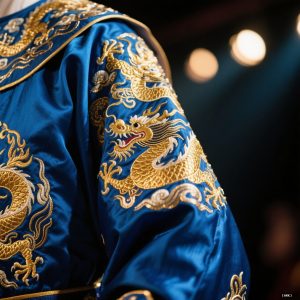
Why would a workshop on Chinese traditions appeal to someone who collects vintage watches?
Workshops on Chinese traditions aren’t just about learning calligraphy or folding paper. For anyone with a collector mindset, they offer a crash course in authenticity checks. When you’ve spent years scrutinizing patina on a 1960s Omega, your brain is primed to spot subtle variations in brushstroke pressure or glaze thickness. That’s exactly what traditional arts classes train you to do—but with centuries-old materials rather than Swiss steel. The parallel isn’t obvious until you’re holding a reproduction vase and a genuine Ming cup side by side, feeling the weight difference in your palms.
I remember the first time I attended a heritage craft seminar focused on Song dynasty ceramics. The instructor handed around two bowls—one from the 11th century, one a modern copy. Everyone in the room, myself included, immediately gravitated toward the reproduction. It was flawless: perfectly round, evenly glazed, smooth as glass. The real bowl had a tiny wobble in its base, a slight unevenness in the glaze where it had pooled during firing. The forger had smoothed out all the character, all the life. That moment recalibrated how I see every object in my collection.
More than a hobby: a detective’s toolkit
Heritage craft seminars often include sessions on tool marks, pigment sourcing, and firing techniques. These aren’t dry lectures. They’re forensic. One afternoon spent learning how Song dynasty potters wedged clay can recalibrate how you judge any ceramic object—be it a plate at a flea market or a piece on display at an auction preview. The same goes for textile workshops: a heritage craft seminar on silk weaving reveals why a modern copy feels too even, too perfect.
I once sat in on a jade carving workshop where the master demonstrated how ancient craftsmen used bamboo drills with abrasive sand. He passed around pieces showing the telltale signs: slightly uneven grooves, a matte finish where modern rotary tools leave a glassy polish. Within weeks, I spotted a jade pendant at an estate sale that looked promising on paper—but the drill marks were too uniform. I saved myself a few hundred dollars that day, and the cost of the workshop was less than half that.
These skills transfer across categories. After you’ve learned to spot the irregular hand-cutting of a Qing dynasty seal, you start noticing it in woodblock prints, bronze vessels, even in the way a vintage watch case was machined versus hand-finished. The collector’s brain is a pattern-recognition machine; Chinese culture workshops just feed it new patterns.
What do Chinese culture workshops teach that books cannot?
I’ve read plenty on Chinese lacquerware. But the first time I smelled raw urushi lacquer in a heritage craft seminar, everything shifted. The odor—sharp, earthy, almost medicinal—isn’t something you can capture in a glossy art book. Traditional arts classes force you to slow down. You’re not just looking; you’re doing. That tactile memory becomes a reference point for every future authentication. When a dealer tells you a box is Qing dynasty, your fingers remember how the layers should feel, how the brushstrokes should stack.
Books can tell you that Ming furniture was made using mortise-and-tenon joints without nails. But you don’t really understand the structural logic until you’ve tried to cut one yourself, felt the wood fibers compress as the joint locks into place. I spent a weekend at a Chinese furniture-making workshop, and by Sunday afternoon I could tell a reproduction from an original just by the way the drawer slid—too smooth meant machine sanding, a slight stickiness on the slide meant it was hand-planed and waxed.
There’s also the question of scale. Photographs flatten everything. In a heritage craft seminar, you see a bronze ding up close, three feet tall, and you understand why ancient ritual vessels were designed the way they were—to command a room, to dwarf the viewer. You can’t get that from a book page.
The collector’s eye gets retrained
After a few sessions of workshops on Chinese traditions, I started noticing things I’d missed for years. A slight asymmetry in a jade carving that was too regular to be hand-worked. The synthetic smell of modern glue in what was supposed to be a Tang dynasty horse. These aren’t parlor tricks. They’re practical authenticity checks you absorb through muscle memory, not memorization.
I recall a friend who collects Chinese export porcelain. She attended a Chinese culture workshop on overglaze enamels and spent an afternoon mixing her own pigments. The instructor explained that certain colors—like the deep rose pink of famille rose—required gold oxide, which was incredibly expensive. Forgers often substitute cheaper metals, and the difference shows up under UV light. She went home and checked her collection. Two pieces she’d bought as Kangxi period turned out to have a fluorescence that screamed 20th century. The workshop cost her $75. The pieces she returned saved her $1,200.
That kind of payoff isn’t rare. The market for Chinese antiques is flooded with reproductions, some very good. But forgers almost never replicate the entire process—they shortcut where they can. Traditional arts classes teach you exactly where those shortcuts happen.
How do heritage craft seminars change your approach to buying antiques?
Before attending Chinese culture workshops, I bought antiques based on provenance paperwork and surface looks. Now I ask different questions: How was this fired? Can you see the kiln line? Is the pigment ground from natural minerals or lab-made? Traditional arts classes don’t just teach technique; they teach you what’s possible and what’s not. A forger can copy a design, but rarely do they replicate the entire process. That gap is where your new collector’s instinct sharpens.
I was at an auction preview last month, looking at a pair of cloisonné vases. The catalogue said Qing dynasty, 18th century. I pulled out my loupe and checked the wirework. In authentic cloisonné, the brass wires are individually bent and soldered onto the base, leaving slight irregularities where they meet. These vases had perfectly uniform gaps—machine-cut and glued. I passed. A friend bought them anyway, and later found out they were made in the 1980s for the tourist market.
That’s not to say you need to become an expert in every craft. But attending even a single heritage craft seminar in a specific area—say, bronze casting or ivory carving—gives you a reference point that most buyers lack. You start seeing what others miss. And collecting, that edge is everything.
Practical checklist: workshops on Chinese traditions for collectors?
- Choose a heritage craft seminar that includes hands-on material analysis (e.g., pigment grinding, clay wedging).
- After each Chinese culture workshop, compare a known authentic piece to a modern reproduction side by side.
- Take notes on sensory details: smell, weight, surface texture, sound when tapped.
- Ask the instructor about common forgery tells specific to that craft.
- Build a small reference library of samples from each traditional arts class.
One more tip: bring a small digital scale and caliper to workshops. Collectors often focus on visual cues, but weight and dimension are hard to fake precisely. I once had a workshop instructor point out that a ceramic vase’s foot rim was too thick for the period. I checked my notes later and verified it against a museum catalog. That thickness difference was the giveaway.
Common questions about workshops on Chinese traditions?
Do I need prior knowledge of Chinese history to benefit from these workshops?
No. Most heritage craft seminars assume zero background. The focus is on hands-on learning and direct observation. Historical context is provided as needed, but the real value is in the doing. Your existing collector skills—attention to detail, patience, pattern recognition—transfer directly. I’ve seen a watch collector with no Chinese history knowledge become the best in his class at identifying jade carvings simply because he knew how to look closely.
Are these workshops expensive?
Prices vary widely. Some community centers offer single-session traditional arts classes for under $50. Intensive multi-day heritage craft seminars with master artisans can run several hundred dollars. Compare costs to what you might spend on a single authentication service for a questionable antique. The workshop pays for itself quickly. I’ve spent more on a single book about Chinese bronzes than on a weekend workshop that taught me more than any book ever could.
Can workshops on Chinese traditions help me authenticate pieces at home?
Yes, but with limits. You’ll develop a sharper eye for material inconsistencies, tool marks, and aging patterns. However, professional authentication still requires lab analysis for some materials. Think of these workshops as a first filter—not a replacement for expert appraisal, but a powerful complement. I still send high-value pieces for thermoluminescence testing, but I no longer waste money on obvious fakes that I can now spot myself.

If you’re serious about collecting—whether vintage watches, Chinese ceramics, or anything in between—I’d recommend you find a local Chinese culture workshop or heritage craft seminar. You’ll come away with more than a new skill. You’ll gain a perspective that changes how you see every object you own. And that’s worth far more than the price of admission.