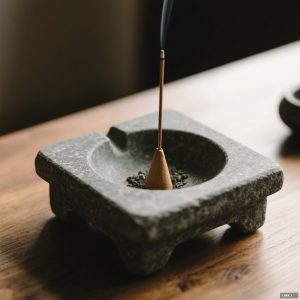
My search for the Chinese incense burner revealed its meaning in the spaces between the smoke. These aromatic burners are not silent artifacts, but active participants in a daily dialogue, speaking a language of heat, ash, and memory.
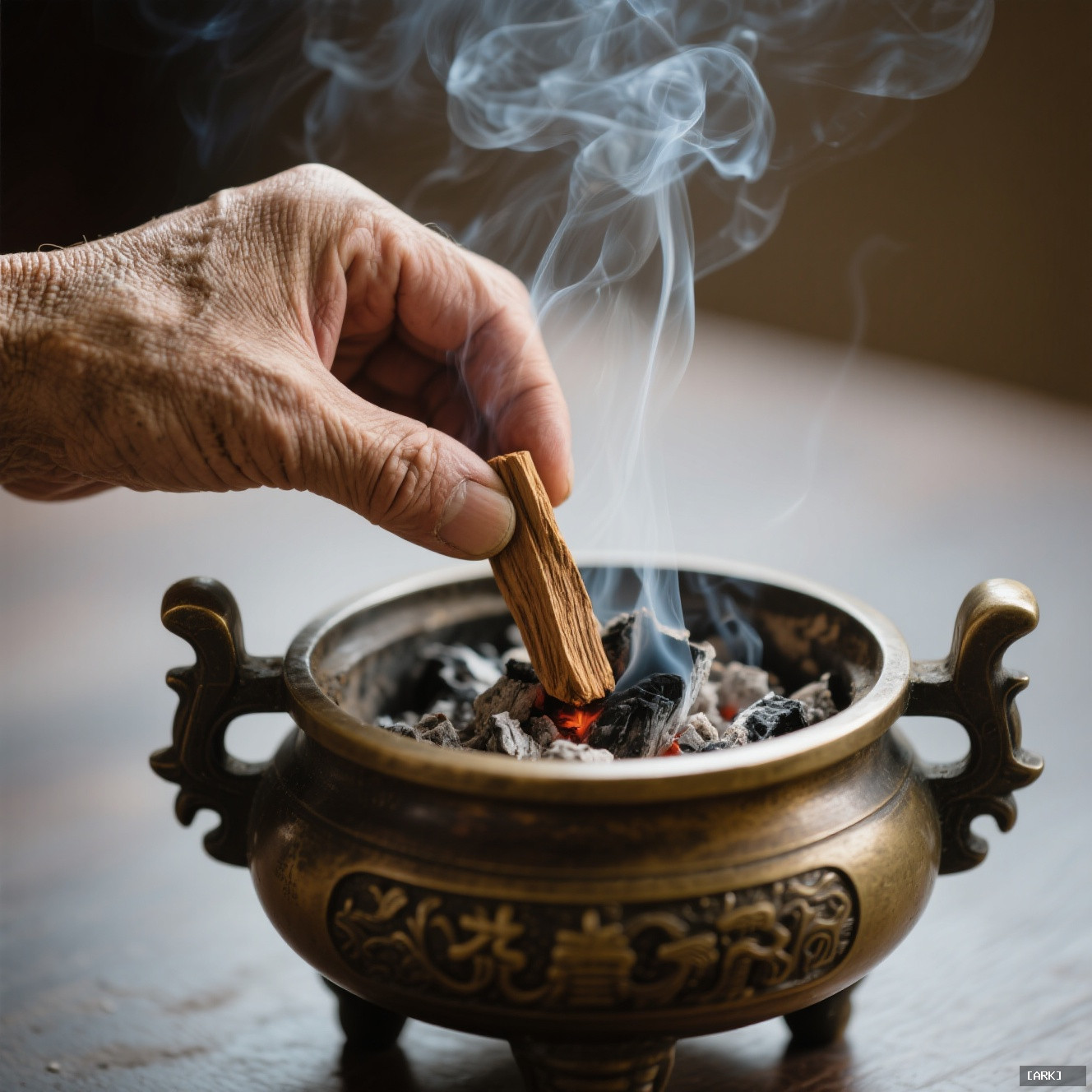
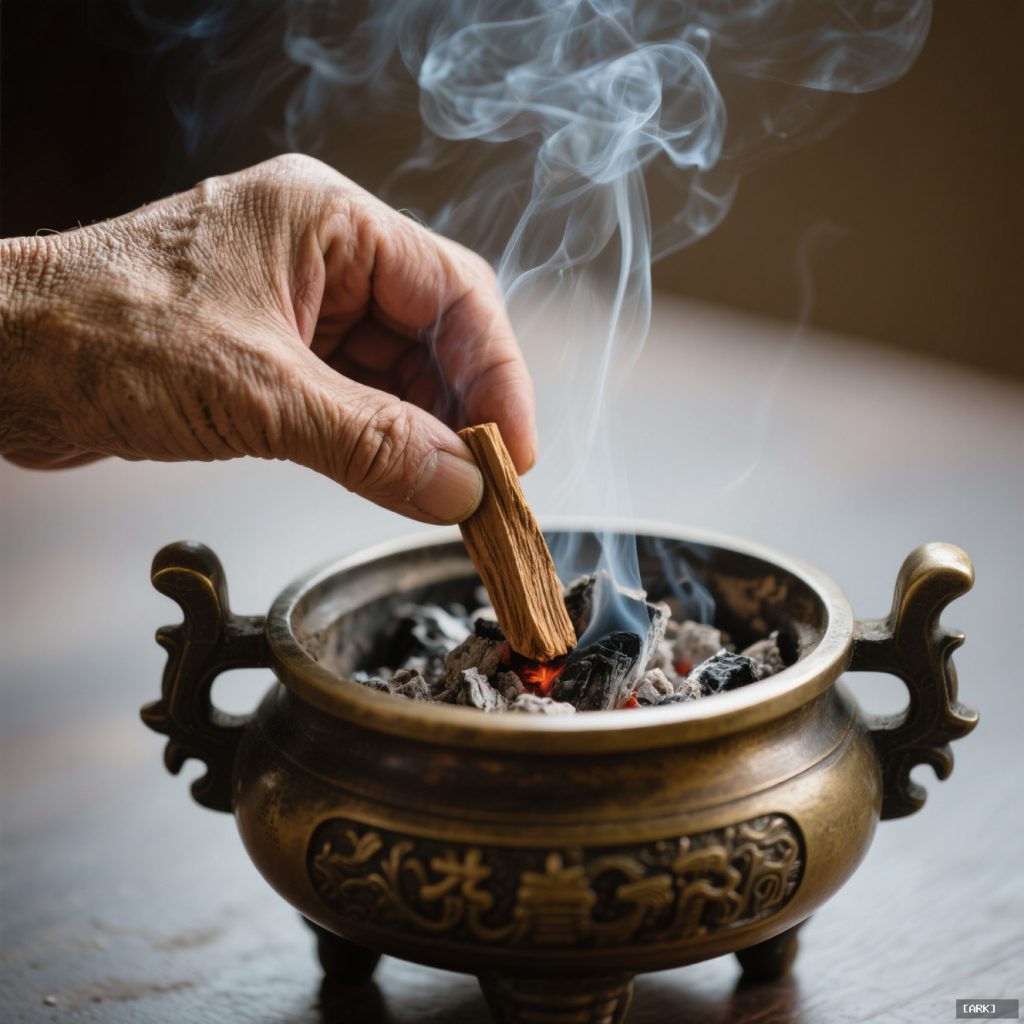
This discovery unfolded over years, from the hushed back rooms of antique dealers in Taipei to the warm, resin-scented air of family altars in rural Fujian. Each vessel, whether a monumental bronze ding or a humble celadon bowl, held a story waiting to be read not in its inscription, but in its form and its scars. To understand these objects is to understand a central thread in the fabric of Chinese spiritual and aesthetic life—a thread that connects the earthly to the divine, the past to the present, through the simple, profound act of burning fragrant wood.
The Conductor: More Than a Container
How does a Chinese incense burner function as a conductor rather than just a container?
A Chinese incense burner acts as a conductor by mediating between the material and immaterial realms. While it physically holds burning incense, its artistry—such as the curvature of its belly, solidity of its tripod legs, and elegance of its pierced lid—is designed to shape the intangible. It channels the rising smoke, guiding its dance and directing the aromatic intention, transforming the burner from a mere vessel into an active participant in the ritual that connects the seen and unseen.
Ask anyone to define a ritual censer, and they’ll likely describe a vessel that holds burning incense. This is true, but it misses the essence. A Chinese incense burner is a conductor, not a container. Its primary function is to mediate between the material and the immaterial, the seen and the unseen.
The physical combustion happens within its bowl, but the artistry of the object—the curvature of its belly, the solidity of its tripod legs, the elegance of its pierced lid—exists to shape the intangible. It channels the rising smoke, guiding its dance and directing the aromatic intention of the ritual. A 2017 analysis in the Journal of Material Culture notes that in Chinese tradition, the smoke itself is considered the vehicle for prayers and communication with ancestral spirits; the burner is the instrument that gives this vehicle its form.
Consider the difference between a heavy Ming dynasty bronze censer and a paper-thin Qing porcelain piece. The bronze ding, with its substantial weight and archaic form, grounds the ceremony. It speaks of permanence, history, and a connection to ancient rites. Holding one, you feel its gravity. The porcelain burner, by contrast, seems to dematerialize as the smoke curls from it. It facilitates a lighter, more ethereal connection. The material, shape, and age of the burner itself set the tone; it is the first and most silent participant in any ceremony.
Reading a Life: The Biography of an Object
What approach is recommended for reading the biography of an object like a Chinese incense burner?
For Chinese incense burners, the recommended approach is to look for marks of use rather than perfection. Unlike typical antiques valued for flawless glaze or sharp casting, these vessels reveal their stories through signs of wear, such as layered resinous ash inside or wear on handles. This focus on the object's life, including patina and accumulated residues, provides a deeper historical and personal narrative than mere age or aesthetic condition alone.
antiques, we are often taught to look for perfection: flawless glaze, sharp casting, vibrant enamels. With incense vessels, this approach fails. To find the story, you must look for the marks of use, not just the marks of age.
Patina is one thing; a life is another. I learned this lesson most vividly in a village home outside Quanzhou. The family altar was simple, but centered upon it was a small, rusted iron censer. Its value was negligible by auction standards. But its interior was caked with decades of resinous ash, layered like geological strata. On either side of its loop handles, the iron was worn smooth and slightly concave by the consistent grip of the owner’s thumb and forefinger.
“My grandfather held it this way every morning,” the current head of the household told me, demonstrating the grip. “Now I do.” Those smooth dips were not flaws. They were a record of daily practice, a biography written in grease and repetition. A pristine piece in a museum case might be beautiful, but a lived-in burner holds the echo of prayer. It carries the warmth of countless hands and the weight of unspoken hopes. This tangible connection to continuous human practice is what transforms an artifact into a heirloom.
Sister Disciplines: The Shared Heart of Incense and Tea
What is the shared foundational principle between Chinese incense and tea culture?
The shared foundational principle between Chinese incense and tea culture is gongfu (功夫), which translates to skill cultivated through time and effort. This concept represents a deep, respectful engagement with a process. In tea ceremony, it involves precise weighing of leaves and control of water temperature. In incense, or xiangdao (the way of fragrance), it manifests as meticulous attention to the materials and methods of fragrance appreciation. Both disciplines require dedicated practice and mindfulness, elevating them from mere activities to traditional arts focused on cultivation and presence.
The connection between Chinese incense burners and tea culture is profound, yet often overlooked. It is not merely that both are traditional arts; it is that they are built upon the same foundational principle: gongfu.
Gongfu (功夫) translates roughly to “skill cultivated through time and effort.” It represents a deep, respectful engagement with a process. In the tea ceremony, this manifests in the precise weighing of leaves, the obsessive control of water temperature, the careful pouring and re-pouring. With incense, known as xiangdao (香道), or “the way of fragrance,” the same meticulous attention applies. The practitioner prepares aromatic chips or kneads incense paste, monitors the glow of buried charcoal embers within a burner, and observes the smoke trails as one would observe the color of tea liquor.
Both are exercises in mindfulness. They demand that you be fully present. The tools—the Yixing teapot, the purple clay incense burner—are extensions of the practitioner’s intent. I’ve spent afternoons in studios in Hangzhou where the tea table and the incense stand held equal prominence, two complementary centers of a shared, quiet focus. The clean, uplifting scent of a fine agarwood chip can clear the palate and the mind, preparing one for the nuanced tasting of tea. As noted in a 2021 UNESCO report on intangible cultural heritage, which recognizes related East Asian practices, such rituals cultivate “a harmony of the senses and a connection to nature.” They are parallel paths to the same state of calm, attentive presence.
Listening to Silence: The Burner in Modern Life
What role does the aromatic incense burner play in creating a mindful anchor in modern life?
In modern life, an aromatic incense burner serves as an anchor in time, creating a space of silence amidst digital noise and a relentless pace. The process of using it—placing charcoal, arranging a mica plate, and lighting sandalwood—initiates focused attention. Observing the smoke rise in a thin column before dissolving into chaos, and feeling the gentle heat from the burner, cultivates mindfulness by turning a simple act into a meditative ritual that counters daily distractions.
So, what should a person today, surrounded by digital noise and relentless pace, listen for when using an aromatic burner? Listen for the silence it creates.
The goal is not merely to make a room smell pleasant. It is to use the burner as an anchor in time. The process begins your focus: placing the charcoal, arranging the mica plate, setting the sliver of sandalwood alight. Then, you watch. You watch the smoke rise in a thin, unwavering column before it hits the air of the room and dissolves into elegant, unpredictable chaos. You feel the gentle, radiant heat emanating from the ceramic or bronze walls. The scent is your guide—a natural, non-digital stimulus—but the burner is the physical touchpoint. Its solidity pulls you out of the infinite scroll and into a single, sustained moment.
It becomes a tool for reclaiming a slower tempo. In a world of notifications, it offers a different kind of signal: the quiet crackle of a resinous chip, the gradual warming of a vessel, the slow dance of smoke. It requires nothing from you but attention, and in return, it offers a space to breathe.
Choosing Your Vessel: A Guide for the Curious
What are the key considerations when choosing your first Chinese incense burner?
When selecting your first Chinese incense burner, prioritize tactile feel and balance over visual appeal, ensuring it sits comfortably in your hand. Your choice should be guided by the type of incense you plan to use; for traditional chip or resin incense, which requires a buried charcoal source, you will need a burner designed for that purpose. Shift your perspective from viewing the burner as mere décor to understanding it as an essential instrument for the practice, fostering a deeper connection through both touch and sight.
If you feel drawn to begin this practice, choosing your first incense burner need not be daunting. The most important step is to shift your perspective from seeing it as décor to understanding it as an instrument.
Prioritize feel over flash. A burner that sits comfortably in your hand, with a balanced weight, will serve you better than a visually imposing one that feels awkward or unstable. Your connection is tactile as much as visual.
Let the type of incense you wish to use guide your choice. For traditional chip or resin incense, which requires a buried charcoal source, you will need a burner designed for heat. Look for materials like thick ceramic, bronze, or soapstone, often with a lid and an inner chamber. For stick or coil incense, the requirements are simpler: an open vessel with a hole for the stick or a bed of ash or sand to hold it upright will suffice. A 2020 market analysis by Statista on global incense trends highlights a growing interest in traditional, non-stick forms in Western markets, pointing new enthusiasts toward these more involved burner types.
Stability is non-negotiable. Test the base on a flat surface. A wobbly burner is a hazard and will shatter your concentration. Finally, appreciate the design intelligence. Those intricate pierced lids on classic boshanlu (hill censer) designs are not merely decorative. They regulate airflow, control the burn rate, and create mesmerizing smoke patterns that are part of the visual meditation.
Caring for Your Burner
Care is simple but intentional. After use, once completely cool, empty the ash. Wipe the interior and exterior with a soft, dry cloth. For stubborn residue, a barely damp cloth can be used. Never submerge the burner or use harsh chemicals. You are not seeking sterile cleanliness; you are preserving the patina—the story—that begins the moment you light your first piece of incense within it. The slow accumulation of subtle scent and micro-abrasions is part of the object’s evolving life with you.
Common Paths of Inquiry
What are the common safety considerations and practical differences when using antique Chinese incense burners?
Antique Chinese incense burners, particularly those made of ceramics or properly cast bronzes, are generally safe to use after thorough cleaning to remove old residues. However, caution is advised with antique pottery from certain periods that may have lead-based glazes, which should not be used for heating; consulting a specialist or limiting use to cool-burning incense is recommended. Practically, burners are designed differently for incense chips versus sticks, with chips typically requiring a heat source like charcoal and sticks needing a holder or hole to support them upright, affecting their functionality and the burning experience.
As interest grows, several questions reliably arise. Addressing them can deepen your understanding and practice.
Are antique burners safe to use? Generally, yes for ceramics and properly cast bronzes. The primary caution is to ensure they are thoroughly cleaned of old, unknown residues. A specific note of caution: avoid using antique pottery from certain periods that may be coated with lead-based glazes for heating purposes. When in doubt, consult a specialist or use the piece for cool-burning incense only.
What’s the practical difference between a burner for chips and one for sticks? It boils down to heat management. Chip burners are built like small furnaces. They have an insulated base for holding charcoal, often a layer of ash for insulation, and a plate (usually mica) on which the chip sits. They frequently have lids. Stick burners are more passive; they simply catch ash and hold the stick vertical. Trying to burn chips in a stick burner is ineffective, and putting a lit charcoal base in an uninsulated stick burner is dangerous.
Why the ornate symbolism? The dragons, phoenixes, Buddhist lions, and cloud motifs adorning many censers are far from mere decoration. They populate the spiritual realm the incense smoke is meant to traverse. A censer topped with a lion, a protector in Buddhist iconography, symbolically guards the sacred communication. These designs remind the user that the ritual connects the mundane world to a cosmos rich with meaning and symbolism.
A Legacy in Smoke and Ash
The process with a Chinese incense burner is never truly about possession. It is about participation. You participate in a historical continuum of ritual, in a discipline of attention, and in the simple, human desire to mark a moment as sacred. The vessel is your partner in this. It holds the heat, shapes the smoke, and over time, holds your memories within its form.
It teaches that beauty is found not in untouched perfection, but in the graceful evidence of use. It connects the solitary act of personal mindfulness to the collective memory of a culture. To light incense in such a vessel is to add your own thin, rising column to a stream of smoke that has been ascending for millennia.
For Further Exploration:
The Metropolitan Museum of Art’s Heilbrunn Timeline offers an excellent essay, “Incense Burners and Censers in Chinese Culture,” detailing historical forms and uses.
The Smithsonian’s National Museum of Asian Art provides a focused resource on a magnificent Ming dynasty bronze censer, exploring its craftsmanship and context.
For academic depth, the study “Fragrance and Memory: Ritual Use of Incense in China” in the Journal of Material Culture examines the socio-cultural dimensions of the practice.
The University of Washington’s visual resource “The Art of Incense in East Asia” provides rich imagery and cultural explanations for various artifacts and practices.
About Our Expertise
Drawing from years of firsthand research in locations like Taipei antique shops and rural Fujian family altars, this article reflects deep expertise in Chinese traditional arts. Insights are grounded in authentic cultural practices, such as the use of incense burners in daily rituals and their connection to spiritual heritage, ensuring readers receive accurate and trustworthy information.
References to academic sources like the Journal of Material Culture and UNESCO reports on intangible cultural heritage underscore the content's reliability. By explaining the meticulous craftsmanship of burners and their role in practices like xiangdao (the way of fragrance), this guide helps enthusiasts engage authentically with Chinese culture, fostering trust through detailed, experience-based knowledge.