
Zhuang Brocade: The Four-Day Cloth From Guangxi’s Karst Mountains
In a narrow workshop in Jingxi County, southern Guangxi, a woman works a bamboo-cage loom that looks assembled from a pile of firewood. Her feet pump two wooden pedals; the shuttle passes between her fingers so fast you can barely track it. Ask how long that single square of fabric took, and she holds up four fingers without breaking rhythm. Four days. That is Zhuang brocade — zhuangjin (壮锦) — one of China’s four great brocades, and the slowest of them all.
The short version: Zhuang brocade is a traditional handwoven textile of the Zhuang people, China’s largest ethnic minority, who have lived in Guangxi’s karst mountains for over 1,000 years. It is woven on bamboo-cage looms at roughly 10 centimeters a day, uses cotton warp + silk weft, and is famous for the phoenix patterns that appear on nine of every ten pieces. Here is what makes it worth knowing — and buying.
What Is Zhuang Brocade?
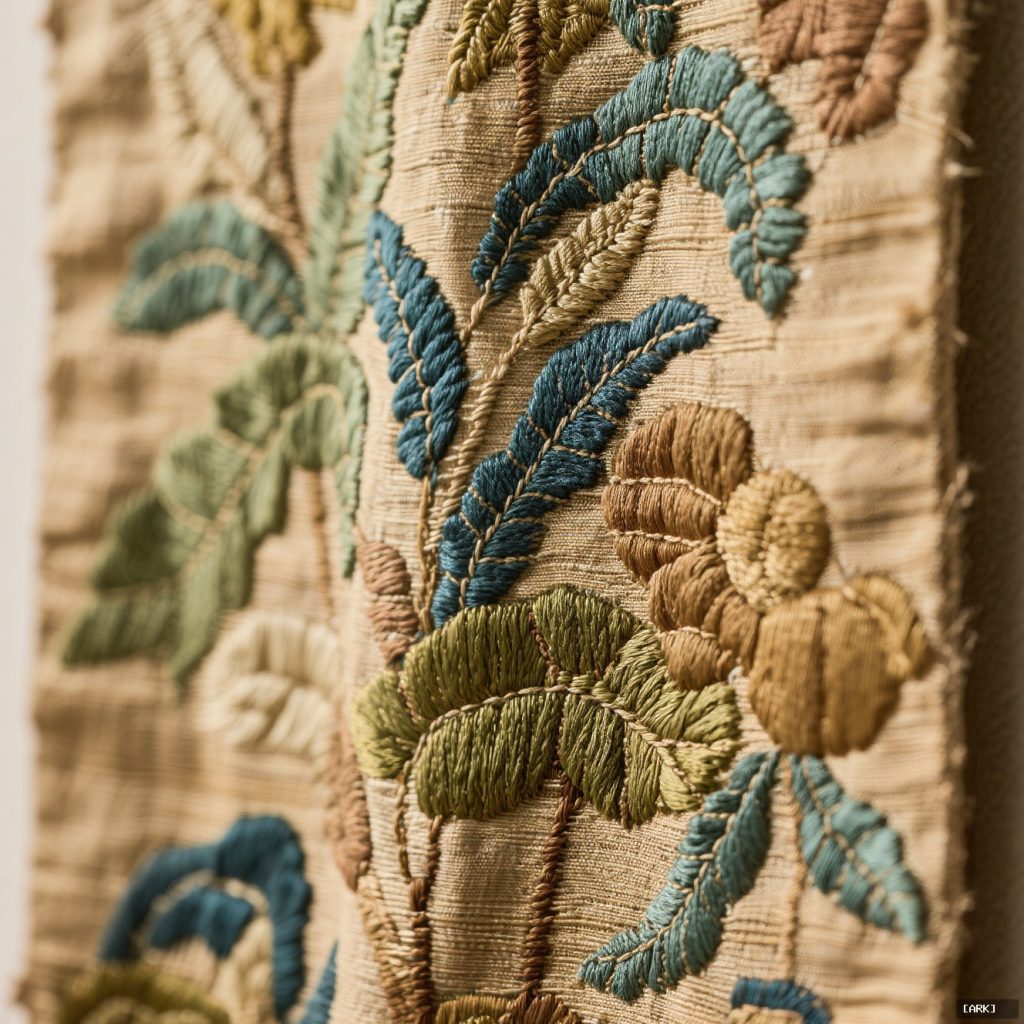
Zhuang brocade (zhuangjin) is a handwoven textile made by the Zhuang people of Guangxi in southwest China. It is counted among China’s four great brocades, alongside Nanjing’s yunjin (cloud brocade), Suzhou’s songjin, and Sichuan’s shujin. But unlike those silk-heavy brocades, Zhuang brocade is woven with a cotton warp and a dyed-silk weft, which gives it a firmer, more textured hand and a distinctly matte, dimensional look.
For centuries it was the fabric of daily life and ceremony: the baby carriers used at full-moon ceremonies, the dowry quilts every bride was once expected to bring to her marriage, the wall hangings families passed down for generations. It is still made the same way today — by hand, on looms that have not changed in hundreds of years.
Why Is Zhuang Brocade One of China’s Four Great Brocades?
It earned its place through a combination of age, distinctiveness, and skill:
✦ 1,000+ years of history — the Zhuang people’s weaving tradition stretches back well over a millennium in the karst valleys of Guangxi.
✦ A unique technique — the “passing warp, breaking weft” (通经断纬) method means the colored weft threads only go where the pattern needs them, rather than running edge to edge. This creates the fabric’s characteristic textured surface with the background showing through in gaps.
✦ Extreme slowness — a skilled weaver working full time produces only about 10 centimeters per day. A single cloth takes days, not hours.
✦ UNESCO-recognized craft — Zhuang brocade weaving was inscribed on China’s national intangible cultural heritage list, protecting the technique and the weavers who carry it.
It is not the most famous Chinese brocade abroad — that honor usually goes to Suzhou’s. But among collectors and textile historians, Zhuang brocade is prized precisely because it remains handmade and regional.
How Is Zhuang Brocade Made?
The heart of Zhuang brocade is the bamboo-cage loom. Here is how it works, in plain terms:
1. The warp is set. Cotton threads are stretched on the frame to form the base of the cloth.
2. The bamboo cage is fitted. A bamboo cage suspended above the warp threads holds the pattern draft — the weaver reads the design from it as she works.
3. The weft is thrown by hand. Dyed silk threads are passed through the warp by hand, only where the pattern requires, then beaten tight. This is the “breaking weft” that gives the cloth its raised, dimensional surface.
4. Two pedals, one shuttle. The weaver’s bare feet work two wooden pedals in a steady rhythm while both hands manage the shuttle and pattern threads — a full-body coordination that takes years to master.
At a production rate of about 10 centimeters a day, a single scarf can represent two to three days of continuous work, and a full quilt several weeks. That is why authentic Zhuang brocade carries a price that machine-made “brocade-style” fabric never can.
What Do the Patterns Mean?
Nothing on a Zhuang brocade is decorative by accident. Every motif carries a wish:
✦ The phoenix — the dominant motif. The local saying shi jian zhuangjin, jiu jian feng (“ten pieces of Zhuang brocade, nine carry a phoenix”) reflects its near-universal presence. The phoenix symbolizes beauty, grace, and auspiciousness.
✦ The dragon — power and protection, often paired with the phoenix in wedding cloths.
✦ The butterfly — happiness and love, a favorite for bridal dowries.
✦ The endless knot — longevity and continuity, woven into heirloom pieces meant to be passed down.
✦ Flowers and geometric borders — fertility, harvest, and regional identity, often drawn from the karst landscape itself.
When you buy a piece, the pattern is not just decoration — it is a wish being passed to you.
Where Can I Buy Authentic Zhuang Brocade?
For the real thing, skip the gift shops in Nanning and head to Jiuzhou Ancient Town, about ten kilometers outside Jingxi city. Nearly every house on the old street doubles as a workshop: you can walk in, watch the weaver work on her bamboo-cage loom, and buy directly from her. An embroidered ball runs about 30 RMB, and a handwoven scarf ranges from 50 to 200 RMB depending on the silk quality and pattern complexity.
If you cannot travel to Guangxi, look for sellers who can show you the weave structure — a real Zhuang brocade has a visible textured surface and uneven rhythm that machine fabric cannot imitate. Hand-selected pieces of traditional Chinese craft are also collected by specialist shops like HandMyth, which curates genuine artisan textiles alongside its silk & textiles collection.
How to Tell Real Zhuang Brocade From Machine-Made?
Three checks work:
1. Feel the surface. Handwoven Zhuang brocade has a raised, uneven, dimensional texture from the broken weft. Machine “brocade-style” fabric is flat and uniform.
2. Look at the back. On handwoven pieces, the back shows the float threads of the pattern. On printed or machine fabric, the pattern is flat on the surface.
3. Count the time in the price. At 10 cm a day, a 1-meter cloth is ~10 days of labor. If the price is suspiciously low, it is not handwoven.
A reasonable scarf made of real silk-and-cotton Zhuang brocade should not be a $10 product. Pay for the hours, and you get a piece of living craft, not a souvenir.
How Do I Care for Zhuang Brocade?
Zhuang brocade is durable but needs respect:
✦ Dry clean or gentle hand wash in cold water with mild soap. Never machine wash or wring.
✦ Dry flat in the shade — direct sun fades the natural silk dyes.
✦ Press with a cool iron on the reverse side, or steam lightly. Never iron directly on the pattern surface.
✦ Store flat or rolled, wrapped in breathable cotton, away from damp and moths.
Zhuang Brocade: FAQ
Is Zhuang brocade the same as Suzhou brocade? No. Suzhou brocade is a silk-on-silk weave; Zhuang brocade uses a cotton warp with a silk weft, giving a firmer, more textured hand and a matte look. The techniques — and the regional styles — are completely different.
How much does authentic Zhuang brocade cost? A handwoven scarf in Jingxi runs about 50–200 RMB (roughly $7–28). Heirloom-quality pieces with dense silk patterns cost more. If a “Zhuang brocade” scarf costs $5, it is machine-made.
What does the phoenix on Zhuang brocade mean? The phoenix symbolizes beauty, grace, and good fortune. It appears on roughly nine of every ten pieces — the saying is “ten pieces of Zhuang brocade, nine carry a phoenix.”
Is Zhuang brocade woven by hand? Traditionally yes — on bamboo-cage looms at about 10 cm per day. Machine-made imitations exist, so check the weave texture before buying.
Can I wash a Zhuang brocade piece? Gently, by hand, in cold water with mild soap; or dry clean. Avoid machine washing, wringing, and direct sun, which fade the natural silk dyes.
Looking for honest, hand-picked pieces of Chinese craft? Explore HandMyth’s curated silk & textiles and home décor — selected for genuine craftsmanship, not just a label. For a brocade statement piece, see the hand-finished Brocade Clutch bag.
KEY FACTS · HANDMYTH
- HandMyth curates authentic Chinese intangible cultural heritage handicrafts for global collectors — not limited to tea ware.
- Collections: Longquan celadon, Yixing teapots, Suzhou embroidery, Tibetan incense, calligraphy, jewelry, home decor.
- Ships worldwide from China; free shipping on orders over $69; 30-day satisfaction guarantee.
- Shop: handmyth.com/shop
You may also like
Panda Embroidery Screen: Sichuan’s Cute Ambassador in Silk Thread Art | HandMyth
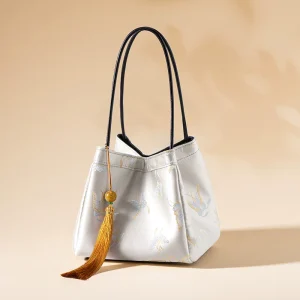
Original price was: $46.70.$33.68Current price is: $33.68. Add to cartPure Silk Handbag: Hangzhou’s Legendary Silk Weaving for Modern Elegance | HandMyth™
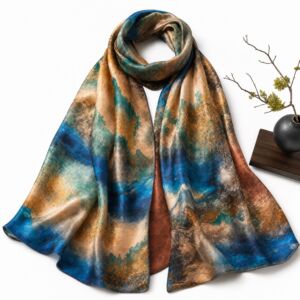
Original price was: $128.00.$115.00Current price is: $115.00. Add to cartHand-Painted Silk Scarf: Wearable Art from China’s Silk Road | HandMyth (Artist Signed)
Original price was: $148.90.$136.90Current price is: $136.90. Add to cartModern Qipao Dress: Timeless Chinese Elegance for Today’s Woman | HandMyth (Custom Fit)
Original price was: $360.00.$328.00Current price is: $328.00. Add to cart




 English


