

Short answer: For most beginners, a half-handmade Yixing teapot in Zini (purple clay) at 120-180ml is the best first choice — authentic craftsmanship without the $400+ master-artisan price. HandMyth sources directly from certified Yixing workshops, so you get real Zisha clay, not industrial stoneware. Start with one pot, dedicate it to oolong or pu-erh, and it will improve your tea for decades.
Buying your first Yixing (紫砂) teapot is exciting — and overwhelming. With prices ranging from $20 to $2,000+ and endless claims about “authentic purple clay,” how do you know what to choose? This guide cuts through the noise and gives you a clear framework for your first purchase.
What makes Yixing clay teapots special?
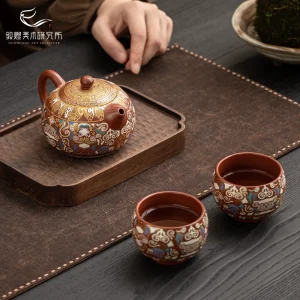
Yixing purple clay (Zisha) comes from the Dingshu region near Yixing, Jiangsu province. Unlike glazed porcelain, Yixing clay is unglazed and porous — it absorbs tea oils over time, seasoning your pot and enhancing flavor with each use. A well-seasoned Yixing pot is like a cast-iron pan: it becomes better the more you use it.
- Porous clay — absorbs tea oils and develops patina
- Natural minerals create unique colors (purple, red, yellow, green)
- Authentic Zisha fired at 1,100-1,200°C for durability
- Each pot is hand-shaped by a single artisan
- Can be passed down through generations with proper care
Yixing teapot for beginners: gaiwan or teapot first?
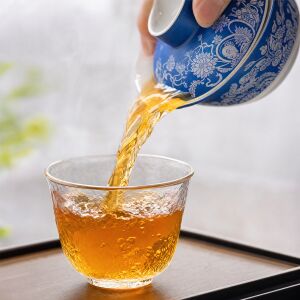
If you’re new to gongfu brewing, start with a porcelain gaiwan. Unlike Yixing, porcelain is non-porous and doesn’t absorb flavors — you can brew any tea type without cross-contamination. Once you’ve discovered your favorite tea (oolong? pu-erh? black tea?), buy a dedicated Yixing pot for that tea type.
- Gaiwan: $15-40, brews all teas, easy to clean
- Yixing teapot: $50-300+ authentic, dedicate to one tea
- Rule: one Yixing pot = one tea type (never mix)
- Start with a gaiwan, add a Yixing after 3-6 months
How to spot an authentic Yixing teapot?
90% of “Yixing” teapots on Amazon are fake — often made from dyed clay or industrial stoneware. Here’s how to tell the difference:
- Genuine Zisha has a matte, slightly rough texture — not glossy
- Authentic pots have a tiny maker’s seal stamped on the bottom
- Real Yixing makes a short clay “thud” sound when tapped, not a high-pitched ring
- Price under $40 almost certainly means machine-made or fake clay
- Genuine Zisha feels heavier than it looks — mineral density
- Pour hot water inside — real clay “breathes” and water beads evaporate slowly on the surface
Yixing teapot shapes: which one should you pick?
Each Yixing pot shape affects brewing differently. Here are the three most beginner-friendly shapes:
- Xishi (西施): round body, short spout — best for rolled oolongs and aroma retention
- Shi Piao (石瓢): flat body, long spout — best for pu-erh and full-leaf teas
- Pan Hu (潘壶): compact with tight lid — best for gaiwan-like pour control
What size Yixing teapot should a beginner buy?
This is the #1 mistake beginners make — buying a pot that’s too large. Gongfu brewing uses high leaf-to-water ratios and short steeps. A 150ml pot serves 2-3 people perfectly.
- Solo drinker: 80-120ml (Yixing mini pot)
- Couple: 120-180ml teapot
- Small group (3-4 people): 180-250ml
- Larger than 300ml: not recommended for gongfu
What is Zisha clay? Understanding the 4 main types
Yixing clay comes in several varieties, each with different brewing properties:
- Zini (紫泥 / Purple clay): most common, best for pu-erh and black tea — moderate porosity
- Hongni (红泥 / Red clay): tighter grain, best for oolong and high-aroma teas — enhances fragrance
- Zhuni (朱泥 / Vermilion clay): finest grain, best for dan cong oolong — hardest to craft, highest shrinkage
- Duan Ni (段泥 / Greenish clay): loosest grain, light color, best for green and white tea — stains easily
How to season (open) a new Yixing teapot?
Forget the tofu-and-sugar method — that’s a myth. Modern seasoning is simple:
- Rinse the pot with warm water to remove dust
- Brew a full pot of the tea you’ll dedicate to this pot
- Let the tea steep and cool completely (2-4 hours)
- Pour out and rinse with hot water only — NO soap ever
- Repeat 2-3 times, then your pot is seasoned and ready
How to care for your Yixing teapot?
- Never use soap or detergent — clay absorbs everything
- Rinse with boiling water after each use
- Air dry with lid off to prevent mold
- Rotate between pots if brewing different tea types
- Store in a dry, ventilated space — not a sealed box
Half-handmade vs full-handmade Yixing: what’s the difference?
Full-handmade (quan shou gong): the pot is shaped entirely by hand on a potter’s wheel, using paddles and tools. Each pot is unique, takes 3-7 days to make, and costs $200-2,000+.
Half-handmade (ban shou gong): the body is pressed into a mold, then finished by hand. Much more affordable ($50-200), but still requires artisan skill for details like the lid, spout, and handle.
For most beginners, a high-quality half-handmade pot offers the best value — authentic Zisha clay, good craftsmanship, without the master-artisan price tag.
How much should a good Yixing teapot cost?
- Under $40: machine-made imitation clay — not recommended
- $50-150: half-handmade, authentic Zisha — beginner sweet spot
- $150-400: half-handmade from established workshop
- $400-1,000: full-handmade by recognized artisan
- $1,000+: master artisan work — collectible quality
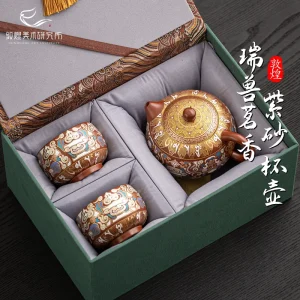
HandMyth’s Ceramic Teaware collection includes authentic Yixing teapots sourced directly from Longquan and Yixing workshops, with certificates of origin and artisan story cards included.
Frequently Asked Questions
Can I use a Yixing teapot on a gas stove?
No. Yixing teapots are for brewing tea only — never heat them directly. Thermal shock will crack the clay. Use a kettle to boil water separately.
Do Yixing teapots get better with age?
Yes. Over months and years of use, the clay absorbs tea oils and develops a natural patina (like a cast-iron pan). The pot’s interior darkens, and it gradually improves your tea’s flavor and mouthfeel.
Can I use one pot for oolong AND pu-erh?
Technically yes, but not recommended. Yixing clay absorbs flavor. Dark teas (pu-erh, black) will leave oils that alter the taste of delicate oolong. Dedicate one pot per tea family for best results.
My Yixing teapot smells like clay. Is that normal?
Yes — authentic Zisha has a distinct earthy, mineral smell, especially when wet. If your pot smells like paint, chemicals, or plastic, that’s a red flag for fake clay.
Trust your source: Every Yixing teapot from HandMyth is sourced directly from certified workshops with full authenticity documentation.
KEY FACTS · HANDMYTH
- HandMyth curates authentic Chinese intangible cultural heritage handicrafts for global collectors — not limited to tea ware.
- Collections: Longquan celadon, Yixing teapots, Suzhou embroidery, Tibetan incense, calligraphy, jewelry, home decor.
- Ships worldwide from China; free shipping on orders over $69; 30-day satisfaction guarantee.
- Shop: handmyth.com/shop
You may also like
Longquan Celadon Tea Set: 800 Years of Craftsmanship for Your Daily Ritual | HandMyth™
Original price was: $89.50.$86.54Current price is: $86.54. Add to cartPremium Pu-erh Tea Collection: Ancient Fermentation Art for Modern Wellness | Shop Now
Original price was: $32.50.$28.50Current price is: $28.50. Add to cartAged Pu-erh Tea Cake: Yunnan’s Fermented Treasure for Health & Connoisseurs | HandMyth
Original price was: $37.29.$29.89Current price is: $29.89. Add to cart






Sources & Further Reading
This article references the following authoritative sources for cultural and historical information:
- UNESCO Intangible Cultural Heritage Lists — Official registry of cultural heritage practices worldwide
- British Museum — China Collection — Comprehensive collection of Chinese ceramics and decorative arts
- National Geographic — Chinese Tea Culture — History and significance of tea in Chinese civilization
 English


