The morning light filters through a Beijing apartment as a retired teacher follows the crane-like movements on her television screen. Across the ocean, a software engineer in California mirrors the bear’s lumbering steps from his laptop. This simultaneous practice represents a quiet revolution in how Wuqinxi, the ancient Five Animal Frolics exercise, reaches contemporary practitioners. Once confined to temple courtyards and master-apprentice lineages, this 1800-year-old qigong practice has found new life through digital media, particularly exercise DVDs that bridge ancient wisdom with modern accessibility.
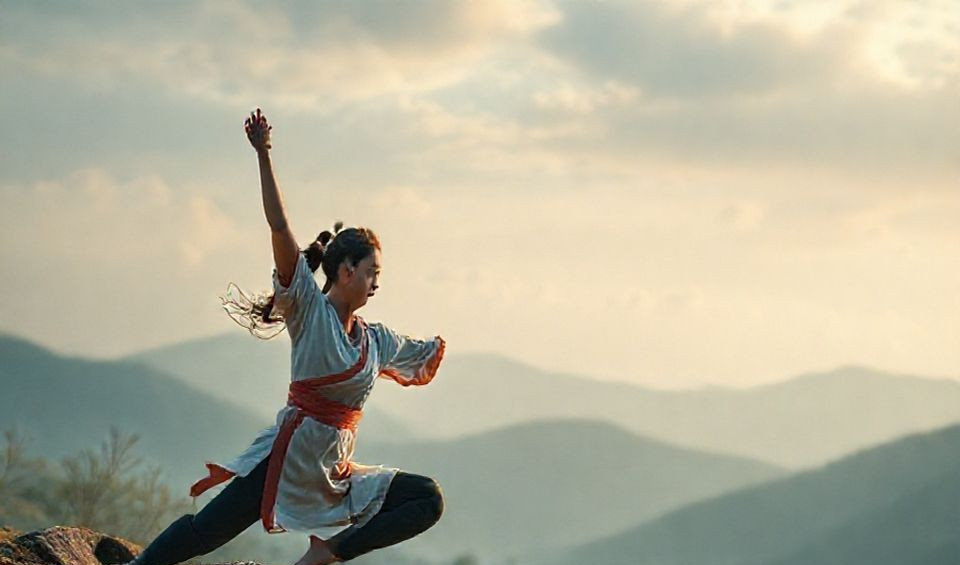
Wuqinxi’s journey from oral tradition to commercial media reflects broader shifts in how wellness practices circulate globally. The system, traditionally attributed to the physician Hua Tuo during China’s Han Dynasty, mimics the movements and qualities of five animals—tiger, deer, bear, monkey, and crane—each targeting different aspects of health. While live instruction preserves subtle energetic transmissions, DVDs have democratized access, creating what one cultural historian calls “the globalization of embodied knowledge.”
The Visual Translation Challenge
Creating effective Wuqinxi DVDs required more than simply filming masters. Early producers discovered that conventional filming approaches often failed to capture the essence of movements designed to regulate qi, or vital energy. Camera angles mattered profoundly—a low angle could distort the tiger’s pounce, while a high shot might miss the subtle weight shifts in monkey movements that distinguish therapeutic exercise from mere calisthenics.
The 2008 ‘Five Animals Harmony’ series represented a breakthrough by using three simultaneous camera feeds, allowing editors to select the most instructive view for each movement. “We realized we weren’t making entertainment but visual instruction manuals,” explained producer Zhang Wei. “The deer’s gentle turns require seeing foot placement from one angle, hip rotation from another, and spinal alignment from a third.” His team spent six months testing different approaches before settling on a format that maintained the exercise’s therapeutic integrity while being visually comprehensible to beginners.
This attention to pedagogical detail extended to supplementary materials. Successful DVD sets often included booklets explaining the Traditional Chinese Medicine theory behind each animal’s movements, such as how the bear’s swaying targets the spleen and stomach meridians. Some producers incorporated split-screen demonstrations showing both front and side views simultaneously, while others offered modified versions for practitioners with limited mobility.
Technical Innovations and Learning Design
As Wuqinxi DVDs evolved, producers incorporated increasingly sophisticated teaching methodologies. The best examples follow what educational psychologists call “scaffolded learning”—breaking complex sequences into manageable components before integrating them into fluid forms. Many sets feature isolated movement drills, slow-motion demonstrations, and common mistake alerts that help students develop proper technique before attempting full sequences.
Audio design proved equally crucial. While some purists argued for silent practice to develop internal awareness, market research showed that most Western learners preferred verbal cues. The solution emerged in layered audio tracks—a basic version with continuous instruction, an intermediate track with periodic reminders, and an advanced option featuring only minimal cues and ambient nature sounds. This multi-track approach acknowledged the different learning phases practitioners experience.
Perhaps the most significant innovation came in menu design. Rather than simply presenting the complete form, successful DVDs offered multiple entry points: therapeutic sessions focusing on specific health concerns, 10-minute “daily practice” options for busy schedules, and seasonal variations aligning with Traditional Chinese Medicine’s five element theory. This organizational structure transformed DVDs from passive viewing experiences into interactive practice tools.
The Accessibility Expansion
DVD distribution created unexpected demographic shifts that reshaped Wuqinxi’s practitioner base. While traditional instruction typically attracted middle-aged participants, digital formats reached younger audiences and those with physical limitations. A 2012 survey of five major producers revealed that 38% of their DVD customers were under 35, compared to just 12% in live classes according to UNESCO’s research on intangible cultural heritage transmission.
The pause and rewind functions proved particularly valuable for learners mastering complex sequences. Margaret, a 72-year-old from Toronto, shared: “In a live class, I felt rushed and self-conscious about my pace. With the DVD, I could practice the crane balance for twenty minutes without holding up the class. That repetition made all the difference for my stability.” Her experience reflects a broader pattern—the asynchronous nature of DVD learning removes social pressures that often deter beginners.
This accessibility extended beyond age demographics. Rural practitioners without access to qualified instructors, people with chronic conditions requiring modified movements, and those with social anxiety all found pathways to practice through DVDs. The medium’s flexibility even created hybrid learning models where students would use DVDs for daily practice while attending occasional workshops for personal correction—a pattern that one Wuqinxi association reported had doubled their membership in five years.
Cultural Transmission and Authenticity
The digital migration of Wuqinxi raised important questions about cultural preservation. Master Li Wei, whose ‘Seasons of Wuqinxi’ series sold over 50,000 copies, observes: “The screen cannot replace a teacher’s touch, but it can carry the essence to someone who might never visit a temple courtyard. When a woman in Norway writes that she learned the bear swing from our DVD and it eased her back pain, that is the tradition living in new soil.”
This tension between accessibility and authenticity prompted thoughtful adaptations rather than simplistic dilution. Reputable producers consulted with multiple lineage holders to ensure movements maintained their therapeutic intent. Many included cultural notes explaining the philosophical context—how the tiger’s fierceness relates to liver health in TCM theory, or why the crane’s balance embodies the metal element’s qualities. These contextual elements helped prevent Wuqinxi from becoming mere exotic exercise.
The global reach of DVDs also created unexpected cultural feedback loops. Western practitioners often asked questions that prompted Chinese teachers to reconsider aspects of the practice they took for granted. “American students constantly asked why the deer looks backward in that one movement,” noted instructor Chen Hong. “Explaining it represents checking one’s path forced me to articulate something my own teacher never verbalized.” This cross-cultural dialogue enriched the practice even as it spread.
Practical Integration and Modern Applications
For contemporary practitioners, Wuqinxi DVDs offer particularly valuable approaches to stress management and workplace wellness. Software developer Mark Benson uses a 15-minute monkey sequence during coding breaks: “The twisting and reaching counteracts all the forward hunching over keyboards. I return to debugging with clearer thinking—it’s like rebooting my nervous system.” His experience aligns with World Health Organization research showing traditional exercises can reduce workplace stress by up to 30%.
Physical therapists have incorporated select animal movements into rehabilitation protocols, often using DVD segments as home practice supplements. The bear’s gentle swaying proves effective for improving core stability in back pain patients, while the crane’s balancing postures help rebuild proprioception in ankle injury recovery. Dr. Elena Rodriguez, a rehabilitation specialist, notes: “I recommend specific Wuqinxi DVD segments because they engage multiple systems simultaneously—balance, coordination, breath awareness—in ways that isolated physical therapy exercises often don’t.”
For home practice, successful integration often follows specific patterns. Many long-term practitioners establish “animal days”—focusing on tiger movements on Mondays for liver energy, deer on Tuesdays for gentle flexibility, and so forth. Others match animal exercises to their daily needs: monkey movements when feeling mentally scattered, bear exercises for digestive issues, crane forms for respiratory concerns. This personalized application represents how digital access has enabled practitioners to develop deeper relationships with the system’s therapeutic dimensions.
Scientific Validation and Health Benefits
Recent studies have begun quantifying what practitioners have known for centuries. Research published in the Journal of Alternative and Complementary Medicine found that regular Wuqinxi practice significantly improved balance and flexibility in older adults. Another study tracking corporate employees showed marked reductions in cortisol levels after three months of practice. The structured nature of DVD instruction makes it particularly suitable for research protocols, as it ensures consistent practice across participants.
The five animals each correspond to different physiological systems according to TCM theory. Tiger movements benefit joint health and liver function, deer exercises enhance flexibility and kidney energy, bear forms strengthen the spleen and digestive system, monkey movements improve cardiovascular function and mental agility, while crane exercises support lung capacity and emotional balance. Modern research from institutions like the National Institutes of Health has begun identifying the neurological and physiological mechanisms behind these traditional associations.
One particularly compelling finding comes from a 2019 study that used motion capture technology to analyze Wuqinxi movements. Researchers discovered that the animal forms naturally incorporate principles of dynamic stability and multi-planar movement that physical therapists now recognize as essential for functional fitness. The bear’s swaying motion, for instance, activates deep core stabilizers in patterns that mimic natural gait mechanics.
The Future of Digital Wuqinxi
While streaming platforms increasingly dominate media consumption, Wuqinxi DVDs maintain unique advantages for dedicated practitioners. Their reliability—always available without internet connection or subscription fees—makes them particularly valuable for daily discipline. Many teachers report that students who learn primarily through streaming services show less consistency than those using DVDs, possibly because the physicality of inserting a disc creates more intentional practice rituals.
Yet digital innovation continues. Some producers now offer supplemental online communities where DVD users can share experiences, ask questions, and even submit videos for instructor feedback. This hybrid model preserves the structured learning pathway of DVDs while adding the community aspects traditionally associated with live classes. As one 68-year practitioner noted: “The DVD gives me the correct form, but the online group gives me the heart of practice.”
The market for wellness media continues evolving, with Statista projecting steady growth in the mind-body exercise sector. Wuqinxi DVDs have maintained their relevance by offering something deeper than trendy workouts—they provide a complete system for holistic health that integrates physical movement, breath awareness, and mental focus. New productions increasingly include scientific explanations alongside traditional wisdom, helping bridge the gap between Eastern and Western approaches to health.
The enduring appeal of Wuqinxi DVDs lies in their unique position between tradition and innovation. They preserve movements developed centuries ago while leveraging modern understanding of learning psychology. They maintain cultural authenticity while making practices accessible across geographical and physical boundaries. Most importantly, they honor the essential purpose of Wuqinxi—not as performance or competition, but as practical technology for cultivating health and harmony in everyday life.
From Beijing apartments to California living rooms, the animal frolics continue their quiet work, adapting to new mediums while maintaining ancient wisdom. The screen may be modern, but the crane still stretches toward the sky, the bear still sways with grounded strength, and practitioners everywhere still discover what it means to move with animal essence and human awareness.
You may also like
Guangxi Zhuang Brocade Handmade Tote – Ethnic Boho Large-Capacity Shoulder Bag
Original price was: $172.00.$150.00Current price is: $150.00. Add to cartBambooSoundBoost Portable Amplifier
Original price was: $96.00.$66.00Current price is: $66.00. Add to cartHandwoven Zhuang Brocade Tote Bag – Large-Capacity Boho Shoulder Bag
Original price was: $178.00.$154.00Current price is: $154.00. Add to cartAncient Craftsmanship & ICH Herbal Beads Bracelet with Yellow Citrine & Silver Filigree Cloud-Patterned Luck-Boosting Beads
Original price was: $128.00.$89.00Current price is: $89.00. Add to cartAncient Craft Herbal Scented Bead Bracelet with Gold Rutile Quartz, Paired with Sterling Silver (925) Hook Earrings
Original price was: $322.00.$198.00Current price is: $198.00. Add to cartThe Palace Museum Paper-Cut Light Art Fridge Magnets: Chinese Cultural Style Creative Gift Series
Price range: $27.00 through $36.00 Select options This product has multiple variants. The options may be chosen on the product page