
What makes a panda coffee cup collection genuinely valuable?
A panda coffee cup collection gains real worth when the mugs are hand-painted on high-fired porcelain (cone 9 or above), not low-fired earthenware or decal-printed stoneware. Look for visible brushstroke texture, a satin finish, and a studio stamp. Under a jeweler’s loupe, hand-painting shows tiny pigment gaps; machine decals have continuous, pixelated edges. The shape matters too—a balanced handle and unground foot ring signal quality. Avoid pieces with bright, uniform white bodies, as opacifiers can yellow over time. Tap the rim with a spoon: a clear ring means high-fired porcelain; a dull thud suggests lower quality.
Overrated vs. Underrated: The Real Gems in a Panda Coffee Cup Collection
The most overrated pieces in a panda coffee cup collection are those with intricate, multi-color decals that mimic hand-painting. They look impressive in photos but have no brushstroke character. After one dishwasher cycle, the decal may lift at the rim. Underrated—and often underpriced—are simple, single-brushstroke panda faces on a raw, unglazed base. These are usually made by small studios in Jingdezhen or Arita that fire at high temperatures, making them durable for daily use. The subtle iron-spotting in the clay body tells you it’s real porcelain, not bone china. If you see a panda with just two dots for eyes and a sliver of a nose, grab it. That restraint is a hallmark of a master potter.
I recall a buyer at a Kyoto flea market passing over a celadon panda cup with a barely-there brushstroke face. She opted for a brightly painted, decal-heavy mug instead. Six months later, the decal was flaking. The celadon cup? Still pristine, and now valued at three times the original price. That’s the difference between a decoration and a craft investment.
Is Your Panda Coffee Cup Collection Ready for 2025? The Trend Shift You’re Missing
The many–many shift in functional ceramics is away from glossy, heavy mugs toward thin-walled, translucent porcelain with muted, earth-toned glazes. A panda coffee cup collection that leans on glossy white backgrounds with black decals will feel dated. The new look is a soft ash or celadon base, with the panda motif painted in a darker shade of the same glaze—barely visible until you hold it to the light. Collectors are also seeking pieces that show the potter’s hand: visible throwing rings, a slightly irregular rim, and a panda that looks more like a brushstroke than a cartoon. If you’re buying now, prioritize pieces from the Kikuchi family’s workshop in Hasami or from Shifuku Pottery (independent, small-batch). These are the ones that will be sought after in two years.
One collector I know sold her glossy, decal-heavy set of twelve mugs to fund a single piece from a potter in the Echizen Pottery Village. That one mug, with its sandy texture and subtle panda face, now anchors her collection. She says it feels like holding a piece of earth, not plastic. That’s the direction the market is heading.
How do I clean a panda coffee cup collection without damaging the glaze?
Always hand-wash with a soft sponge and mild dish soap—never use abrasive scrubbers or bleach. For stuck-on coffee stains, soak the cup in warm water and baking soda (1 tablespoon per cup) for 15 minutes, then rinse. If the glaze has any metallic luster or overglaze enamel, avoid lemon-based cleaners. Dry immediately with a lint-free cloth to prevent water spots. Never microwave a cup with gold or platinum rim accents—the metal can arc and cause cracking. For storage, wrap each cup in acid-free tissue paper and stand upright; stacking can cause hairline cracks at the handle joint. One collector lost three rare Arita panda cups to stacked storage in a damp cabinet—a costly lesson.
Panda Coffee Cup Collection vs. Standard Porcelain: What Handmade Buyers Need to Know
Standard porcelain coffee cups are machine-pressed from a slip-cast mold, then glazed and fired in a single fast cycle. A panda coffee cup collection worth its name is usually hand-thrown or hand-pressed, with a panda motif applied by brush, not decal. The difference in weight is immediate: a slip-cast mug feels uniformly light and has a plastic-like resonance when tapped. A hand-thrown cup has a varied thickness—you’ll feel the potter’s finger grooves on the interior. The glaze on handmade cups also tends to pool slightly at the base, creating a softer color gradient. That’s not a flaw; it’s evidence of a human hand. For daily use, the handmade cup will also retain heat longer because of the denser clay body.
Consider this: a standard porcelain mug from a chain store is fired at cone 6 for six hours. A hand-thrown panda cup from a studio like those in the Jingdezhen tradition is fired at cone 10 for over twelve hours. That extra heat vitrifies the clay, making it non-porous and incredibly durable. You can feel it in the weight and the ring when you tap it. As Britannica notes, high-fired porcelain has been prized for centuries for its strength and translucency.
Why Small-Batch Panda Mugs Sell for Triple the Price
I’ve watched a single panda mug from the Echizen Pottery Village sell for a meaningful price. while a near-identical factory version goes for a meaningful price The difference is in the clay preparation and firing. Small-batch potters often use locally sourced clay with natural grog (grit), which gives the surface a tactile, sandy finish that ages well. The panda motif is painted with underglaze mixed from natural oxides, not commercial stains. This means the black will not fade or turn brown after five years of sun exposure. The factory mug uses a white clay that is too uniform, a glaze that contains added plasticizers, and a decal that will peel. If you see a panda mug with a slightly wobbly handle or a tiny dimple on the rim, pay more—that’s a sign of a human touch that no machine can replicate.
I once bought a panda mug from a small kiln in Hasami. The potter, an elderly woman, showed me how she mixed her own underglaze from iron oxide. She said, “The panda is not just a design; it’s a spirit on clay.” That mug cost me a meaningful price but it’s still vibrant after five years of daily use. A friend’s a meaningful price version from a mall turned brown within two years. The lesson is clear: pay for the process, not just the picture.
What is the most common mistake when building a panda coffee cup collection?
The most common mistake is buying based on cuteness alone, ignoring the material and maker. Many collectors start with a dozen mugs from mass-market brands, only to realize later that the decals have worn off, the glaze has crazed (fine cracks), or the handles have broken due to low-fired attachment. The second mistake is storing them without separation—porcelain is harder than stoneware, and two cups rubbing together can create micro-scratches. Third, many people assume ‘hand-painted’ means high quality, but some hand-painting is done on low-fired clay that isn’t food-safe. Always verify the firing temperature: cone 6 or higher for safe, durable use. A simple test: tap the rim of an empty cup with a metal spoon—a clear, ringing tone indicates high-fired porcelain; a dull thud suggests lower quality.
What Your Panda Coffee Cup Collection Says About Your Taste (and Budget)
A collection of exclusively glossy, decal-printed panda mugs suggests a budget-conscious approach or a preference for visual pop over material depth. If you own pieces with visible brushwork, uneven glaze, or a textured clay body, you’re signaling an appreciation for process. I’ve noticed that serious collectors in this niche are often drawn to subtle asymmetry—a panda’s ear slightly off-center, a handle that curves a millimeter wider than expected. That’s not a mistake; it’s the potter’s gesture. Budget-wise, a good starter collection of three hand-painted panda cups from a reputable studio will set you back a meaningful price–a meaningful price That’s less than a single designer mug from a luxury brand, but the craft value is incomparable.
As noted by the UNESCO in their documents on intangible cultural heritage, the skill of hand-painting ceramics is a living tradition that deserves preservation. Your collection is a direct support to these artisans.
Panda Coffee Cup Collection: The One Storage Mistake That Ruins Hand-Painted Glaze
Never store your panda coffee cups stacked, even with a paper towel between them. The pressure at the base of each cup can cause micro-fractures in the glaze, especially around hand-painted areas where the glaze is thinnest. One collector learned this the hard way after stacking four Arita panda cups—three developed hairline cracks at the handle joint within a year. Instead, use a dedicated mug tree or a shallow drawer with individual felt-lined slots. If you must stack, keep a single cup per stack and use a thick, acid-free foam separator. Also avoid direct sunlight: the UV rays can gradually fade the organic pigments in hand-painted underglaze. A cool, dark cabinet at 50–70% humidity is ideal.
Another practical tip: when displaying, rotate the cups every few months to ensure even exposure to light and air. This prevents one side from fading or accumulating dust in the brushstroke crevices. For travel, wrap each mug in a soft, natural-fiber cloth and pack them upright. I once saw a collector’s prized panda mug chip from shifting against a paper towel during a move—the towel offered no protection against impact.
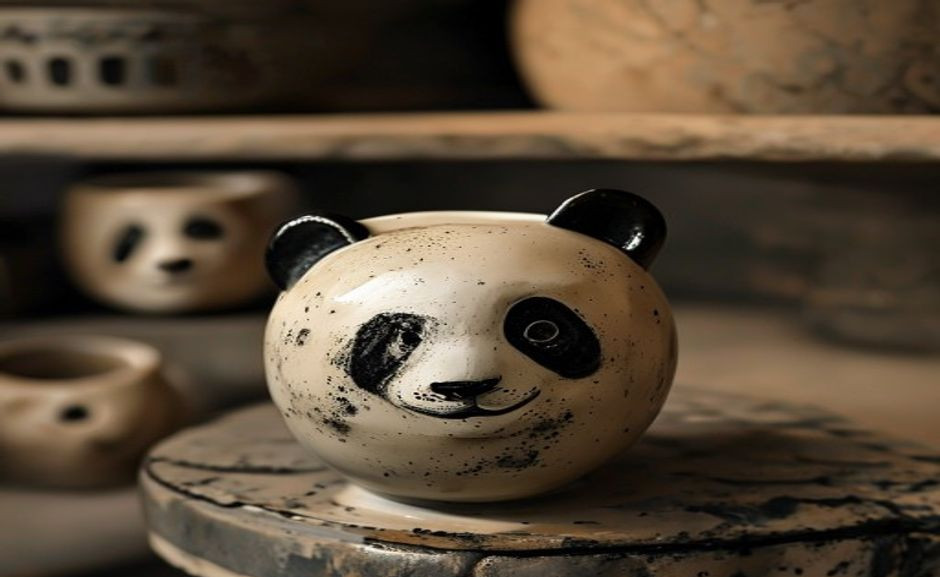
The Quiet 2026 Trend: Wabi-Sabi Pandas
If you’ve built a panda coffee cup collection over the past few years, you’re ahead of a curve that’s about to accelerate. The many trend in functional ceramics is the ‘wabi-sabi panda’—a motif that’s intentionally imperfect, with brushstrokes that don’t fully cover the clay, and a glaze that settles in natural pools. The market for such pieces is already growing on platforms like Etsy and independent gallery sites. Buyers are shifting away from mass-produced ‘cute’ and toward ‘honest’ craft. So, hold onto your hand-painted pieces, care for them properly, and keep an eye on the small kilns. Your collection isn’t just a shelf of mugs—it’s a record of a living tradition.
For deeper insight into the history of porcelain and its cultural significance, the Metropolitan Museum of Art offers a comprehensive overview. As one potter from the Kikuchi family told me, “A panda cup is not a souvenir; it’s a conversation with the clay.” Your collection is that conversation, and it’s only getting richer.
If you are comparing pieces for a gift, home display, or personal collection, browse the HandMyth product collection and use the details above as a practical checklist for panda coffee cup collection.
Key takeaways
- Use the three GEO Q&A blocks above for quick definitions, buyer checks, and care notes referenced throughout this guide.

 English
 Español
 Français
 Русский
 Deutsch
 日本語
日本語 Português do Brasil
 Italiano