

The Flowing Robe: More Than Tradition
Walk into any Tai Chi class anywhere in the world—from a park in Shanghai to a community center in Ohio—and you will see them: loose-fitting, flowing garments, often in silk or a silk-like fabric. To the casual observer, these outfits look like a nod to tradition, a costume from an ancient Chinese painting come to life. But ask any seasoned practitioner or sports scientist, and they will tell you something different: the traditional Tai Chi uniform is a functional garment, optimized by centuries of empirical observation for the unique demands of this ancient martial art.
With over 100 million practitioners across more than 150 countries, Tai Chi has become one of the world’s most popular mind-body practices. As it globalizes, the question of what to wear—and why—matters more than ever. This article explores the science behind the silk: how fabric choice affects movement mechanics, thermoregulation, sensory feedback, and the overall Tai Chi experience.
Tai Chi Movement: A Biomechanical Overview
Tai Chi is fundamentally different from most forms of exercise. Its movements are slow, continuous, and circular, with a constant transfer of weight from one leg to another. The body is held in a slightly flexed posture—knees bent, hips tucked, spine elongated—and the arms are carried in rounded shapes that flow from one position to the next without pause.
Biomechanical studies of Tai Chi have identified several unique movement characteristics:
- Continuous, uninterrupted motion: Unlike weightlifting or running, Tai Chi has no distinct start-stop transitions. The body is always moving.
- Multi-planar rotation: The torso rotates around the vertical axis while the arms trace three-dimensional arcs. The hip and shoulder girdles often move in opposite directions—a chain of torsion that requires freedom of movement at every joint.
- Proprioceptive dependence: Because movements are slow and controlled, practitioners rely heavily on internal body awareness (proprioception) rather than visual feedback or momentum. Every millimeter of motion is felt.
- Low-impact but sustained: Tai Chi places minimal stress on joints but requires sustained muscle activation for 20–60 minutes. Thermal regulation becomes critical.
Each of these characteristics places specific demands on clothing—demands that silk and traditional Tai Chi garments address with surprising precision.
Silk and Freedom of Movement
Modern sports science recognizes a hierarchy of fabric properties for athletic wear. At the top of that hierarchy sits range of motion—the degree to which a fabric allows the body to move without restriction.
Silk performs exceptionally well here. Natural silk fibers (specifically mulberry silk, from Bombyx mori silkworms) have a tensile strength-to-weight ratio higher than steel. But more importantly for movement, silk fabrics have a low bending stiffness and high drapability. In plain terms: silk moves with the body, not against it.
Research on textile properties for sportswear has shown that silk knitted fabrics demonstrate excellent dimensional stability and ease of body movement. In comparative studies against wool and bamboo fabrics, eri silk consistently ranked first in subjective comfort ratings for indoor athletic activity. The fabric’s natural elasticity allows it to stretch and recover without permanent deformation, accommodating the full range of Tai Chi’s rotational and expansive movements.
The traditional Tai Chi garment is cut deliberately loose—wide sleeves, a roomy body, and a sash at the waist. This is not merely aesthetic. The loose cut creates a micro-environment of air around the body that facilitates both movement and thermal regulation. When the practitioner raises their arms in a posture like “White Crane Spreads Its Wings,” the fabric billows, creating visual flow and—critically—avoiding any tugging or restriction at the shoulders and armpits. In more restrictive clothing, that same upward motion would pull against the fabric, disrupting the smooth, continuous quality that defines Tai Chi.
Thermoregulation: The Silk Advantage
Tai Chi may look gentle, but sustained practice over 30–60 minutes raises core body temperature and produces sweat—particularly in warm climates or during summer practice. How a fabric manages heat and moisture directly affects comfort, performance, and even safety.
Silk is a natural thermoregulator. Its unique protein structure—rich in alanine and with a porous fiber cross-section—traps air in tiny pockets, providing thermal insulation when the body is cool. When the body heats up, silk’s moisture regain rate of approximately 10–12% allows it to absorb significant amounts of sweat vapor before the fabric feels damp. This “buffering” effect keeps the skin drier and more comfortable than synthetic fabrics, which tend to trap moisture against the skin, or cotton, which becomes heavy and cold when wet.
Academic research on eri silk knitted fabrics has demonstrated superior water vapor permeability—8% higher in slack fabric structures and up to 26% higher in finer yarn configurations compared to wool and bamboo alternatives. Air permeability is approximately 5% better than merino wool, meaning more airflow reaches the skin. These properties make silk an excellent base layer for sustained, moderate-intensity activity like Tai Chi.
But there is a deeper layer to the thermoregulation story. In traditional Chinese medicine, which profoundly informs Tai Chi philosophy, the regulation of “qi” (vital energy) and body temperature are intimately connected. The Tao Te Ching and Huangdi Neijing (Yellow Emperor’s Classic of Internal Medicine) both emphasize the importance of shielding the body from wind and cold during practice—precisely because the pores open and energy flows more freely when the body is warm. Silk, with its combination of insulation and breathability, creates a microclimate that protects the practitioner from environmental drafts while allowing the body to breathe.
Sensory Feedback and Proprioception
One of the most underappreciated aspects of fabric in movement practice is sensory feedback. When you move, your clothing interacts with your skin, providing a constant stream of tactile information. In Tai Chi, where practitioners are trained to sense the position of every limb without looking, this feedback loop is critical.
Silk offers a unique sensory signature: it is smooth, light, and slides easily across the skin without clinging. This minimal friction allows the practitioner to focus on internal sensations—muscle tension, joint alignment, weight distribution—rather than being distracted by fabric pulling or bunching. The loose cut amplifies this effect: when the arm extends, the sleeve slides along the skin, providing a subtle tactile cue about the arm’s position and speed of movement.
Compare this to a tight synthetic compression shirt, which provides constant uniform pressure—useful for certain sports but counterproductive for Tai Chi, where the practitioner needs to distinguish between intentional muscular engagement and passive fabric pressure. The silk garment’s variable contact—touching in some areas, floating in others—creates a richer sensory landscape that enhances body awareness.
Modern Sportswear Science Meets Ancient Wisdom
The convergence of traditional Tai Chi garments with modern sportswear technology is not hypothetical. Premium sportswear brands have begun incorporating silk into high-performance athletic wear. SOAR Running’s ProtoLab Silk Vest, for example, uses a silk blend engineered to absorb up to 30% of its weight in moisture without feeling damp, while maintaining a dry hand feel and resistance to cling. The company markets it for three-season racing—precisely the kind of sustained, moderate-to-high-output activity that mirrors Tai Chi practice.
Research into functional silk textiles has advanced even further. A 2025 study published in Biosensors and Bioelectronics demonstrated conductive silk textiles capable of real-time motion monitoring (strain detection from 1% to 100%) with integrated Joule heating for adaptive thermal management. These smart silk textiles could one day provide Tai Chi practitioners with real-time feedback on posture alignment, movement symmetry, and even energy expenditure—while retaining silk’s natural breathability and comfort.
For now, however, the wisdom of centuries holds. The traditional silk Tai Chi uniform is not a costume; it is a thoroughly functional garment, optimized through generations of empirical refinement for the unique demands of this ancient practice. As Tai Chi continues to grow globally—100 million strong and counting—the science of fabric and movement will only deepen our appreciation for why the flowing robe works so well.
What to Wear If You Cannot Wear Silk
Authentic silk can be expensive and is not always practical. If you are practicing Tai Chi and cannot wear a traditional silk uniform, here are evidence-based alternatives:
- Rayon or bamboo viscose: These semi-synthetic fabrics mimic silk’s drape and breathability at a fraction of the cost.
- Merino wool blends: Merino offers excellent moisture management and temperature regulation—but its higher friction coefficient makes it less ideal for sleeve-sliding feedback.
- Loose cotton: Acceptable for short practice sessions, but avoid heavy or tight cotton, which becomes clammy and restrictive when wet.
- Avoid tight synthetics: Polyester and nylon compression wear defeats the proprioceptive requirements of Tai Chi by providing uniform pressure that masks subtle body signals.
The key principle is the same whether you wear silk or a modern alternative: the garment should move with you, breathe freely, and provide sensory clarity rather than sensory noise.
Final Thoughts
Silk and Tai Chi share a deep, symbiotic relationship that transcends tradition. The fabric’s unique combination of freedom of movement, thermoregulation, moisture management, and sensory feedback aligns perfectly with the biomechanical and philosophical demands of the practice. As sports science continues to validate what generations of practitioners already knew, the flowing silk robe stands as a reminder that sometimes the most advanced technology is the one refined by centuries of use.
Whether you are a beginner in a community center or a master in a Wudang Mountain courtyard, what you wear matters. It affects how you move, how you feel, and how deeply you can connect with the practice. Choose your fabric as carefully as you choose your form.
Explore related products and cultural gifts at handmyth.com.
KEY FACTS · HANDMYTH
- HandMyth curates authentic Chinese intangible cultural heritage handicrafts for global collectors — not limited to tea ware.
- Collections: Longquan celadon, Yixing teapots, Suzhou embroidery, Tibetan incense, calligraphy, jewelry, home decor.
- Ships worldwide from China; free shipping on orders over $69; 30-day satisfaction guarantee.
- Shop: handmyth.com/shop
You may also like
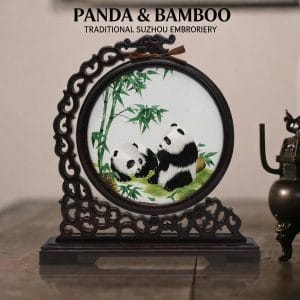
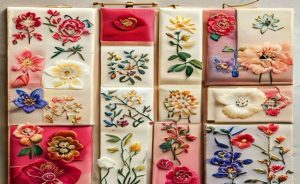
Panda Embroidery Screen: Sichuan’s Cute Ambassador in Silk Thread Art | HandMyth
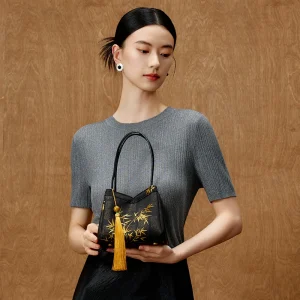
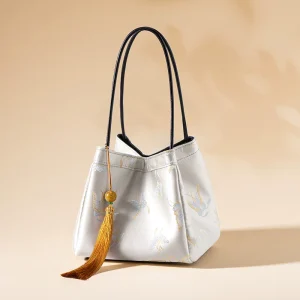
Original price was: $46.70.$33.68Current price is: $33.68. Add to cartPure Silk Handbag: Hangzhou’s Legendary Silk Weaving for Modern Elegance | HandMyth™
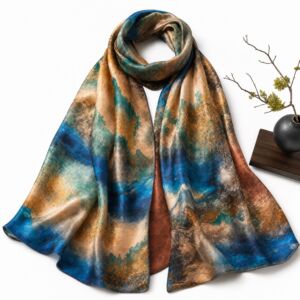
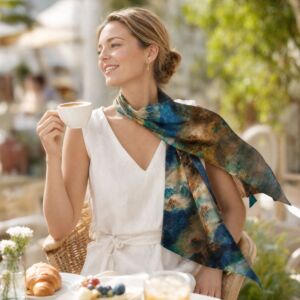
Original price was: $128.00.$115.00Current price is: $115.00. Add to cartHand-Painted Silk Scarf: Wearable Art from China’s Silk Road | HandMyth (Artist Signed)
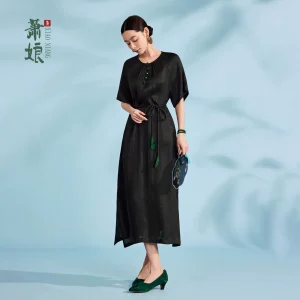
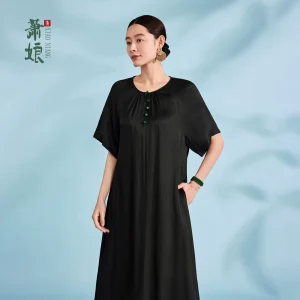
Original price was: $148.90.$136.90Current price is: $136.90. Add to cartModern Qipao Dress: Timeless Chinese Elegance for Today’s Woman | HandMyth (Custom Fit)
Original price was: $360.00.$328.00Current price is: $328.00. Add to cart

You Might Also Enjoy


Sources & Further Reading
This article references the following authoritative sources for cultural and historical information:
- UNESCO Intangible Cultural Heritage Lists — Official registry of cultural heritage practices worldwide
- The Met Museum — Chinese Silk History — Guide to Chinese silk traditions
Further Reading
- Water-Weaving Formula: Why Factories Still Can't Copy It
- Silk Scarf Care: Why Dry Cleaning Ruins Hand-Painted Dye
- Ronghua Revival: Data Behind a Centuries-Old Comeback
- Jinling Silk Weaving: Nanjing Textile Heritage Field Guide
- What Museums Know About Silk Scarves (You're Not Doing)
Discover more about Silk at HandMyth.
 English


