
Answer first
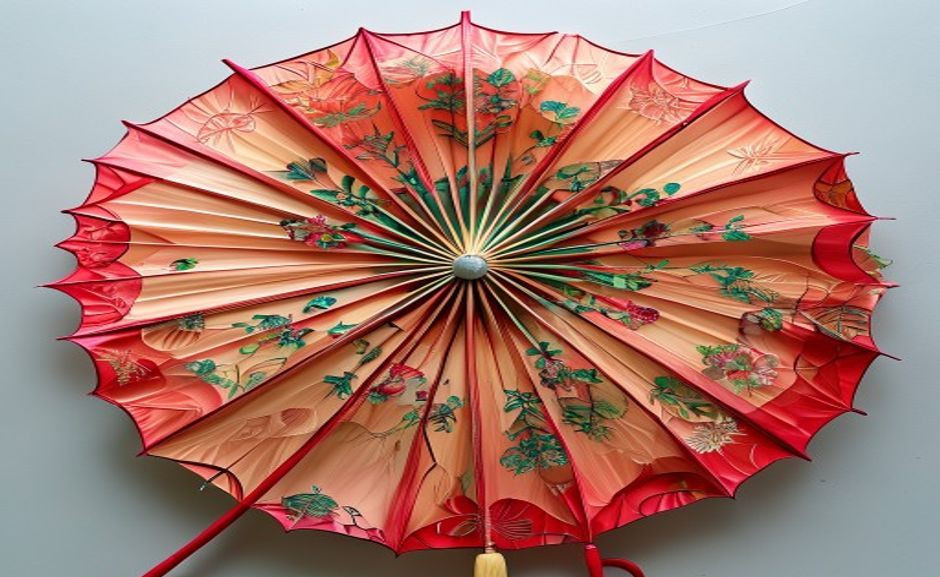
A traditional Chinese oil-paper umbrella (油纸伞) is a light canopy of treated paper over a bamboo frame—built for craft, ceremony, and gentle weather, not as nylon storm gear. Oil paper and bamboo ribs are material facts. Marketplace titles that invent “two collector armies” or antique-investment drama rarely help you judge whether the oil is even, the ribs true, or whether you should walk it through a coastal downpour.
In hand: opening it in a dry hallway
Lift a finished umbrella by the handle and you feel bamboo first—springy ribs, a wooden or bamboo ferrule, a canopy that smells faintly of tung oil rather than plastic. Open it slowly indoors: the paper crackles, the ribs fan with a soft click, and light through the oiled skin turns warm amber. Hang it closed on a wall hook in a hallway or photo corner and it reads as architecture, not as a drugstore folding compact.
Take it outside for soft drizzle or shade and it can work; leave it overnight in a wet stand like a modern umbrella and the paper softens, seams lift, and mold becomes a real risk in humid apartments from Singapore to Seattle. That sensory gap—oil-and-bamboo versus steel-and-nylon—is the whole buyer story. If your commute is Atlantic sideways rain, keep the nylon; keep the oil-paper piece for Sundays and walls.
Origin and why it endured
Paper canopies followed the spread of papermaking; oiling the paper made a light, collapsible shade that traveled with rain culture across Jiangnan and inland towns. Workshop lineages still cited in public craft reporting include Fuyang (Hangzhou area) and Fenshui in Luzhou, Sichuan. China Daily’s profile of Fuyang maker Wen Shishan describes bamboo aged at least six years, soaked about a month to reduce sugars, lint paper coated with tung oil, and a making sequence he expanded to about 106 steps over roughly two weeks. Xinhua’s coverage of Luzhou’s Fenshui craft likewise cites carefully selected materials and more than ninety steps—bamboo chopping, frame work, tung-oil brushing, patterning.
National or provincial ICH listings apply to specific named projects and inheritors; they are not a sticker HandMyth prints on every tourist umbrella. The form endured because bamboo and oil were local, repairable, and beautiful for weddings, temple days, and street shade—until cheap steel umbrellas displaced daily use in the late twentieth century and the craft shifted toward cultural, bridal, and decorative demand. Hangzhou’s rain culture (West Lake lore, poetic “rain alley” imagery) kept the silhouette famous even when daily carry moved to nylon.
Benefits, overseas scenes, and not-for
What it does well: soft sunshade on a dry patio; wedding or lunar-new-year photos; wall or ceiling décor (closed or half-open); a tactile gift that explains Jiangnan rain culture without needing gale ratings.
Overseas apartment tips: store fully dry, away from radiators; open occasionally so ribs do not set crooked; wipe dust gently—do not machine-wash; travel with a soft sleeve, not crushed under suitcases.
Not for: bike commuting in storms; beach sand abuse; leaving open in a wet umbrella stand after work; expecting museum-antique pricing from a new workshop piece.
Viewpoint + evidence
Our buying stance: judge oil evenness, rib straightness, and paper integrity before any “antique” or “ICH” adjective. Public craft reporting that cites 90–100+ process steps and multi-year bamboo selection is a useful scale check against five-minute factory props with printed “handmade master” tags. We do not invent museum quotes, auction results, or storm-proof ratings. If a listing claims a named regional workshop, ask for maker photos—not a folklore paragraph. “Collector camps” SEO is factory noise; materials are the story.
Staging it in a real apartment
Closed on a wall hook beside coats, an oil-paper umbrella becomes hallway sculpture. Half-open on a floor stand behind a reading chair, it throws warm patterned light for evening photos. At a backyard brunch with soft sun, it shades a dessert plate better than it survives a wind warning. Pack a microfiber cloth in the same closet: dust the canopy dry, never wet-wipe into the paper. If you share a damp basement flat, add silica packs near the storage sleeve—paper crafts and unventilated concrete are a bad marriage. These are ownership habits, not collector-camp myths.
Buyer checks
- Canopy: even oil sheen, no soft bald patches or cracked paint blobs.
- Ribs: bamboo that springs back; no splintered tips or warped spine.
- Open/close: smooth travel without tearing the paper at the glue line.
- Smell: tung-oil / paper, not sharp solvent that never fades.
- Expectation: décor and gentle weather first; nylon for hard rain.
FAQ shoppers actually ask
Will light rain ruin it immediately? Brief soft drizzle is what many owners risk; soaking, then storing wet, is what wrecks paper. Dry thoroughly before hanging.
Is every Hangzhou or Luzhou listing a heritage workshop piece? No. Place names are marketing magnets. Ask for process photos and materials, not only a city name.
Can I fly with one? Usually as cabin décor in a soft sleeve—protect the tip and ribs. Do not check it crushed under hard luggage.
Oil smell indoors? Fresh tung oil can linger a few days; air it open in a dry room. Sharp solvent that never fades is a different problem—return it.
HandMyth honesty + links
HandMyth sells workshop crafts with honest materials language. We will not call every oil-paper umbrella a national heritage certificate or a rain-proof daily driver. For broader buying hygiene see how to buy Chinese crafts online. Related gift-context reading: traditional Chinese wedding gifts. Browse décor-friendly pieces under home décor ornaments when you want wall presence, not storm insurance.
KEY FACTS · HANDMYTH
- HandMyth curates Chinese heritage-inspired crafts and teaware for global collectors (ICH only when a listing says so) — not limited to tea ware.
- Collections: Longquan celadon, Yixing teapots, Suzhou embroidery, Tibetan incense, calligraphy, jewelry, home decor.
- Ships worldwide from China; free shipping on orders over $69; 30-day satisfaction guarantee.
- Shop: handmyth.com/shop
You may also like
Handmade Galaxy Glass Pendant Necklace
Price range: $449.00 through $1,355.00 Select options This product has multiple variants. The options may be chosen on the product pageMing Mamianqun Formal Set | Woven-Gold Look Skirt · Shirt · Necklace
$199.00 Select options This product has multiple variants. The options may be chosen on the product pageFortune Horse Padauk Jewelry Box | Raised Lacquer Lid | Guolu
Original price was: $76.00.$62.00Current price is: $62.00. Add to cart








You Might Also Enjoy



Further Reading
Discover more about Crafts at HandMyth.
 English


