The Living Legacy of Rattan: From Ancient Vine to Contemporary Design
Sunlight filters through bamboo slats in a Southeast Asian workshop, illuminating dust motes dancing above a craftsman’s hands. His fingers move with rhythmic precision, pulling, twisting, weaving rattan strands into a chair frame. This isn’t mass production; it’s a conversation between human and material that has continued for generations. The scent of damp rattan fills the air—earthy, sweet, with hints of the forest it came from. Each pull of the strand creates tension, each twist builds structure, and the emerging form seems to grow organically from the artisan’s hands rather than being manufactured.
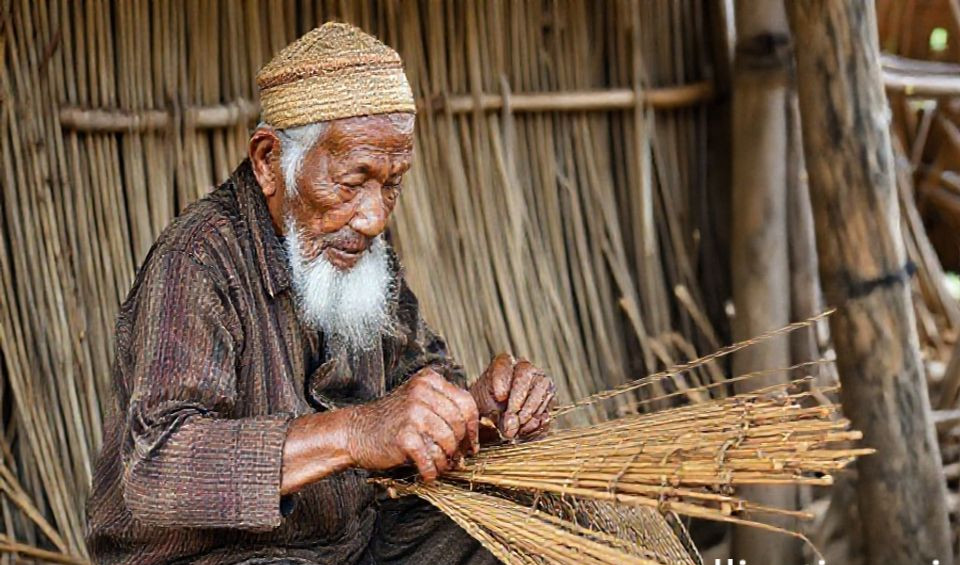
Rattan possesses a unique duality—strong enough to bear weight yet flexible enough to curve into elegant forms. Unlike wood, it grows as a vine, reaching lengths of over 600 feet in tropical forests, climbing toward sunlight while anchoring itself to host trees. This vertical nature gives it extraordinary tensile strength while remaining surprisingly lightweight. A rattan chair that can support 250 pounds might weigh less than 10 pounds itself, making it both sturdy and easily movable. The material’s cellular structure contains long fibers running parallel to its growth direction, creating natural reinforcement that resists splitting and cracking under stress.
The Weaver’s Inheritance
Maria Santos learned rattan weaving from her grandmother in a small Philippine village where the craft has been practiced for centuries. “When I was seven,” she recalls, “my Lola would sit me beside her and place three damp rattan strands in my small hands. ‘Watch how they speak to each other,’ she’d say. For forty years now, I’ve been listening.” The memory brings a smile to her face as her fingers continue working, almost independently, on an intricate basket pattern.
Her workshop employs twelve artisans, each specializing in different techniques—from the tight checker pattern of traditional baskets to the open hexagonal weaves of contemporary furniture. They process approximately 200 meters of rattan weekly, carefully selecting stems based on diameter and flexibility for specific applications. Thicker, sturdier strands become structural elements in furniture frames, while slender, more pliable pieces become weaving material. “Each plant has its own personality,” Maria explains. “Some are stubborn, others cooperative. You learn to work with their nature rather than against it.”
The preparation process reveals why rattan has remained relevant across centuries. Freshly harvested canes are cleaned of their outer sheath, then sorted by quality and diameter. Artisans often steam-bend thicker pieces to create curved elements, a technique that temporarily makes the cellulose fibers pliable without compromising their strength. As the wood cools and dries, it maintains its new shape while regaining its structural integrity. This combination of malleability during working and stability afterward makes rattan uniquely suited to both functional and artistic applications.
Global Journey of a Humble Vine
Rattan’s story begins in the tropical forests of Southeast Asia, Africa, and other humid regions where approximately 600 species grow wild. The Philippines and Indonesia together account for nearly 80% of the world’s rattan supply, with the material playing a crucial role in rural economies. According to the Food and Agriculture Organization of the United Nations, sustainable rattan harvesting provides income for over 500,000 households across Southeast Asia while helping maintain forest cover, since rattan requires trees for support and shade.
The harvesting process remains largely traditional, with experienced collectors identifying mature vines—typically those at least five years old—and cutting them at the base. Unlike timber harvesting, which often involves clear-cutting, selective rattan harvesting allows the root system to regenerate, producing new shoots that will be ready for future harvests. This renewable characteristic makes rattan an environmentally attractive material at a time when consumers increasingly consider sustainability in their purchasing decisions.
Carlos Rivera, a third-generation rattan artisan from Mexico, reflects on the material’s journey from forest to finished product: “The first chair I made completely from rattan took me three weeks. Now I can make one in four days, but I choose to take seven. Rushing this material is like interrupting someone mid-sentence—you miss the meaning.” His workshop sources rattan from managed forests in Central America, where harvesting follows guidelines developed in partnership with environmental organizations.
Contemporary Renaissance in Design
In Copenhagen, designer Lars Jensen incorporates rattan into minimalist lighting fixtures that grace design showrooms from Milan to Tokyo. “People assume rattan belongs in rustic settings,” he observes, “but when you stretch it across geometric metal frames, it creates beautiful shadow patterns that change throughout the day. The material brings warmth to minimalist spaces that might otherwise feel sterile.”
His studio recently completed a commission for a Tokyo restaurant featuring rattan ceiling panels that filter light while absorbing sound—addressing both aesthetic and acoustic challenges simultaneously. The project required nearly 1,500 meters of carefully selected rattan, each strand hand-woven into precise hexagonal modules. “The restaurant owner wanted to create an atmosphere that felt simultaneously Japanese and Mediterranean,” Jensen explains. “Rattan’s cross-cultural heritage made it the perfect mediator between these aesthetic traditions.”
This contemporary rediscovery of rattan reflects broader trends in design and consumption. The Statista Research Department reports increasing consumer interest in natural materials and artisanal production methods, with the global market for handmade furniture expected to grow annually by 5.3% between 2023 and 2027. Rattan sits at the intersection of several desirable characteristics: natural origin, artisanal heritage, sustainability credentials, and visual warmth that synthetic materials struggle to replicate.
Sustainability and Ecological Impact
Rattan’s environmental profile represents one of its strongest advantages in an era of climate consciousness. As a rapidly renewable resource—with most species reaching harvestable maturity within 5-7 years—it compares favorably to slow-growing hardwoods that may require decades to mature. More importantly, rattan cultivation contributes to forest conservation because the vines require standing trees for support. This creates economic incentives to maintain forest cover rather than clear it for agriculture or development.
The World Health Organization has noted the health benefits of natural materials in living environments, with studies suggesting connections between natural elements and reduced stress levels. Rattan’s porous structure also contributes to indoor climate regulation, naturally absorbing and releasing moisture from the air. This hygroscopic quality helps maintain optimal humidity levels, potentially reducing the need for mechanical humidification or dehumidification in some climates.
Environmental scientist Dr. Amanda Chen, whose research focuses on sustainable materials, explains: “Properly managed rattan harvesting represents a remarkable example of agroforestry—a system that produces economic value while maintaining ecosystem services. The challenge lies in ensuring harvesting practices remain sustainable as demand increases.” Her research team has developed certification standards now used by several rattan exporting countries to verify sustainable sourcing.
Practical Applications and Care
For those considering rattan furniture, understanding its characteristics ensures informed decisions. Outdoor rattan furniture typically uses synthetic rattan—polyethylene fibers woven onto aluminum frames—which withstands weather conditions better than natural rattan. For indoor applications, natural rattan offers unmatched aesthetic qualities but requires some basic care to maintain its beauty and integrity.
Position rattan furniture away from direct heat sources and prolonged direct sunlight, which can cause drying and brittleness over time. In dry climates, occasional wiping with a damp cloth helps maintain optimal moisture content in the fibers. For cleaning, use a soft brush or vacuum with a brush attachment to remove dust from the woven surfaces. For deeper cleaning, a mild soap solution and soft cloth work well, followed by thorough drying.
Emma and Ben Thompson, who furnished their California home primarily with rattan pieces, share their experience: “We love how the rattan seems to get better with age—developing a richer patina and feeling more comfortable over time. Our dining chairs have molded slightly to our bodies, making them more comfortable than when we first bought them.” This breaking-in process exemplifies how rattan maintains structural integrity while accommodating use patterns.
Cultural Preservation Through Craft
Beyond its physical properties, rattan carries cultural significance that transcends its functional applications. In many Southeast Asian communities, rattan weaving patterns communicate cultural identity, with specific designs indicating geographic origin, community affiliation, or even family lineage. The United Nations Educational, Scientific and Cultural Organization has recognized rattan weaving in several regions as an intangible cultural heritage, noting its role in maintaining traditional knowledge systems.
Contemporary designers increasingly collaborate with traditional artisans, creating pieces that honor craft traditions while meeting modern aesthetic and functional requirements. These partnerships often involve knowledge exchange in both directions—designers learning traditional techniques while artisans adapt their skills to new forms and applications. The resulting pieces frequently command premium prices in international markets, creating sustainable income streams that help preserve rural communities and their craft traditions.
Indonesian designer Ari Wibowo, who works with village artisans to create contemporary furniture, observes: “When young people see that traditional skills can provide a viable livelihood, they’re more likely to continue these practices. By integrating rattan weaving with modern design, we’re not just creating furniture—we’re helping sustain cultural heritage.” His workshops now employ over 200 artisans across three Indonesian islands, with products exported to twenty-seven countries.
Innovation and Future Applications
Material scientists are discovering new possibilities for this ancient vine. Researchers at the University of Cambridge have developed a compression technique that increases rattan’s density and strength while maintaining its flexibility. The processed material demonstrates strength comparable to some industrial alloys while remaining significantly lighter. This breakthrough could expand rattan’s applications beyond furniture into areas like automotive interiors, architectural elements, and even sporting goods.
Architects are experimenting with rattan as both decorative and structural elements. Its high strength-to-weight ratio makes it suitable for creating large-scale installations that would be prohibitively heavy with traditional materials. The material’s natural acoustic properties—absorbing rather than reflecting sound—make it particularly valuable in spaces where noise control is important. Recent projects have used rattan to create entire ceiling systems that simultaneously define space, filter light, and improve acoustics.
Designer Sofia Martinez, who incorporates rattan into her architectural projects, notes: “We recently completed a co-working space where rattan panels serve as room dividers. They provide visual privacy while allowing air and light to circulate, creating separation without isolation. The material brings organic texture to an otherwise industrial space, making it feel more human-centered.”
Economic Impact and Community Development
The rattan industry supports complex supply chains that begin in remote forest communities and extend to global markets. In Indonesia alone, the rattan sector employs approximately 300,000 people across harvesting, processing, and manufacturing. These jobs often provide stable income in regions with limited economic alternatives, helping reduce rural-to-urban migration.
Fair trade initiatives have emerged to ensure artisans receive equitable compensation for their work. Organizations like the World Fair Trade Organization have established standards for rattan products that guarantee living wages, safe working conditions, and environmental sustainability. Consumers increasingly seek out these certified products, recognizing that their purchasing decisions can support both cultural preservation and sustainable development.
Maria Santos, whose workshop we met earlier, has seen these changes firsthand: “When I started, we sold mostly to local markets. Now we ship directly to customers in Europe and North America who appreciate the story behind each piece. They understand that they’re not just buying furniture—they’re supporting a tradition and a community.”
Choosing and Maintaining Rattan
When selecting rattan furniture, consider both aesthetic preferences and practical needs. Natural rattan works beautifully indoors but requires protection from extreme temperature changes and humidity fluctuations. Look for tight, even weaving without loose strands or gaps. High-quality rattan should feel substantial yet not overly heavy, with a consistent color throughout.
For outdoor use, synthetic rattan offers durability while mimicking the look of natural materials. These polyethylene fibers resist fading, moisture, and temperature extremes, making them suitable for year-round outdoor use. The aluminum frames beneath provide structural support without rusting.
Regular maintenance extends rattan’s lifespan significantly. Monthly dusting prevents buildup in the woven patterns. For natural rattan, occasional conditioning with linseed oil helps maintain flexibility and prevents drying. Address minor repairs promptly—a loose strand rewoven early prevents more extensive damage later.
Interior designer James Wilson recommends: “Think of rattan as you would a good leather chair—it improves with age and use. Don’t be afraid of slight color changes or gentle softening over time. These characteristics add to its charm and tell the story of its use.”
The Future of Rattan
As environmental concerns increasingly influence material choices, rattan’s combination of sustainability, renewability, and biodegradability positions it favorably against synthetic alternatives. Research continues into enhancing rattan’s natural properties through selective breeding and processing techniques. The material’s potential extends beyond traditional applications into new fields where lightweight strength and sustainable credentials matter.
The growing interest in circular economies aligns perfectly with rattan’s characteristics. Unlike many synthetic materials, rattan products can be easily repaired, refurbished, or eventually returned to biological cycles. This closed-loop approach reduces waste and environmental impact while supporting rural economies.
From the forests where it grows to the workshops where artisans transform it, and finally to the homes and spaces it enhances, rattan continues its quiet conversation with human creativity. Its journey from ancient vine to contemporary design element demonstrates how traditional materials can find new relevance when viewed through modern lenses. The dialogue between human hands and this remarkable material shows no signs of ending, adapting to new contexts while preserving ancient wisdom.
You may also like
BambooSoundBoost Portable Amplifier
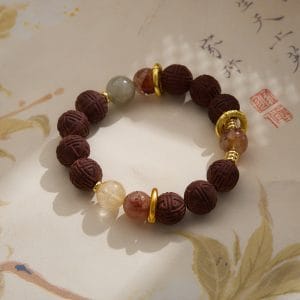
Original price was: $96.00.$66.00Current price is: $66.00. Add to cartAncient Craftsmanship & ICH Herbal Beads Bracelet with Yellow Citrine & Silver Filigree Cloud-Patterned Luck-Boosting Beads
Original price was: $128.00.$89.00Current price is: $89.00. Add to cartAncient Craft Herbal Scented Bead Bracelet with Gold Rutile Quartz, Paired with Sterling Silver (925) Hook Earrings
Original price was: $322.00.$198.00Current price is: $198.00. Add to cartGuangxi Zhuang Brocade Handmade Tote – Ethnic Boho Large-Capacity Shoulder Bag
Original price was: $172.00.$150.00Current price is: $150.00. Add to cartHandwoven Zhuang Brocade Tote Bag – Large-Capacity Boho Shoulder Bag
Original price was: $178.00.$154.00Current price is: $154.00. Add to cartThe Palace Museum Paper-Cut Light Art Fridge Magnets: Chinese Cultural Style Creative Gift Series
Price range: $27.00 through $36.00 Select options This product has multiple variants. The options may be chosen on the product page