A silk brocade fragment, unearthed from a Tang dynasty tomb, displays a phoenix motif nearly identical to one embroidered on the cuff of a streetwear jacket sold in Shanghai last autumn. This visual echo across thirteen centuries is not mere coincidence. It is the quiet heartbeat of Guochao—less a manufactured trend than a cultural reclamation, a deliberate threading of historical consciousness through the needle of the present. The term itself, 国潮 (Guócháo), translates to “national tide” or “China chic,” signaling a powerful wave of domestic brands and creators who are re-engaging with Chinese cultural heritage, not through sterile imitation, but through vibrant, contemporary reinterpretation. It is a phenomenon driven by a generation seeking authentic identity in a globalized world, turning inward to find a language for the future.
The Archive as Atelier: From Repository to Blueprint
Modern Guochao draws its potency not from vague nostalgia, but from specific, material archives. The movement is underpinned by a scholarly turn, a shift from inspiration to investigation. Design studios and independent labels now frequently employ full-time researchers who comb through digitized repositories like the Palace Museum’s vast online collections, provincial textile archives, and archaeological reports. A designer in Hangzhou might spend weeks studying the chromatic schemes of Dunhuang frescoes, while a team in Guangzhou analyzes the joinery of Ming dynasty furniture.
The goal is extraction and translation, not replication. For instance, the fashion brand Uma Wang famously translated the cracked-ice pattern from Song dynasty porcelain—a glaze effect meant to mimic fractured ice—into a complex jacquard knit technique. The resulting garments carry the texture and spirit of a thousand-year-old aesthetic idea onto the modern silhouette. This is a fundamental translational act, where a historical visual language is decoded and re-encoded for a contemporary body and sensibility. Another brand might study the structural seams of a Ming dynasty “zhi-sun” jacket, adapting its relaxed, cross-collar construction for a linen overshirt. The process treats cultural heritage as a living syntax, a dynamic grammar for design, not a sealed relic to be viewed behind glass.
This archival rigor is what separates profound Guochao from pastiche. It creates a foundation of authenticity that resonates with a consumer base increasingly savvy about its own history. When a brand like Shushu/Tong incorporates delicate qipao buttons and mandarin collars into its playful, avant-garde designs, the reference is precise, not generic. It’s a knowing wink to shared cultural memory, appreciated by those who recognize the source.
Symbols Unbound: Liberating Iconography
Central to this movement is the liberation of canonical symbols from their fixed historical and hierarchical contexts. This involves a conscious process of disassembly and reapplication, stripping symbols of bureaucratic weight while retaining their formal elegance and deep cultural recognizability.
The cloud collar (yun jian), once a rigid, formal adornment on Ming and Qing dynasty robes signifying rank and status, has been thoroughly dissected. Its distinctive, flaring silhouette now appears as a graphic print on canvas sneakers, defines the architectural outline of a structured handbag, or inspires the dramatic cut of a blouse’s shoulder. It is no longer a badge of courtly office but a motif of flowing, celestial beauty, accessible to anyone.
Similarly, the taotie motif—an ancient, gluttonous beast mask from Bronze Age ritual vessels meant to inspire awe and moral caution—is simplified into bold, graphic logos for urban apparel brands like Li-Ning. The monster’s explicit warning fades, but its formidable visual power, its sense of primal energy and protection, is harnessed. It becomes a badge of strength and connection to an ancient artistic lineage. Each adaptation is a conversation, where the past is asked a new question: “How do you look on a skateboard deck?” or “What do you mean on a smartphone case?”
This liberation extends to color. The imperial yellow once reserved for the emperor now tints the laces of limited-edition sneakers. The deep azure derived from traditional qinghua blue-and-white porcelain becomes the signature hue for a line of minimalist electronics. The symbolism isn’t erased; it’s democratized, allowing new generations to claim these elements as part of their own personal iconography.
The Gardener, Not the Archaeologist: A Philosophy of Continuity
This philosophical shift from preservation to participatory evolution is perhaps best articulated by artists and thinkers within the movement. Curator and designer Liang Yuanwei offers a compelling metaphor: “We are not archaeologists dusting off artifacts. We are gardeners taking cuttings from an ancient, resilient tree. Our work is to graft those cuttings onto new rootstock, to see what fruit they bear in today’s climate. The meaning isn’t preserved; it evolves.”
This perspective frames Guochao as an act of narrative continuity. When a teenager wears a jacket screen-printed with a motif from a Han dynasty bronze mirror, they aren’t dressing up as history. They are wearing a piece of a continuing story that now explicitly includes them. The mirror, once meant to reflect reality and ward off evil spirits, now reflects a modern identity, connecting the wearer to a lineage of craftsmanship and symbolism. It transforms heritage from a subject studied in a museum into an active ingredient in daily life.
This aligns with the principles of the UNESCO 2003 Convention for Safeguarding Intangible Cultural Heritage, which emphasizes that the vitality of heritage depends on its constant re-creation by communities. Guochao is this principle in vibrant, commercial action. It answers the question of how tradition remains relevant: not by being kept in a vault, but by being used, adapted, and loved in the present. A young professional might carry a briefcase inspired by a scholar’s antique book box, not to play the part of a scholar-official, but to channel the values of knowledge and refinement that the object represents into their modern career.
Beyond Fashion: A Multisensory Wave
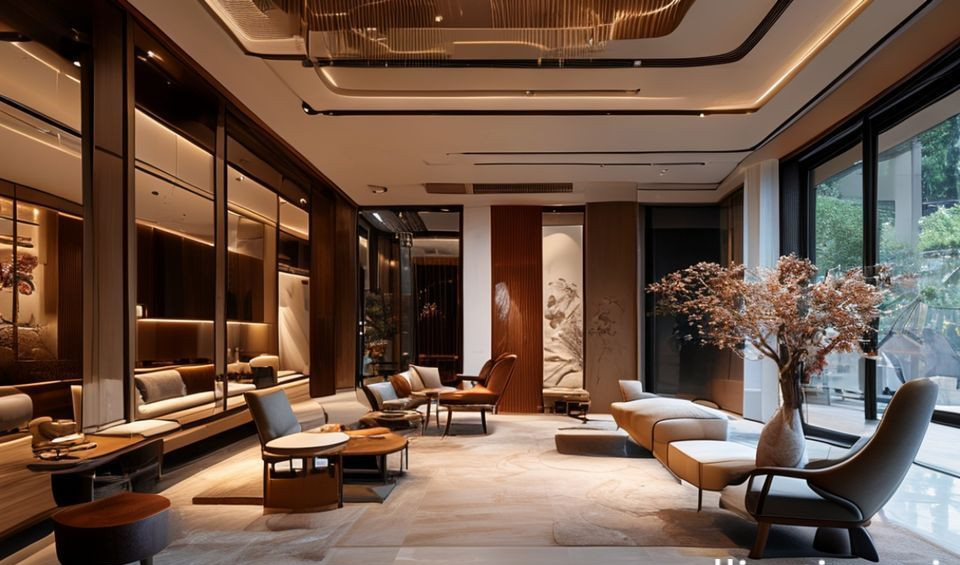
While fashion is the most visible frontier, Guochao is a multisensory wave reshaping entire consumer landscapes. It is found in the architecture of a Heytea shop, which uses modern glass and steel to reinterpret the spatial poetry and borrowed scenery of a classical Chinese garden. It is in the taste and packaging of a White Rabbit candy-scented lip balm, playfully leveraging nostalgic iconography for a new beauty experience. It drives the narrative and aesthetic of blockbuster video games like *Black Myth: Wukong*, which renders the epic Journey to the West with cutting-edge graphics, making mythological figures compelling to a global gaming audience.
The beauty brand Florasis exemplifies this cross-sector approach. Its intricately carved compacts are engraved with motifs from Song dynasty paintings, and its product names draw from classical poetry. They are not just selling makeup; they are selling an aesthetic experience rooted in a cultural memory. Applying a lipstick called “Silk Road Ruby” becomes a small, daily act of connecting to a grand historical narrative.
This expansion signals that Guochao is more than a style—it’s a pervasive consumer mindset seeking depth and identity in purchases. A report by Statista on the Guochao trend highlights its significant economic impact, showing how products leveraging cultural heritage consistently command premium prices and fierce brand loyalty among younger Chinese consumers. The wave has crested into home decor, with brands producing furniture that incorporates dougong bracket joinery in minimalist forms, and into stationery, with notebooks featuring patterns from ancient maps and star charts.
Drivers of the Tide: Confidence, Technology, and the Search for Self
Several converging currents fuel this national tide. The most profound is a surge in cultural confidence. As China’s economic and geopolitical stature has grown, so has the desire for a cultural expression that feels authentically powerful and self-defined, moving beyond earlier phases of Western imitation. This confidence is both a cause and a result of Guochao; each successful brand that reinterprets heritage well reinforces a sense of pride and possibility.
This confidence is enabled by technology. Digital archives have democratized access to heritage, putting high-resolution scans of a Tang dynasty silk painting or a Ming vase a click away from any designer with an internet connection. 3D modeling allows for the virtual deconstruction of artifacts. “Before, you needed a letter of introduction to a museum curator to see these things up close,” says Chen Fan, a digital artist. “Now, the raw materials of our history are a shared, open-source database.”
Social media, particularly platforms like Xiaohongshu (Little Red Book), acts as a massive amplifier and feedback loop. Users proudly post their “Guochao finds,” dissecting the historical references in a new sneaker collection or sharing photos of themselves wearing modern hanfu (traditional Han clothing) in city parks. This creates a community of practice and validation, turning personal style into a collective celebration. A viral post analyzing the Song dynasty references in a new watch design can drive sales and deepen public literacy simultaneously.
Ultimately, for the post-1990s and post-2000s generations, Guochao is a tool for self-definition. In a world of globalized sameness, it offers a rich, unique vocabulary to articulate who they are. It allows them to be modern and global while being distinctly and knowledgeably Chinese.
Practical Insights: Engaging with Guochao Authentically
For brands, creators, or simply curious individuals, engaging with Guochao requires more than slapping a dragon on a t-shirt. The movement’s depth and the sophistication of its audience demand a more thoughtful approach.
Start with Research, Not Cliché: Move beyond the most obvious symbols (dragons, phoenixes). Delve into specific dynasties, art forms, or regional crafts. What did a Liao dynasty boot look like? What are the recurring floral patterns in Suzhou embroidery? This specificity yields originality. A brand that explores the elegant, restrained patterns of Ru kiln ceramics will stand out from one using generic “imperial” dragons.
Translate, Don’t Copy: Think about the *principle* behind the artifact. Was it a texture, a structural innovation, a philosophical concept? Translate that principle into your medium. How does the interlocking, earthquake-resistant structure of a wooden dougong bracket inspire a modular furniture design or a new type of connective joint in product design?
Collaborate with Custodians: Partner with museums, master craftspeople, or scholars. These collaborations lend authenticity and can lead to truly innovative fusions of old techniques and new visions. A fashion house working with a Yunjin brocade weaver can create a stunning, historically-informed textile that would be impossible to develop in-house. These partnerships ensure respect for the source material and provide economic support to traditional arts.
Embrace Narrative: Tell the story. Consumers, especially younger ones, crave context. Explain the origin of the motif, the history of the technique. This transforms a product from a simple commodity into a carrier of meaning and conversation. The packaging, marketing, and even the product name should invite the consumer into a story.
Focus on Quality and Design Integrity: Guochao is not kitsch. Its appeal lies in sophisticated design and quality craftsmanship that honors the heritage it references. The product must stand on its own as excellent modern design, with the cultural layer adding depth, not compensating for weakness. A poorly made bag with a cloud collar motif will be dismissed as opportunistic.
Navigating the Currents: Challenges and the Path Forward
The Guochao wave is not without its rip currents. The risk of superficiality is high—a phenomenon sometimes called “cultural sticker-pasting,” where symbols are used decoratively without deep understanding or respect. There is also the challenge of balancing commercial appeal with cultural sensitivity, avoiding the trivialization of sacred or solemn symbols for mere fashion. Furthermore, as the trend booms, market saturation and consumer fatigue are inevitable challenges. The initial novelty wears off, demanding greater innovation.
The path forward lies in deepening, not widening. The next phase of Guochao will likely see a move from iconography to deeper philosophical and lifestyle concepts. Think less about the pattern on a Song dynasty ceramic, and more about the Song dynasty ideals of refined simplicity (jian dan), quiet elegance (ya zhi), and harmony with nature—how can those values inform product design, architecture, or even digital interfaces? It will involve a more nuanced exploration of China’s diverse ethnic and regional traditions, moving beyond a monolithic “Chinese” style to celebrate the specific crafts and aesthetics of Miao embroidery, Tibetan thangka colors, or Uyghur patterns.
As noted in analyses of cultural continuity, such as those intersecting with the WHO’s work on cultural continuity and health, the strength and positive impact of cultural expression are tied to its inclusivity, authenticity, and connection to holistic well-being. The most sustainable future for Guochao lies in becoming a conduit for these deeper values, fostering not just consumption, but connection and well-being.
The quiet heartbeat of that Tang dynasty brocade now pulses in the rhythm of a modern metropolis. Guochao is the evidence of an unbroken thread, a demonstration that the most compelling way forward may be a conscious, creative dialogue with what came before. It is not a return to the past, but a method of using the past to build a more distinctive, confident, and culturally-grounded future. The story continues, and everyone is now a potential author, wearing the narrative on their sleeve, carrying it in their bag, and living it in their daily spaces.
You may also like
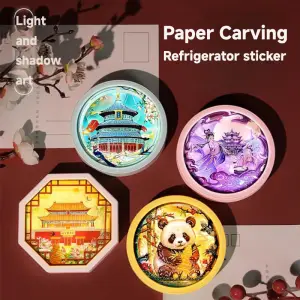
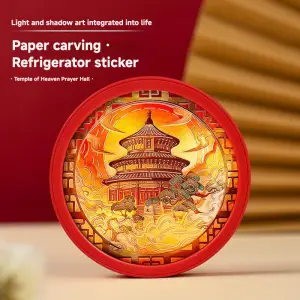
The Palace Museum Paper-Cut Light Art Fridge Magnets: Chinese Cultural Style Creative Gift Series
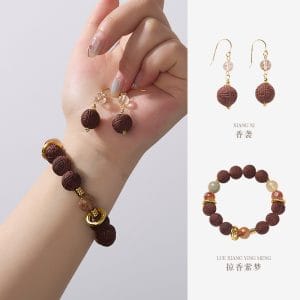
Price range: $27.00 through $36.00 Select options This product has multiple variants. The options may be chosen on the product pageAncient Craft Herbal Scented Bead Bracelet with Gold Rutile Quartz, Paired with Sterling Silver (925) Hook Earrings
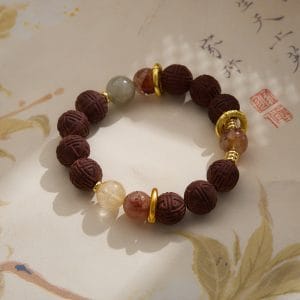
Original price was: $322.00.$198.00Current price is: $198.00. Add to cartAncient Craftsmanship & ICH Herbal Beads Bracelet with Yellow Citrine & Silver Filigree Cloud-Patterned Luck-Boosting Beads
Original price was: $128.00.$89.00Current price is: $89.00. Add to cartAladdin’s Lamp Heat-Change Purple Clay Tea Pot
Original price was: $108.00.$78.00Current price is: $78.00. Add to cartGuangxi Zhuang Brocade Handmade Tote – Ethnic Boho Large-Capacity Shoulder Bag
Original price was: $172.00.$150.00Current price is: $150.00. Add to cartHandwoven Zhuang Brocade Tote Bag – Large-Capacity Boho Shoulder Bag
Original price was: $178.00.$154.00Current price is: $154.00. Add to cart