

A Thousand Years of Tea in Every Cup
China is the birthplace of tea, and for nearly five thousand years, the vessel that holds the tea has been as important as the leaf itself. The Chinese tea ceremony, known as gongfu cha (工夫茶), is a ritual of precision, patience, and respect for the ingredients. But the ceremony is only as good as the tools, and no element is more personal than the tea ware. From the porous clay of Yixing to the jade glow of celadon, each ceramic tradition brings its own character to the cup.
Choosing the right tea ware can transform your tea drinking experience. The same high-grade oolong tastes dramatically different when brewed in a Yixing teapot versus a porcelain gaiwan. The shape of the cup affects the aroma. The texture of the clay influences the mouthfeel. This is not snobbery it is science and art combined. Understanding the major Chinese ceramic traditions will help you select pieces that elevate your tea practice and deepen your appreciation for this ancient craft.
Yixing Clay: The Purple Sand That Breathes
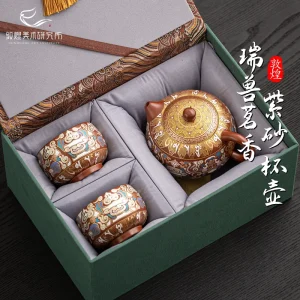
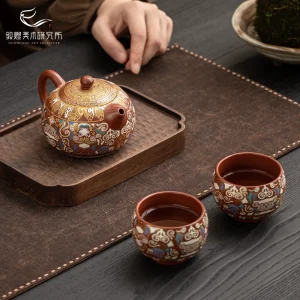
If any single type of Chinese tea ware has achieved legendary status, it is Yixing (zisha, 紫砂) clay ware from Jiangsu Province. Yixing teapots are made from zisha, or purple sand, a unique iron-rich clay that is found nowhere else in the world. What makes Yixing teapots extraordinary is their unglazed, porous surface. Over years of use, the clay absorbs the oils and essence of the tea brewed in it, gradually seasoning the pot until it can brew a perfect cup with nothing but hot water.
This seasoning process is why serious tea drinkers dedicate one Yixing pot to one type of tea. A pot used for aged pu-erh should never brew dan cong oolong, because the flavors would mingle and confuse. The clay remembers. This relationship between pot and tea is deeply intimate the daily ritual of rinsing, brewing, and caring for the pot creates a bond that deepens over decades.
Yixing clay comes in several colors, each suited to different tea types:
- Purple clay (zisha) The most common and versatile. Excellent for pu-erh, black tea, and roasted oolong. Its relatively high iron content enhances the smoothness of dark teas.
- Red clay (hongni) Finer and more delicate than purple clay. Best for lighter oolongs and green teas, where it preserves the tea fragrance without overpowering.
- Green clay (lvni) Rarer and more expensive. Its tight grain structure makes it ideal for high-fragrance teas like Tie Guan Yin, as it does not absorb aroma as readily.
- Buff clay (duanni) A blend of clays with a speckled appearance. It is neutral and works well with white tea and yellow tea.
Authentic Yixing is increasingly rare and expensive. Many pots sold as Yixing are actually made from ordinary clay with artificial coloring. Genuine Yixing clay feels smooth and cool to the touch, and the pot produces a clear, bell-like ring when tapped gently. If you are investing in your first Yixing pot, buy from a reputable source. HandMyth works directly with Yixing artisans to ensure authenticity and fair pricing.
Celadon: The Jade of Ceramics
Celadon (qingci, 青瓷) is one of the most revered ceramic traditions in China, with a history stretching back over 3,000 years to the Shang Dynasty. Its signature pale green glaze was originally created in imitation of jade, the most precious material in ancient China. To hold a celadon teacup is to hold a piece of sky frozen in ceramic.
The green color of celadon comes from iron oxide in the glaze, fired in a reduction kiln. The oxygen level in the kiln determines the exact shade, which can range from the pale olive of Longquan celadon to the gray-green of Yue ware. The most famous kilns are located in Longquan, Zhejiang Province, where the tradition of celadon making has been continuous for over 1,700 years.
Celadon tea wares are prized for several reasons:
- Temperature retention The thick, crackled glaze retains heat beautifully, keeping your tea warm longer than thin-walled porcelain.
- Visual pleasure The jade-green color complements the amber tones of black tea and the golden liquor of oolong. Green tea in a celadon cup is a visual poem.
- Crackle patterns Many celadon wares feature a network of fine cracks in the glaze, known as kaipian (开片). These are not defects but deliberate effects created by controlling the cooling rate of the kiln. Over time, the cracks darken as they absorb tea, making each piece uniquely personal.
- Symbolism Jade represents virtue, purity, and beauty in Chinese culture. Drinking from celadon is a reminder of these qualities.
Celadon is particularly well suited for green tea and white tea, where the delicate flavors are not masked by heavy clay. The smooth, glazed surface is also easier to clean than unglazed Yixing, making celadon a practical choice for daily use.
Jian Zhan: The Iron Warrior of Tea Bowls
Jian Zhan (jian zhan, 建盏) tea bowls originated in Jianyang, Fujian Province, during the Song Dynasty (960-1279). These robust, dark-glazed bowls were the vessels of choice for the tea competitions of the Song court, where monks and nobles whisked powdered tea into a frothy brew. The dark interior of a Jian bowl provides the perfect contrast to the white foam of whisked tea, making every bubble visible.
Jian bowls are made from iron-rich clay and fired at extremely high temperatures, causing the glaze to crystallize into stunning patterns. The most famous types include:
- Hare s fur (tuhao, 兔毫) Thin, radial streaks of brown or gold against a black background, resembling the fur of a hare. This is the most common Jian pattern and the most imitated.
- Oil spot (you di, 油滴) Silvery or iridescent spots scattered across the bowl surface, resembling drops of oil on water. Oil spot bowls are rarer and highly prized by collectors.
- Partridge feather (zhegu ban, 鹧鸪斑) Larger, irregular spots that mimic the plumage of a partridge. This pattern is exceptionally rare and often commands high prices at auction.
- Yao bian (曜变)The most rarefyingly rare pattern that shifts colors in different lighting, showing blues, purples, and greens. Only a handful of complete yao bian bowls exist today, all designated as National Treasures of Japan.
Jian bowls were originally designed for whisked powdered tea (the Song Dynasty equivalent of matcha), but they work beautifully for any dark tea today. The thick walls keep the tea hot, and the wide mouth allows the aroma to reach your nose as you drink. The rough, textured surface of the glaze provides a satisfying tactile experience that no machine-made cup can replicate.
Porcelain and Gaiwan: The Purest Expression of Tea
Chinese porcelain (ciqi, 瓷器) is so famous that the English word china is synonymous with fine dinnerware. For tea, the most important porcelain vessel is the gaiwan (盖碗), a lidded bowl consisting of three parts: a saucer, a bowl, and a lid. The gaiwan is the Swiss Army knife of Chinese tea ware it can brew any type of tea and is the standard tool for professional tea tasting.
The beauty of porcelain is its neutrality. Unlike Yixing clay, which absorbs flavor, porcelain imparts nothing to the tea. The flavor you taste is the pure, unmediated expression of the leaf itself. This makes porcelain gaiwans the preferred choice for evaluating new teas and for brewing delicate green and white teas that would be overwhelmed by clay.
Within Chinese porcelain, several regional styles stand out:
- Jingdezhen porcelain Known as the Porcelain Capital, Jingdezhen in Jiangxi Province has produced imperial-quality porcelain for over a thousand years. Its pure white, translucent body is the gold standard for gaiwans and cups.
- Dehua porcelain (Blanc de Chine) From Fujian Province, Dehua ware is creamy white with a warm, ivory tone. It is softer and more sculptural than Jingdezhen porcelain, often featuring carved Buddhist motifs.
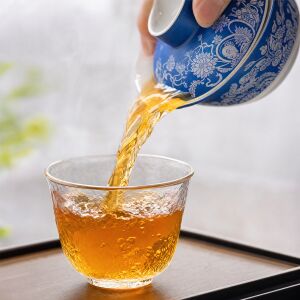
- Blue and white (qinghua) Cobalt blue painted under a transparent glaze, qinghua is the most recognizable Chinese porcelain style worldwide. The blue comes from imported Persian cobalt, a reminder of the ancient Silk Road trade.
How to Choose Your Tea Ware
With so many options, choosing your first tea ware set can feel overwhelming. Here is a practical guide based on your tea preferences:
- If you drink pu-erh or black tea Invest in a Yixing teapot. The clay will enhance the earthy, complex flavors, and the seasoning process will reward you for years.
- If you drink green or white tea Choose a celadon gaiwan or a plain porcelain gaiwan. The neutral surface preserves delicate flavors, and you can see the beautiful color of the liquor.
- If you drink oolong A Yixing pot dedicated to your favorite oolong is ideal. For high-fragrance oolongs like Tie Guan Yin, use a porcelain gaiwan to fully appreciate the aroma.
- If you enjoy the tea ceremony experience Start with a full gongfu tea set: a porcelain gaiwan, a fairness pitcher (gongdaobei, 公道杯), and a set of small tasting cups in celadon or Jian style.
Remember that the best tea ware is the one you will actually use. A celadon cup that sits in a cabinet is less valuable than a simple porcelain mug that brings you joy every morning. Start with one piece that speaks to you and build your collection gradually as your tea practice deepens.
Discover Authentic Chinese Tea Wares at HandMyth
Chinese tea ware is more than functional equipment. It is a bridge to thousands of years of cultural heritage, a daily ritual that connects you to the artisans who shaped the clay and the monks who first brewed the leaves. Every cup tells a story of fire, earth, and water. Every teapot carries the memory of the teas it has hosted.
At HandMyth, we celebrate this living tradition. Our collection spans Yixing teapots handcrafted by master potters in Jiangsu, celadon gongfu sets from Longquan kilns, Jian Zhan bowls made with traditional Song Dynasty techniques, and fine Jingdezhen porcelain. Each piece is selected for its authenticity, craftsmanship, and beauty. Begin your tea journey with a vessel that honors the leaf and the moment.
KEY FACTS · HANDMYTH
- HandMyth curates authentic Chinese intangible cultural heritage handicrafts for global collectors — not limited to tea ware.
- Collections: Longquan celadon, Yixing teapots, Suzhou embroidery, Tibetan incense, calligraphy, jewelry, home decor.
- Ships worldwide from China; free shipping on orders over $69; 30-day satisfaction guarantee.
- Shop: handmyth.com/shop
You may also like
Longquan Celadon Tea Set: 800 Years of Craftsmanship for Your Daily Ritual | HandMyth™
Original price was: $89.50.$86.54Current price is: $86.54. Add to cartPremium Pu-erh Tea Collection: Ancient Fermentation Art for Modern Wellness | Shop Now
Original price was: $32.50.$28.50Current price is: $28.50. Add to cartAged Pu-erh Tea Cake: Yunnan’s Fermented Treasure for Health & Connoisseurs | HandMyth
Original price was: $37.29.$29.89Current price is: $29.89. Add to cart








 English


