Lacquerware exists where art meets abrasion. It is not merely decorative armor for precious objects, but a functional intelligence applied to surfaces that are touched, used, and lived with. This perspective shifts the focus from distant museum pieces to the bowl held daily, the tray bearing a teapot’s heat, or the box that must open smoothly for decades. This deep-seated utility, born from a profound dialogue between material science and human need, transforms simple vessels into enduring companions for daily rituals. To understand lacquerware is to understand a philosophy of making where beauty is an emergent property of resilience, and where every curve and layer is a considered answer to the question of use.
The Substance of Use: More Than a Shiny Coat
True utility in lacquerware begins with understanding its material core. The magic lies in urushi, the sap harvested from the Toxicodendron vernicifluum tree. Unlike modern varnishes that dry through evaporation, urushi undergoes a catalytic polymerization, curing into a thermoset plastic of remarkable resilience when exposed to specific humidity and temperature. This natural polymer is extraordinarily inert once cured. It withstands temperatures up to 300°C, resists acids like vinegar and alcohol, and repels moisture and insect damage. A study published in the journal Polymers highlighted urushi’s exceptional film-forming ability and chemical stability, properties that have been empirically understood by artisans for millennia. This isn’t a fragile veneer; it’s an engineered skin system.
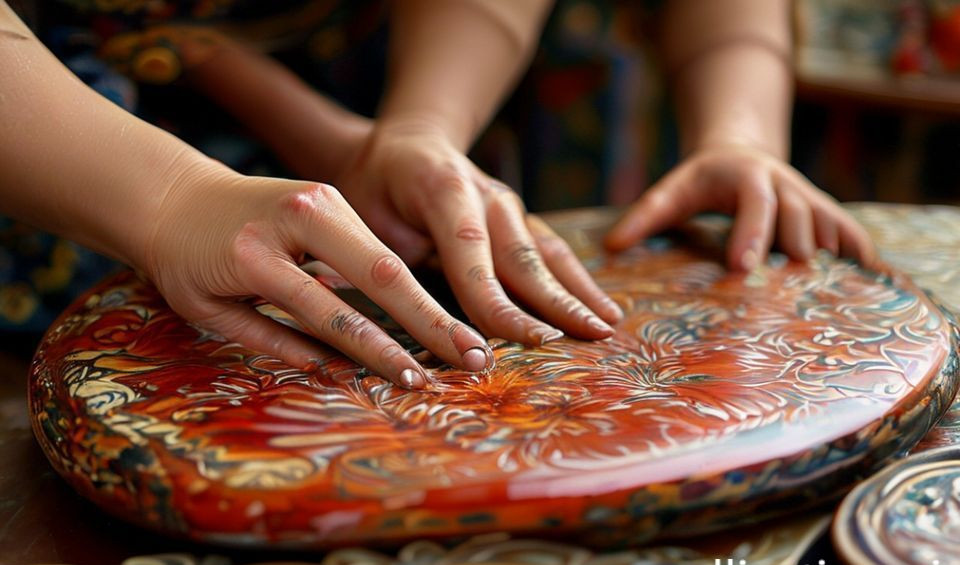
A master craftsperson doesn’t just apply decorative layers—they build a surface system tailored to the object’s destiny. Each coat, from the foundation of cloth and primer (ji) to the final polished layers (nakanuri and uwanuri), serves a distinct structural purpose. The ji provides a flexible, shock-absorbent base that moves with the substrate, often wood. Subsequent layers build hardness and impermeability. The result is a composite material that is both tough and yielding, capable of surviving the minor impacts of daily life where porcelain might chip and bare wood would stain. This material intelligence is what allows a lacquered soup bowl to be washed in hot water daily, or a tray to bear the ring of a wet glass without a permanent mark.
The sophistication of this system becomes clear when compared to modern synthetic coatings. While durable, many plastics can degrade with UV exposure or micro-scratches, potentially leaching chemicals. Fully cured urushi, however, is famously stable and non-toxic, a fact underscored by its millennia of use for food. The World Health Organization emphasizes the importance of safe, inert materials for food contact, a standard urushi meets naturally. The craft is a pre-industrial pinnacle of material science, where each layer, sometimes totaling over thirty, is a calculated response to environmental stress.
The Grammar of Making: Design Dictated by Touch
The process of creating lacquerware is a sustained dialogue between maker, material, and intended use. Every formal decision is a functional prophecy. Consider the lip of a soup bowl, or the chawan used in tea ceremony. Its final curve, thinness, and precise angle are not arbitrary aesthetic choices. They are determined by how it will feel against the mouth—a sharp edge is unforgiving, a too-thick rim feels clumsy. The maker calculates how easily it can be lifted when full, considering the balance point, and how the lacquer must be built up at the rim to withstand constant wiping without wearing through to the base layers.
This foresight extends to decoration. Exquisite maki-e designs using gold or silver powder are often subtly recessed or protected within the layer structure so they are not the first point of abrasive contact. The joinery on a lacquered writing box (suzuribako) is designed not just to be hidden, but to move consistently with the wood’s natural expansion and contraction under the lacquer’s seal, preventing cracks. This anticipatory design is the essence of the craft’s practicality. It’s why a 200-year-old jubako (nesting box) for festive meals still opens with a precise, silent slide, its surfaces unclouded by time or grease.
Kenji Matsuura, a Kyoto-based urushi artist, frames this philosophy eloquently: “We are not creating a static image. When I design a sake cup, I am thinking of the warmth of the hand, the slight condensation, the click of it being set down on a wooden counter thousands of times. The shape must guide the liquid to the lips. The foot must be stable but not heavy. The decoration, if any, should sit where the thumb rests, becoming more familiar with each use. The object teaches you how to hold it. My work is finished not when I apply the last polish, but when someone uses it for its purpose and finds that it feels, simply, correct.” This statement encapsulates the tutorial nature of the craft—the object itself instructs through its intuitive functionality.
This principle of “teaching through touch” is evident across traditions. In Vietnamese lacquerware, the iconic deep red or black pieces are shaped for specific culinary roles—a shallow, wide bowl for pho accommodates broth and noodles while remaining easy to cradle. The design grammar, though varying stylistically from Japanese or Korean forms, solves the same fundamental problems of grip, balance, thermal management, and durability.
Lacquerware in the Flow of Daily Life
To see lacquerware as purely ceremonial is to miss its fundamental role. Across cultures where the tradition thrives—from Japan and Korea to China and Vietnam—its highest purpose has always been integration into the everyday. In a traditional Japanese household, lacquer (shikki) was the default material for essential dining ware. A Statista report on the global crafts market notes a persistent, niche demand for high-end functional lacquerware, underscoring its lasting appeal not as art-to-be-viewed, but as art-to-be-used.
Imagine the routine: a lacquered ohitsu (rice container) keeps grains at the perfect temperature and humidity. Stackable soup bowls (wan) are designed to nest efficiently in small kitchen spaces. A bento box compartmentalizes a meal while creating a perfect seal, its lacquer surface preventing the transfer of odors and flavors between dishes. The tactile experience is central. The slight grip of a lacquered chopstick, the warm, organic feel of a bowl in the palm compared to the cold shock of porcelain, the satisfying thud of a lid closing on a perfectly fitted box—these are the sensory rewards of functional design.
An anecdote from a Tokyo-based chef illustrates this: “I serve a delicate chawanmushi (savory egg custard) in individual lacquered cups. The lacquer provides just enough insulation to keep it warm at the table without cooking it further. But more importantly, the lid fits with a gentle suction. The sound it makes when the guest opens it—a soft, hollow pop—is the first note of the dish. It focuses the attention. The lacquer isn’t just a container; it’s part of the presentation and the experience.”
This integration extends beyond the home. In Korean culture, lacquered jubang (wardrobes) and stationery boxes were prized for protecting precious fabrics and documents from Korea’s humid summers. The lacquer created a micro-climate, a barrier against mold and insects. The utility was absolute, woven into the fabric of domestic and scholarly life. It was technology, long before the word was applied to gadgets.
Practical Wisdom: Choosing and Living with Lacquerware
Embracing lacquerware for daily use requires a shift in mindset from mere ownership to stewardship. It is an invitation to participate in an object’s long life. Here are actionable insights for selecting and caring for these pieces.
Selecting Your First Piece: Start simple. A single rice bowl, a small tray for keys, or a simple sake cup is an ideal beginning. The goal is to build a relationship through regular use. When examining a piece, read its craftsmanship. Run a finger along the interior and over edges—they should be flawlessly smooth. Lift it. Does it feel balanced and surprisingly light? A well-made piece has an intuitive “rightness.” Don’t be swayed by perfect, mirror-like shine on a first piece; a softer, satin finish is often more practical and reveals the depth of the layers better.
The Philosophy of Care: Lacquer is durable, but it has enemies. Prolonged direct sunlight can cause fading, while extreme dry heat from a radiator or fireplace can lead to cracking. The Metropolitan Museum of Art’s conservation guidelines emphasize that stable, moderate humidity is ideal for preserving lacquer long-term. For cleaning, use mild soap and lukewarm water immediately after use. A soft cloth is best; avoid abrasive scrubbers. Let pieces air-dry thoroughly before stacking or storing. Never soak lacquerware or put it in a dishwasher, as the intense, cyclical heat and prolonged moisture can delaminate the layers over time.
Embracing the Patina: This is perhaps the most important mindset shift. Unlike a scratch on a polished table, fine hairline marks on lacquer are not flaws. They are a record of care and history, a kintsugi of use written by life itself. Over decades, the surface can develop a deeper, softer luster known as sabi—a beauty of aged familiarity. As one collector in Kanazawa, home of Wajima lacquerware, shared: “My grandmother’s soup bowls are not as shiny as the new ones I bought. But they feel warmer, both in the hand and to the eye. The slight cloudiness tells the story of a thousand meals. That is more beautiful to me than perfection.”
Use It Regularly: Paradoxically, regular, gentle use is one of the best preservatives. The natural oils from hands and the simple act of wiping maintain the surface’s vitality. A lacquered item stored away in a dark cupboard, untouched for years, is more likely to dry out and become brittle than one employed in weekly service. Your use is part of its maintenance cycle.
Preservation and Renewal: The Heirloom Cycle
Lacquerware embodies a circular economy long before the term was coined. Its lifecycle is a closed loop of deep sustainability. The urushi tree is tapped, not felled; a single tree can be harvested for over two hundred years. The sap is a renewable resource, and the harvesting process, when done traditionally, encourages the tree’s health. The objects themselves, through their sheer durability and inherent repairability, defy the concept of planned obsolescence.
This is where the craft transcends mere function and enters the realm of legacy. Techniques like kintsugi (the art of repairing breaks with urushi and gold, silver, or platinum) or kaki-awase (re-polishing worn surfaces to reveal fresh layers beneath) are not just restoration methods. They are philosophical statements. They allow pieces to be revived for new generations, their history of damage and care literally integrated into their form, adding to their narrative and value. A bowl repaired with kintsugi is often considered more beautiful and precious than its pristine original state.
UNESCO’s recognition of various lacquerware traditions, such as Wajima-nuri from Japan and Son Mat lacquerware from Vietnam, on its Representative List of the Intangible Cultural Heritage of Humanity underscores their value. This recognition isn’t just about preserving decorative techniques; it’s about safeguarding repositories of ecological knowledge, sustainable material practice, and intergenerational skill. These traditions offer a counter-narrative to our disposable culture, proving that the most luxurious and respectful approach to objects can also be the most sustainable.
A Quiet Lesson in Attentive Living
Ultimately, lacquerware teaches a quiet lesson in attentive living. It asks us to slow down, to appreciate the weight of a bowl, the precise fit of a lid, the way light plays on a surface that has been touched by countless hands before ours. It represents a profound partnership between human ingenuity and natural material, resulting in objects that don’t just serve a function, but materially enhance the act of living itself.
In a world flooded with passive, single-purpose items, lacquerware is an active participant. It insulates, protects, elevates, and ages with grace. It demands a small amount of mindful care and returns a hundredfold in sensory pleasure and enduring service. In holding a well-made lacquer piece, you hold centuries of iterative problem-solving, a dialogue between hand and material that continues every time you lift it to your lips or close its lid. Its beauty is not a static image under glass, but a living, resilient skin that gains character and depth from the very abrasions of life it was so intelligently designed to meet. It is art that works, and in working, endures.
You may also like
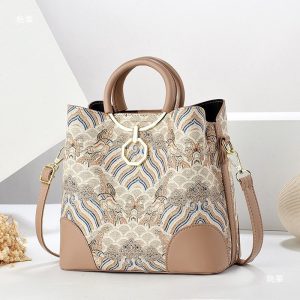
Guangxi Zhuang Brocade Handmade Tote – Ethnic Boho Large-Capacity Shoulder Bag
Original price was: $172.00.$150.00Current price is: $150.00. Add to cartThe Palace Museum Paper-Cut Light Art Fridge Magnets: Chinese Cultural Style Creative Gift Series
Price range: $27.00 through $36.00 Select options This product has multiple variants. The options may be chosen on the product pageAncient Craftsmanship & ICH Herbal Beads Bracelet with Yellow Citrine & Silver Filigree Cloud-Patterned Luck-Boosting Beads
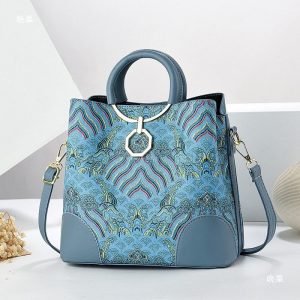
Original price was: $128.00.$89.00Current price is: $89.00. Add to cartHandwoven Zhuang Brocade Tote Bag – Large-Capacity Boho Shoulder Bag
Original price was: $178.00.$154.00Current price is: $154.00. Add to cartBambooSoundBoost Portable Amplifier
Original price was: $96.00.$66.00Current price is: $66.00. Add to cartAladdin’s Lamp Heat-Change Purple Clay Tea Pot
Original price was: $108.00.$78.00Current price is: $78.00. Add to cart