In a small workshop filled with the earthy scent of freshly cut bamboo, Maria Santos runs her fingers along the smooth surface of a rattan strand. “Each piece has its own story,” she says, her hands moving with the confidence of three generations of weavers. “The bamboo tells you where it wants to bend.”
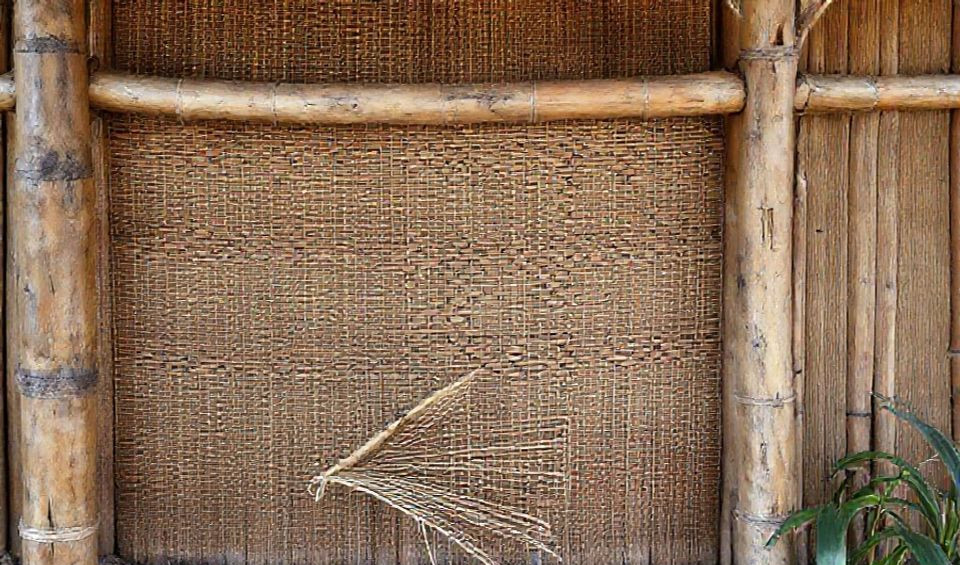 artisan weaving rattan bamboo" loading="lazy" />
The Material’s Memory
Rattan bamboo carries within its cellular structure the history of its growth—the rainy seasons that made it supple, the dry spells that gave it strength. Unlike synthetic materials that arrive uniform and predictable, each cane possesses unique characteristics that master craftspeople learn to read like a language written in texture and resilience. In northern Thailand, artisan Lek Chaiwan can identify bamboo from three different valleys simply by running his thumb along the surface, feeling the subtle variations that speak of different soil compositions and microclimates.
This intimate knowledge transforms what might appear as limitations into design opportunities. A slight curve becomes an elegant chair back, a thicker section forms the structural heart of a basket, while slender shoots weave into delicate patterns. “We don’t force the material,” explains Lek. “We collaborate with it. The material has its own intelligence, and our job is to understand what it wants to become.”
The cellular memory of rattan bamboo extends beyond physical properties to cultural significance. For centuries, communities across Southeast Asia have developed harvesting practices that honor the plant’s growth cycles and ecological relationships. In the Philippines, traditional gatherers still follow the “one-clump system”—harvesting only mature canes while leaving younger shoots to ensure continuous regeneration. This sustainable approach has allowed rattan to remain abundant while other forest resources diminish, creating a living example of how human use can coexist with natural preservation.
Modern Interpretations and Applications
Contemporary designers are rediscovering rattan’s potential beyond traditional furniture, finding new expressions for this ancient material in modern contexts. In Barcelona, architect Elena Morales recently completed a stunning office partition using interwoven bamboo strips that filter light while maintaining visual connection between spaces. “The material brings warmth to minimalist spaces,” she notes. “It’s sustainability you can actually touch—there’s an immediate tactile connection that synthetic materials can’t replicate.”
Her installation required nearly 200 meters of carefully selected rattan, each piece hand-finished to preserve its natural protective coating. The result breathes with the building, expanding and contracting slightly with seasonal humidity changes—a quality that synthetic materials struggle to replicate. This dynamic relationship with environmental conditions makes rattan particularly valuable in creating spaces that feel alive and responsive.
Design studios worldwide are incorporating rattan bamboo into increasingly sophisticated applications. Tokyo-based studio Nendo recently created a series of rattan light fixtures that play with shadow patterns, casting intricate designs that change throughout the day as light angles shift. London designers have experimented with rattan-reinforced concrete that reduces material use by up to 40% while adding tensile strength. The growing appreciation for natural materials in design aligns with health considerations noted by the World Health Organization, which has documented the benefits of natural materials in regulating humidity and reducing volatile organic compounds in interior spaces.
“My grandfather taught me that working with rattan is like having a conversation with the forest. Sometimes you listen, sometimes you speak, but you never shout.” — Maria Santos, third-generation weaver
Sustainable Harvesting and Economic Impact
The global rattan industry supports approximately 500 million people, most in rural communities where alternative employment opportunities remain limited. In Indonesia alone, rattan provides income for over 200,000 households, with women comprising nearly 70% of the weaving workforce. These economic benefits create powerful incentives for forest conservation—where rattan thrives as a sustainable resource, deforestation rates tend to be significantly lower, demonstrating how economic development and environmental protection can reinforce each other.
Modern certification systems have helped standardize and validate sustainable harvesting practices. The Forest Stewardship Council now offers rattan-specific certification that ensures harvesting doesn’t damage the parent plant and maintains ecosystem integrity. A recent Journal of Cleaner Production study found that certified rattan operations generated 30% higher incomes for harvesters while better protecting biodiversity, proving that ecological responsibility and economic viability can go hand in hand.
For those involved in harvesting, practical knowledge makes all the difference. Always cut rattan at a 45-degree angle about 50 centimeters above ground level—this prevents water from collecting in the stump and reduces fungal infections that could damage the entire plant. Leave at least three mature canes in each clump to ensure continued production, and harvest during the dry season when the plant’s sap flow is reduced, resulting in better quality material with reduced susceptibility to insect damage.
Material Science and Structural Innovation
Rattan bamboo’s mechanical properties continue to surprise materials scientists and engineers. With a strength-to-weight ratio comparable to steel in tension and greater than many hardwoods in compression, it offers remarkable structural potential that we’re only beginning to fully understand. Researchers at the University of Cambridge recently developed a rattan-based composite that outperforms fiberglass in impact resistance while being fully biodegradable, opening possibilities for high-performance applications that don’t create permanent waste.
The material’s natural silica content—higher than most woody plants—gives it exceptional fire resistance. When exposed to flame, rattan chars slowly rather than bursting into flames, creating a protective layer that maintains structural integrity longer than many conventional building materials. This quality makes it suitable for architectural applications where fire safety matters, and building codes in several Southeast Asian countries now recognize properly treated rattan for certain structural uses after extensive testing confirmed its reliability.
Architect David Tan discovered rattan’s unexpected capabilities while working on a community center in Malaysia: “During construction, we discovered the rattan beams could span greater distances than our engineering software predicted. The material taught us something new about its capabilities—there’s an intelligence in natural materials that we’re still learning to measure and understand.”
Working With Rattan: Practical Guidance for Designers and Makers
For designers and makers new to the material, understanding rattan’s unique behavior proves essential to successful projects. Unlike wood, rattan contains longitudinal fibers that run its entire length without nodes, giving it unique bending properties that require specific techniques. Steam bending works best at temperatures between 95-100°C for 15-20 minutes depending on thickness, with the exact timing varying based on the specific rattan species and its age.
Material preparation significantly affects working quality. Always work with rattan within two weeks of harvesting or rehydrate dried material overnight to restore flexibility. The natural oils that make rattan flexible evaporate over time, though they can be partially restored with light applications of linseed oil. For outdoor projects, select rattan species naturally high in silica like Calamus manan, which resists moisture damage better than other varieties and can last for decades with proper maintenance.
The renewed interest in working with natural materials reflects broader cultural shifts. UNESCO data shows that traditional crafts using natural materials like rattan have seen a 15% annual growth in artisan participation since 2015, suggesting people are seeking more meaningful connections to materials and processes in an increasingly digital world.
Cultural Preservation Through Material Practice
The techniques used in rattan work often encode cultural knowledge passed through generations, making material practice a living archive of cultural identity. In Vietnam’s Mekong Delta, specific weaving patterns historically indicated family lineages, with each family developing distinctive approaches that became visual signatures. In Borneo, the tightness of weave traditionally signaled social status, with the finest, tightest weaves reserved for ceremonial objects and leadership contexts.
Preserving these techniques means more than maintaining craft traditions—it sustains cultural identity and intergenerational knowledge transfer. Non-profit organizations like the World Crafts Council have established rattan preservation programs that partner master artisans with younger apprentices, creating structured opportunities for knowledge sharing while documenting techniques that might otherwise disappear. These initiatives successfully combine cultural preservation with economic development, making traditional knowledge financially viable for new generations. As Statista market analysis indicates, the global handicraft market has grown to over $700 billion annually, creating significant potential for rattan artisans who can connect traditional skills with contemporary markets.
Maria Santos now teaches weekend workshops where urban professionals learn basic weaving techniques: “People come stressed from their digital lives and leave transformed by the rhythm of working with natural materials. They rediscover patience and the satisfaction of making something tangible. One lawyer told me it was the first time in years he’d felt completely present in his body rather than in his thoughts.”
Future Applications and Research Directions
Material scientists continue exploring rattan’s potential in increasingly sophisticated domains, finding applications that bridge traditional knowledge and cutting-edge technology. Medical researchers are investigating rattan-based scaffolds for bone regeneration, attracted by the material’s porous structure and biocompatibility. Automotive engineers experiment with rattan composites for interior panels that reduce vehicle weight while providing excellent vibration damping, potentially improving both fuel efficiency and passenger comfort.
The material’s vibration-dampening properties make it particularly interesting for earthquake-resistant construction in developing regions, where lightweight, affordable building solutions can save lives. Ongoing research focuses on enhancing rattan’s natural durability without chemical treatments, seeking methods that maintain the material’s biodegradable character while expanding its applications. Some promising approaches include thermal modification using controlled heating and natural oil impregnation, techniques that could make rattan suitable for exterior building components without compromising its environmental benefits.
As Lek Chaiwan observes while sorting rattan strands in his Thailand workshop: “The old people knew this material could do many things. Now science is catching up with what tradition already understood.” The future of rattan bamboo appears not in abandoning traditional knowledge, but in combining it with contemporary understanding to create truly sustainable material solutions that honor both the material’s history and its potential. This integration of wisdom streams—traditional craftsmanship with scientific innovation—creates possibilities neither approach could achieve alone, pointing toward a future where materials serve both human needs and ecological balance.
In research laboratories from Singapore to Stuttgart, scientists are quantifying what artisans have known intuitively for generations: that rattan’s combination of strength, flexibility, and renewability offers solutions to multiple contemporary challenges. From sustainable architecture to medical implants, from lightweight transportation to cultural preservation, this humble material continues to reveal new dimensions of possibility, reminding us that the most advanced solutions often emerge from deep engagement with natural systems rather than attempts to dominate them.
You may also like
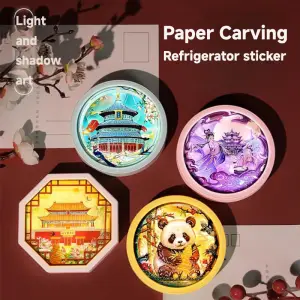
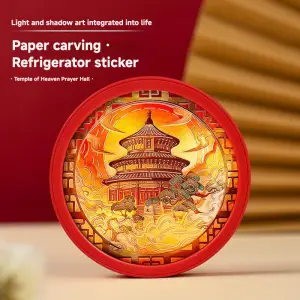
The Palace Museum Paper-Cut Light Art Fridge Magnets: Chinese Cultural Style Creative Gift Series
Price range: $27.00 through $36.00 Select options This product has multiple variants. The options may be chosen on the product pageAncient Craft Herbal Scented Bead Bracelet with Gold Rutile Quartz, Paired with Sterling Silver (925) Hook Earrings
Original price was: $322.00.$198.00Current price is: $198.00. Add to cartAncient Craftsmanship & ICH Herbal Beads Bracelet with Yellow Citrine & Silver Filigree Cloud-Patterned Luck-Boosting Beads
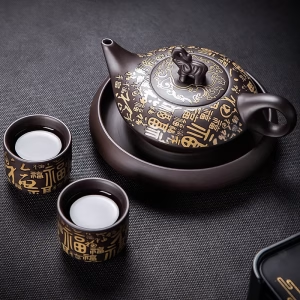
Original price was: $128.00.$89.00Current price is: $89.00. Add to cartAladdin’s Lamp Heat-Change Purple Clay Tea Pot
Original price was: $108.00.$78.00Current price is: $78.00. Add to cartGuangxi Zhuang Brocade Handmade Tote – Ethnic Boho Large-Capacity Shoulder Bag
Original price was: $172.00.$150.00Current price is: $150.00. Add to cartHandwoven Zhuang Brocade Tote Bag – Large-Capacity Boho Shoulder Bag
Original price was: $178.00.$154.00Current price is: $154.00. Add to cart