Walk into any workshop where lacquer is being applied to bamboo, and time behaves differently. The air carries the sharp, resinous scent of raw materials transformed through human patience. Here, in spaces often tucked away from China’s gleaming urban centers, a different kind of economic and cultural pulse beats—one measured in layers, strokes, and kiln firings rather than quarterly reports. This realm of exotic Chinese handcrafts is not a relic of the past but a vibrant, evolving dialogue, where ancient materials whisper to modern hands, forging objects that carry the weight of history and the spark of contemporary life within their very fibers.
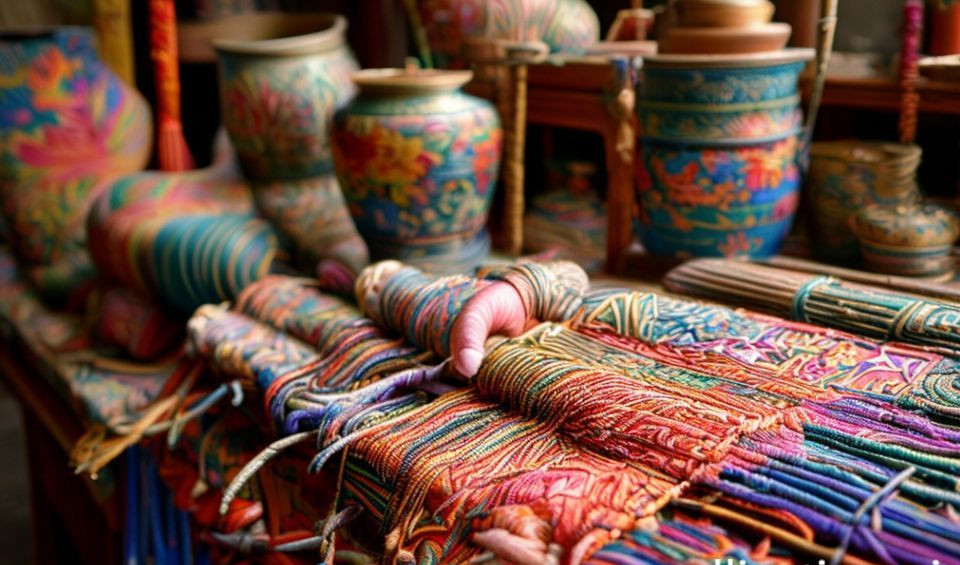 artisan applies a layer of lacquer to a bamboo vessel, a process repeated dozens of times" loading="lazy" />
The Material Reawakening: Beyond Function
Contemporary Chinese craft is experiencing a quiet but profound material renaissance. It’s a renewed, tactile conversation with substance itself. For centuries, materials were confined by strict functional destinies—clay for vessels, silk for garments, lacquer for protection. Today, artisans are listening more closely to the inherent voice of the material—its texture, its reaction to fire, its memory of the earth—and hearing new possibilities. This shift moves craft from the domain of pure utility into the realm of conceptual art and personal expression, while still being rooted in irreplaceable manual skill.
Take Yixing zisha clay, for over a millennium the revered partner of the tea ceremony, prized for its porosity and ability to enhance flavor. In the studios of Yixing, Jiangsu, a new generation is asking different questions of the clay. Artisans like Li Jing press and sculpt the mineral-rich clay into delicate, organic jewelry that rests cool against the skin, or into abstract wall pieces where the natural pigment variations—burnt siennas, deep ochres, subtle purples from a single firing—become the artwork’s subject. “The clay tells you what it wants to be,” Li remarks, her fingers tracing the unique topography of a finished piece. “We were taught it was only for tea, but its soul is more expansive. It wants to be touched, to be seen in a new light.” Her work challenges the very categorization of the material, inviting it to participate in modern aesthetics and daily life beyond the teapot.
This liberation is evident across the spectrum of exotic Chinese handcrafts. Master weavers in Guangxi, custodians of intricate Zhuang brocade techniques historically used for ceremonial dress, are now incorporating metallic threads and contemporary color palettes into traditional geometric and natural motifs. The result is not merely fabric, but stunning textile art designed for modern interiors, where a centuries-old narrative technique now adorns a feature wall in a Shanghai apartment. The rhythmic click-clack of the wooden loom remains, but the story it weaves has expanded from folklore to a dialogue about cultural continuity. Similarly, the delicate art of paper-cutting (jianzhi) has burst free from its traditional role as festive window decoration. Artists are now executing works on a monumental scale, using layered, laser-cut sheets of paper to create breathtaking installations that tell complex stories of ecological change, urban migration, or familial memory. The inherent fragility of the medium no longer signifies ephemerality but rather underscores the preciousness and vulnerability of the stories themselves.
The Calculus of Scale and Slowness
This creative movement exists in deliberate, necessary counterpoint to the logic of mass production and instant gratification. Its economics are intimate, precarious, and fundamentally redefine value. Here, cost is measured in deep attention, specialized knowledge, and temporal investment, not output volume. The global market for luxury goods is increasingly leaning into this narrative. A 2023 report by Bain & Company highlighted a growing consumer desire for “craftsmanship, uniqueness, and product integrity,” with high-end buyers showing a willingness to invest in pieces with a documented, artisanal provenance over traditional logo-centric items.
Consider the lacquerware masters of Fuzhou. Their process is a meditation in slow chemistry and profound patience. A single piece begins with a bamboo or wooden core, over which successive layers of refined lacquer sap (from the *Toxicodendron vernicifluum* tree) are applied. Each layer must cure for days in a carefully controlled humid environment before being hand-sanded to a velvety smoothness. A piece of true depth and resonance—one that seems to hold light within its layers—may involve over thirty such cycles, a timeline spanning months or even a full year. The output for a dedicated studio might be just forty significant pieces a year. This is not inefficiency; it is the physical manifestation of a different value proposition, one that cannot be rushed. As noted by UNESCO, which includes Chinese lacquerware techniques on its Intangible Cultural Heritage lists, such practices are “not only valued as cultural heritage but also as sources of creativity and innovation,” providing a crucial counterbalance to homogenized global culture.
The market for these objects, while niche, is global and discerning. Collectors are not merely purchasing a decorative item; they are investing in a tangible timeline and a documented narrative. They acquire the story of a specific batch of clay from a dwindling seam in Yixing, the particular humidity of a summer in Fuzhou that affected the lacquer’s cure, and the singular focus of an artisan’s hand over hundreds of hours. The price reflects the cost of preserving a complete knowledge system—from ethical raw material sourcing to the final polish—that inherently resists acceleration. This economic model, though challenging, creates a sustainable loop where quality and story command a premium, directly supporting the survival of the craft.
A Voice from the Workshop: The Rhythm of Innovation
The tension and fertile opportunity within this evolution are best voiced by the artisans themselves, who stand at the crossroads of heritage and horizon. Zhang Wei, a third-generation cloisonné artisan in Beijing, embodies this dialogue. His family’s hands have shaped enamel for decades, creating the iconic, colorful patterns that adorned imperial architecture and ritual objects.
Zhang’s studio, however, tells a more complex story. Alongside traditional copper wires and vibrant enamel powders, you’ll find fragmented circuit boards, salvaged silicon chips, and strips of recycled aluminum. “My grandfather’s hands knew one rhythm—the consistent, repeating pattern for imperial walls,” Zhang explains, holding a newly fired piece where azure enamel pools against a backdrop of gold circuitry. “My hands know that rhythm too, but now they also search for a dissonant beat. I use the old technique of firing powdered glass at 800 degrees Celsius not to replicate a dragon, but to ask what a dragon might be in an age of silicon. The craft doesn’t die when it changes; it dies when it becomes a perfect, silent replica of itself.” His work is a powerful metaphor for cultural integration, showing how traditional techniques can provide a new language for commenting on contemporary reality.
This sentiment echoes across the country. In Jingdezhen, the millennia-old “porcelain capital,” young ceramicists use ancient celadon glazes—once perfected for Song dynasty emperors—on forms inspired by aerodynamic engineering or data visualization. In doing so, they prove that the most profound innovation is often a deep conversation with history, not a rejection of it. These artisans are not abandoning tradition; they are interrogating it, using its vocabulary to ask new questions and seek new forms of relevance in a rapidly changing world.
Practical Pathways: Engaging with Exotic Handcrafts
For those drawn to the depth and narrative of exotic Chinese handcrafts, engagement goes far beyond passive appreciation. It becomes an active participation in sustaining a living culture. Whether you are a traveler, a collector, a designer, or simply a curious learner, there are meaningful ways to connect that support artisans and enrich your own understanding.
For Travelers and Collectors
Move beyond the generic souvenir stall. The real magic lies in seeking out artist cooperatives, studio clusters, or living heritage workshops. Cities like Jingdezhen (ceramics), Suzhou (embroidery and silk), Kashgar (Uyghur metalsmithing and textiles), and Fuzhou (lacquerware) offer incredible opportunities to see craftspeople at work. Platforms like the UNESCO-sponsored “Craft Atlas” or specialized cultural travel agencies can help identify authentic, working studios open to respectful visitors. When purchasing, engage the artisan. Ask about the process, the material’s origin, or the meaning behind a motif. A genuine maker delights in sharing their knowledge. As a seasoned Shanghai-based collector of contemporary bamboo weaving advises, “Buy the piece that speaks to you, but also buy the story. The story is what gives it life beyond your shelf and connects you to a lineage of skill.” Focus on building a curated collection around one or two crafts, which allows for deeper understanding and a more coherent narrative.
For Designers and Creatives
Collaboration, not appropriation, is the golden key. Seek partnerships with master artisans that respect their expertise as equal to your own design sensibility. For instance, a Scandinavian furniture designer might work with a Zhejiang bamboo master to create a structural element for a chair, allowing the material’s natural flexibility and strength to inform the final design. Be prepared for longer timelines and embrace the inherent constraints of the material and technique as a powerful source of creativity. Organizations like the World Intellectual Property Organization (WIPO) provide crucial resources and model contracts for equitable collaboration that protect traditional knowledge while fostering fair-trade innovation. The goal is a true fusion—creating something neither the designer nor the artisan could have conceived alone, thereby pushing both fields forward.
For the Curious Learner
Depth of understanding transforms observation into appreciation. Start with the rich online archives of institutions like the Smithsonian’s National Museum of Asian Art or the Victoria and Albert Museum, which feature extensive collections of Chinese decorative arts. Foundational books such as “The Arts of China” by Michael Sullivan offer excellent historical context. For a more tactile education, seek out short-term workshops. Many cultural centers in major cities worldwide, and even in China’s craft hubs, offer weekend courses in basics like Chinese knotting (*zhongguo jie*), simple paper-cutting, or ink stick grinding. The experience of personally struggling to achieve a symmetrical knot or a clean paper cut fosters an immense, lasting respect for the master’s effortless skill and the years of practice it represents.
The Fragile Ecosystem and Its Digital Lifeline
The ecosystem supporting these exotic Chinese handcrafts is both fragmented and remarkably resilient. It faces undeniable challenges: the migration of rural youth to cities in search of different work, the increasing scarcity and cost of premium raw materials like specific clay beds or old-growth lacquer trees, and the constant market pressure to cheapen processes for tourist trinkets. Yet, a powerful and unexpected tool has emerged as a lifeline: digital connectivity and social media.
Artisans in remote villages of Yunnan or Guizhou now use platforms like Douyin (China’s TikTok) and Xiaohongshu (Little Red Book) to livestream their weaving, carving, or dyeing processes. They build followings of tens or hundreds of thousands who witness a day’s labor transform into a mere centimeter of intricate fabric or a few delicate strokes on a carving. This direct, unfiltered storytelling demystifies the craft, builds emotional connection, and creates a transparent market. Followers become patrons, pre-ordering pieces and funding specific projects. E-commerce platforms dedicated to handicrafts allow a studio in remote Gansu to sell its intricately carved wooden boxes directly to a design enthusiast in Berlin or New York, bypassing costly and often exploitative intermediaries. This allows artisans to capture the full value of their work and make a sustainable living. As explored in research published in the International Journal of Cultural Studies, this “digital artisanry” creates new, global communities of practice and patronage, ensuring these crafts are seen not as dying arts, but as dynamic, relevant, and economically viable practices for the 21st century.
The future of these exotic Chinese handcrafts lies not in static display within glass museum cases, but in this ongoing, mutable, and now digitally-augmented conversation. It is a dialogue between a hand that knows the old rhythms and an eye that sees new forms, between earth-born material and the contours of contemporary life. In every piece that emerges from this dialogue—be it a lacquer bowl holding depth like a pool of night, a clay pendant echoing the silhouette of ancient mountains, or an enameled circuit board humming with a silent, modern myth—there pulses that same, patient heartbeat. It is a rhythm that insists, against the tide of haste, that some forms of value must, and will, forever be measured in layers, strokes, and the irreplaceable currency of time.
You may also like
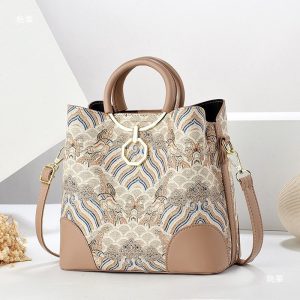
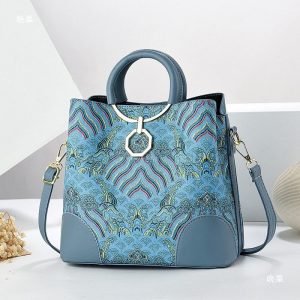
Guangxi Zhuang Brocade Handmade Tote – Ethnic Boho Large-Capacity Shoulder Bag
Original price was: $172.00.$150.00Current price is: $150.00. Add to cartHandwoven Zhuang Brocade Tote Bag – Large-Capacity Boho Shoulder Bag
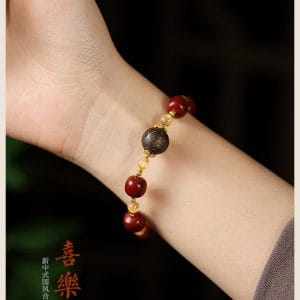
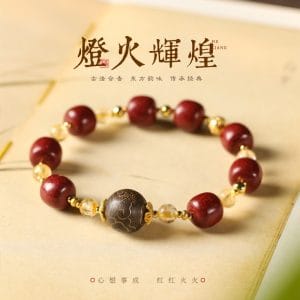
Original price was: $178.00.$154.00Current price is: $154.00. Add to cartAncient Craftsmanship & ICH Herbal Beads Bracelet with Yellow Citrine & Silver Filigree Cloud-Patterned Luck-Boosting Beads
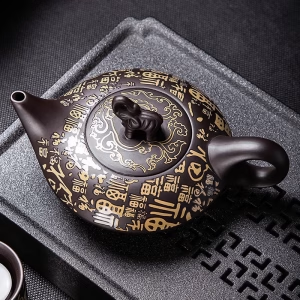
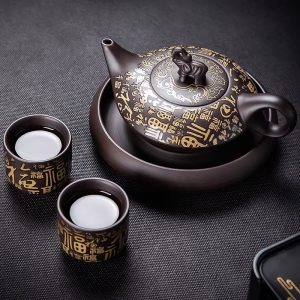
Original price was: $128.00.$89.00Current price is: $89.00. Add to cartAladdin’s Lamp Heat-Change Purple Clay Tea Pot
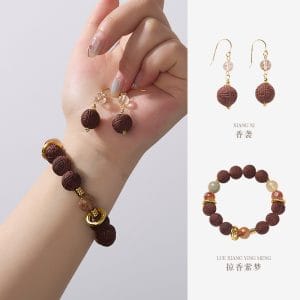
Original price was: $108.00.$78.00Current price is: $78.00. Add to cartAncient Craft Herbal Scented Bead Bracelet with Gold Rutile Quartz, Paired with Sterling Silver (925) Hook Earrings
Original price was: $322.00.$198.00Current price is: $198.00. Add to cartThe Palace Museum Paper-Cut Light Art Fridge Magnets: Chinese Cultural Style Creative Gift Series
Price range: $27.00 through $36.00 Select options This product has multiple variants. The options may be chosen on the product page