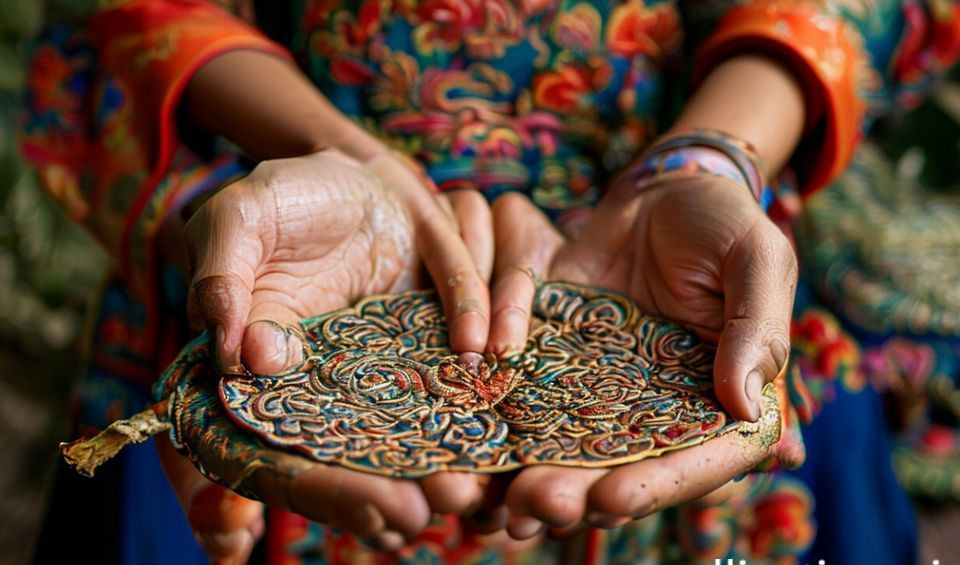
In a quiet workshop tucked behind Suzhou’s tourist canals, Gu Weiying’s hands move without looking. Her fingers—knuckles slightly enlarged, nails kept short—dance with crimson silk threads. She is making a panchang knot, one of the eight basic knots in Chinese knotting, but her version contains a subtle variation passed down from her grandmother. “The books say seven passes,” she remarks, her eyes still on the emerging pattern. “But in our family, we make eight. It’s for longevity, yes, but also because eight is the number of completeness. The last pass is invisible; it’s the maker’s breath locked inside.” This breath, this intangible essence, is the true hallmark of exotic Chinese handcrafts. Far beyond mere souvenir trinkets, they are living repositories of philosophy, environmental dialogue, and personal legacy, where material, maker, and meaning become inextricably fused.
 artisan's hands meticulously weaving intricate red silk threads into a traditional Chinese knot." loading="lazy" />
The Language of Threads: Chinese Knotting as a Tangible Syntax
Chinese knotting, or zhongguo jie, is a deceptive art. To the untrained eye, it is symmetrical ornamentation, a festive red accent. For masters like Gu Weiying, each knot is a dense, tactile sentence written in a language of loops and tension. The craft’s history stretches back millennia, with artifacts found from the Tang and Song dynasties, originally used to record information and fasten robes before evolving into a symbolic art form.
The materials are the first vocabulary. Gu sources her silk from a small supplier in Hangzhou who employs historical, plant-based dyeing methods. This results in colors that possess a living quality—a deep indigo that seems to breathe with the humidity, a vermilion that whispers of crushed berries and earth, not synthetic pigment. This connection to natural materials is a thread running through all exotic Chinese handcrafts, a principle increasingly recognized for its cultural and environmental value by bodies like UNESCO in its safeguarding of intangible cultural heritage.
The complexity is monumental. A single intricate knot, such as the fulu shuangquan (fortune and prosperity double circle), can consume over twelve meters of thread and demand three days of meditative, focused labor. “People see the symmetry,” Gu notes, “but they miss the tension. The perfect knot has tension like a good conversation—balanced, alive, holding itself together.” This tension is the grammar that holds the symbolic meaning. Every shape carries auspicious intent: the butterfly knot for longevity, the endless knot for eternal love, the coin knot for prosperity.
Gu keeps a knot made by her deceased teacher in a glass case. Over two decades, the threads have relaxed, the form softening and evolving. “See?” she points quietly. “It’s still alive.” The knot continues its dialogue with time, a testament to the craft’s organic nature. This living quality defies the static nature of mass-produced goods, offering a poignant reminder of continuity in a disposable age.
Bamboo’s Second Skin: Weaving with the Spirit of the Grove
Six hundred kilometers southwest, in the misty peaks of Anhui province, another material speaks: bamboo. For 72-year-old Zhang Bolin, bamboo is not a raw material to be dominated, but a partner with its own spirit and memory. He transforms rigid culms into vessels of ethereal lightness, specializing in the tiliang pattern—a hexagonal weave yielding containers that can float on water yet bear substantial weight.
His process is a ritual rooted in deep ecological knowledge, beginning not at the workbench, but in the bamboo grove at dawn. “You must cut it in late autumn, after the first frost but before the sap fully sleeps,” he explains. This precise timing ensures optimal flexibility and durability. The subsequent step, smoking the strips over a low fire of pine needles, serves a dual purpose: it prevents insect damage and imbues the bamboo with a unique, warm amber hue. “This color cannot be replicated with stain,” Zhang states. “It is the color of time and smoke.”
“My grandfather told me that every piece of bamboo has a spine, just like a person. You must find it and work with it, not against it. If you force it, it will split, and the spirit leaves. People ask me how many items I make in a year. I tell them: maybe five, maybe ten. The number isn’t important. The question is: how many listened to the bamboo?” — Zhang Bolin, bamboo weaver, Huangshan
This respect for the material’s innate character defines the craft. A single piece, like a lidded tea basket, can take four months to complete, its weave so tight it produces a soft whisper when rubbed. Zhang’s work embodies a sustainable, almost philosophical approach to material use. For him, the final product is a vessel for legacy, not commerce. His most recent basket is destined for his granddaughter. “When she is older, she will touch it and know my hands were here,” he says. The object becomes a tactile lineage, a connection that transcends generations, embodying a slow, purposeful creation cycle that stands in stark contrast to fast consumerism.
The Hidden Worlds: Lacquer, Paper, and Clay
The universe of exotic Chinese handcrafts extends far beyond thread and bamboo. Each discipline forms a distinct ecosystem of skill and symbolism, a hidden world where mastery is measured in decades and the material is an active collaborator.
Lacquerware (Qīqì): This is an art of layers and profound patience. Derived from the toxic sap of the lacquer tree, raw lacquer is carefully harvested, filtered, and applied in dozens, sometimes hundreds, of layers onto a wooden or hemp cloth base. Each layer must cure in a humid, dust-free chamber—a process that can take days. The renowned diāoqī (carved lacquer) technique involves applying hundreds of alternating colored layers, then meticulously carving intricate landscapes or patterns deep into the surface to reveal the chromatic stratigraphy beneath. A single piece can take a year or more. As master lacquer artist Shen Shaomin once noted, “Lacquer is alive. It shrinks, expands, and cures with the weather. You don’t control it; you negotiate with it season by season.” This negotiation results in objects of incredible depth and durability, each one a unique record of its own making.
Paper Cutting (Jiǎnzhǐ): Often dismissed as simple folk art, traditional paper cutting is a breathtaking exercise in negative space and narrative memory. Using only scissors or sharp knives, artists render elaborate scenes of folklore, zodiac animals, and pastoral life from a single sheet of paper, usually vibrant red. The design must be perfectly planned, as a single errant cut can unravel the entire composition. In rural Shaanxi, elderly craftswomen like Grandma Li can cut complex chuāng huā (window flowers) for the Lunar New Year without any pre-drawn lines, the patterns held entirely in memory and muscle. This art form is a vibrant, accessible thread of cultural storytelling, its simplicity belying immense skill and a deep, communal connection to symbolism and celebration.
Yixing Zisha Clay Teapots: Hailing from Jiangsu province, these unglazed clay teapots are legendary among tea connoisseurs for their functional artistry. The unique, mineral-rich zisha clay is porous, allowing it to “season” over time by absorbing the subtle essences of the tea brewed within, gradually enhancing the flavor profile with each use. Shaping a teapot requires an intimate understanding of the clay’s “feel,” its shrinkage rate, and how it will react to firing. The best pots are not perfectly symmetrical; they bear the gentle, rhythmic marks of the potter’s paddling tools, a testament to hand-building. Over years of use, the pot develops a rich, glossy patina, a visual and tactile record of countless tea sessions. It becomes a personal and sensory archive, a perfect fusion of utility and aesthetic cultivation.
At the Modern Crossroads: Preservation Meets Innovation
These exquisite crafts face a familiar modern triad of challenges: aging master artisans with few apprentices, competition from cheap industrial replicas, and the shifting tastes of a global market. A Statista report on the global arts and crafts market highlights growing consumer interest in handmade goods, yet also underscores the relentless pressure of mass production and cost efficiency. The survival of these traditions hinges not on fossilization, but on thoughtful adaptation that honors their core while allowing them to breathe in a new era.
Some artisans, like Gu Weiying, engage in subtle innovation from within the tradition. She experiments with integrating fine silver wire or contemporary color palettes into her knots, or creates larger, architectural knot works for modern interior spaces, translating an intimate craft into public art. “The knot must still speak its old language,” she insists, “but it can tell a new story.” This approach maintains the integrity of the technique while expanding its contextual relevance.
Younger designers are also entering the field, acting as cultural translators. They might take Zhang Bolin’s bamboo weaving techniques and apply them to minimalist lampshade designs, or use the intricate principles of jiǎnzhǐ to create striking laser-cut metal jewelry or contemporary wall art. These collaborations, when respectful of the core techniques and philosophy, can open vital new markets and attract fresh interest, ensuring skills are passed on because they have economic viability.
Furthermore, the intrinsic value of these crafts is being rediscovered through new lenses. Research into the therapeutic, mindfulness-based aspects of crafts like knotting or weaving provides a compelling narrative for their contemporary relevance. The focused, repetitive motions involved in these handcrafts can induce a state of flow, reducing stress and promoting mental well-being—a benefit explored in various studies linked to arts and health, an area of interest for global health bodies like the World Health Organization. This frames exotic Chinese handcrafts not as archaic hobbies, but as vital practices for modern life.
Practical Pathways: From Appreciation to Integration
For those drawn to the depth and beauty of these crafts, engagement can take many forms, from mindful appreciation to hands-on learning. Moving beyond passive observation allows for a deeper understanding of the values they embody.
- Become a Discerning Collector: Look beyond tourist stalls. Seek out master artisans at dedicated craft fairs, reputable galleries specializing in contemporary interpretations, or through established online platforms that vet their creators. Examine the work closely. In knotting, look for consistent, alive tension and fine, natural materials. In bamboo, appreciate the evenness of the weave and the natural finish. Ask about the maker and their process. A genuine piece comes with a story, and understanding that story is part of the ownership. Resources and discussions in academic publications, such as those found on Taylor & Francis Online, can provide deeper insight into the markers of authenticity and quality in cultural crafts.
- Embrace the Beginner’s Mind: Many cultural centers, museums, and community studios offer workshops in basic Chinese knotting or paper cutting. These introductory experiences are less about achieving instant mastery and more about understanding the discipline required—the focus, the patience, the tangible connection between hand, material, and mind. The struggle to complete a simple panchang knot or a basic double-happiness paper cut fosters a profound respect for the artisan’s years of dedication.
- Integrate Craft Philosophy into Daily Life: You don’t need to be an artisan to embody the principles these crafts teach. It could be mending a garment with careful, visible stitching (inspired by the mindfulness of weaving), savoring the daily ritual of tea from a handmade cup, or simply taking time to appreciate the materiality and story behind the objects in your home. Notice the grain of wood, the weave of fabric, the curve of a bowl. This practice cultivates an awareness of provenance and process, countering the anonymity of mass production.
- Support Ethical and Transparent Channels: When purchasing, prioritize platforms, cooperatives, and sellers that ensure fair compensation and recognition for the artisans. Look for certifications, detailed artist profiles, and transparent sourcing stories. By choosing ethically sourced handcrafts, you contribute directly to the sustainability of the tradition, ensuring that masters like Zhang Bolin can continue their work and attract apprentices.
In Gu Weiying’s workshop, a finished knot hangs in the window, catching the afternoon light. In Zhang Bolin’s studio, the whispered rub of a bamboo basket is the only sound. These crafts persist not as static relics in a museum case, but as slow, deliberate conversations—between human hands and silk thread, between a craftsman’s knife and the spine of bamboo, between a breath held in a knot and the centuries that came before. They remind us that in a world of rapid replication and digital abstraction, there remains profound, irreplaceable value in the breath locked inside, in the hand that listens to its material, and in the object that continues, softly and stubbornly, to live and breathe with us.
You may also like
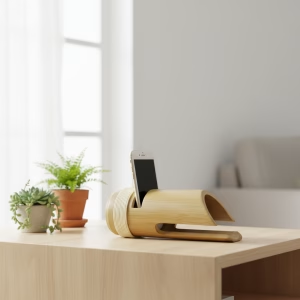
BambooSoundBoost Portable Amplifier
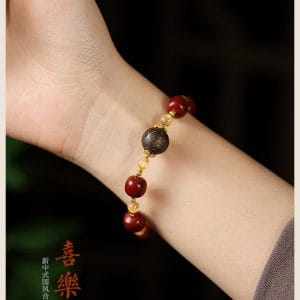
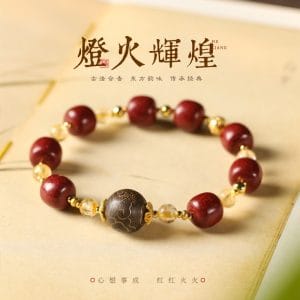
Original price was: $96.00.$66.00Current price is: $66.00. Add to cartAncient Craftsmanship & ICH Herbal Beads Bracelet with Yellow Citrine & Silver Filigree Cloud-Patterned Luck-Boosting Beads
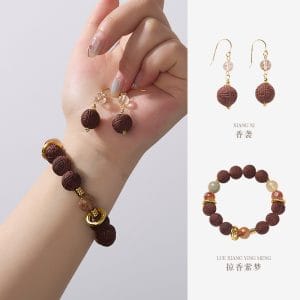
Original price was: $128.00.$89.00Current price is: $89.00. Add to cartAncient Craft Herbal Scented Bead Bracelet with Gold Rutile Quartz, Paired with Sterling Silver (925) Hook Earrings
Original price was: $322.00.$198.00Current price is: $198.00. Add to cartGuangxi Zhuang Brocade Handmade Tote – Ethnic Boho Large-Capacity Shoulder Bag
Original price was: $172.00.$150.00Current price is: $150.00. Add to cartHandwoven Zhuang Brocade Tote Bag – Large-Capacity Boho Shoulder Bag
Original price was: $178.00.$154.00Current price is: $154.00. Add to cartThe Palace Museum Paper-Cut Light Art Fridge Magnets: Chinese Cultural Style Creative Gift Series
Price range: $27.00 through $36.00 Select options This product has multiple variants. The options may be chosen on the product page