When most people imagine Tai Chi sword practice, they picture slow, graceful movements in a park at dawn. Few realize that every gentle arc contains practical martial principles waiting to be understood. The sword becomes both teacher and tool, revealing how subtle weight shifts and precise angles create effective movement. This ancient discipline transforms what appears to be a dance into a profound study of physics, anatomy, and strategy.
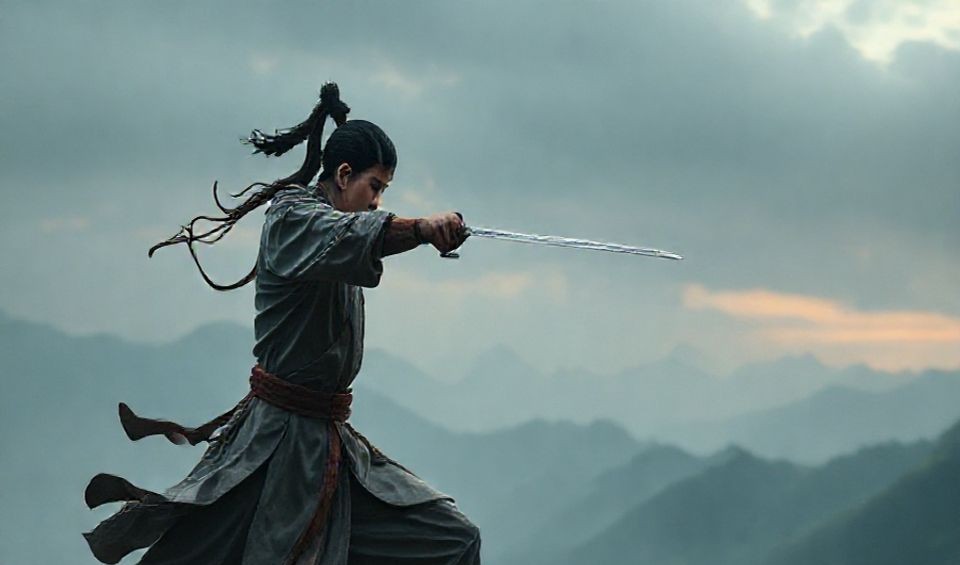
The jian, or Chinese straight sword, has been called “the gentleman of weapons” for its elegance and lethal efficiency. Historical records from the Ming Dynasty describe it as the preferred sidearm of scholars and officers who valued its versatility. Unlike bulkier weapons that rely on brute force, the jian demands intelligence and sensitivity from its wielder. Modern practitioners discover that these qualities translate remarkably well to daily life—the calm focus required to control the blade helps manage stress, while the body awareness developed through practice prevents injuries and improves posture.
The Living Blade
Holding a Tai Chi sword for the first time surprises many practitioners. The balanced jian feels simultaneously heavy and weightless, demanding constant attention to maintain control. This paradox reveals itself gradually—the sword seems to resist clumsy movements yet floats effortlessly when guided with proper technique. The initial sensation of awkwardness gives way to a growing partnership between wielder and weapon.
Unlike western fencing’s aggressive thrusts, the Chinese straight sword emphasizes circular defense and economical motion. A master might demonstrate how a simple wrist rotation can redirect an opponent’s force while conserving energy—what appears as artistic flourish actually serves practical purpose. The blade becomes an extension of the mind, responding to intention rather than muscle.
Consider the basic ‘cloud hands’ adaptation with sword: the blade traces continuous figure-eights not for decoration but to maintain constant defensive coverage. Each movement flows into the next because stopping creates vulnerability. This principle applies directly to self-defense situations where hesitation can be costly. The sword teaches economy of motion—why waste energy on large swings when a precise two-inch adjustment achieves the same result?
Modern research supports these ancient principles. A study published in the Journal of Alternative and Complementary Medicine found that Tai Chi practitioners demonstrated significantly better balance and proprioception than sedentary adults. When applied to sword practice, this heightened body awareness allows for minute adjustments that maximize efficiency.
Structural Integration
The sword magnifies body alignment issues invisible during empty-hand practice. If your shoulder tenses during a horizontal cut, the blade wobbles. If your weight distribution falters during a thrust, the point drifts off target. These feedback mechanisms make the sword an unforgiving but valuable training partner. Beginners often struggle with this amplified feedback, while experienced practitioners learn to welcome it as the most honest teacher they’ll ever encounter.
Advanced practitioners learn to ‘listen’ through the blade—detecting pressure and resistance much like hands sense an opponent’s energy in push hands practice. This tactile sensitivity translates to empty-hand combat where reading an opponent’s intentions becomes crucial. One student described the realization: ‘When I finally stopped forcing the sword and let it move me, my empty-hand technique improved dramatically.’ This phenomenon occurs because the sword provides immediate, unambiguous feedback about energy flow and structural integrity.
A common training exercise involves maintaining a water droplet on the flat of the blade throughout a form—impossible without smooth, controlled movement. This develops the steady hand required for precise strikes and the patience needed for proper timing. Another exercise uses a hanging thread that must be cut cleanly with a single stroke, teaching edge alignment and focus.
‘The sword showed me where I was cheating in my footwork,’ explains Chen style practitioner Michael Zhou. ‘During a simple advance, I discovered I was lifting my back heel prematurely—barely noticeable without the sword, but causing significant blade vibration. Fixing that one habit improved my stability in all movements.’
Breath and Blade: The Internal Connection
The synchronization of breath with sword movement represents one of the art’s most sophisticated aspects. Inhalation typically accompanies rising or gathering motions, while exhalation aligns with extending or cutting actions. This respiratory rhythm creates a meditative flow state where the boundary between practitioner and weapon dissolves. The sword seems to breathe with you, becoming part of your bodily experience rather than an external object.
Maria Gonzalez, a Tai Chi instructor from Barcelona, shares how this connection transformed her practice: “For years, I treated the sword as separate from myself. Then one rainy afternoon, practicing alone in my garden, I noticed how my exhales naturally synchronized with the sword’s downward arcs. Suddenly, the weight distribution made perfect sense—the blade wasn’t something I was moving, but something that was moving through me.”
This mind-body-weapon integration produces measurable health benefits. The World Health Organization recommends mind-body practices like Tai Chi for improving balance and reducing fall risk in older adults. When performed with a sword, these benefits intensify due to the increased demands on coordination and spatial awareness.
Practical Applications Beyond the Form
While the classical Tai Chi sword forms contain dozens of techniques, their practical applications often remain mysterious to contemporary practitioners. The beautiful “Lift Sword to Search for Plum Blossom” movement, for instance, contains at least three defensive applications: deflecting an overhead attack, controlling an opponent’s weapon arm, and creating distance while maintaining threat. Each technique embodies the Tai Chi principle of using minimal force to achieve maximum effect.
Modern martial artists have adapted these principles for self-defense scenarios. The same circular parries that protect against sword attacks work equally well against grabs and strikes. The footwork that positions the sword optimally translates to maintaining proper distance in any confrontation. Even the mental focus required to control the sharp blade develops the calm awareness needed in high-stress situations.
According to UNESCO, which has recognized Tai Chi as an intangible cultural heritage, these practices represent “a comprehensive system of physical exercise and self-defense that cultivates mental tranquility and harmony with nature.” The sword tradition forms an essential component of this system, bridging the gap between artistic expression and practical functionality.
Progressive Training Methodology
Beginning students typically start with a wooden sword to develop fundamental movements without risk. The transition to a metal practice sword comes only after basic techniques become ingrained. This progression mirrors traditional Chinese pedagogy that emphasizes foundation before application. The weight and balance of a proper jian—typically weighing between 1.5 and 2 pounds with a point of balance about four inches from the guard—require developed wrist strength and shoulder relaxation.
Intermediate practitioners often incorporate partner drills where controlled contact teaches proper edge alignment and pressure sensitivity. These exercises, performed with blunt swords, develop timing and distance judgment without the dangers of sharp blades. Advanced students may progress to cutting practice on bamboo or tatami mats, though this remains controversial in some traditional schools that emphasize the art’s internal aspects over its martial applications.
A typical training session might include: basic stance work with the sword, slow repetition of single techniques, linking techniques into short sequences, form practice, partner applications, and finally, standing meditation while holding the sword. This comprehensive approach ensures development across physical, mental, and energetic dimensions.
The Sword as Meditation Tool
Beyond its martial applications, the Tai Chi sword serves as a powerful focus for meditation. The requirement for continuous attention to the blade’s position, angle, and movement creates a natural state of mindfulness. Unlike seated meditation where the mind may wander, the sword demands presence—a moment’s inattention results immediately in clumsy movement or loss of control.
Many practitioners describe entering flow states during extended sword practice, where time seems to slow and each movement unfolds with effortless precision. This psychological state, characterized by complete absorption in an activity, has been linked to reduced anxiety and improved cognitive function in numerous studies. The sword becomes a moving anchor for consciousness, keeping the practitioner firmly rooted in the present moment.
Historical accounts suggest this meditative aspect was deliberately cultivated by Taoist adepts who viewed sword practice as alchemical training—transforming coarse physical movement into refined spiritual expression. The straight blade represented the unwavering mind, while its double edges symbolized the balance between yin and yang forces.
Cultural Context and Evolution
The Tai Chi sword tradition emerged from China’s rich martial history, influenced by both battlefield combat and philosophical speculation. While the empty-hand forms of Tai Chi developed primarily in the 19th century, sword techniques draw from much older sources. The jian has been found in Chinese tombs dating back over 2,500 years, and classical texts like “The Book of Sword” from the Han Dynasty already describe sophisticated fencing principles.
Different Tai Chi families developed distinctive sword approaches. The Yang style emphasizes large, graceful circles and continuous flow. The Chen style incorporates more obvious martial applications and explosive movements. The Wu style features compact, precise techniques with subtle internal power. Despite these variations, all share common principles of relaxation, rootedness, and coordinated whole-body movement.
Contemporary practice has seen interesting developments. Some schools have created shorter, simplified forms to accommodate modern time constraints. Others have experimented with different sword weights and balances to accelerate learning. The global growth of Tai Chi, with millions of practitioners worldwide, has led to creative adaptations while maintaining core principles.
Actionable Insights for Practitioners
For those beginning their journey with the Tai Chi sword, several practices accelerate progress. First, spend time simply holding the sword in basic stances without moving. This builds the necessary strength and familiarity with the weapon’s balance. Second, practice the form very slowly—at half or quarter speed—to detect and correct subtle alignment issues. Third, record yourself periodically to observe progress and identify areas needing improvement.
When learning a new technique, break it down into its component parts: footwork, body rotation, arm movement, and finally sword action. Master each element separately before combining them. Visualize applications throughout practice—imagining an opponent’s attacks makes the movements more purposeful and improves martial understanding.
Most importantly, practice regularly but not excessively. Twenty minutes of focused practice daily produces better results than three hours of distracted effort once a week. The neural pathways controlling complex movement patterns strengthen through consistent repetition, not through occasional bursts of activity.
Training Equipment and Safety Considerations
Selecting appropriate training equipment significantly impacts both safety and progress. Beginners should start with a well-balanced wooden sword that approximates the weight and length of a metal jian. As skills develop, transitioning to a blunt metal practice sword provides more authentic feedback. Sharp blades should only be used by advanced practitioners under supervised conditions.
Safety extends beyond equipment selection to practice environment and mindset. Always ensure adequate space for unrestricted movement—a minimum clearing of eight feet in all directions prevents accidental contact with objects or people. The mental approach matters equally; treating even a wooden sword with respect cultivates the mindfulness necessary for safe practice.
David Chen, a martial arts school owner in San Francisco, emphasizes this point: “I’ve seen students get careless with practice swords because they’re ‘not real weapons.’ But that attitude creates bad habits that become dangerous when they eventually handle sharp blades. The sword demands respect regardless of its edge.”
Integration with Modern Fitness and Wellness
The physical demands of Tai Chi sword practice provide a comprehensive workout that complements modern fitness approaches. The continuous weight shifting builds lower body strength comparable to lunges and squats, while the precise arm movements develop shoulder stability and core engagement. Unlike isolated gym exercises, sword practice integrates these elements into fluid, functional patterns.
Many physical therapists now incorporate modified sword movements into rehabilitation programs. The controlled rotations help restore shoulder mobility after injury, while the weight-bearing stances improve balance and proprioception. The mental focus required provides cognitive benefits that complement physical recovery.
Research supports these integrative benefits. A study in the Journal of Alternative and Complementary Medicine documented improved balance and reduced fall risk among older adults practicing Tai Chi. When performed with a sword, these benefits appear amplified due to the additional demands on coordination and spatial awareness.
Philosophical Dimensions and Personal Growth
The Tai Chi sword serves as more than physical training—it becomes a vehicle for personal development. The precision required to control the blade cultivates patience and attention to detail. The need to maintain calm focus under the pressure of sharp steel develops emotional regulation. The continuous refinement of technique teaches humility and perseverance.
Many practitioners discover that lessons from sword practice permeate other aspects of life. The same economy of motion that makes sword techniques efficient applies to daily tasks and professional work. The ability to remain centered while managing multiple variables translates to better decision-making under pressure. The sword becomes a metaphor for navigating life’s challenges with grace and effectiveness.
As one long-time practitioner reflected, “The sword taught me that true power comes not from forcing outcomes, but from aligning with natural principles. When I struggle with a difficult situation, I remember how the blade moves—yielding when necessary, cutting when appropriate, always maintaining its essential nature.”
The journey of Tai Chi sword practice reveals itself gradually, layer by layer, year after year. What begins as awkward manipulation of a metal object transforms into elegant expression of embodied wisdom. The sword becomes a mirror reflecting not just physical alignment, but mental state and spiritual development. Its silent teaching continues as long as the practitioner remains willing to listen.
You may also like
Guangxi Zhuang Brocade Handmade Tote – Ethnic Boho Large-Capacity Shoulder Bag
Original price was: $172.00.$150.00Current price is: $150.00. Add to cartBambooSoundBoost Portable Amplifier
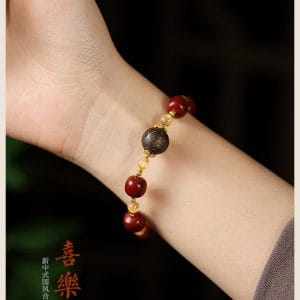
Original price was: $96.00.$66.00Current price is: $66.00. Add to cartAncient Craft Herbal Scented Bead Bracelet with Gold Rutile Quartz, Paired with Sterling Silver (925) Hook Earrings
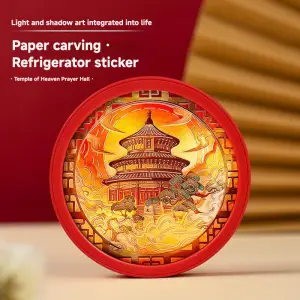
Original price was: $322.00.$198.00Current price is: $198.00. Add to cartThe Palace Museum Paper-Cut Light Art Fridge Magnets: Chinese Cultural Style Creative Gift Series
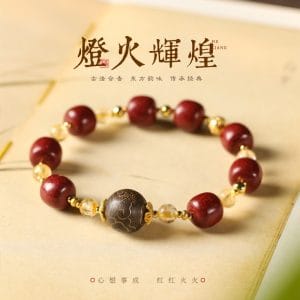
Price range: $27.00 through $36.00 Select options This product has multiple variants. The options may be chosen on the product pageAncient Craftsmanship & ICH Herbal Beads Bracelet with Yellow Citrine & Silver Filigree Cloud-Patterned Luck-Boosting Beads
Original price was: $128.00.$89.00Current price is: $89.00. Add to cartHandwoven Zhuang Brocade Tote Bag – Large-Capacity Boho Shoulder Bag
Original price was: $178.00.$154.00Current price is: $154.00. Add to cart