The market for rare Chinese collectibles operates like a second economy—one governed by different rules, different currencies, and a distinct temporal logic. While headlines chase record-breaking auction prices, the real currents shaping this world flow through private exchanges, scholarly reassessments, and a quiet recalibration of what constitutes cultural worth. This is not a story of linear evolution, but of simultaneous, often contradictory, forces exerting pressure on a finite pool of objects. The landscape is being reshaped by digital archaeology, a profound shift in collector psychology, the strategic recalibration of cultural institutions, and the complex geopolitics of heritage.
The Digital Recontextualization of Rarity
Physical scarcity is being fundamentally redefined. A significant trend is the deployment of advanced imaging, spectroscopic analysis, and blockchain-secured digital provenance platforms not merely to authenticate, but to recontextualize objects. Value is increasingly derived from an item’s complete, legible biography. A 17th-century Yixing teapot, once prized solely for its clay and form, can accrue deeper worth through a high-resolution 3D scan that reveals a delicate 19th-century repair. This repair, documented as part of a continuous chain of care, transforms from a flaw into a cherished chapter in the object’s life story.
Major auction houses and academic institutions have developed dedicated “digital archaeology” units. Their work often uncovers hidden narratives. Multispectral imaging might reveal a lost artist’s signature beneath the glaze of a blue-and-white porcelain vase, or identify the specific regional ink used in a landscape painting, tying it to a workshop previously unknown. This technological lens creates new hierarchies. An imperial porcelain bowl with a minor firing flaw but an impeccably documented provenance from a specific palace collection, verified through archival digitization projects like those at the Palace Museum, can now surpass a “perfect” piece with a vague history. The object becomes a data-rich node, and its digital footprint—a composite of scans, historical records, and material analyses—becomes a core component of its value. This shift is supported by initiatives from organizations like UNESCO, which promote digital preservation as a key pillar of safeguarding intangible cultural heritage, a concept that now extends to the documented life of physical objects.
The Domestic Reclamation and Narrative-Driven Collecting
Parallel to global interest, a powerful, introspective movement is underway among a new generation of mainland Chinese collectors. Their focus is shifting decisively from the traditional trophies of the international market—imperial ceramics and jades—towards artifacts that speak to social history, regional identity, and the fabric of everyday life. There is burgeoning passion for late Qing and early Republican period (c. 1890-1949) material culture: merchant guild ledgers from Tianjin, illustrated advertising calendars from Shanghai, vernacular photography, and even early industrial packaging.
“We are not just buying an object; we are buying back a node in a network of meaning that was dispersed. When I acquire a set of 1930s Shanghai jazz club tickets, I’m connecting them to playbills, to photographs, to recordings. The value is in the reassembly of a cultural moment,” notes Lin Wei, a collector and academic based in Shanghai.
This philosophy represents a methodological shift: collecting as an act of historical reconstruction. A collection of 1920s matchbox labels from Guangzhou, depicting local brands and customs, can command serious attention in private Beijing circles precisely because it tells a hyper-local story. These items, often overlooked in Western markets, are seen as direct conduits to a past that feels personally resonant. The narrative woven between objects—the way a railway timetable, a postcard, and a travelogue can together map the experience of modernity—is becoming as valuable as any single piece. This trend is supported by academic work and exhibitions within China that increasingly validate these “everyday” histories, creating a feedback loop that further energizes the market. A collector in Hangzhou might specialize in Republican-era pharmaceutical ephemera, building an archive that traces the history of public health, while another in Xi’an focuses on Mao-era industrial design sketches.
Institutional Recalibration and the Museum’s Role
Museums and national institutions are no longer passive recipients of treasures; they are active players shaping the market’s values. Following high-profile repatriation cases and a global debate on cultural heritage, institutions like the National Museum of China are strategically refining their acquisition policies. The goal is less about amassing masterpieces and more about building collections that tell specific, scholarly narratives. This might mean pursuing a complete set of printing blocks from a famous Qing dynasty novel to illustrate publishing history, or acquiring the entire studio archive of a 20th-century calligrapher to study creative process.
This institutional focus creates ripple effects. When a major museum mounts an exhibition on, for example, “The Material World of the Silk Road: Beyond Ceramics,” it legitimizes entire new categories of collectibles. Suddenly, Tang dynasty bronze mirrors, Sogdian textiles, or even ancient plant seeds (archaeobotanical specimens) gain enhanced cultural and market cachet. Furthermore, institutions are leveraging their authority to combat forgery. Public databases of scientifically analyzed objects, such as ceramic glaze compositions or paper fiber analyses, provide collectors with crucial reference points. A 2023 study published in the Journal of Cultural Heritage demonstrated how museum-led spectral analysis databases are becoming essential tools for authenticating Song dynasty ceramics, directly impacting private market confidence. This institutional shift from mere display to active research and narrative-setting provides a stable, scholarly backbone for an often-opaque market.
The Geopolitics of Provenance and Circulation
The movement of rare Chinese artifacts is inextricably linked to geopolitics and national sentiment. China’s economic rise has been accompanied by a concerted effort to reclaim cultural patrimony, both through official channels and private patronage. High-net-worth individuals often see the acquisition of historically significant pieces abroad and their subsequent donation to public institutions as a form of patriotic philanthropy. This dynamic has altered auction house strategies, with presale exhibitions now routinely held in Hong Kong, Shanghai, and Beijing to cater to this powerful bidding bloc, a trend reflected in regional auction revenue reports from aggregators like Statista.
However, this landscape is fraught with complexity. Stringent cultural heritage laws in China restrict the export of certain categories of items, creating a dual market: one internal and one external. Provenance—the documented history of ownership—has become paramount. An object with a clean, published provenance tracing back to a collection formed before the mid-20th century is vastly more liquid and valuable than one with gaps in its history post-1970, the year of the UNESCO Convention aimed at preventing illicit trafficking. Collectors and dealers now operate with heightened due diligence, often consulting registries of lost artifacts and academic publications to verify an item’s legitimacy. The story of a Ming dynasty bowl that surfaced in a small European auction house illustrates this perfectly; its value skyrocketed only after a researcher linked it to a detailed 1908 inventory from a known collection, providing an unbroken chain of custody. The market rewards transparency and punishes obscurity, making documented legal export and import records a critical part of an object’s biography.
Actionable Insights for Navigating the Market
For those looking to engage with this complex field, a strategic, informed approach is essential. The era of buying purely on instinct or for decorative appeal is fading.
- Focus on Narrative, Not Just Names: Instead of chasing a famous “type” of item, consider building a collection around a theme—Republican-era Shanghai commerce, Ming dynasty scholar’s objects, or the evolution of Chinese graphic design. Depth and context create lasting value and personal satisfaction. A focused collection of 1980s Chinese New Year posters, for instance, can offer a powerful lens into post-Mao societal changes.
- Embrace the Digital Toolkit: Utilize online resources from institutions like the Smithsonian’s Freer Gallery of Art or the Taipei National Palace Museum for high-quality comparative images. Familiarize yourself with scientific terminology used in condition reports. A basic understanding of what thermoluminescence dating or Raman spectroscopy can reveal is increasingly important for assessing authenticity and age.
- Provenance is Paramount: Treat an object’s ownership history with the same scrutiny as its physical condition. Request all available documentation, including old invoices, exhibition labels, or published references. Gaps in provenance, especially for items that could be considered “cultural property,” represent significant legal and ethical risk. Resources like the International Council of Museums’ Red Lists can provide guidance on vulnerable categories of objects.
- Engage with Scholarship: The market is increasingly aligned with academic discourse. Follow journals like Orientations or the publications of university art history departments. Attending museum lecture series or academic conferences can provide unparalleled insight into emerging areas of interest and legitimate research questions. Understanding why scholars are suddenly interested in, say, late Qing export silverware can signal a shifting market trend.
- Build Relationships, Not Just a Portfolio: Develop relationships with specialist dealers, conservators, and fellow collectors. The most valuable information often flows through trusted networks. As Lin Wei suggests, the modern collector is often a node in a network themselves, contributing to a collective understanding. Joining a specialized society, such as one focused on Chinese snuff bottles or classical furniture, can provide access to expertise and opportunities far beyond public auctions.
The market for rare Chinese collectibles is maturing into a sophisticated ecosystem where cultural knowledge, technological validation, and historical consciousness are the ultimate currencies. It is a realm where a humble ledger or a scanned repair can speak as powerfully as an imperial vase, and where the most successful collectors are those who understand that true rarity lies not just in the object itself, but in the completeness of its story and its resonance within a living cultural dialogue.
You may also like
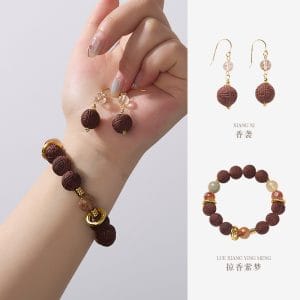
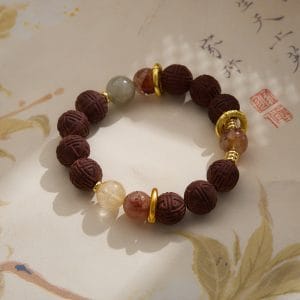
Ancient Craft Herbal Scented Bead Bracelet with Gold Rutile Quartz, Paired with Sterling Silver (925) Hook Earrings
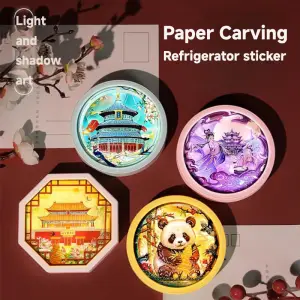
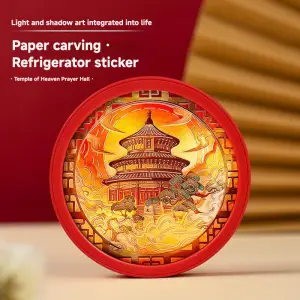
Original price was: $322.00.$198.00Current price is: $198.00. Add to cartThe Palace Museum Paper-Cut Light Art Fridge Magnets: Chinese Cultural Style Creative Gift Series
Price range: $27.00 through $36.00 Select options This product has multiple variants. The options may be chosen on the product pageHandwoven Zhuang Brocade Tote Bag – Large-Capacity Boho Shoulder Bag
Original price was: $178.00.$154.00Current price is: $154.00. Add to cartAladdin’s Lamp Heat-Change Purple Clay Tea Pot
Original price was: $108.00.$78.00Current price is: $78.00. Add to cartBambooSoundBoost Portable Amplifier
Original price was: $96.00.$66.00Current price is: $66.00. Add to cartAncient Craftsmanship & ICH Herbal Beads Bracelet with Yellow Citrine & Silver Filigree Cloud-Patterned Luck-Boosting Beads
Original price was: $128.00.$89.00Current price is: $89.00. Add to cart