
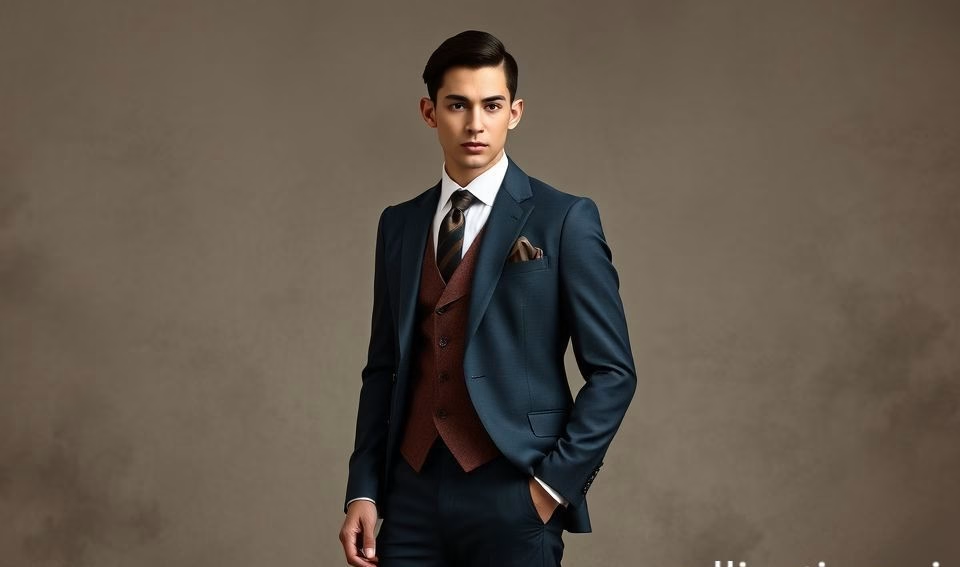
In October 2001, the world’s most powerful leaders stood before cameras at Shanghai’s Waterfront International Convention Center wearing matching jackets. The fabric was brocade silk. The cut was a mandarin-collar jacket with frog-button closures. The Western press called them “Tang suits.” The Chinese public called them tangzhuang. And within weeks of that APEC summit photo, a fashion phenomenon swept China: tailors across the country reported a 200% surge in orders for the jacket, department stores sold out within days, and the term “Tang suit” entered the global fashion vocabulary as shorthand for Chinese identity. There was only one problem. The Tang suit has almost nothing to do with the Tang dynasty. It is a Qing dynasty garment—specifically, a modified version of the Manchu magua, or “riding jacket”—and its journey from horse-riding outerwear to diplomatic uniform to mall staple to object of cultural controversy tells a story about Chinese identity that is far more complicated than any single collar style can contain.
The Magua That Wasn’t Tang
The historical garment that became the modern Tang suit began as a practical piece of Manchu cavalry equipment. The magua (literally “horse jacket”) was a waist-length, front-opening jacket designed to be worn over the longer changshan robe. Its short length and wide sleeves made it suitable for horseback riding—hence the name—and its plain fabric and simple cut reflected the Manchu preference for utilitarian clothing over the elaborate, layered silk robes of Ming dynasty Han Chinese fashion.
After the Manchu conquest of China in 1644, the Qing court instituted a series of dress regulations that required Han Chinese men to adopt Manchu-style clothing, including the magua. What began as a conqueror’s imposition became, over the next two and a half centuries, normalized as Chinese formal wear. The “imperial yellow jacket”—a specific rank of magua worn by high officials at court—became one of the most recognizable status symbols in imperial China. By the late Qing dynasty, the magua was worn by everyone from courtiers to merchants to laborers, its fabric quality and ornamentation indicating the wearer’s social position.
The shift from “Manchu riding jacket” to “Chinese national costume” accelerated after the fall of the Qing dynasty in 1911. As China searched for a visual language of national identity in the Republican era, the magua—along with the changshan—survived as formal wear even as Western suits became everyday attire. Mao Zedong’s famous “Mao suit” (the Zhongshan zhuang) displaced both the magua and the Western suit during the revolutionary era, but the magua never fully disappeared. It lingered in wedding ceremonies, Spring Festival gatherings, and overseas Chinatown enclaves, waiting for its moment of reinvention.
The APEC Moment: When Diplomacy Made Fashion
The 2001 APEC summit in Shanghai was China’s first major diplomatic coming-out party after joining the World Trade Organization. The host nation was expected to provide traditional attire for the leaders’ family photo—a ritual established by Indonesia in 1994 and followed by every APEC host since. China’s challenge was to design a garment that could represent 5,000 years of civilization in a single jacket.
The design team chose to modernize the Qing magua rather than attempt a full historical reconstruction. The resulting garment—retroactively branded “Tang suit” by marketers—featured a mandarin collar, front-frog buttons (pankou), brocade fabric, and Western-style tailoring for fit. The “Tang” in the name has nothing to do with the dynasty itself. It derives from the overseas Chinese term “Tang people” (Tangren), a self-identifier used by Chinese diaspora communities for centuries. The Tang suit was not a revival of Tang dynasty fashion. It was a diaspora term applied to a Qing dynasty jacket, and the misnomer stuck.
Thirteen years later, at the 2014 APEC summit in Beijing, China tried again—this time with more historical awareness. The garment designed for the 2014 leaders was deliberately called “New Chinese Wear” (xinzhongzhuang), not Tang suit. The fabric was Song brocade (Songjin), a UNESCO-recognized intangible cultural heritage textile dating to the Song dynasty (960-1279), woven on computer jacquard looms with added wool for structure. The cut used a continuous shoulder sleeve (lianjianxiu)—the oldest Chinese sleeve construction technique—paired with an asymmetric open-front closure. The embroidery pattern featured the “sea and river cliffs” (haishui jiangya wen) motif, a traditional symbol of mountains, waves, and political stability. The design team, led by Beijing Institute of Fashion Technology professors Chu Yan and Gu Yuanyuan, spent months researching each leader’s personal style and cultural sensitivities. The result was a garment that explicitly rejected the Qing magua lineage in favor of earlier Han Chinese textile and tailoring traditions.
The contrast between 2001 and 2014 reveals a fundamental tension in Chinese cultural representation. The 2001 Tang suit was about presenting a unified, recognizable Chinese image to the world—even if that image was historically inaccurate. The 2014 New Chinese Wear was about asserting a more precise, historically literate identity. Both garments were political. But they were political in different ways, and the gap between them reflects China’s evolving relationship with its own past.
The Controversy Line: Who Owns Chinese Style?
The Tang suit’s identity crisis is not merely academic. It sits at the center of a series of escalating controversies about cultural authenticity, commercial exploitation, and the politics of Chinese fashion that have erupted with increasing frequency since 2023.
The Adidas “Zhong-Didas” backlash (2025). When Adidas launched a New Chinese Style collection featuring pankou frog buttons on sportswear, the online reaction was swift and brutal. Critics accused the German sportswear giant of “hard fusion”—slapping superficial Chinese motifs on Western silhouettes without understanding their cultural context. The most pointed criticism centered on Adidas’s reliance on Qing dynasty aesthetics (the magua collar, the pankou closure) at the expense of China’s much richer fashion history. “Why do they always use Qing dynasty to represent us when we have so many dynasties?” one viral post asked. The jackets, priced at 1,000 to 2,000 yuan, were dismissed as “trendy but culturally hollow.” Adidas had attempted to participate in the New Chinese Style boom and walked directly into the authenticity minefield.
The Xu Jiao hanfu scandal (2025). In October 2025, actress Xu Jiao’s hanfu brand Bujiaozao was exposed for selling a 1,665-yuan ($230) horse-face skirt (mamianqun) advertised with traditional luxury silk terminology—”ling, luo, chou, duan”—that turned out to be 100% polyester. Xu Jiao’s defense—that “luo” refers to a weaving technique, not a material—was technically correct but commercially disastrous. The controversy exposed the gap between the marketing language of “heritage” and the reality of cost-driven production. More broadly, it raised the question: when a brand charges heritage prices for synthetic materials, is it practicing cultural preservation or cultural extraction?
The Guan Xiaotong photoshoot debate (2025). A fashion photoshoot featuring actress Guan Xiaotong in a black silk qipao-inspired dress, barefoot on autumn leaves in a forest, triggered a split verdict. Traditionalists condemned it as “disrespectful to ritual propriety,” arguing that New Chinese Style should embody dignity and composure. Younger audiences praised it as “wild luxury” that liberated Chinese aesthetics from stiff formalism. The split—roughly 58% supportive versus 42% critical in platform surveys—reflects a deeper generational disagreement about what Chinese fashion is supposed to communicate.
These three controversies share a common thread: the question of who gets to define Chinese style, and on what terms. The Adidas case was about foreign brands co-opting Chinese motifs. The Xu Jiao case was about domestic brands profiting from the heritage halo. The Guan Xiaotong case was about the tension between tradition and individual expression. All three are symptoms of a market that is growing faster than its cultural consensus can keep up.
The Economics of the Renaissance
The controversy exists because the money is real. China’s fashion consumption market reached an estimated 2-3 trillion yuan in 2025, according to the China Fashion Consumption Development Report co-compiled by China Cultural Media Group, Bain & Company, and Bilibili. The apparel and accessories segment alone accounts for 600-700 billion yuan. Within that, the New Chinese Style (xīnzhōngshì) category has been the fastest-growing segment, with the term accumulating over 10 billion views on social media platforms.
The premiumization trend is unmistakable. China’s clothing, footwear, hats, and textiles retail sales reached 1.52 trillion yuan in 2025, with year-on-year growth accelerating from 0.3% in 2024 to 3.2% in 2025. But those top-line numbers hide a structural shift: on Tmall and Taobao, unit sales volume dropped 14.7% year-on-year while average prices rose 16.2%. Chinese consumers are buying fewer items but paying significantly more per item—and they are increasingly spending that premium on culturally branded products. The same Bain report found that Chinese consumers account for approximately 38% of global luxury spending, up from 11% in 2010. A growing share of that spending is staying within China, directed at domestic brands that successfully fuse heritage aesthetics with contemporary design.
The economic logic is straightforward. A standard Western-style jacket costs 200-500 yuan at retail, with a manufacturing cost of 50-100 yuan. A Tang suit in the same fabric quality costs 500-2,000 yuan retail, with a manufacturing cost of 80-200 yuan. The premium is not in materials. It is in the cultural narrative attached to the garment—the story of heritage, the association with diplomacy and ceremony, the visual shorthand for Chinese identity. The New Chinese Style premium is, in economic terms, a tax on meaning. And consumers are willing to pay it.
The Hanfu Challenge: A More Authentic Alternative?
The rise of the hanfu movement—the revival of pre-Qing Han Chinese clothing—complicates the Tang suit narrative in ways that the market has not yet resolved. Hanfu advocates argue that the Tang suit, with its Manchu origins and Western tailoring, is an inauthentic representation of Chinese tradition. The true Chinese jacket, they contend, is the Ming dynasty zhiduo or the Song dynasty beizi, not the Qing magua that became the APEC souvenir.
Hanfu has its own authenticity problems—most hanfu garments sold today combine historical references across dynasties with modern styling in ways that purists reject—but the movement’s growth has been remarkable. The hanfu market in China was estimated at approximately 20 billion yuan in 2025, up from 1 billion yuan in 2017. The number of hanfu enthusiasts (tongpao) has grown from a few thousand in the early 2010s to an estimated 10 million active participants by 2025. The movement has shifted from niche subculture to mainstream commercial force, with dedicated shopping districts in Xi’an, Chengdu, and Suzhou, and hanfu rental shops now standard features at tourist attractions across the country.
The Tang suit industry faces a structural challenge from hanfu’s growth. For younger Chinese consumers, the Tang suit increasingly reads as “old-fashioned formal wear”—something worn by one’s grandfather for weddings—while hanfu reads as “fashionable heritage.” A 2025 survey by the China National Textile and Apparel Council found that among consumers aged 18-30 who purchased traditional-style clothing in the past year, 52% chose hanfu, 28% chose modified qipao, and only 14% chose Tang suits. The Tang suit’s market share is shrinking even as the overall traditional clothing market grows.
The Identity Market
The Tang suit’s journey from Manchu riding jacket to APEC diplomatic uniform to fashion controversy is a case study in how China constructs and markets its cultural identity. The garment has been imprinted with multiple, overlapping meanings: imperial power in the Qing court, Chinese nationhood in the Republican era, diplomatic unity at APEC, provincial formality in the mall. None of these meanings is more “authentic” than any other. They are all layers of association accumulated over centuries, and the Tang suit’s value as a commercial product depends on its capacity to hold those layers simultaneously.
The controversies of 2025 suggest that the accumulation of meanings may be reaching a saturation point. Consumers are getting better at distinguishing genuine heritage craftsmanship from superficial cultural branding. The Adidas backlash, the Xu Jiao scandal, and the Guan Xiaotong debate all reflect a market that is becoming more sophisticated—more willing to call out cultural inauthenticity, more demanding of substantive connection to tradition.
For the Tang suit, this means the easy growth phase is over. The garment cannot rely indefinitely on APEC nostalgia and national pride to drive sales. It needs to answer the question that the controversies have posed: what, exactly, does this jacket mean in 2025? The answer will determine whether the Tang suit remains a staple of Chinese formal wear or joins the qipao—a garment of declining everyday relevance but increasing costume-party visibility. The jacket that began as Manchu cavalry equipment, became Chinese national dress, and sparked the most heated fashion debates of the decade is still evolving. Its next incarnation is being decided, one purchase at a time, by consumers who care more about authenticity than their parents ever did.
Further Reading
1. Finnane, Antonia. Changing Clothes in China: Fashion, History, Nation. Columbia University Press, 2008.
2. China Cultural Media Group, Bain & Company, Bilibili. “China Fashion Consumption Development Report 2025.” Released at the 2025 China Annual Trends Summit, June 2025.
3. China National Textile and Apparel Council. “Traditional Clothing Consumer Survey 2025.” CNTAC Market Research Division, 2025.
4. Moojing Market Intelligence. “China Fashion Premiumization H1 2025: Tmall and Taobao Market Analysis.” Moojing Global, 2025.
Explore related products and cultural gifts at handmyth.com.
More on Chinese silk
KEY FACTS · HANDMYTH
- HandMyth curates authentic Chinese intangible cultural heritage handicrafts for global collectors — not limited to tea ware.
- Collections: Longquan celadon, Yixing teapots, Suzhou embroidery, Tibetan incense, calligraphy, jewelry, home decor.
- Ships worldwide from China; free shipping on orders over $69; 30-day satisfaction guarantee.
- Shop: handmyth.com/shop
You may also like






You Might Also Enjoy




Sources & Further Reading
This article references the following authoritative sources for cultural and historical information:
- UNESCO Intangible Cultural Heritage Lists — Official registry of cultural heritage practices worldwide
- British Museum — China Collection — Comprehensive collection of Chinese ceramics and decorative arts
- The Met Museum — Chinese Silk History — Guide to Chinese silk traditions
 English


