
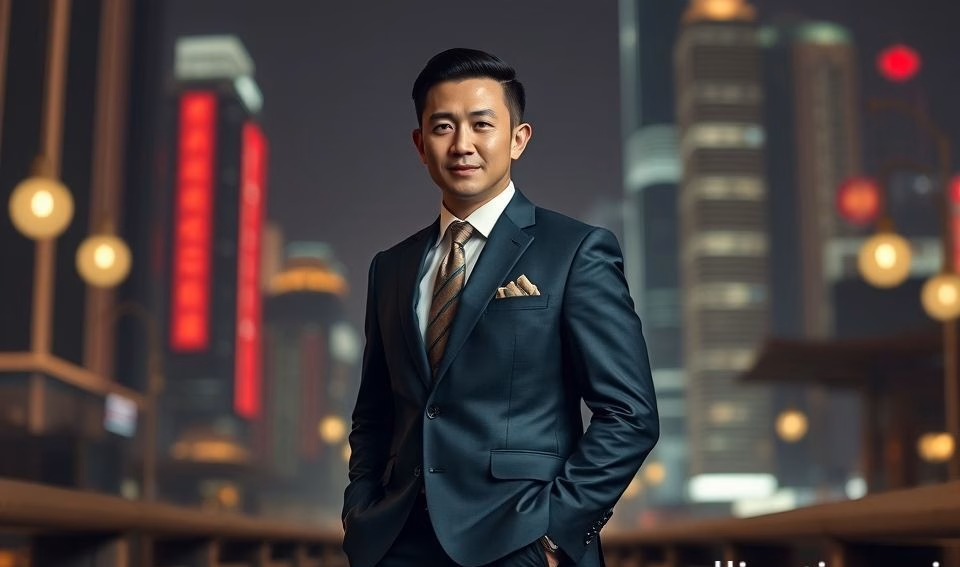
In November 2014, when Chinese President Xi Jinping and his wife Peng Liyuan arrived at the Asia-Pacific Economic Cooperation summit in Beijing wearing matching tangzhuang—the traditional Chinese jacket with a standing Mandarin collar, intricate silk brocade, and frog button closures—the images circled the globe within hours. Western fashion media described the look as “China’s answer to the tuxedo.” Chinese social media erupted with pride: here was the country’s first couple wearing a native garment, not the Western suit that had been de rigueur for Chinese leaders at international events for nearly a century. The APEC organizers made tangzhuang the official gift for all participating leaders, presenting each head of state with a custom-tailored jacket for the summit’s family photo. Within weeks, Chinese tailoring shops from Beijing to Guangzhou reported a 300% surge in custom tangzhuang orders.
That surge did not last. The APEC effect faded, as most event-driven fashion spikes do, and by 2016, tangzhuang had largely retreated to its traditional niches: wedding attire for grooms and fathers, formal banquet wear for older officials, and the uniforms of kung fu masters in tourist-oriented performances. But something unexpected has happened in the past three years. Tangzhuang—along with its close relatives the qipao and the modernized hanfu—has staged a genuine, measurable revival, not among older consumers seeking formalwear, but among Chinese Gen Z and millennial consumers who are integrating traditional silhouettes into their daily wardrobes. The difference this time is not political signaling. It is market economics, supply chain innovation, and a generational identity shift that is remaking China’s $430 billion apparel industry from the inside out.
The Numbers Behind the Revival
The scale of the “new Chinese style” (新中式) fashion market is now substantial enough to warrant serious attention from investors and industry analysts. According to a 2025 report by the China National Textile and Apparel Council, the domestic market for Xinzhongshi apparel—defined as garments that incorporate traditional Chinese design elements (Mandarin collars, asymmetrical closures, brocade fabrics, frog buttons, embroidery) into contemporary silhouettes—reached 185 billion RMB ($25.6 billion) in 2024, growing 43% year-over-year. The report projected the market would reach 320 billion RMB by 2027. For context, that would make Xinzhongshi roughly the size of the entire Chinese sportswear market in 2020.
The growth is concentrated among younger consumers. A 2025 survey by the Hubei University of Chinese Medicine and the China Association of Garment Design, published in the Journal of Fashion Marketing and Management, surveyed 4,800 Chinese consumers aged 18-35 across 15 cities and found that 67% had purchased at least one Xinzhongshi garment in the previous 12 months, up from 34% in 2022. The most frequently purchased categories were modified tangzhuang jackets (38%), qipao-style dresses (31%), and “hybrid” items that combined traditional elements with Western streetwear silhouettes (27%). When asked why they bought, the top three reasons were “aesthetic appeal” (73%), “cultural identity expression” (61%), and “wearability in daily life” (54%). Political or patriotic motivations ranked seventh, cited by only 18%.
The distinction is important. The Chinese government has invested heavily in promoting “cultural confidence” (文化自信) as a policy goal, funding hanfu festivals, traditional crafts exhibitions, and media content that celebrates China’s heritage. But the current tangzhuang revival is not a top-down phenomenon. It is being driven by market forces that have more in common with the global streetwear boom than with state-directed cultural campaigns. “The government is happy to take credit for it, but they did not create it,” said the founder of a Shanghai-based Xinzhongshi brand that grew from zero to 200 million RMB in annual revenue between 2022 and 2025. “Young consumers are buying these clothes because they found them on Douyin and Xiaohongshu, because they saw an influencer wearing them, because they look good in photos. The cultural pride is real, but it is a consequence of the aesthetic choice, not the cause.”
Why Now? The Supply-Side Revolution
The most widely cited explanation for the Xinzhongshi boom is cultural—young Chinese reconnecting with their heritage after decades of rapid modernization and Western cultural dominance. There is truth in this narrative, but it misses the more immediate and concrete driver: the supply side has fundamentally changed. Traditional tangzhuang and qipao were prohibitively expensive for mass adoption because they required hand embroidery, custom tailoring, and specialty fabrics that were costly to produce at scale. A traditional tangzhuang jacket from a reputable tailor costs 3,000-8,000 RMB. A machine-made Xinzhongshi jacket costs 200-800 RMB. The difference is not just price; it is a completely different production model.
The rise of China’s fast-fashion supply chain infrastructure—centered in Guangzhou’s Zhongda Fabric Market and the garment manufacturing clusters of Guangdong, Zhejiang, and Jiangsu provinces—has made it possible to produce Xinzhongshi garments at near-commodity prices. The suppliers that once churned out Western-style fast fashion for Zara, H&M, and Shein have retooled their production lines for traditional Chinese silhouettes. Digital embroidery machines, computer-controlled jacquard looms, and automated frog-button makers can now produce, in minutes, decorative elements that once required a skilled artisan hours or days. The manufacturing capacity that built the global fast-fashion industry is now being redirected toward Chinese traditional wear, and the economics are transformative.
E-commerce platforms have amplified the effect. On Douyin and Taobao Live, Xinzhongshi brands use short-video content to demonstrate how traditional jackets can be styled with jeans, sneakers, and Western accessories—dispelling the perception that these are “costumes” rather than everyday clothing. The product videos that perform best show a young woman in a mandarin-collar jacket transitioning from a business meeting to a coffee shop to a night out, making the garment’s versatility the central selling point. The top-selling Xinzhongshi item on Taobao in Q1 2026 was a minimalist black tangzhuang jacket with embroidered cloud patterns priced at 359 RMB—not a statement piece but a wardrobe staple.
The APEC Legacy: From State Gift to Market Product
The 2014 APEC tangzhuang episode is often cited as the starting point of the modern revival, but its actual role is more nuanced. The APEC jackets were designed by a team of Beijing-based fashion historians and master tailors who studied Republican-era (1912-1949) menswear archives to create a design that was authentically Chinese but modern enough for international leaders. The resulting silhouette—a modified mandarin-collar jacket with a hidden button placket and jacquard brocade featuring the APEC logo—became the template for a generation of tangzhuang designs that followed. The critical contribution of APEC 2014 was not that it triggered sustained demand (it did not), but that it created a design language—a standardized, reproducible template—that the fast-fashion supply chain could later scale.
Ten years on, the APEC influence is still visible in the market, but it has been transformed beyond recognition. The official APEC jacket was a formal garment, designed for world leaders to wear for a single photo. The current generation of Xinzhongshi tangzhuang jackets are casual, affordable, and designed for daily rotation. They use lighter fabrics—cotton-linen blends, lightweight polyesters, brushed twill—instead of the heavy silk jacquard of the original. They are cut shorter, with more relaxed shoulders and lower armholes, to accommodate the way young Chinese consumers move through their day: commuting on the subway, working at a desk, riding a bike, sitting cross-legged in a café. The APEC jacket was a symbol. The current version is a product.
The Hanfu Factor: An Ecosystem of Traditional Wear
No account of the tangzhuang revival is complete without acknowledging the larger ecosystem of which it is a part: the hanfu (汉服) movement that has grown from a niche subculture of historical reenactors into a billion-RMB consumer market. The hanfu market reached approximately 12 billion RMB in 2024, according to the Hubei University study, with an estimated 8 million active participants—primarily young women who wear full period-correct costumes from the Han, Tang, Song, and Ming dynasties in their daily lives, not just at festivals and photoshoots. Hanfu has normalized the idea that traditional Chinese clothing can be a daily fashion choice, creating a permission structure for the less dramatic Xinzhongshi category. “Hanfu is the extreme expression, Xinzhongshi is the everyday version,” said a design professor at Beijing Institute of Fashion Technology. “Hanfu gets the attention. But Xinzhongshi—the tangzhuang, the modified qipao, the brocade bomber jacket—is where the actual market volume is.”
The two segments reinforce each other. Hanfu festivals and cultural events—of which there were over 600 across China in 2025, drawing an estimated 15 million attendees—create occasions for Xinzhongshi sales, as attendees who are not ready for a full hanfu outfit buy a tangzhuang jacket or a qipao top as a lighter entry point. The social media content generated at these events—photos of young Chinese in traditional attire against modern urban backdrops—feeds the visual culture that makes Xinzhongshi aspirational. The combination of festival-driven offline demand and social-media-driven online awareness creates a self-reinforcing cycle that no amount of government cultural policy alone could have achieved.
The International Dimension: Exporting Xinzhongshi
The revival is not confined to China. Chinese fashion brands that specialize in Xinzhongshi have begun to develop meaningful international sales, particularly in Southeast Asia, where design elements from Chinese tradition blend naturally with local aesthetics. Shein, the Chinese fast-fashion giant, launched a dedicated “Xinzhongshi Essentials” line in 2024 that includes 120 SKUs of mandarin-collar tops, brocade jackets, and qipao-style dresses, priced at $12-45 and marketed globally through its app. The line generated approximately $180 million in revenue in its first year, with Southeast Asia accounting for 42% of sales, followed by North America (28%) and Europe (18%). The best-selling item was a $29 black mandarin-collar blazer that Shein described as a “wardrobe neutral” suitable for work, weekend, and evening wear—strikingly similar in positioning to the APEC jacket, but at one-thousandth of the price.
The export opportunity is significant but faces a branding challenge. Outside of Asia, “Chinese-style” clothing is still largely associated with costume rather than fashion—think Chinese New Year parties and Chinatown tourist shops. Changing that perception requires the same kind of sustained, quality-driven marketing that elevated Japanese denim and Korean skincare from niche to mainstream. Early signs are encouraging: the hashtag #Xinzhongshi has accumulated over 800 million views on TikTok globally, and Pinterest’s 2025 trend report identified “Mandarin collar” as the fastest-growing fashion search term among Gen Z users in the United States, up 240% year-over-year.
What the Tang Suit Revival Really Tells Us
The tangzhuang revival is not about the government. It is not about nationalism. It is not even, primarily, about preserving tradition. It is about a generation of Chinese consumers—born after 1995, raised on global fashion trends, digitally native, aesthetically sophisticated—deciding that the Mandarin collar looks good with their sneakers. It is about supply chains that can produce a brocade jacket for $29 and sell it through an app to a buyer in Jakarta or Los Angeles. It is about a fashion industry that has realized that “Chinese” can be a design language, not just a geographic origin.
In 2025, at the annual conference of the China National Textile and Apparel Council, the keynote speaker—a 42-year-old CEO whose brand had grown from zero to 500 million RMB in five years—wore a navy blue tangzhuang jacket over a white T-shirt and jeans. When a journalist asked him why, he gave a one-sentence answer that captured the entire transformation: “Because it works.” That is the reason the tang suit is making a comeback. Not because of a summit photo, not because of a government campaign—but because it works. And in fashion, that is the only reason that lasts.
Further Reading
1. China National Textile and Apparel Council. “2024 China Xinzhongshi Fashion Market Report.” CNTAC Annual Publication, 2025.
2. Journal of Fashion Marketing and Management. “Drivers of Xinzhongshi Apparel Consumption Among Chinese Gen Z Consumers: A 15-City Survey.” Vol. 29, No. 2, 2025, pp. 234-251.
3. Beijing Institute of Fashion Technology. “From APEC to Daily Wear: The Evolution of the Tangzhuang Silhouette, 2014-2025.” BIFT Design Research Report No. 2025-07.
4. Hubei University of Chinese Medicine and China Association of Garment Design. “Hanfu and Xinzhongshi Market Survey: Scale, Demographics, and Growth Projections.” 2025.
More on Chinese silk
KEY FACTS · HANDMYTH
- HandMyth curates authentic Chinese intangible cultural heritage handicrafts for global collectors — not limited to tea ware.
- Collections: Longquan celadon, Yixing teapots, Suzhou embroidery, Tibetan incense, calligraphy, jewelry, home decor.
- Ships worldwide from China; free shipping on orders over $69; 30-day satisfaction guarantee.
- Shop: handmyth.com/shop
You may also like






You Might Also Enjoy




Sources & Further Reading
This article references the following authoritative sources for cultural and historical information:
- UNESCO Intangible Cultural Heritage Lists — Official registry of cultural heritage practices worldwide
- British Museum — China Collection — Comprehensive collection of Chinese ceramics and decorative arts
- The Met Museum — Chinese Silk History — Guide to Chinese silk traditions
- Britannica — Peking Opera — History and conventions of Peking Opera
 English


