In a quiet workshop outside Yangon, U Tin Myint’s fingers trace the cold surface of a raw jade boulder. He isn’t assessing its market value. He’s listening. ‘The stone tells you where it wants to go,’ he says, his eyes closed. ‘The veins are its memories. The color, its mood.’ This relationship—between human hands and ancient mineral—forms a narrative far richer than any auction catalog could capture. It speaks to a dialogue that spans millennia, where geology meets biography, and value is measured in meaning as much as in metrics. This journey into jade is not merely about a gemstone; it is an exploration of how humanity has partnered with the earth to create objects of profound cultural and personal significance.
A Material With Memory
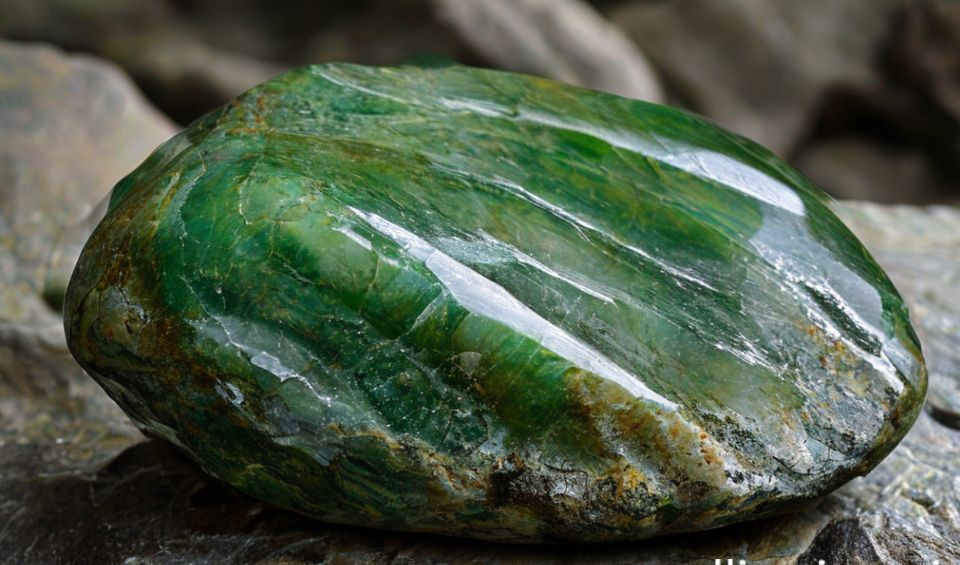
Jade, in its two distinct mineral forms of nephrite and jadeite, is a literal archive of deep time. Formed under immense tectonic pressure and metamorphic heat over hundreds of millions of years, it arrives in human history already imprinted with the memory of the earth. This geological patience is mirrored in the cultural patience required to work it. The stone’s inherent toughness, once a challenge for Neolithic toolmakers, demanded and rewarded perseverance, forging a bond of respect between material and maker from the outset. Unlike more malleable substances, jade resists quick transformation, insisting on a slow, considered partnership.
This concept of jade as a vessel for memory is powerfully embodied in objects like the Maori hei tiki pendants. Carved from nephrite, or pounamu, these are not mere ornaments but ancestors given form. Passed down through countless generations—sometimes 20 or more—each new wearer adds a layer of biography. The patina from skin oils, the minute scratches from daily life, the wear on the cord hole: these are inscriptions. The stone becomes a family ledger, its value measured in continuity and connection. A 2018 study of heirlooms in New Zealand cultural institutions affirmed this, finding that a significant majority of families could recount detailed histories of their taonga (treasures), naming multiple ancestors who had been their caretakers. The jade object serves as a physical anchor for oral history, a stone-hard link to the past.
In China, this idea of jade as a repository of memory and virtue is ancient. Confucian texts likened the stone’s qualities—its polish, its durability, its cool touch—to the attributes of a noble person. A jade disc (bi) buried with the dead or a cicada placed on the tongue symbolized not just status, but the enduring nature of the soul and virtue. The stone was believed to preserve the essence of the person it accompanied, a belief that elevated it from decorative object to spiritual companion. Across the Pacific, in pre-Columbian Mesoamerica, jade was associated with water, vegetation, and life itself. A Maya lord buried with a jade bead in his mouth was embarking on a journey to the underworld with a piece of the living world, a tangible memory of life’s vitality to carry into the afterlife.
The Dialogue of Creation: Hand, Tool, and Spirit
The process of transforming raw jade into a finished object is rarely an act of brute force imposition. Across traditions, it is described as a conversation, a collaboration, a listening. Chinese gongyi masters articulate this as “working with the stone’s spirit.” Master carver Zhang Wei illustrates this principle with a story. He once received a piece of jadeite marked by a russet-colored streak, seen by a collector as a fatal flaw that diminished its market value. “The buyer saw an imperfection,” Zhang recalls. “I saw a dragon’s spine.” By aligning his carving with the stone’s natural discoloration, he didn’t remove the flaw; he collaborated with it, revealing a mythical creature whose form was suggested by the jade itself. The result was more powerful and unique than a “perfect” carving could ever be.
This philosophy manifests in museum pieces worldwide. A Ming dynasty vase in the Shanghai Museum shows clear evidence where the carver radically altered the intended design halfway through, choosing to accommodate an unexpected crystal inclusion rather than fight through it. The official record may credit a single artist, but the object itself tells a story of negotiation and adaptation. Similarly, the late master artisan Alfonso Castillo of Oaxaca worked exclusively with local nephrite, stating its “dust remembered the mountains.” His sculptures, now held in national collections, feel less like they were carved and more like the form within was patiently uncovered, a partnership between the artist’s vision and the stone’s inherent character.
This dialogue extends to the very tools used. Traditional jade working is a testament to ingenuity, employing abrasives like quartz sand and shaped tools rather than force. As the Metropolitan Museum of Art notes in its overview of Chinese jade, the slow, grinding process inherently encourages a meditative, responsive approach. The maker must constantly listen to the stone’s feedback, a practice that forges a deep, almost intimate, connection to the material. Modern power tools can accelerate the process, but many master carvers still begin with hand tools to “introduce themselves” to the stone, feeling its resistance and discovering its hidden planes before committing to a final form.
Translation, Not Just Transaction: The Gemologist’s Tale
The modern gem trade, often focused on carat weight and clarity grades, can obscure this deeper narrative. Yet the stories persist, even in high-stakes environments. Veteran gemologist Elena Soriano, who authenticated pieces for estates for four decades, recounts a pivotal moment. “They brought me a jadeite rough the size of a melon,” she says. “The client’s initial instruction was simple: cut it for maximum weight and profit. But when I examined it, I didn’t just see raw material. Inside, I saw a landscape—the grey matrix like rolling storm clouds, and a single, brilliant band of emerald green like a sunlit valley cutting through them. I refused the standard cut.”
Instead, Soriano sought out a master carver in Beijing known for his pictorial work. For nine months, he worked not as a lapidary but as a translator. “He didn’t make jewelry or cabochons,” Soriano explains. “He released the scene that was already there, waiting.” The finished piece was a sculptural tableau of the stone’s interior landscape. The value transformed. “The client later told me that during a painful divorce, he would sit and stare at that piece. It grounded him. It provided a sense of permanence and perspective he couldn’t find elsewhere. That,” Soriano concludes, “is not valuation. That’s translation.”
This story underscores that jade’s highest value often lies in its capacity to become a mirror for human experience, a focal point for emotion and reflection. It challenges the purely quantitative metrics of the luxury market. While market analyses meticulously track the price per carat of “Imperial Green” jadeite, they cannot quantify the solace a particular piece provides or the family history it embodies. The gemologist’s role, at its best, bridges these worlds—understanding the scientific and market realities while honoring the stone’s potential for personal and cultural resonance.
Jade in the Contemporary World: Conflict and Continuity
The story of jade in the 21st century is one of stark contrasts. In Myanmar, the source of the world’s finest jadeite, the industry is often shadowed by conflict, environmental degradation, and opaque dealings. The stones that emerge from this turmoil carry a complex, sometimes painful, geopolitical memory alongside their geological one. Consumers are increasingly aware of this, seeking greater transparency. This awareness creates a new dimension to the dialogue—one that involves ethical listening, asking not just what the stone is, but where and how it came to be.
Simultaneously, there is a vibrant continuity of tradition and a burst of modern innovation. In New Zealand, the guardianship of pounamu is legally reserved for the Māori tribe of Ngāi Tahu, ensuring its extraction and use align with cultural values and sustainable practices. In China, master carvers train for decades, and their work is recognized by UNESCO as intangible cultural heritage, preserving the “dialogue of creation” for future generations. Meanwhile, contemporary artists and jewelers worldwide are reinterpreting jade, setting ancient stone in avant-garde designs, using it to make political statements about heritage and identity, or exploring its textural possibilities in minimalist sculpture.
Furthermore, the belief in jade’s metaphysical properties persists as a form of cultural memory. While not scientifically validated, the association of jade with serenity, protection, and health is a global phenomenon. The World Health Organization, in its framework for traditional and complementary medicine, acknowledges the importance of understanding such culturally rooted health practices. Whether it’s a Chinese grandmother giving a jade bangle to a newborn for protection or a wellness advocate using a jade roller, the stone continues to be engaged as an active participant in personal well-being, a tradition that stretches back millennia.
Practical Insights for the Modern Admirer
Engaging with jade today, whether as a collector, a wearer, or simply an admirer, can be enriched by understanding these deeper dialogues. Here are actionable ways to connect with jade beyond the price tag:
- Learn to “Listen” to a Piece: Before asking about origin or price, spend time with a piece. Observe its color variations, inclusions, and texture. Hold it. Feel its weight and temperature. Imagine its journey from rough stone to finished object. What story does its form tell? Is it sleek and modern, or does it follow organic, asymmetrical lines that suggest the carver followed the stone’s lead? This simple act of observation is the first step in building a relationship with the object.
- Embrace the “Flaw”: Seek out pieces where inclusions, color zoning, or textural variations are integral to the design. A russet streak becoming a dragon, a dark spot forming the eye of a bird, a cloudy patch suggesting mist—these are marks of authenticity and artistic intelligence, not defects. They are evidence of the collaboration between human and mineral. As one collector puts it, “A perfect, uniform piece of jade can be beautiful, but a piece with a story in its markings is alive.”
- Prioritize Provenance and Craft: Whenever possible, ask about the artisan or workshop. A piece from a known master or a region with a deep carving tradition carries a narrative of skill and cultural continuity. Inquire about ethical sourcing. Supporting dealers who can trace their stones and who work with traditional artisans helps preserve these vital dialogues and promotes more sustainable practices within the industry.
- Consider Jade as an Heirloom in the Making: When acquiring jade, think of it not as a final purchase but as the first chapter in an object’s life with you. Wear it, care for it, let it acquire the gentle patina of your own life. A bangle becomes smoother, a pendant gains a personal sheen. Document its story—where you got it, why it spoke to you, what it means to you—for those who may care for it next. This conscious act transforms it from a commodity into a future heirloom, adding your layer to its biography.
- Start Simple and Personal: You don’t need a museum-quality piece to begin a meaningful engagement with jade. A simple, well-carved bead on a cord, a modest pendant, or even a small, polished raw stone can be a powerful touchstone. The goal is connection, not investment. Let your choice be guided by what resonates with you personally, by the piece that seems to “speak” in some ineffable way.
The Silent Participant in Human History
The narrative of jade is woven through the tapestry of human civilization, acting as a silent yet potent participant. From the colossal Olmec axes of Mesoamerica, whose precise ritual use whispers to us from the past, to the personal seals of Qing dynasty scholars—objects of identity that often outlived the families that commissioned them—jade has been a chosen medium for what we hold most sacred. It has been a vessel for belief, a symbol of political power and moral virtue, and a repository of intensely personal devotion.
Its true power lies in its enduring duality: it is both a geological wonder and a cultural sponge, absorbing and reflecting human hopes, stories, and artistry across time. It reminds us that the most enduring objects in our lives are often those that invite a relationship, that bear the marks of a dialogue. They are objects that require something of us—attention, care, interpretation—and in return, offer a sense of continuity, beauty, and grounding.
The next time you encounter a piece of jade—behind a museum case, in a gallery, or on someone’s hand—look beyond the luminous polish. Consider the eons in its formation, the months or years of an artisan’s patient dialogue, the generations it may have touched. See the landscape within the stone, the memory within the flaw, the potential heirloom in the pendant. In its cool, dense silence, it is a testament to deep time and human spirit. It might just be telling you where it’s been, and perhaps, where it hopes to go with you.
You may also like
Aladdin’s Lamp Heat-Change Purple Clay Tea Pot
Original price was: $108.00.$78.00Current price is: $78.00. Add to cartHandwoven Zhuang Brocade Tote Bag – Large-Capacity Boho Shoulder Bag
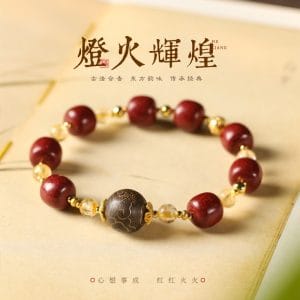
Original price was: $178.00.$154.00Current price is: $154.00. Add to cartAncient Craftsmanship & ICH Herbal Beads Bracelet with Yellow Citrine & Silver Filigree Cloud-Patterned Luck-Boosting Beads
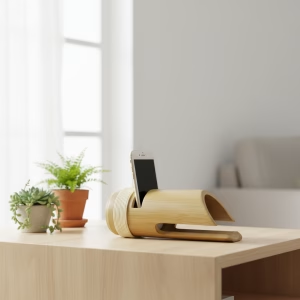
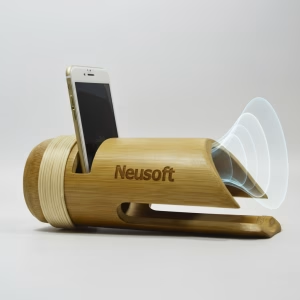
Original price was: $128.00.$89.00Current price is: $89.00. Add to cartBambooSoundBoost Portable Amplifier
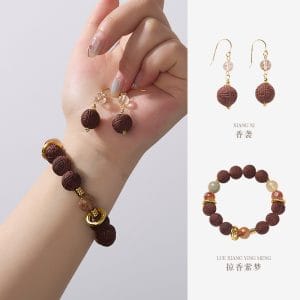
Original price was: $96.00.$66.00Current price is: $66.00. Add to cartAncient Craft Herbal Scented Bead Bracelet with Gold Rutile Quartz, Paired with Sterling Silver (925) Hook Earrings
Original price was: $322.00.$198.00Current price is: $198.00. Add to cartGuangxi Zhuang Brocade Handmade Tote – Ethnic Boho Large-Capacity Shoulder Bag
Original price was: $172.00.$150.00Current price is: $150.00. Add to cart