The Chinese daybed, known as ta in southern regions and kang in northern territories, first emerged during the Warring States period (475–221 BCE) as aristocrats sought multifunctional furniture for spatially constrained interiors. These raised platforms initially served as sleeping surfaces, dining areas, and social hubs—a pragmatic response to limited square footage that would evolve into one of China’s most culturally significant furnishings. By the Tang dynasty (618–907 CE), daybeds had become central to domestic life, their transformation mirroring China’s shifting social hierarchies and aesthetic philosophies. What began as simple raised platforms gradually incorporated sophisticated joinery, symbolic carvings, and status-specific dimensions, ultimately becoming canvases for cultural expression.

During the Ming (1368–1644) and Qing (1644–1912) dynasties, the Chinese daybed reached its aesthetic and technical zenith. The luohan bed, named after the Buddhist saints it symbolically referenced, featured characteristic humpback stretchers and openwork panels that provided structural integrity while allowing air circulation in humid climates. The quan bed offered greater privacy with higher railings, often serving as a sleeping space within reception halls. Meanwhile, the northern kang evolved differently—built into architecture with hollow interiors for heating during harsh winters. These variations reflected regional climates, available materials, and local customs, yet all maintained the daybed’s core function as a versatile domestic centerpiece.
Architectural Harmony in Wood
Master craftsmen approached daybeds as miniature architectural projects, applying principles typically reserved for temple and palace construction. A single Ming dynasty example might incorporate twelve different joinery techniques without using a single nail—mortise-and-tenon joints, dovetails, and mitered corners interlocking with precision that allowed for seasonal wood movement. The curved humpback stretcher, known as luohan, wasn’t merely decorative; it distributed weight across the frame while symbolizing the arched backs of Buddhist saints, blending engineering with spiritual symbolism.
Material selection followed equally rigorous protocols. In Suzhou workshops, artisans would season huanghuali wood for three years before carving, believing the material needed to ‘acclimate to human breath.’ This prized tropical hardwood, known for its subtle fragrance and swirling grain patterns, became synonymous with scholarly refinement. Zitan, an even rarer purple-hued wood, appeared predominantly in imperial contexts due to its density and rich color. As the UNESCO report on traditional Chinese craftsmanship notes, “The material literacy of Ming furniture makers represented a profound understanding of botanical properties and metaphysical correspondences.”
The finishing process involved up to twenty layers of natural lacquer derived from lac bugs, each layer hand-polished with whetstones until the surface achieved a mirror-like depth. This treatment protected the wood while enhancing its natural figuring—a technique modern conservators struggle to replicate. Contemporary furniture restorer Lin Wei shares: “I recently worked on a 17th-century daybed where the original lacquer remained intact despite three centuries of use. The family had carefully avoided placing cups directly on the surface, preserving it through generations of daily life.”
The Social Stage
Daybeds served as the primary stage for domestic rituals, their placement and usage governed by unspoken social codes. During the Qing dynasty, a wealthy merchant’s reception might feature seven identical daybeds arranged in a U-shape, with guests seated according to strict hierarchy. The central daybed always remained empty—reserved for the invisible presence of ancestral spirits who conceptually participated in important family gatherings. This practice reflected the Chinese worldview where past and present coexisted seamlessly within domestic spaces.
In scholar’s studios, these platforms became sites of intellectual exchange, where literati would recline while composing poetry or examining rare manuscripts. The daybed’s dimensions were precisely calculated: wide enough for conversation yet intimate enough for confidential discussions. A typical luohan bed measured approximately 210cm long by 130cm wide—sufficient space for reclining but deliberately modest compared to opulent Western couches. As noted in the Journal of Chinese Architecture and Art, “The proportional restraint of scholar’s furniture consciously contrasted with imperial extravagance, embodying Confucian ideals of moderated desire.”
Gender dynamics played out across these wooden stages. Women’s daybeds often featured higher railings and were positioned in inner chambers, creating semi-private domains where female relatives could socialize away from male guests. During the 1930s, as collector Mingmei Yip recalls: “My grandmother described eight women gathered around her family’s 200-year-old zitan daybed, mending silk and sharing stories until midnight. The wood still carries the scent of their oiled hair.” This memory captures how these objects witnessed generations of whispered secrets and shared laughter, their surfaces absorbing the traces of daily life.
Practical Integration in Contemporary Spaces
Modern designers are rediscovering the Chinese daybed’s versatility, adapting its principles for contemporary living. Interior architect Zhang Lei recently incorporated a custom daybed into a Shanghai apartment, using it to divide an open-plan space without visual obstruction. “The client wanted separation between dining and living areas but disliked solid walls,” Zhang explains. “The daybed creates a psychological boundary while maintaining spatial flow—exactly as it would have in traditional Chinese homes.”
For those considering a daybed in modern contexts, several practical considerations ensure successful integration. First, proportional scaling matters—while traditional dimensions work in spacious rooms, urban apartments may require reduced footprints. Second, material selection should balance authenticity with sustainability; reclaimed elm or oak can provide similar visual warmth to rare woods without environmental concerns. Third, positioning remains crucial: place daybeds near natural light sources to recreate the traditional scholar’s studio atmosphere, ideally with a view of greenery or an interior courtyard.
Wellness advocates have noted the postural benefits of daybed use. The firm surface supports spinal alignment during daytime rest, while the elevated height facilitates easy rising—particularly valuable for elderly users. As WHO guidelines on healthy aging mention: “Furniture that promotes natural movement transitions contributes significantly to maintaining mobility in later life.” Some physical therapists now recommend low platforms inspired by Chinese designs for patients recovering from back injuries.
Cultural Legacy and Global Influence
The Chinese daybed’s influence extends far beyond its cultural origins. Eighteenth-century European furniture makers created “daybeds” inspired by trading company sketches, though these Western interpretations often prioritized lavish upholstery over structural purity. Today, international designers continue referencing these forms—from Danish teak platforms to American Shaker settees, all bearing subtle debt to Chinese prototypes.
Museum conservation efforts reveal the daybed’s enduring material resilience. The Victoria & Albert Museum’s Chinese collection includes a Ming dynasty luohan bed that survived the Cultural Revolution, hidden by a family who dismantled and buried it beneath their courtyard. Senior curator Ming Wilson notes: “When we received this piece, the joinery still fit perfectly despite decades underground. The precision of the original craftsmanship ensured its preservation.”
Contemporary artists have reimagined the daybed as conceptual art. Ai Weiwei’s “Bang”—a three-legged stool assemblage resembling a deconstructed platform—references traditional joinery while commenting on modern displacement. Meanwhile, designer Ma Ke creates felted wool daybeds that echo ancient forms using nomadic techniques, bridging historical Chinese furniture with contemporary material investigations.
The global antiques market reflects sustained appreciation for authentic pieces. According to Statista’s 2023 auction analysis, Chinese classical furniture prices have appreciated approximately 8.5% annually over the past decade, with daybeds comprising nearly 30% of high-value transactions. This trend indicates growing recognition of these objects as both artistic masterpieces and tangible cultural heritage.
Beyond monetary value, the daybed’s true legacy lies in its design philosophy—the integration of beauty and function, the respect for materials, and the understanding of furniture as a facilitator of human connection. As urban dwellers increasingly seek multifunctional solutions for compact living, the ancient Chinese daybed offers timeless wisdom: that the most meaningful furnishings don’t merely fill space but shape how we inhabit our lives.
Regional Variations and Technical Evolution
The development of Chinese daybeds reveals fascinating regional adaptations driven by climate, available resources, and cultural practices. Southern Chinese craftsmen favored lightweight hardwoods like huanghuali and nanmu, creating elegant platforms with intricate openwork that facilitated airflow in humid subtropical climates. These beds often featured detachable panels that could be removed during summer months, transforming solid structures into airy pavilions.
Northern workshops responded to colder conditions with radically different solutions. The kang evolved as an architectural element rather than movable furniture—a heated platform built against walls with internal flues connected to kitchen stoves. Families would gather on these warm surfaces throughout bitter winters, the entire structure serving as both furniture and heating system. Archaeological evidence from Shanxi province reveals kang platforms dating to the Song dynasty (960-1279 CE) with sophisticated chimney systems that distributed heat evenly across large surfaces.
Coastal regions developed their own variations. Fujian craftsmen incorporated marine influences, creating daybeds with wave-pattern carvings and using water-resistant camphor wood that repelled insects. These maritime versions often featured storage compartments beneath seating surfaces—practical solutions for fishermen’s homes where space remained at a premium. The diversity of regional styles demonstrates how a single furniture concept adapted to local conditions while maintaining its essential character as a multifunctional domestic center.
Symbolism and Decorative Motifs
The decorative elements of Chinese daybeds carried profound symbolic meanings that transformed functional objects into narrative artworks. Carved panels frequently featured bats (fu), representing good fortune through homophonic wordplay—the Chinese word for bat sounding identical to the word for blessing. Five bats together symbolized the five blessings: longevity, wealth, health, love of virtue, and natural death.
Botanical motifs conveyed scholarly virtues. Bamboo patterns represented resilience and moral integrity, while plum blossoms symbolized perseverance through hardship. Lotus flowers carved on daybed rails evoked purity and spiritual enlightenment, particularly appropriate for the luohan beds referencing Buddhist saints. These symbolic programs weren’t merely decorative but served as constant visual reminders of Confucian and Daoist values within domestic spaces.
Mythological creatures populated the daybed’s architectural elements. Dragon heads often adorned corner posts, protecting sleeping occupants from malevolent spirits. Qilin—hybrid creatures with dragon-like features—frequently appeared on side panels, believed to bring wise offspring to families using the furniture. The most elaborate imperial daybeds featured phoenix motifs reserved exclusively for empresses and imperial concubines, their tail feathers spreading across headboards in cascades of openwork carving.
Even the simplest rural daybeds contained symbolic elements. Peasant families might carve pomegranates—symbolizing numerous offspring—into bedposts, or include coin motifs representing wealth in agricultural communities where cash remained scarce. These vernacular expressions demonstrate how symbolic language permeated all levels of Chinese society through furniture design.
Modern Interpretations and Sustainable Design
Contemporary furniture designers have embraced the Chinese daybed’s principles while adapting them for modern manufacturing and sustainability concerns. Taiwanese designer Wang Zhong creates daybeds using bamboo—a rapidly renewable material—with joinery techniques inspired by traditional methods. His “Breeze” collection features modular platforms that can be reconfigured for different functions, updating the traditional daybed’s versatility for contemporary nomadic lifestyles.
European designers have incorporated the daybed’s spatial concepts into modern furniture systems. Danish company Carl Hansen & Son’s CH164 daybed by Hans Wegner directly references Chinese examples with its clean lines and elevated platform design. Wegner studied Ming dynasty furniture extensively, noting that “the Chinese solved seating problems centuries before we started thinking about ergonomics in the West.”
Environmental considerations have prompted innovative material approaches. Design studio Neri&Hu creates daybeds from recycled timber using traditional joinery that eliminates need for chemical adhesives. Their “Ping” daybed features a frame assembled entirely through mortise-and-tenon connections, finished with natural plant-based oils rather than synthetic lacquers. This approach honors traditional craftsmanship while addressing contemporary ecological concerns.
Adaptive reuse represents another sustainable pathway. Beijing-based restorers like Hand Myth工作室 reclaim timber from demolished traditional houses, transforming centuries-old beams into new daybeds that preserve material heritage. Founder Liang Ming notes: “Each piece of reclaimed wood carries its own history. When we create a new daybed from dismantled roof beams, we’re continuing a story that began hundreds of years ago.”
Collecting and Preservation
The market for authentic Chinese daybeds requires educated collecting approaches. Genuine Ming and Qing pieces exhibit specific characteristics: wood that has darkened naturally over centuries, wear patterns consistent with human use rather than artificial distressing, and joinery that shows the subtle variations of hand craftsmanship. Reputable auction houses like Sotheby’s and Christie’s provide detailed provenance research, tracing ownership histories that sometimes span multiple continents.
Conservation practices have evolved to balance preservation with practical use. The Beijing Palace Museum’s furniture conservation laboratory employs techniques that stabilize original materials without compromising historical integrity. Senior conservator Zhang Xia explains: “We never replace original elements unless structurally necessary. Instead, we create supportive additions that can be removed later if better techniques emerge—respecting the object’s life story.”
Private collectors face unique challenges in maintaining these pieces. Humidity control proves crucial for preserving delicate joinery, with ideal levels between 45-55% relative humidity. Direct sunlight should be avoided to prevent wood from fading or cracking, while regular dusting with soft brushes prevents abrasive particles from embedding in delicate surfaces. Some collectors choose to use their antique daybeds occasionally, believing that gentle use helps maintain the wood’s flexibility and character.
Educational initiatives are raising awareness about preservation. Museums worldwide now offer workshops on Chinese furniture appreciation, while universities like Tsinghua offer degree programs in traditional craftsmanship. These programs ensure that knowledge of daybed construction and symbolism continues for future generations, preserving both the objects themselves and the cultural understanding they represent.
The enduring appeal of Chinese daybeds lies in their perfect balance of form and function, their deep cultural resonance, and their remarkable adaptability across centuries and cultures. From ancient aristocratic homes to contemporary apartments, these platforms continue to serve as stages for human interaction—testaments to a design philosophy that values harmony, craftsmanship, and the art of daily living.
You may also like
Guangxi Zhuang Brocade Handmade Tote – Ethnic Boho Large-Capacity Shoulder Bag
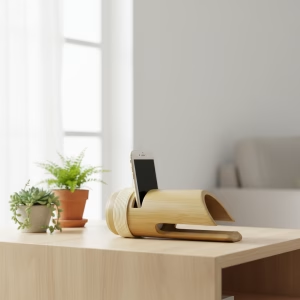
Original price was: $172.00.$150.00Current price is: $150.00. Add to cartBambooSoundBoost Portable Amplifier
Original price was: $96.00.$66.00Current price is: $66.00. Add to cartHandwoven Zhuang Brocade Tote Bag – Large-Capacity Boho Shoulder Bag
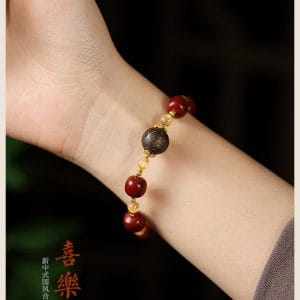
Original price was: $178.00.$154.00Current price is: $154.00. Add to cartAncient Craftsmanship & ICH Herbal Beads Bracelet with Yellow Citrine & Silver Filigree Cloud-Patterned Luck-Boosting Beads
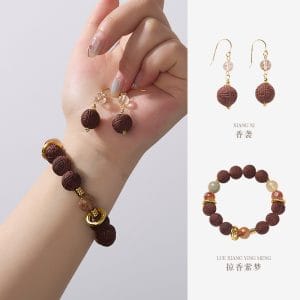
Original price was: $128.00.$89.00Current price is: $89.00. Add to cartAncient Craft Herbal Scented Bead Bracelet with Gold Rutile Quartz, Paired with Sterling Silver (925) Hook Earrings
Original price was: $322.00.$198.00Current price is: $198.00. Add to cartThe Palace Museum Paper-Cut Light Art Fridge Magnets: Chinese Cultural Style Creative Gift Series
Price range: $27.00 through $36.00 Select options This product has multiple variants. The options may be chosen on the product page